 How-to
Ceramic Coating for Commercial Property Interiors Explained
Last Updated: November 9, 2026
Quick Summary
Ceramic coating for commercial property interiors is a liquid polymer applied to floors, counters, glass and fixtures that bonds to the surface and creates a thin, hard, water-repellent layer. That layer resists stains, scratches and UV fading far better than bare finishes.
- Nano-ceramic coatings bond into the substrate, while standard sealers sit on top and wear away.
- Prep decides the outcome: grind or etch the floor, then clean it fully before coating.
- Never use abrasive pads or strong acids, clean spills promptly and schedule a yearly inspection.
- Professional application is required for warranty coverage on most commercial products.
- Ask for a written scope listing prep steps, products and cure times; a quote without prep details is a red flag.
Table of Contents
- Why Commercial Interiors Need Ceramic Coating
- Ceramic Coating for Commercial Floors in High-Traffic Spaces
- Commercial Countertop Coating for Retail and Hospitality Surfaces
- How Ceramic Coating Protects Glass, Partitions and Fixtures
- Commercial Surface Coating Maintenance That Keeps the Warranty Valid
- DIY Kits vs Professional Application for Commercial Properties
- What Interior Ceramic Coating Costs and How to Budget for It
- Book an Interior Coating Assessment for Your Barrie Property
- Frequently Asked Questions
Why Commercial Interiors Need Ceramic Coating
Ceramic coating for commercial property interiors is a liquid polymer applied to floors, counters, glass and fixtures that bonds to the surface and creates a thin, hard, water-repellent layer. That layer resists stains, scratches and UV fading far better than bare finishes.
The core problem is simple. Commercial interiors take a beating that residential surfaces never see. Carts roll over floors all day. Coffee spills sit on counters until someone wipes them. Sun pours through south-facing glass for years.
Bare surfaces absorb all of it. Sealed concrete stains. Laminate counters dull. Glass etches. Replacing those surfaces costs far more than protecting them. For a deeper overview of commercial interior surface protection services, see the full guide.
A ceramic layer changes how the surface behaves. It raises surface tension so liquids bead instead of soaking in. Dirt releases with a wipe. The gloss holds up under traffic. Canada's workplace safety regulator on chemical handling also matters here, because proper application means controlling fumes and ventilation.
Ceramic Coating for Commercial Floors in High-Traffic Spaces
Floors fail first in any busy building. Entrances, checkout lanes and food service areas collect the most grit, moisture and foot traffic.
A ceramic coating for commercial floors works differently from a standard floor sealer. Sealers sit on top and wear away. Nano-ceramic coatings bond into the substrate and build scratch resistance into the surface itself. For more detail on the benefits of commercial floor coating in busy spaces, read the full breakdown.

Grit acts like sandpaper under every footstep, so entrance zones are where abrasion is most severe.
Prep decides the outcome. Surface preparation means grinding or etching the floor, then cleaning it fully.
- Tile and polished concrete: high gloss, strong chemical resistance
- Vinyl and laminate: moderate protection, needs a compatible primer
- Grout lines: sealed against staining and mildew
Commercial Countertop Coating for Retail and Hospitality Surfaces
Counters in cafés, salons and reception areas take constant abuse. Coffee, wine, cleaners and hot cups all attack the finish.
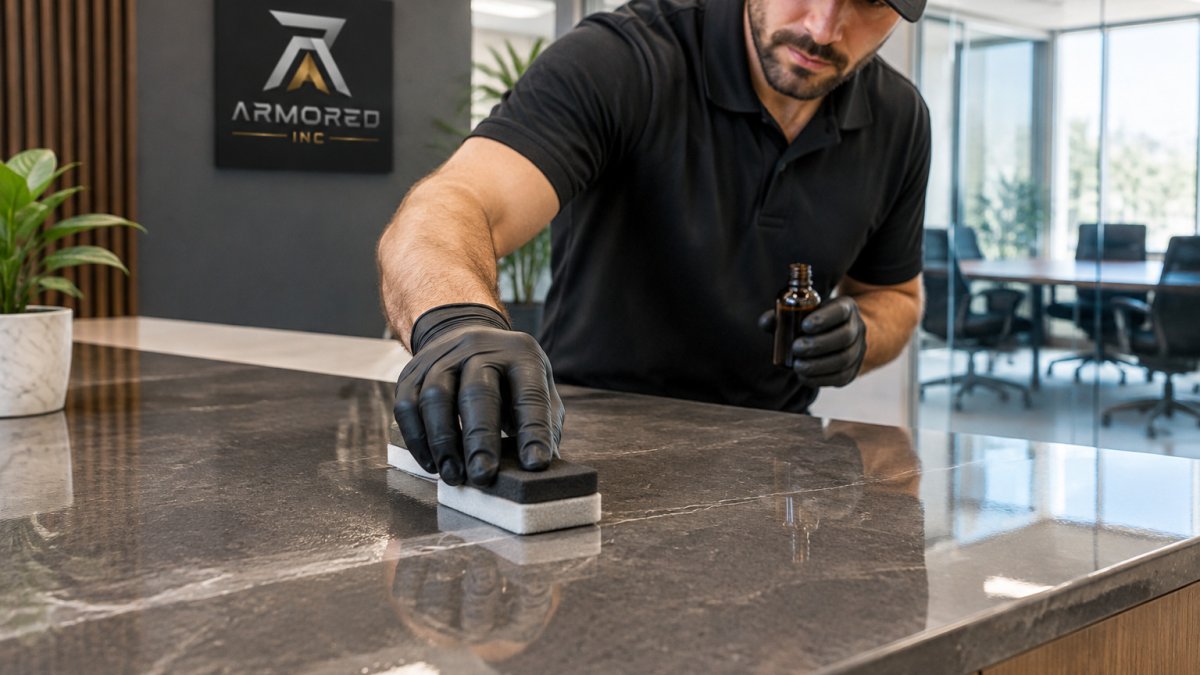
A commercial countertop coating gives those surfaces a stain-resistant barrier that wipes clean. It also adds gloss enhancement, which matters in customer-facing spaces. See the guide to protecting office countertops from wear for a focused walkthrough.
Different substrates need different approaches:
- Quartz and granite: excellent bonding, strong stain resistance
- Laminate: good protection, but edges need extra care
- Stainless steel: chemical resistance improves, fingerprints fade
- Wood butcher block: needs a food-safe product and full curing
Health Canada's guidance on surface sanitizers is worth reading, because cleaning products must match the coating chemistry.
How Ceramic Coating Protects Glass, Partitions and Fixtures
Glass is the surface most people overlook. Shower screens, storefront partitions and office dividers can collect hard water spots and soap film.
Fixtures benefit the same way. Chrome, brushed nickel and powder-coated frames resist fingerprints and cleaning chemical damage. Read why commercial property interior protection is necessary for glass, partitions and fixtures.
Commercial Surface Coating Maintenance That Keeps the Warranty Valid
Maintenance is where most property managers drop the ball. A coating is not a permanent shield. It is a wear layer that needs care, and on a commercial property the care protocol has to be written down, assigned to a role, and logged. That is the difference between a coating that lasts and one that fails inside two years. A written care protocol also makes polyaspartic coating longevity easier to assess over time, since logged maintenance gives teams a basis for adjusting routines before wear becomes a failure.
A commercial surface coating maintenance schedule usually looks like this:
| Surface | Cleaning Frequency | Method | Watch For |
|---|---|---|---|
| Floors | Daily sweep, weekly damp mop | pH-neutral cleaner | Grit at entrances |
| Countertops | Daily wipe-down | Soft cloth, mild soap | Standing water at seams |
| Glass | Weekly | Microfiber and water | Hard water spots |
| Fixtures | Weekly | Damp microfiber | Abrasive pads |
That table is the floor, not the ceiling. Commercial interiors need a zone-based protocol because wear is not uniform. In a Barrie retail or hospitality space, the entrance zone, the checkout lane, and the food service area each fail at a different rate.
Three rules protect the warranty and the coating:
- Never use abrasive pads or strong acids
- Clean spills promptly, especially acidic drinks
- Schedule a yearly inspection
For multi-tenant or multi-site properties, keep a simple log per surface: date cleaned, product used, and any damage noted. That log is what supports a warranty claim and what tells you when to budget the next maintenance coat.
DIY Kits vs Professional Application for Commercial Properties
Retail ceramic kits look tempting. The price gap is real. So is the gap in results.
Professional-grade coatings differ from consumer kits in three ways: solids content, bonding strength and curing behavior. Pro products often need controlled temperature and humidity during curing.
Application technique is the bigger divide. Surface preparation alone takes hours on a commercial floor. Grinding, degreasing and masking are not weekend projects.
- DIY kits: fine for a small office counter, risky on high-traffic floors
- Professional application: required for warranty coverage on most commercial products
- Hybrid: pro application on floors and counters, in-house care afterward
A common mistake is buying a kit, applying it over a poorly prepped floor, and blaming the product when it peels. The product was fine. The prep was not.
For commercial assets, we recommend professional application every time. The downtime and redo cost of a failed DIY job outweighs the savings.
What Interior Ceramic Coating Costs and How to Budget for It
Pricing for interior ceramic coating depends on quantity, surface type and condition. Contact Armored Inc. for a quote tailored to your property.
Budget planning works better than hunting for a flat price. Build your estimate around these factors:
- Total area: floors cost more per square foot than counters
- Prep work: damaged or unsealed surfaces add labor
- Downtime: after-hours work carries a premium
- Maintenance plan: ongoing care protects the investment
What most guides miss is the ROI side. A commercial property manager is not buying gloss. They are buying fewer cleaning hours, fewer replacement cycles, and less downtime. Frame the quote against what the surface costs to replace. A coated floor that holds its finish for years instead of months reduces strip-and-wax cycles and extends the life of the substrate. That is the number to put in front of a building owner, not the per-square-foot rate.
Ask for a written scope that lists prep steps, products and cure times. A quote without prep details is a red flag. Also ask whether the quote includes a maintenance coat and an inspection visit, because those are the line items that decide total cost of ownership over the warranty period.
For current rates on your property, request an interior coating assessment and we will scope the job properly.
Book an Interior Coating Assessment for Your Barrie Property
Barrie winters are hard on commercial interiors. Road salt gets tracked across floors for months. Grit grinds into entrances. Freeze-thaw cycles stress glass and frames.
Armored Inc. offers mobile service and valet options. The business also provides commercial and residential interior coatings alongside its ceramic coating and window tint services.
If you manage retail, office or hospitality space in Barrie and the surrounding area, start with a walkthrough. We will tell you which surfaces need protection now and which can wait.
Get started with Armored Inc. and protect your interior surfaces before the next busy season.
Your floors and counters are taking damage every day you wait. Book an interior coating assessment with Armored Inc. and get a clear scope, honest timelines and a maintenance plan that protects your investment for years.
Frequently Asked Questions
What surfaces can be protected with ceramic coating in a commercial property?
Interior ceramic coating bonds to hard, non-porous surfaces: polished concrete, sealed tile and grout, natural and engineered stone countertops, glass partitions, stainless fixtures and powder-coated metal. It is not a fabric treatment, so upholstery and carpet need a separate textile guard. Surfaces must be clean and fully cured before application, which is why a site assessment comes first.
How long does commercial interior ceramic coating last?
Expect two to five years on floors and counters, depending on traffic volume, cleaning products and how well the surface was prepared. Glass and low-touch fixtures often hold longer because abrasion is minimal. High-traffic entrances and food prep areas wear fastest. The coating does not fail all at once; it thins where feet and equipment rub most. A yearly inspection catches thinning early, and a maintenance coat on those zones extends the whole floor's service life without a full reapplication.
How should coated commercial surfaces be cleaned and maintained?
Use pH-neutral cleaner, a microfiber flat mop or cloth, and plain water for daily work. Skip acidic descalers, abrasive pads and bleach-heavy sanitizers, which break down the coating film. Sweep grit off floors before mopping so you are not grinding sand across the surface.
Is professional ceramic coating worth it for a commercial property?
It depends on surface turnover and replacement cost. Ask for a quote covering square footage, surface type and prep work, then compare it against your current cleaning and replacement costs.