 listicle
Commercial Floor Coating Benefits: What to Know
Last Updated: October 22, 2026
Quick Summary
A commercial floor coating is a resin-based layer bonded to concrete that takes punishment instead of the slab, delivering wear resistance, slip resistance, and protection from moisture and road salt. The benefits are conditional: preparation, moisture control, the right system for the room, and a realistic cure schedule decide the outcome more than the product name.
- Durability is decided before resin is poured: surface prep, moisture testing, and build thickness matter more than brand.
- Match texture to the room: medium aggregate in kitchens, heavier in washdown bays, smoother in warehouse aisles.
- Ask installers how slip resistance will be measured after cure and get a written finish specification.
- Most installation calendar time is cure, not labor, so stage work in zones to keep the facility running.
- Be cautious with any quote that is firm before a site assessment and moisture testing.
Table of Contents
- Why Commercial Floor Coatings Matter for Your Facility
- Commercial Epoxy Flooring Benefits: Durability That Handles Heavy Loads
- Slip-Resistant Commercial Floor Coatings and Workplace Safety
- Protection From Moisture, Road Salt, and Ontario Weather
- Commercial Floor Coating Installation Time and Return to Service
- Epoxy Floor Coating Maintenance and Long-Term Upkeep
- Cost, Limitations, and When Coatings May Not Be Suitable
- Conclusion
- Frequently Asked Questions
Why Commercial Floor Coatings Matter for Your Facility
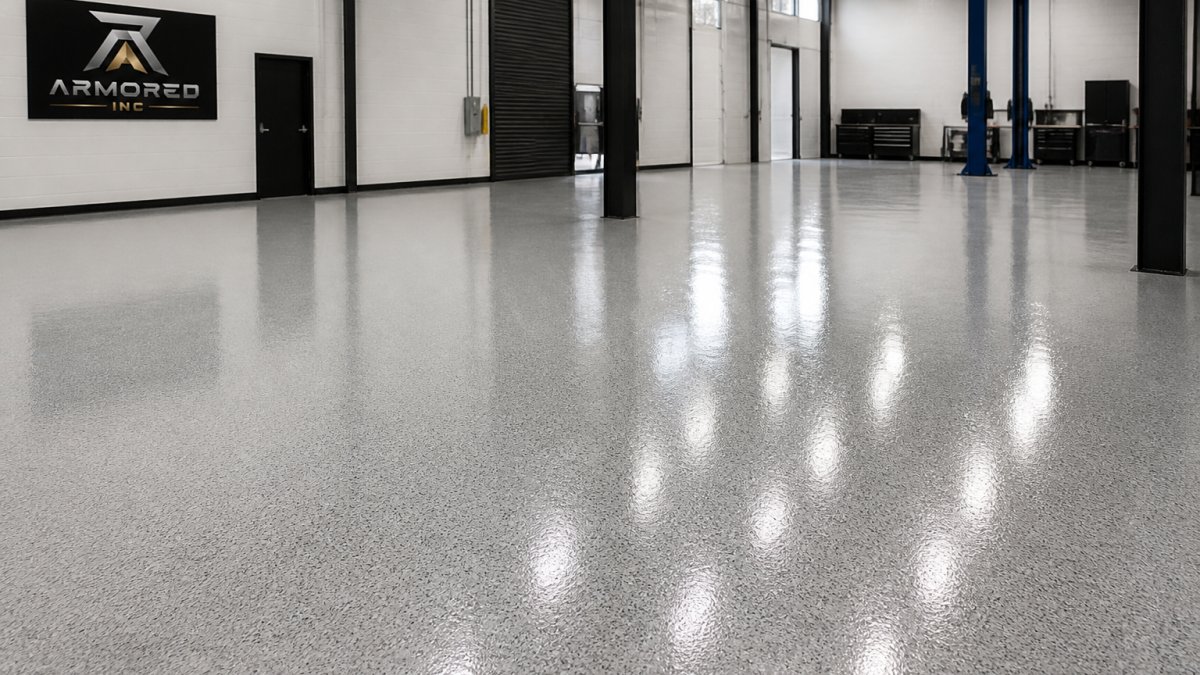
A concrete floor in a working facility takes more punishment than almost any other surface on the property. Forklifts turn on it, pallets drop on it, chemicals spill on it, and road salt gets dragged across it every winter. A commercial floor coating is a resin-based layer bonded to the concrete that takes that punishment instead of the slab underneath, and the benefits of commercial floor coatings come down to one trade: you spend once on surface protection and avoid repeated repairs, replacements, and downtime.
Below, we break down what a coating actually delivers, where the limits are, and how to plan installation around a working building.
Commercial Epoxy Flooring Benefits: Durability That Handles Heavy Loads
The headline benefit of commercial epoxy flooring is wear resistance under constant traffic. A properly installed epoxy system forms a hard, seamless surface that resists abrasion, impact, and the point loads that come from racking legs and forklift wheels.
Where it earns its keep:
- Abrasion resistance for aisles with steady forklift or pallet jack traffic
- Impact resistance in loading zones and staging areas
- Chemical and spill resistance in shops that handle oils, solvents, or cleaning agents
- Seamless surface protection with no grout lines or joints to trap dirt
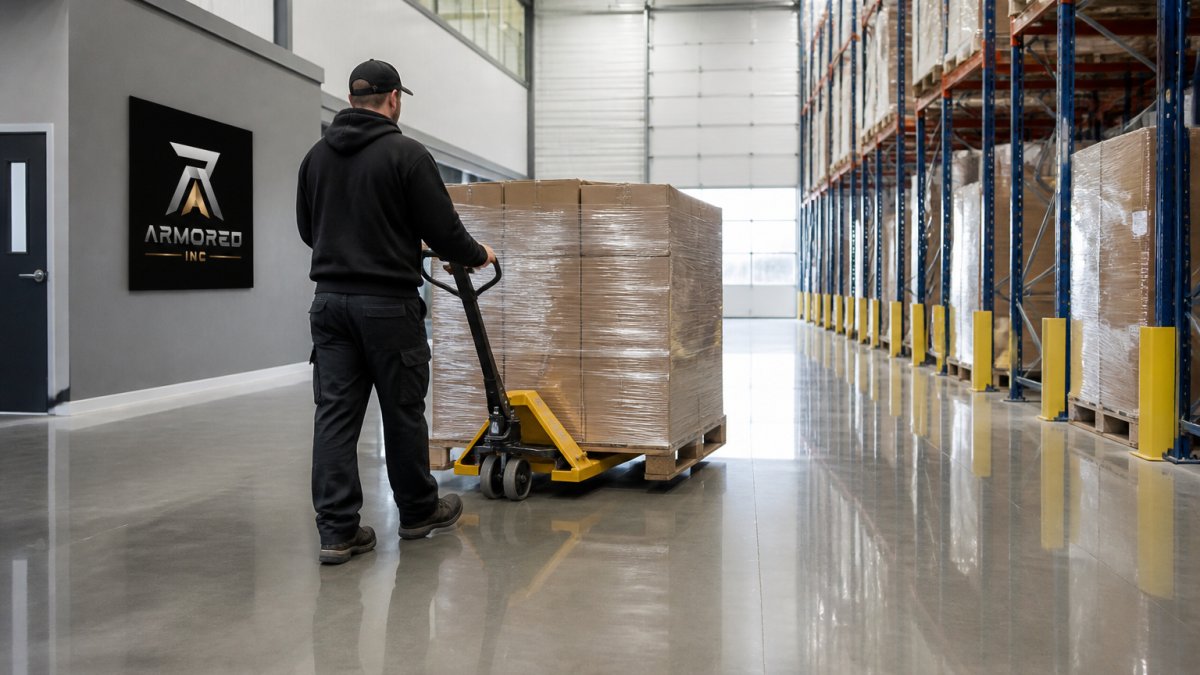
What most guides miss is that durability is decided before a drop of resin is poured. Surface preparation, moisture testing, and the right build thickness matter more than the brand on the pail.
Slip-Resistant Commercial Floor Coatings and Workplace Safety
Slip resistance is where floor coatings quietly pay for themselves, but only if the finish is specified for the room rather than picked from a catalog.
Ontario employers have a legal duty to keep floors in a condition that does not endanger workers. Under the Occupational Health and Safety Act, workplaces must be kept free of hazards, and slippery walking surfaces count.
Finish selection by setting is where most projects go wrong:
- Commercial kitchens and food prep: medium aggregate broadcast with a sealed topcoat so the floor is slip-resistant when wet but still mop-friendly and able to meet hygiene cleaning routines.
- Washdown and car wash bays: heavier aggregate or a profiled system, because standing water and detergent residue are constant.
- Entryways and vestibules: medium texture to handle tracked-in rain and winter grit without turning the first ten feet of the building into a broom-shredding surface.
- Healthcare and senior-care corridors: fine texture that satisfies traction needs while remaining cleanable and compatible with wheeled equipment.
- Warehouse aisles and staging areas: usually a smoother finish for pallet jack and forklift traffic, with texture concentrated at doorways and wet zones rather than the whole floor.
Verification is the part competitors skip. Ask your installer how slip resistance will be measured after cure, not just promised in the quote.
Texture level also has a maintenance trade-off. Coarse aggregate in a kitchen can hold grease and make daily cleaning harder, which creates its own hazard over time.
Protection From Moisture, Road Salt, and Ontario Weather
Freeze-thaw conditions are the enemy of bare concrete in this region. Water gets into surface pores, freezes, expands, and slowly breaks the slab apart. Road salt makes it worse by drawing moisture in and cycling through thaw and refreeze all winter.
A sealed commercial floor coating blocks that path. It keeps moisture and de-icing salt at the surface where they can be cleaned off, rather than letting them soak in. Garages, entryways, service bays, and any space where vehicles come in wet benefit most.
The same logic applies outside the building. Our ceramic coating work on vehicles and our interior coating work on commercial properties follow the same principle: seal the surface, then maintain it.
Commercial Floor Coating Installation Time and Return to Service
Installation time depends on square footage, the condition of the slab, and the coating system. A typical commercial floor coating installation follows this sequence:
- Assessment and moisture testing to confirm the slab is ready
- Surface preparation by mechanical grinding or shot blasting
- Repairs to cracks, spalls, and joints
- Primer coat applied and cured
- Base coat with optional aggregate for slip resistance
- Topcoat for chemical and wear protection
- Cure time before foot traffic and vehicle traffic
Most of the calendar time is cure, not labor. Foot traffic usually returns within a day or so of the final coat, while vehicle traffic needs longer. Plan on staging the work in zones so part of the facility keeps running. A single overnight window rarely covers a large warehouse floor, and pretending otherwise is how projects go wrong.
Epoxy Floor Coating Maintenance and Long-Term Upkeep
Epoxy floor coating maintenance is minimal compared with bare or tiled concrete. Routine sweeping and damp mopping handle most of it, and a pH-neutral cleaner protects the finish. The savings show up in labor hours, not just materials.
What to do:
- Sweep or dust-mop daily in high-traffic aisles
- Clean spills promptly, especially oils and solvents
- Use a neutral cleaner rather than harsh degreasers
- Rinse washdown areas thoroughly
- Schedule a periodic inspection for wear spots and touch-ups
What to avoid: dragging sharp steel across the floor, dropping heavy loads on edges, and letting grit build up under equipment. Abrasion resistance is good, not unlimited.
The same upkeep discipline applies to dealership inventory and marine surfaces. If you are protecting vehicles rather than floors, our paint protection film follows the same rule: the coating buys you time, and maintenance decides how much.
Cost, Limitations, and When Coatings May Not Be Suitable
Cost is where honest advice matters most, and it is also where most guides go quiet. No responsible installer quotes a number before seeing the floor, but that does not mean you cannot understand what drives the figure.
What drives the price:
- Square footage and layout. Large open warehouse floors price differently per square foot than small, cut-up rooms with equipment to work around. Edges, columns, and tight corners add labor.
- Slab condition. A sound, dry slab needs preparation; a slab with cracks, spalls, or failed previous coatings needs repair and possibly milling before any resin goes down.
- Surface preparation method. Mechanical grinding or shot blasting is the baseline. Heavier preparation for contaminated or coated slabs adds time and equipment.
- Moisture condition. If moisture testing shows vapor transmission above what the system tolerates, mitigation is a separate line item and must be priced before coating, not discovered later.
- Coating system and build thickness. A thin-film roll-on system, a high-build epoxy, and a polyaspartic topcoat sit at different price points and deliver different service lives.
- Slip-resistance and finish. Aggregate broadcast and specialized finishes add material and labor.
- Access, staging, and downtime. Night and weekend work, zone-by-zone staging, and temporary protection all carry a cost that should appear in the quote.
A lifecycle view is more useful than a per-square-foot comparison. A coating that lasts years and needs only cleaning usually beats repeated patching, replacement, and the downtime that comes with both.
Where coatings fall short:
- Slabs with active moisture problems need mitigation first, not a coating over the top. Moisture vapor is the most common cause of blistering and delamination.
- Severe structural damage calls for concrete repair before any coating decision. A coating is a surface, not a structural fix.
- Outdoor exposure needs a system rated for UV and weather. Standard interior epoxy will chalk and fade under sun and freeze-thaw.
- Very heavy impact zones may need a different build or a topping rather than a thin film.
- Hot-tire and heavy chemical exposure in service bays and industrial areas may call for a system specified for those conditions, not a general-purpose coating.
- Tight timelines with no cure buffer are a limitation of planning, not of the product. If the schedule cannot accommodate cure, the project is not ready.
Maintenance expectations. A coated floor is not maintenance-free. Sweeping, prompt spill cleanup, pH-neutral cleaners, and periodic inspection for wear spots are part of the lifecycle cost. Budget for touch-ups in high-traffic aisles and at doorways, and treat that as normal rather than a failure.
Conclusion
The hard part is not choosing a coating. It is finding an installer who tests the slab, plans the cure time, and tells you when a coating is the wrong answer. Armored Inc. handles commercial and residential interior coatings across Barrie and the surrounding area, with mobile service, valet, and rental options that keep your operation running while the work is done. Contact us for an assessment and a quote built on your actual floor, not a guess.
Frequently Asked Questions
What are the main benefits of commercial floor coatings?
Commercial floor coatings protect the concrete beneath from wear, impacts, abrasion, and chemical spills. They create a seamless surface that resists cracking, peeling, and fading, and they make daily cleaning faster. A commercial floor coating also improves safety with slip-resistant finishes and can enhance the appearance of warehouses, retail spaces, and showrooms. For facility managers, the result is longer floor life, fewer repairs, and lower lifecycle costs compared with uncoated or failing concrete.
How long do commercial floor coatings last?
Service life depends on the coating system, prep quality, and traffic. A properly installed epoxy floor coating in a warehouse or retail space often lasts many years before needing a recoat, while polyaspartic topcoats can extend wear resistance in high-traffic areas. Heavy loads, chemical exposure, and Ontario freeze-thaw conditions all affect longevity. Regular epoxy floor coating maintenance, including prompt spill cleanup and routine sweeping, helps you get the full life out of the system and delays replacement costs.
How long does it take to install a commercial floor coating?
Commercial floor coating installation time varies with square footage, surface preparation, and the number of coats. Small areas can be completed in a day or two, while larger warehouse floors may take several days including cure time. Surface preparation, such as grinding or shot blasting, is a major factor. Plan for limited access during application and curing, and ask your installer for a return-to-service timeline so you can schedule around business hours.
Do commercial floor coatings make floors easier to clean?
Yes. A seamless coated surface has no grout lines or joints where dirt and moisture collect, so sweeping and mopping take less time. Spills from oils, chemicals, or food service stay on the surface instead of soaking into concrete. Many commercial floor coatings are easy to clean with standard equipment, which reduces labor hours and keeps retail spaces, restaurant floors, and healthcare facilities presentable. Pair the coating with a routine maintenance schedule for the best results.