 ultimate-guide
Why Commercial Property Interior Protection Is Necessary
Table of Contents
- Why Commercial Property Interior Protection Is Necessary
- Commercial and Industrial Property Uses That Demand Protection
- Building Regulations, Zoning, and Occupant Safety
- Commercial Interior Coating Benefits for Property Owners
- Commercial Interior Surface Protection by Area and Material
- Surface Preparation, Grime, and Older Building Conditions
- Commercial Surface Coating Maintenance and Business Continuity
- Environmental Contamination, Cleanup Liability, and Cost Recovery
- Frequently Asked Questions
Last Updated: October 19, 2026
Why Commercial Property Interior Protection Is Necessary
Walk into any busy commercial space in Barrie after a decade of daily traffic and the damage tells a story: scuffed drywall at cart height, dulled countertops, etched glass, and grout that no mop will rescue. This guide from Armored Inc. explains why commercial property interior protection is necessary, not as a cosmetic upgrade but as an asset-management decision. Interior protection is the practice of applying durable coatings, films, and barriers to interior surfaces so they resist wear, moisture, and contamination between renovations. The core argument here is simple: most owners budget for repair after damage appears, when a planned protection layer would have prevented the damage and the disruption entirely.
Most property managers treat interior finishes as disposable. That assumption gets expensive fast.
Commercial and Industrial Property Uses That Demand Protection
Interior protection needs differ sharply by building use, and a single specification rarely fits a mixed portfolio.
Retail, Office, and Mixed-Use Spaces
Retail floors take cart traffic, shelving drag, and constant cleaning. Office interiors face different pressure: high-touch surfaces, coffee stains, and furniture scuffs. Mixed-use buildings combine both, plus residential-grade wear in shared corridors. Each space type needs a protection plan matched to its actual traffic pattern, not a generic coating applied everywhere.
Manufacturing, Aerospace, and Industrial Facilities
Industrial buildings bring grease, chemical exposure, and heavy equipment movement. Facilities serving manufacturing, aerospace, and the defence industry often carry contamination concerns that go beyond appearance. A protective surface here is part of operational risk control, not decoration.
Building Regulations, Zoning, and Occupant Safety
Interior protection intersects with building regulations in ways owners often overlook. Canada's National Building Code of Canada sets requirements for finishes in certain occupancies, and Ontario's building code and fire safety rules govern how materials behave in an emergency. Zoning by-laws and permitted uses determine what a commercial lot can house, which in turn shapes the protection specification: a restaurant kitchen and a warehouse bay have almost nothing in common. Development standards and non-residential uses also affect renovation approvals, so protection work should be planned alongside building permits rather than after them. Occupant safety and building safety are not abstract: slip resistance, off-gassing, and surface cleanability all fall under regulatory compliance for commercial buildings.
Commercial Interior Coating Benefits for Property Owners
The case for commercial interior coating benefits comes down to three outcomes: longer finish life, lower maintenance cost, and fewer disruptive closures.
Coated surfaces resist staining and clean faster, which reduces labor hours in high-traffic areas. They also protect the substrate beneath, so a worn coating gets recoated instead of a floor getting replaced. For owners managing multiple properties, that predictability matters more than any single project's savings. Property value and asset protection improve when finishes hold up under inspection. In practice, this means a coating decision made once prevents a recurring line item in the maintenance budget.
Commercial Interior Surface Protection by Area and Material
Effective commercial interior surface protection starts with matching the barrier to the substrate and the wear it will face. Concrete, laminate, glass, and natural stone all behave differently under the same coating, so area-by-area planning beats a single blanket specification. The practical approach is a walk-through checklist organized by room and material, so nothing gets overlooked between the loading dock and the boardroom.
A Room-by-Room Protection Checklist
Entrances and vestibules. The highest-wear zone in most Barrie commercial buildings, especially through winter when road salt and grit are tracked in.
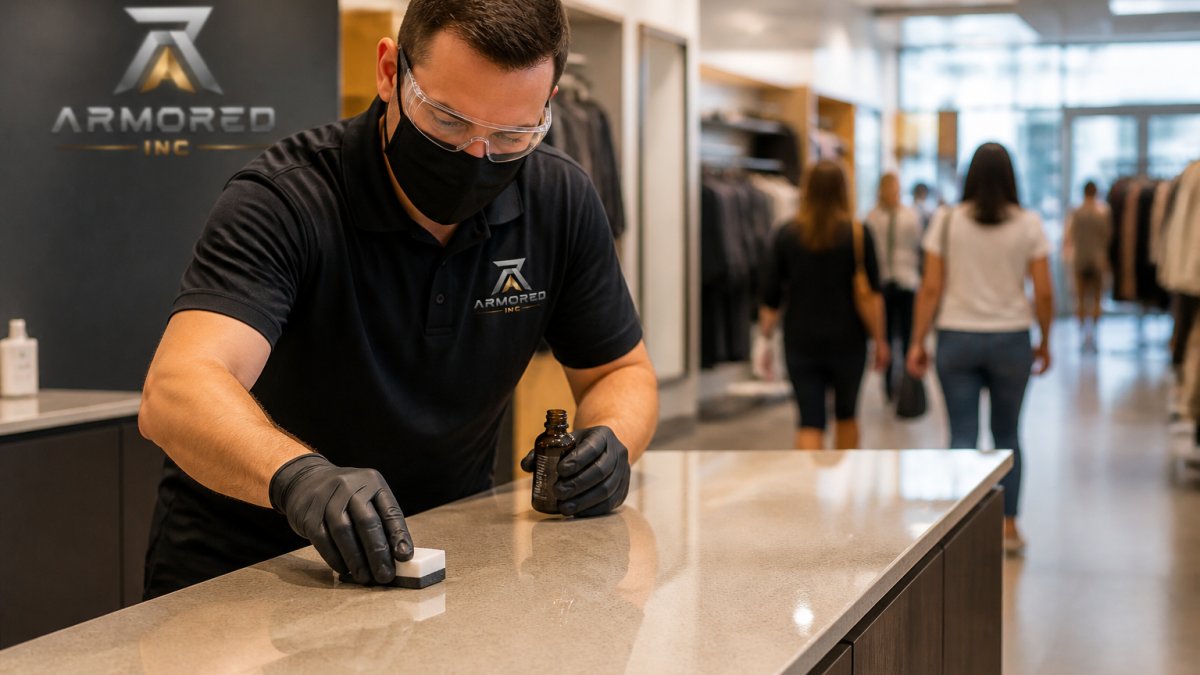
Retail sales floors and checkout lanes. Cart traffic, shelving drag, and constant mopping. Abrasion-resistant coatings on the floor, and a sealed surface on countertops that face heat, cutting, and chemical cleaners.
Service corridors and back-of-house. Cart impact, grease, and equipment movement. Reinforced wall coatings up to cart height and a slip-resistant floor finish. This is where impact damage accumulates fastest and where a reinforced wall system pays for itself.
Restrooms and kitchens. Moisture, cleaners, and grout. Sealed, cleanable finishes on walls and fixtures, and epoxy or similar coatings on floors.
Office interiors and meeting rooms. High-touch surfaces, coffee stains, and furniture scuffs. Low-sheen protective coatings on drywall and a cleanable finish on desks and partitions. Glass partitions need a hydrophobic treatment to resist fingerprints and etching.
Windows and glass. Fingerprints, mineral deposits, and etching from hard water. Where solar heat gain and glare are also concerns, professional window tinting adds another layer of control for glass-heavy commercial interiors.
HVAC, vents, and electronics. Dust and overspray are the threats during any adjacent work. Cover return and supply grilles, seal electronics with antistatic sheeting, and confirm ventilation protection before any coating or spray work begins.
Sensitive surfaces. Natural stone, brass, and specialty finishes need masking rather than coating. Masking tape and film protect these during work, but the wrong tape can pull a finish, so specify low-tack products for delicate surfaces.
Floors, Walls, and High-Traffic Zones
Floors and lower walls absorb the most abuse. Entrances, checkout lanes, and service corridors need abrasion-resistant finishes. Upper walls and ceilings usually need only cleanability. Splitting the specification by zone keeps costs proportionate to actual wear.
Countertops, Glass, and Fixtures
Countertops face heat, cutting, and chemical cleaners. Glass shows every fingerprint and mineral deposit. Fixtures collect grime in joints. Each needs a different protection approach, and mixing them up is a common and costly mistake.
| Area | Main Threat | Protection Approach | Reapplication Cycle |
|---|---|---|---|
| Entrance floors | Abrasion, salt, grit | Abrasion-resistant coating plus walk-off matting | Highest frequency |
| Retail countertops | Heat, cleaners, scratching | Sealed surface coating | Moderate |
| Glass and partitions | Fingerprints, etching | Hydrophobic glass treatment | Moderate |
| Service corridors | Cart impact, grease | Reinforced wall coating | High frequency |
| Restrooms and kitchens | Moisture, cleaners, grout staining | Sealed, cleanable finish | Moderate to high |
| HVAC and vents | Dust, overspray | Temporary covers and sealed grilles | Per project |
| Fixtures and joints | Grime buildup | Sealed, cleanable finish | As inspection dictates |
Surface Preparation, Grime, and Older Building Conditions
No coating performs on a poorly prepared surface. Surface preparation is where most protection projects succeed or fail, and it matters most in older facilities.
Thorough cleaning removes grease, oils, and embedded grime that prevent adhesion. Older buildings add complications: unknown previous coatings, moisture intrusion, and substrates that have been patched repeatedly. A common mistake is coating over a contaminated surface and discovering the failure months later. Proper preparation includes adhesion testing and, where contamination is suspected, an environmental assessment before work begins.
Commercial Surface Coating Maintenance and Business Continuity
Commercial surface coating maintenance is not a one-time event. It is a schedule, and that schedule is what keeps an occupied building running while protection work happens around employees, customers, and tenants.
Planning Protection Work Around Occupants
Business continuity during interior protection work comes down to four controls: containment, access routes, signage, and scheduling.
Containment. Temporary barriers and negative-air units keep dust and overspray out of occupied areas. For coating and spray work, seal doorways and returns with plastic sheeting and confirm the HVAC system is protected before work starts. Dust that migrates into a retail floor or an office suite creates cleanup costs that dwarf the protection budget.
Access routes. Keep at least one clear, signed path to exits at all times. In Ontario, the Fire Code requires means of egress to remain unobstructed, so staging materials and equipment in a corridor is not a neutral choice. Plan the work sequence so barriers never block an exit route.
Signage and communication. Post clear signage at barrier edges and notify tenants and staff in advance of noisy or odorous work. A short written schedule reduces complaints and keeps customers from walking into a wet floor.
Scheduling. Phase work by zone and run it after hours or on low-traffic days where possible. Planned maintenance happens on a schedule; emergency replacement happens whenever the floor finally fails, usually at the worst possible time. For property managers running occupied buildings, the planned path protects revenue as much as it protects surfaces.
Maintenance Schedules That Actually Hold
A simple maintenance plan keeps protection performing: routine cleaning with compatible products, periodic inspection of high-traffic zones, and recoating before wear reaches the substrate. The practical detail is in the intervals. Entrance floors and service corridors need inspection more often than office interiors, and recoating a worn coating is far cheaper than replacing the substrate beneath it. Keep a written record of products used and reapplication dates; that record is also useful due-diligence material if the property is sold or refinanced.
Workplace Safety and Regulatory Context
Interior protection work in Ontario falls under the Occupational Health and Safety Act and its regulations. Coating and spray work can involve chemical exposure, so ventilation, personal protective equipment, and material safety data sheets matter. Fire safety is the other regulatory thread: protective materials applied to walls, ceilings, or floors can affect how a fire-rated assembly performs, and the authority having jurisdiction should confirm material compatibility before installation. Skipping that check can void fire-rated assembly performance.
Environmental Contamination, Cleanup Liability, and Cost Recovery
Environmental contamination changes interior protection from a maintenance question into a legal one. In Ontario, contaminated sites are governed by the Environmental Protection Act, and a Phase I assessment followed by a Phase II assessment may be required before redevelopment or certain changes in use. Cleanup costs and legal responsibility can follow the property owner even when a tenant caused the contamination. Protected land and industrial hubs carry heightened scrutiny.
This is the part most owners underestimate. A sealed, well-maintained interior limits how far contamination spreads and makes cleanup faster when it happens. For anyone buying or developing a commercial property in Barrie, protection records and assessment history are due-diligence material, not paperwork.
Frequently Asked Questions
Why should a business protect its interior surfaces?
Interior protection shields floors, walls, counters, and glass from daily wear, grease, and chemical exposure. It also supports occupant safety and helps a property stay compliant with building and fire regulations. For owners, that means fewer repair bills, shorter downtime, and a building that holds its value. In high-traffic retail or industrial settings, unprotected surfaces degrade fast and replacement costs add up quickly.
What commercial interior surfaces can be protected with a coating?
Most hard surfaces can be coated, including concrete floors, tiled walls, countertops, glass partitions, stainless fixtures, and washroom surfaces. The right product depends on material and traffic level. A retail countertop needs a different coating than a manufacturing floor exposed to grease and heavy equipment. A site assessment confirms which surfaces will benefit most and which need repair before coating.
How long does commercial interior surface protection last?
Lifespan depends on the coating type, surface material, and traffic. Low-traffic office surfaces can hold up for several years, while industrial floors under constant load need more frequent renewal. Regular commercial surface coating maintenance, including proper cleaning and periodic inspection, extends service life significantly. Skipping maintenance shortens it, so budget for both the initial application and ongoing care.
Is commercial interior protection worth the cost for a business?
For most properties, yes. Pricing depends on square footage, surface condition, and coating type, so get a quote rather than relying on averages. The return shows up as fewer replacements, lower cleaning labor, and reduced liability risk. High-traffic retail and industrial sites usually see the strongest payback because their surfaces take the most abuse. Ask for a breakdown of scope before committing.
Interior protection is a decision about risk, not appearance. If you are managing commercial or residential interiors and want a surface specification built around your actual traffic and materials, Armored Inc. provides interior coating and protection solutions alongside its ceramic coating and paint protection film work. We offer mobile service, valet, and rental options to keep your operation running during the job. Contact Armored Inc. to plan protection before the damage, not after.