 blog
Alternatives to Dark Window Tinting: Clear Film and Shades
Last Updated: November 12, 2026
Quick Summary
Clear ceramic window tinting is the closest alternative to dark tint, blocking infrared heat and UV rays while letting almost all visible light through so glass looks factory-stock. Light window tint and removable sunshades offer glare and privacy benefits without a blacked-out car.
- Clear ceramic film reflects infrared energy instead of absorbing it like older dyed films.
- Light window tint keeps front glass legal while still reducing glare and cabin heat.
- Detachable sunshades use suction cups or clips and come off in seconds.
- Ontario requires a clear view through the windshield and front side windows.
- Suction-cup shades can lose grip in cold weather as the cup stiffens and glass contracts.
Table of Contents
- Why Drivers Look Beyond Dark Window Tinting
- Ontario Tint Laws and What Barrie Enforcement Looks Like
- Clear Ceramic Window Tint: The Invisible Option
- Light Window Tint for Heat Rejection Without the Darkness
- Car Window Sunshades: Removable and Retractable Options
- Alternative Window Coverings: Foam Board, Blankets and Trim
- Privacy Versus Visibility: Choosing Based on Your Driving Needs
- Booking Your Window Film Consultation
- Frequently Asked Questions
Why Drivers Look Beyond Dark Window Tinting
Dark tint solves one problem and creates three others. Limo-black film cuts glare and adds privacy, but it dims your mirrors at dusk, draws police attention when it crosses Ontario's legal limits, and makes a cabin feel like a cave in February.
Drivers often ask for heat rejection, UV protection, and privacy without a blacked-out car. Modern film separates those goals, block infrared heat without blocking visible light, and add privacy without failing a roadside light meter check.
Below, we break down every realistic alternative to dark window tinting, from clear ceramic film to snap-in sunshades, with the trade-offs, legal limits, and winter performance.
Ontario Tint Laws and What Barrie Enforcement Looks Like
Ontario does not publish a single blanket percentage for every window, which is where most online guides get it wrong.
Front side windows are commonly kept light enough to stay clearly legal, with darker film reserved for rear glass. Enforcement can vary at the roadside, where a meter reading or visual assessment determines the outcome.
Watch out: film that measures legal at installation can read differently once it cures and ages, and stacked film over factory-tinted glass compounds the darkness. If unsure where your setup sits, ask for a meter reading before adding anything.
Clear Ceramic Window Tint: The Invisible Option
Clear ceramic window tint is a nearly colorless film that blocks infrared heat and UV rays while letting almost all visible light through, so your glass looks factory-stock while the cabin stays measurably cooler.
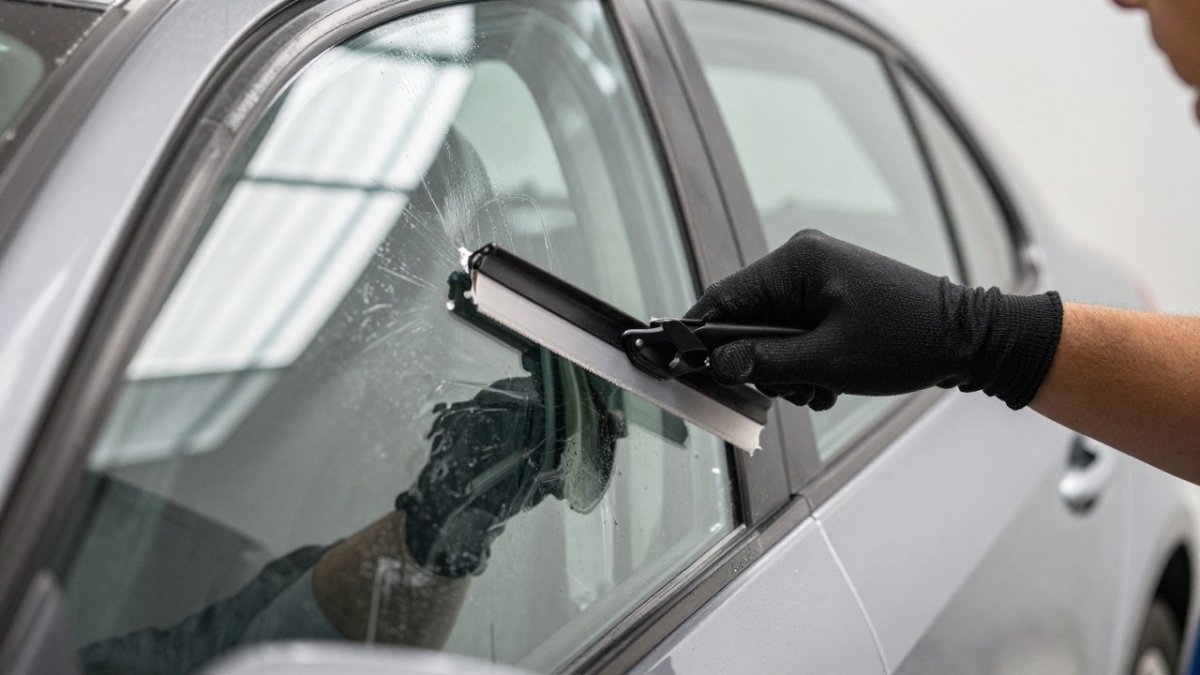
Ceramic film works differently from older dyed films. For local cost, legal limits, and curing details, our guide to ceramic window tint in Barrie covers exactly that.
How Clear Ceramic Film Compares to Dyed and Metalized Film
For a deeper breakdown of how each film type performs and what installation involves, our 2026 guide to window tint types and benefits walks through the full comparison.
Light Window Tint for Heat Rejection Without the Darkness
Light window tint is the middle path: a visible light transmission level high enough to stay comfortably legal on front glass but low enough to take the edge off summer sun. Think light smoke rather than dark limo tint, you still get glare reduction, some cabin temperature relief, and a cleaner look, without the nighttime visibility penalty of heavy film.
A light tint blocks less total heat than a dark one, so for a noticeably cooler cabin, a light ceramic film can be a better fit. Many drivers choose light ceramic tint on the sides and slightly darker film on the rear glass to balance comfort and legality.
Car Window Sunshades: Removable and Retractable Options
Car window sunshades are the zero-installation alternative: physical covers that block sun and add privacy without any film on the glass. They are popular with parents, rideshare drivers, and anyone wanting temporary protection for a rear-seat passenger or a parked car. Nothing is bonded to the glass, so there is no curing time, no legal measurement, and nothing to remove before a lease return. For Barrie drivers, the appeal peaks in July and August, but the practical questions decide whether a shade stays in the car or ends up in the trunk by September.
Detachable, Snap-In and Retractable Shades Compared
Detachable sun shades use suction cups or clips and come off in seconds. Snap-in shades are cut to fit a specific window frame and stay put with friction or clips. Retractable shades mount on a roller and pull across the glass like a blind, tidiest but most involved to install. Removable shades are the most affordable and flexible; retractable shades are the most permanent and least likely to be left at home.
| Option | Best For | Installation | Main Drawback |
|---|---|---|---|
| Detachable shades | Rentals, occasional use | Suction cups or clips | Can sag or fall in heat |
| Snap-in shades | Rear passenger windows | Friction fit, no tools | Vehicle-specific fit only |
| Retractable shades | Long-term rear window use | Mounted roller, semi-permanent | Higher cost, more setup |
| Clear ceramic film | Year-round heat and UV control | Professional install | Not removable |
| Light window tint | Glare and privacy balance | Professional install | Legal limits on front glass |
Winter, Storage and Parking-Use Performance in Barrie
A common pattern in Simcoe County is that shades are bought for summer and forgotten. Suction-cup shades lose grip in cold weather because the cup stiffens and the glass contracts; a cup that held fine in July can drop off in a January cold snap.
Storage matters as much as fit. Detachable shades fold or roll into a small bundle that fits in a door pocket or under a seat; snap-in shades are rigid and need a flat space or they warp. Retractable units stay mounted, so there is nothing to store, but the fabric can crease if left retracted wet.
Compatibility, Defroster Lines and In-Motion Rules
Shades interact with the glass they cover, and a rear-window shade resting against the defroster grid can slow clearing on a frosty morning.
Ontario's Highway Traffic Act requires a clear view through the windshield and front side windows, so shades belong on rear passenger and rear cargo glass, not the driver's forward view.
Watch out: a shade that looks harmless in a parking lot can block a rear camera or a blind-spot sensor, so test fitment with the vehicle in reverse and with the turn signal on before you rely on it.
Alternative Window Coverings: Foam Board, Blankets and Trim
Foam board, blankets, and window trim inserts are the DIY end of the spectrum: cheap, temporary coverings that block light completely for camping, sleeping in a vehicle, or protecting an interior from sun while parked. A cut piece of foam board pressed into a window frame blocks essentially all light and costs very little.
These are not a substitute for film in daily driving and should never cover a window you need to see through while moving. Used correctly, they are the most effective privacy and sun-blocking option for a parked vehicle and cost almost nothing to try.
Privacy Versus Visibility: Choosing Based on Your Driving Needs
Privacy and visibility pull in opposite directions, and the right balance depends on which windows you cover and when you drive. The front, rear, and side windows have different jobs, and a setup that works for a rear-seat passenger can be a liability for the driver. For Barrie drivers, the calculation also shifts with the season: a tint that feels fine in June glare can be a problem on a dark November commute.
Window by Window: What Each Piece of Glass Actually Needs
The windshield is the one window you should not compromise. Treat it as off-limits for privacy film, and use clear ceramic film only where it is legal and professionally installed.
Front side windows are the next most sensitive. These are the windows you check before a lane change and the ones a police officer looks through to identify occupants.
Rear side windows and the rear glass carry most of the privacy demand. Darker film is more defensible here because the driver's forward view is unaffected, but the rear window still matters for the center mirror and reversing.
Night, Rain and Low-Light Trade-Offs
Visibility loss is not linear. A film reading 35% visible light transmission still lets you see in daylight, but at night your eyes need more light to resolve detail, and the same film can turn a dim side street into a guessing game. Rain compounds it: water on glass scatters light, and dark film reduces the light available to scatter.
Mirror use is the hidden cost. Dark front side windows dim the view in both the side mirror and the mirror housing, and drivers often compensate by leaning or by relying more on the rear camera. That works until the camera is dirty or the sensor is blocked.
A Practical Decision Framework for Barrie Drivers
Here is one way to decide, window by window:
- If heat and UV are the priority: clear ceramic film all around, light shade on the front sides, and no film on the windshield beyond what is legal.
- If privacy for rear passengers matters most: a darker film on rear side and rear glass only, kept light and legal on the front sides.
- If you drive at night or in rain regularly: stay light on every window you look through, and consider clear ceramic on the front sides rather than a smoke film.
- If you park outside and want temporary shade: detachable or snap-in shades for the rear, removed before driving and before a hard freeze.
- If you want zero commitment: removable shades and foam board for parked use only.
If you are weighing which film best balances privacy against outward visibility, our guide to window film for privacy and UV protection goes deeper, and drivers exploring non-dark film options can see a rundown of top window tint alternatives for a side-by-side view.
Watch out: a film that measures legal at installation can read darker once it cures and ages, and stacked film over factory-tinted glass compounds the effect, so ask for a meter reading on the finished glass rather than trusting the box label.
Booking Your Window Film Consultation
The right choice comes down to three questions: how much heat you want to block, how much visibility you are willing to trade, and which windows you are covering. Answer those honestly and the film or shade decision becomes straightforward. If you are still deciding whether professional installation is worth it, our article on whether professional window tinting is worth it covers the long-term cost of doing it right versus fixing a failed DIY job.
At Armored Inc., we offer ceramic window film, paint protection film, and ceramic coatings, and we offer mobile service and valet options so your car is handled without disrupting your day. Our team can help you choose a film that suits your needs. Get started with Armored Inc. and drive cooler without going dark.
Every driver who has stared at a blacked-out windshield at dusk knows the trade-off is real. Clear ceramic film and well-chosen shades solve the heat and UV problem without forcing you to compromise on visibility or legality.
Frequently Asked Questions
What can I use instead of dark window tint?
Clear ceramic window tint blocks heat and UV rays without darkening the glass, which suits drivers who want comfort and legal compliance. Light window tint for heat rejection keeps visible light transmission high while reducing infrared heat. Removable car window sunshades and retractable shades add privacy on demand, and foam board or blankets work for parked storage. Each option trades off differently between privacy, visibility and cost.
Can clear window film reduce heat without making windows look dark?
Yes. Clear ceramic film is engineered to reflect infrared rays while letting most visible light through, so the cabin stays cooler without a dark tint shade. Because visible light transmission stays high, the glass looks close to factory-fitted. Check the film's heat-blocking details and confirm it meets Ontario legal limits before installation.
Are removable car sunshades a good alternative to window tint?
They work well for parking, napping children or seasonal privacy, and they cost less than film upfront. The drawbacks are setup time, storage and reduced outward visibility while installed, so they are not ideal for driving. Some drivers pair snap-in shades for rear windows with a light or clear film on the front glass for year-round UV protection.
What should Barrie drivers consider before choosing a lighter window film?
Check Ontario's legal limits on front side windows, decide whether you need privacy or heat rejection more, and think about winter glare from low sun and snow. Optical clarity matters on dark northern mornings, so compare ceramic and hybrid film samples in person.