 listicle
Is Professional Window Tinting Worth It?
Table of Contents
- The Real Value of Professional Window Tinting
- Heat Rejection and Interior Temperature Control
- UV Ray Protection and Interior Preservation
- Ceramic Window Tint Benefits and Performance
- How Long Does Window Tint Last on Your Vehicle
- Automotive Window Tinting Laws and Compliance
- Professional Installation vs. DIY: What You're Paying For
- Common Concerns and Misconceptions
Last Updated: August 20, 2026
The Real Value of Professional Window Tinting
Professional window tinting has become increasingly popular among vehicle owners seeking to enhance comfort, protect interiors, and improve privacy. But the question remains: is professional window tinting worth it? The answer depends on your priorities, climate, and how you use your vehicle.
The value proposition centers on three core benefits: heat rejection, UV protection, and interior preservation. Modern ceramic and carbon-based films deliver measurable performance improvements that DIY solutions struggle to match. However, the upfront cost and installation time require careful consideration against long-term gains.
Armored Inc. has worked with many vehicle owners, and the feedback is consistent: those who invest in professional-grade window tinting rarely regret it. The difference between a quality installation and a budget alternative becomes apparent within the first few months of ownership.
Below, we'll examine the specific benefits, performance characteristics, common misconceptions, and real-world durability to help you make an informed decision.
Heat Rejection and Interior Temperature Control
The most tangible benefit of professional window tinting is heat rejection. Modern ceramic window films block up to 95-98% of infrared radiation, the primary source of cabin heat. This translates to measurable temperature reductions, typically 10-15 degrees Celsius lower on a hot day compared to untinted windows.
This performance matters most in summer months. A cooler cabin reduces reliance on air conditioning, which directly impacts fuel consumption and battery drain in electric vehicles. For EV owners particularly, reduced HVAC load extends driving range by 5-10%, a meaningful gain for daily commuters.
The mechanism is straightforward: infrared radiation passes through standard glass but gets absorbed and reflected by nano-ceramic particles in premium films. Carbon-based films offer solid performance too, typically blocking 85-90% of infrared heat, though they fall slightly short of ceramic alternatives.
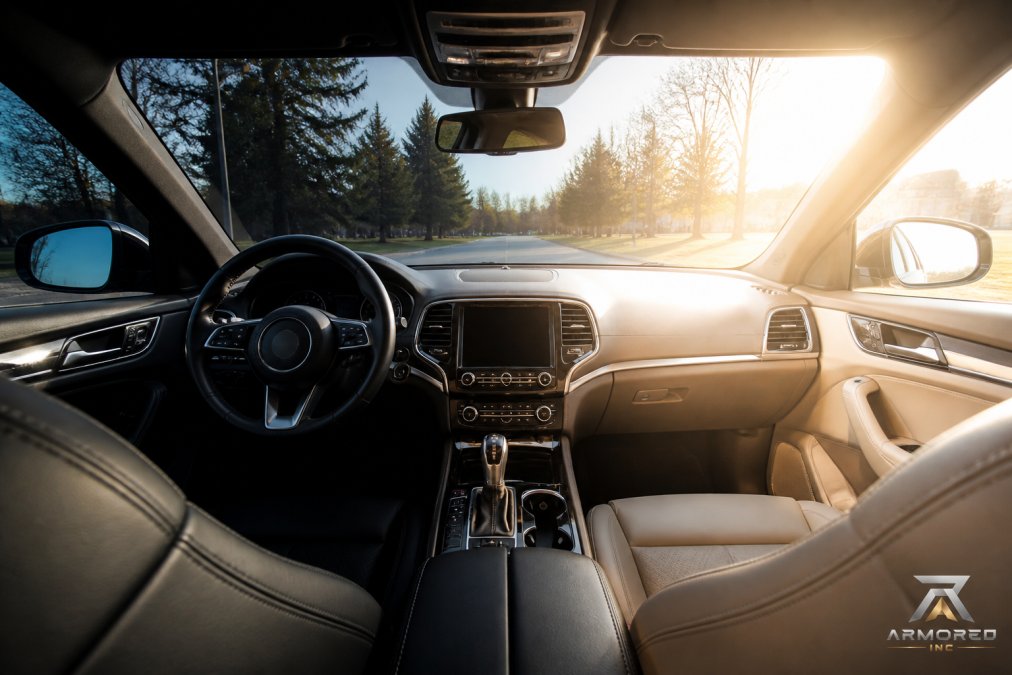
Temperature control extends vehicle lifespan. Repeated heat cycling degrades dashboard plastics, leather, and electronic components. By maintaining a cooler interior, you reduce thermal stress on these materials. This benefit compounds over years of ownership, protecting resale value and reducing replacement costs for faded trim and cracked dashboards.
One common misconception is that all tinting provides equal heat rejection. Budget films (often called "dyed films") absorb heat rather than reject it, meaning the film itself becomes hot and transfers warmth into the cabin. Ceramic films, by contrast, reflect infrared energy away from the vehicle entirely. The performance gap is substantial and worth the premium.
UV Ray Protection and Interior Preservation
Ultraviolet radiation causes interior fading, a slow but relentless process that affects leather, upholstery, and trim. Professional window films block 99% of harmful UV rays, effectively halting this degradation.
The impact becomes visible over 3-5 years. Vehicles with untinted windows show noticeable color fading on driver-side seats, steering wheels, and dashboard surfaces. Tinted vehicles maintain their original appearance far longer. For luxury car owners who take pride in their interiors, this preservation alone justifies the investment.
UV protection also extends to skin health. Prolonged sun exposure through vehicle windows increases skin cancer risk, particularly on the left arm and face during extended drives. Professional window tinting provides an SPF equivalent of up to 1,000, offering meaningful protection during daily commutes.
Ceramic films excel at UV rejection because their nano-particle structure scatters UV wavelengths across the entire spectrum. Carbon films perform similarly well, blocking 99% of UV rays while maintaining optical clarity. Both are dramatically superior to untinted glass, which blocks only about 50% of UV radiation naturally.
Ceramic Window Tint Benefits and Performance
Ceramic window tint represents the premium tier of automotive window films. These films use nano-ceramic particles suspended in a polyester substrate, delivering superior heat and UV rejection without the signal interference issues that plague older metalized films.
The key advantage of ceramic films is their non-metalized construction. GPS, cellular, and satellite radio signals pass through unobstructed. This matters increasingly as vehicles integrate more connected features. Older carbon and dyed films don't interfere with signals, but metalized films, once common, create dead zones that frustrate drivers.
Ceramic films also maintain optical clarity better than alternatives. You get darker tint without the hazy, purple-tinted appearance that budget films develop over time. This clarity matters for nighttime visibility and overall driving safety.
Performance metrics for premium ceramic films include 95-98% infrared rejection, 99%+ UV blocking, and exceptional durability. Manufacturers typically back ceramic films with lifetime warranties against bubbling, peeling, and fading. This warranty confidence reflects the material's proven longevity.
The tradeoff is cost. Ceramic films run 30-50% higher than carbon alternatives. For daily drivers, the premium may exceed your budget. For luxury vehicles or high-mileage drivers, the performance gains justify the expense.
How Long Does Window Tint Last on Your Vehicle
Durability is where professional installation separates itself from DIY approaches. Properly installed professional-grade films last 10-15 years or longer, while DIY applications often fail within 3-5 years.
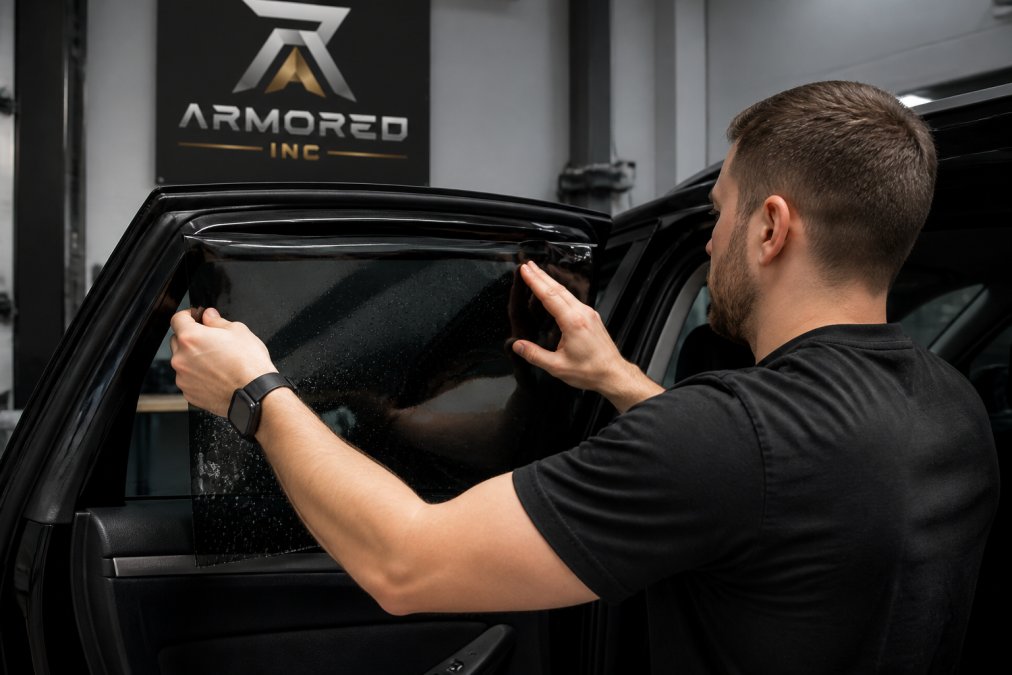
The installation process determines longevity more than the film itself. Professional installers use specialized tools to remove air bubbles, apply precise pressure, and ensure proper adhesion. They also allow adequate curing time, typically 3-7 days before rolling windows down, which lets the adhesive fully bond.
Common failure modes include bubbling, peeling at edges, and purple discoloration. Bubbles form when air gets trapped during installation; peeling occurs when adhesive fails at window seals; purple tint develops when UV-absorbing dyes degrade. All three issues are preventable with professional installation and proper film selection.
Climate affects lifespan. Vehicles in harsh environments, salt spray near coasts, extreme heat, or intense UV exposure at high elevations, experience faster degradation. Even quality films may show signs of wear after 8-10 years in these conditions. Temperate climates support 12-15 year lifespans more consistently. professional window maintenance.
Maintenance extends durability. Avoid rolling windows down during the curing period. After curing, use soft cloths and gentle cleaning products. Aggressive scrubbing or harsh chemicals can damage the film surface. Most professional installers provide care instructions; following them closely pays dividends.
Automotive Window Tinting Laws and Compliance
Window tint regulations vary by jurisdiction. In Ontario, visible light transmission (VLT) percentages define legal limits. VLT measures the percentage of visible light that passes through the tinted window; lower percentages mean darker tint.
For front side windows, the tint must allow at least 70% of light to pass through, meaning the tint cannot be darker than 30%. For the rear windshield and rear side windows, there are no restrictions on how dark the tint can be, provided the vehicle's side mirrors are both functional. Aftermarket tint is not allowed on the windshield, except for a sun visor strip at the top that may not extend more than 75mm from the top of the windshield.
Non-compliance carries penalties including fines and mandatory removal. Some insurance policies also exclude coverage for vehicles with illegal tint. Before choosing a darkness level, verify your local regulations. Professional installers know these requirements and can guide your selection to stay compliant.
Reflectivity also matters in some jurisdictions. Highly reflective films that mirror sunlight can be prohibited because they create glare for other drivers. Ceramic and carbon films generally avoid this issue, but metallic films sometimes cross the line.
One often-overlooked consideration: tint darkness affects nighttime visibility. Darker tint reduces your ability to see pedestrians and obstacles in low-light conditions. Balancing privacy and darkness against safety is a personal decision, but it's worth considering carefully.
Professional Installation vs. DIY: What You're Paying For
The cost difference between professional and DIY tinting is significant. Professional installation for a full vehicle runs higher than DIY film kits, but the premium covers expertise, materials, and durability guarantees.
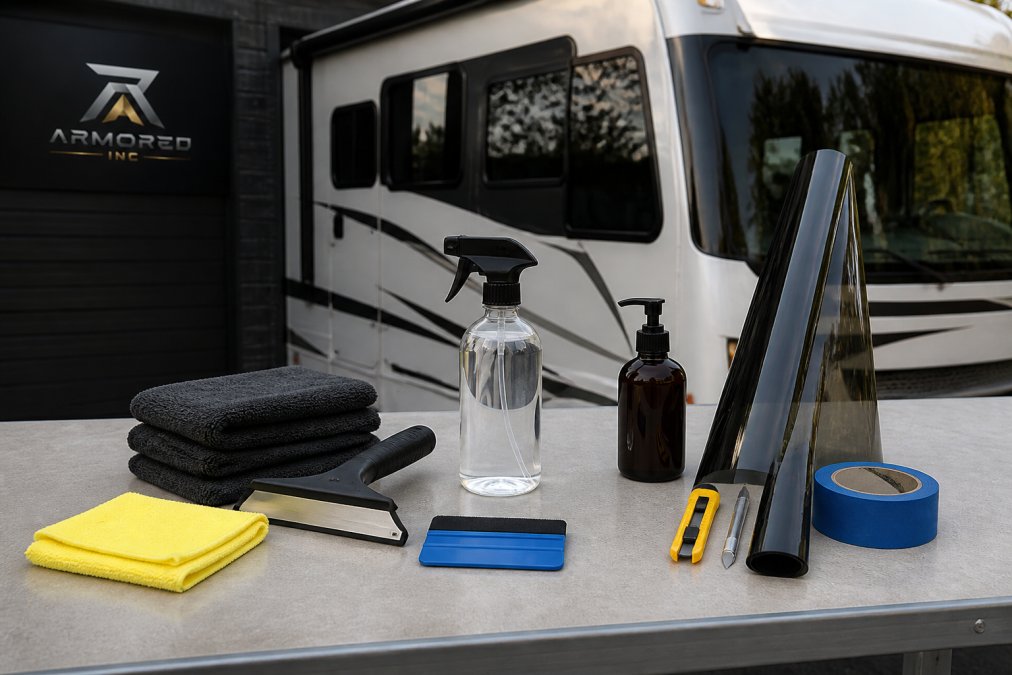
Professional installers bring skill developed across hundreds of installations. They understand how different window shapes require different cutting and application techniques. They have tools, heat guns, squeegees, spray bottles with precise solutions, that enable bubble-free application. They also provide warranty coverage, meaning if the film fails prematurely, they replace it at no cost.
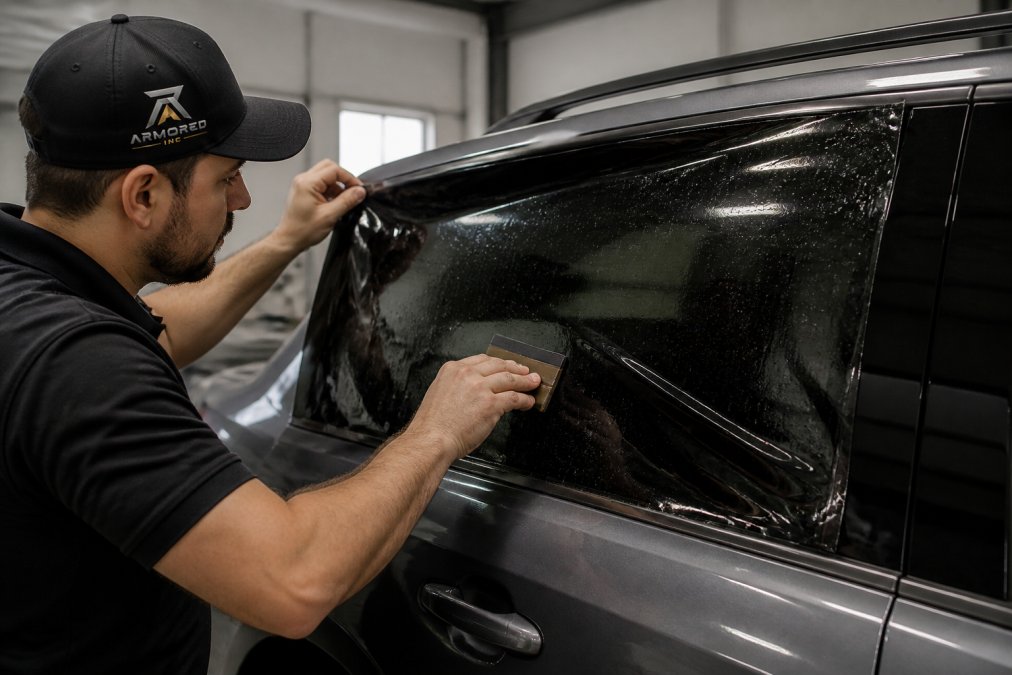
DIY kits offer affordability but sacrifice reliability. Pre-cut kits reduce complexity, but application remains challenging. Common mistakes include misalignment, trapped air bubbles, and improper pressure distribution. Even careful DIYers often achieve results that look acceptable initially but fail within 2-3 years as adhesive degrades or bubbles expand.
The labor component of professional pricing reflects years of training and the cost of operating a proper installation facility. Armored Inc., for instance, maintains climate-controlled bays where temperature and humidity are optimized for film adhesion. This controlled environment is difficult to replicate in a home garage.
Warranty coverage is another distinction. Professional installations typically include guarantees against defects and premature failure. DIY applications come with no recourse if the film fails. For luxury vehicles, this protection matters significantly, a failed tint job on a high-end paint finish creates additional repair costs.
| Aspect | Professional Installation | DIY Application | | --- | --- | | Application Quality | Bubble-free, precise alignment | Often contains bubbles, imperfect fit | | Durability | 10-15 years typical | 3-5 years typical | | Warranty | Manufacturer + installer coverage | Film warranty only, no installation guarantee | | Time Investment | 2-4 hours labor | 4-8 hours of personal time | | Tools Required | Specialized equipment | Basic tools, often improvised | | Curing Conditions | Climate-controlled facility | Ambient garage or driveway | | Resale Value | Adds value if quality is high | Questionable value if visible flaws exist |
For luxury vehicles, sports cars, or high-mileage daily drivers, professional installation justifies the cost. For secondary vehicles or budget-conscious buyers, DIY kits offer a lower-cost entry point, accepting the durability tradeoff.
Common Concerns and Misconceptions
Several myths persist about window tinting, often deterring people from making the investment. Addressing these directly helps clarify the real value proposition.
Tint always peels and bubbles. This belief stems from bad DIY experiences or low-quality dyed films. Professional ceramic installations rarely fail prematurely when applied correctly. The issue isn't tinting itself, it's poor installation or budget materials.
Tint interferes with GPS and cellular signals. This was true for older metalized films, but modern ceramic and carbon films are non-metalized and signal-transparent. GPS, cellular, and satellite radio all function normally. This concern is largely outdated.
Darker tint is always better. Darker tint offers more privacy and heat rejection, but it compromises nighttime visibility. The safest choice balances your privacy needs against your ability to see clearly in low-light conditions. Legal limits exist partly for this safety reason.
Professional tinting is overpriced. The cost reflects quality materials, skilled labor, warranty coverage, and durability. Comparing professional pricing to DIY kits ignores the performance and longevity gap. A 10-year lifespan versus a 3-year lifespan changes the cost-per-year calculation significantly.
All ceramic films are the same. Film quality varies. Premium brands like 3M Ceramic IR and XPEL PRIME XR offer superior performance compared to generic ceramic films. The difference shows in heat rejection percentages, optical clarity, and warranty terms.
Window tint reduces visibility too much. Modern films maintain excellent optical clarity. Even darker tints (35% VLT) allow clear daytime vision. Nighttime visibility is slightly reduced, but most drivers adapt quickly. The tradeoff between privacy and visibility is manageable for most applications.
Tint affects windshield safety. Windshields aren't typically tinted for this reason, the structural integrity of safety glass matters more than heat rejection at the front. Side and rear windows benefit from tinting without compromising safety features.
Is professional window tinting worth it? For most vehicle owners, the answer is yes. The combination of heat rejection, UV protection, interior preservation, and privacy creates measurable value over the film's 10-15 year lifespan. The upfront investment pays dividends through reduced HVAC strain, preserved interior condition, and enhanced comfort.
Armored Inc. specializes in professional window tinting that combines premium ceramic films with expert installation. Our team ensures precise application, optimal curing conditions, and warranty coverage that protects your investment. If you're considering window tinting for your vehicle, contact us for a consultation and quote tailored to your specific needs and local compliance requirements.
Frequently Asked Questions
Is professional window tinting worth the money compared to DIY kits?
Professional window tinting delivers superior results because certified technicians ensure proper film adhesion, eliminate bubbles and wrinkles, and apply films with precise VLT percentages that comply with local regulations. DIY kits often result in peeling, bubbling, and poor heat rejection within months. Professional installations come with warranties and use premium ceramic films that reject up to 98% of infrared heat, while DIY films typically perform significantly worse. The durability difference alone justifies the professional investment, quality ceramic tint lasts 10+ years, whereas DIY applications often fail within 2-3 years.
How long does window tint last on a vehicle?
Professional-grade ceramic window tint typically lasts 10 to 15 years or longer with proper care. Carbon and dyed films last 5 to 10 years, while low-quality DIY films often fail within 2 to 3 years due to peeling, fading, or bubbling. The lifespan depends on film quality, installation precision, climate exposure, and maintenance. Ceramic films resist fading and maintain optical clarity far longer than traditional dyed or carbon options. Regular washing and avoiding extreme heat exposure extend durability. Many professional installers back ceramic films with lifetime warranties against bubbling, peeling, and cracking.
What are the legal restrictions on window tint darkness?
Regulations on visible light transmission (VLT) percentages vary by province. Most provinces allow rear and side windows to be tinted to 35% VLT or darker, while front windshields typically cannot be tinted below 70% VLT to maintain safe visibility for the driver. Some provinces impose stricter limits. It's essential to verify your specific provincial regulations before installation, as non-compliant tint can result in fines or mandatory removal. Professional installers understand these legal requirements and ensure your tint meets all local standards.
Does ceramic window tinting provide better heat rejection than standard film?
Yes, ceramic window tint significantly outperforms standard dyed or carbon films in heat rejection. Ceramic films block up to 95-98% of infrared radiation, compared to 50-70% for carbon films and even less for dyed options. This superior performance reduces interior cabin temperature by 10-15°C on hot days, lowering air conditioning load and improving comfort. Ceramic films also maintain optical clarity without the reflective appearance of metallic films, making them ideal for luxury vehicles. The non-metallic construction ensures no interference with GPS, cellular, or satellite signals, unlike older film technologies.
Will professional window tinting protect my vehicle interior from UV damage?
Professional window tinting blocks 99-99.9% of harmful ultraviolet rays, preventing interior fading, cracking, and deterioration of dashboard materials, upholstery, and leather. This protection is especially valuable for luxury vehicles and sports cars where interior preservation directly affects resale value. UV protection also safeguards occupants by reducing skin damage risk during extended driving. Ceramic films maintain this UV protection for 10+ years without degradation, making them a long-term investment in both vehicle condition and occupant health.
This article was written using GrandRanker