 how-to
Ceramic Window Tint in Barrie: Cost, Laws, and Curing
Table of Contents
- Why Ceramic Window Tint in Barrie Outperforms Standard Dyed Films
- Ceramic vs. Carbon Window Tint: What Actually Differs
- Ontario Window Tint Laws: What Barrie Drivers Need to Know
- Ceramic Window Tint Cost in Barrie: What Affects the Price
- Window Tint Curing Time: What to Expect After Installation
- How to Choose a Ceramic Window Tint Installer in Barrie
- Frequently Asked Questions
Last Updated: October 9, 2026
Why Ceramic Window Tint in Barrie Outperforms Standard Dyed Films
Ceramic window tint is a non-metal, ceramic-particle film that blocks heat and UV rays without interfering with electronics or fading to purple. For Barrie drivers, it handles the two things this region throws at a car every year: intense summer sun and a long, bright winter of snow glare. This guide from Armored Inc. covers what ceramic film actually does, how it compares to carbon, what Ontario law allows, how curing works, and how to pick an installer in Barrie who won't leave you with peeling film in two years.
Here's the part most people get wrong. They shop on darkness, not on heat rejection.
Dyed film is the cheapest option on the shelf, and it shows. The dye absorbs heat until it saturates, then it fades, turns purple, and stops doing much of anything. Ceramic film works differently. It's built from nano-ceramic particles that reject infrared heat rather than soak it up, so it keeps performing year after year.
For a Barrie driver, that matters in three ways:
- Summer heat stays outside, so the cabin cools faster
- UV protection helps stop dashboard cracks and fading
- No metal content, so GPS, cell, and toll signals pass through clean
If you want the full picture of what's available, our window tinting service covers the film options we install.
Ceramic vs. Carbon Window Tint: What Actually Differs
The short answer: carbon film blocks heat by absorbing it, while ceramic film rejects it. Carbon is a solid mid-tier choice with a matte black look and no signal issues. Ceramic sits above it on heat rejection and long-term clarity.
Here's the practical breakdown:
- Carbon film: absorbs heat, matte finish, mid-range price, holds up well over time
- Ceramic film: rejects infrared heat, clearer from inside, top-tier price, best glare control
Neither one uses metal, so both are safe for modern electronics. The gap shows up on a hot day. A carbon-tinted car still warms up noticeably. A ceramic-tinted car stays cooler, and the difference is easy to feel within the first minute of driving.
What most guides miss is the clarity factor. Ceramic film tends to look clearer from the inside, which matters at night and in Barrie's long winter dusk. You get the heat and glare control without a muddy view.
Ontario Window Tint Laws: What Barrie Drivers Need to Know
Ontario sets tint limits by how much light passes through the glass, measured as visible light transmission. The rules differ for the front side windows versus the rear, and enforcement happens at the roadside.
The key points Barrie drivers ask about:
- Front side windows must let enough light through to stay legal
- Windshields have their own restrictions
- Rear windows are treated differently from the front
Because the exact percentages and enforcement details can change, and because they're set by the province, check the current rules before you book. The Ontario Highway Traffic Act and Ministry of Transportation guidance is the source that actually governs what you can run on Barrie roads. Your installer should know these limits cold and refuse to go illegal, even if you ask.
A good shop will tell you what's legal before the film goes on. A bad one will sell you whatever you point at.
Ceramic Window Tint Cost in Barrie: What Affects the Price
Ceramic window tint cost in Barrie depends on four things: the size and number of windows, the film grade, whether old film needs removing, and the shop's labor quality. There's no single number, and any quote that ignores these factors is guessing.
What moves the price:
- Vehicle size. A coupe has fewer windows than a full-size SUV or truck.
- Film grade. Entry ceramic and premium ceramic are not the same product.
- Old film removal. Peeling or bubbling tint has to come off first, and that's skilled labor.
- Window count and shape. Curved rear glass and small quarter windows add time.
For a current quote, contact us and we'll price your specific car.
Here's the thing nobody tells you about the cheap quote. If a price looks half of everyone else's, ask what film they're using. It's almost always dyed, not ceramic. You're not getting a deal. You're getting a different product.
Window Tint Curing Time: What to Expect After Installation
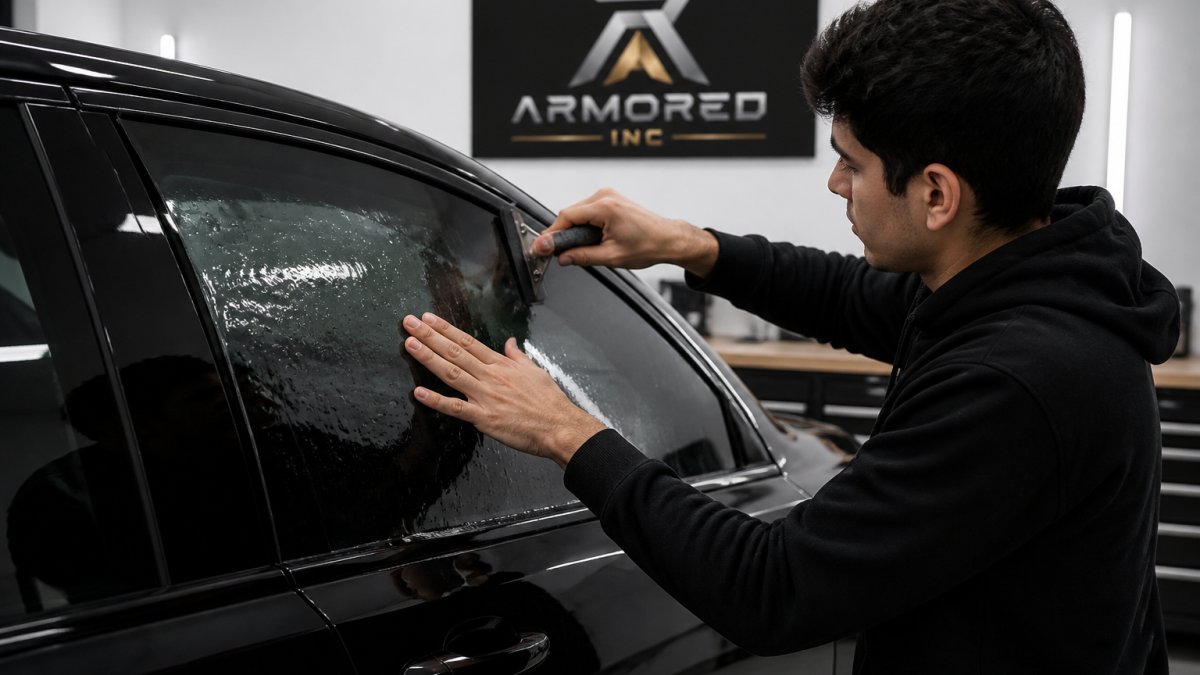
Window tint curing time is how long the film takes to fully bond to the glass and push out the moisture trapped during installation. For most ceramic films, that's roughly one to two weeks, though it can run longer in cool, damp weather.
Expect a few things during that window:
- Small water bubbles or a hazy look are normal at first
- They should shrink and disappear as the film dries
- Don't roll down tinted windows for the first few days
- Park in the sun when you can, since heat helps the cure
Barrie's cold snaps slow curing down, so a job done in deep winter may take longer than one done in July. That's normal, not a defect.
What you should NOT see: large bubbles that never move, peeling edges, or a purple color shift. Those are installation or film-quality problems, not curing. If they show up, call the shop.
How to Choose a Ceramic Window Tint Installer in Barrie
The best ceramic window tint installer in Barrie is the one who names their film brand, shows you their work, and tells you the legal limits without you asking. Everything else is marketing.
Use this checklist before you book:
- They name the specific film brand and grade they install
- They confirm Ontario's legal limits for each window
- They show finished work or a portfolio you can inspect
- They explain the curing process and aftercare
- They offer a written warranty on film and labor
- They remove old film properly, not over top of it
- They have a clean, dust-controlled install space
A shop that can't answer these is a gamble. Tint fails for one reason above all: poor installation in a dirty bay. Dust and bad prep cause the bubbles and peeling people complain about years later.
That's where Armored Inc. fits. We install ceramic window tint in Barrie with a focus on clean prep and film that holds up. We also offer mobile service and valet options, so getting your car tinted doesn't eat your whole day. If you're also protecting paint, our ceramic coating service pairs well with tint for full exterior protection.
For drivers searching "ceramic window tint near me" in Barrie, the deciding factor isn't the film alone. It's who installs it.
| What to Check | Why It Matters | Red Flag |
|---|---|---|
| Film brand named | Confirms real ceramic, not dyed | "Premium film" with no name |
| Legal limits confirmed | Keeps you road-legal | "We'll make it as dark as you want" |
| Work shown | Proves real experience | No portfolio or references |
| Written warranty | Covers film and labor | Verbal promises only |
| Clean install bay | Prevents dust and bubbles | Outdoor or dusty workspace |
Ceramic tint is only as good as the hands that install it, and Barrie's climate is hard on a bad job. If you want film that rejects heat, holds its clarity, and stays legal, get it done right the first time.
At Armored Inc., we install ceramic window tint with careful prep, name-brand film, and options that fit your schedule, including mobile service and valet. We also handle ceramic coatings and paint protection film if you want the full package.
Get started with Armored Inc. and protect your cabin from Barrie's sun and snow glare with tint that lasts. Contact us for a quote on your vehicle.
Frequently Asked Questions
What is ceramic window tint and how is it different from regular tint?
Ceramic window tint uses nano-ceramic particles instead of dyes or metals to block heat and UV rays. Unlike standard dyed films, it won't fade, bubble, or interfere with GPS, cell, or radio signals. In Barrie's summer heat, ceramic film rejects a substantial share of solar heat while staying clear from the inside, so night driving stays sharp. It also blocks most UV radiation, which protects your interior from cracking and fading.
Is ceramic window tint worth the extra cost compared to carbon tint?
It depends on your priorities. Carbon tint blocks heat and UV well and never fades, but ceramic tint outperforms it on heat rejection and clarity. If you park outside or drive long highway stretches, ceramic window tint cost is usually justified by better cabin comfort and no signal interference. If budget is the main driver and you want a matte look, carbon is a solid middle ground.
How long does window tint curing time take in Barrie's climate?
Curing typically takes three to seven days in warm weather, but Barrie's cold winters can stretch that to two weeks or more. During curing, you may see a slight haze or tiny water pockets. Don't roll down your windows for at least 48 hours, and avoid washing the inside of the glass for a week. Park in the sun when you can to speed up the process.
What window tint is legal in Ontario?
Ontario's Highway Traffic Act requires at least 70 percent light transmission through the front windshield and front side windows. Rear windows and rear windshield have no minimum, but you cannot tint them with red or blue film. Reflective mirror tints are also restricted. Always confirm current rules before booking, and ask your installer for a film that meets the 70 percent threshold on front glass.