 blog
7 Best Residential Countertop Protection Methods for Rentals
Last Updated: October 31, 2026
Quick Summary
The best countertop protection for rentals is a removable peel-and-stick film or fitted mat, which shields the surface without permanent alteration and lifts off without residue when done correctly. Match the method to the material: clear film suits quartz, breathable mats suit granite and marble, and silicone mats plus mineral oil suit laminate and butcher block.
- Clean and degrease the surface completely before applying any film, or edges will lift and trap grit.
- Quartz is non-porous and resists stains, but sliding a heavy pot can leave a dull scuff needing professional attention.
- Never leave a non-breathable film on granite for more than a few weeks, since trapped moisture can cloud the sealer.
- Get written landlord consent before any permanent coating or adhesive film goes down in a rental.
- Photograph counter condition at move-in and move-out to distinguish normal wear from damage.
Table of Contents
- Why Rental Kitchens Need a Different Protection Strategy
- Best Countertops for Rental Properties and How They Handle Wear
- 1. Removable Countertop Cover for Renters: Films and Mats
- 2. Countertop Protective Coating: Professional-Grade Sealing
- 3. How to Prevent Scratches on Countertops With Daily Habits
- 4. Temporary Protection Methods Ranked by Countertop Material
- 5. Tenant-Landlord Responsibilities and Permission for Surface Changes
- 6. Installation, Removal, and Damage Risk for Each Method
- Frequently Asked Questions
Why Rental Kitchens Need a Different Protection Strategy
Rental kitchens take more abuse per square foot than almost any room in a home. Tenants come and go, cleaning habits vary wildly, and nobody treats a rental countertop the way they treat one they own. That is why countertop protection in a rental follows different rules than it does in an owner-occupied home. Surface protection for rental properties has to be planned around one constraint: whatever you install has to come off cleanly.
The math is simple. A countertop that survives a decade of turnover protects your long-term value. One that etches, chips, or stains becomes a renovation line item between tenants. Below, we rank seven countertop protection methods by how well they hold up in a rental, what they cost in effort and risk, and which materials they suit.
Best Countertops for Rental Properties and How They Handle Wear
The best countertops for rental properties balance durability against replacement cost. Quartz and granite resist wear well but carry higher upfront prices, while laminate and butcher block cost less and demand more care. The right pick depends on how much turnover you expect and who maintains the surface between tenants.
Quartz, Granite, Laminate, and Butcher Block Compared
| Material | Scratch Resistance | Stain Resistance | Heat Resistance | Maintenance |
|---|---|---|---|---|
| Quartz | High | High, non-porous surface | Moderate, needs trivets | Low |
| Granite | High | Moderate, porous stone needs sealing | High | Periodic sealing |
| Laminate | Moderate, chips at edges | High on sealed surfaces | Low | Low |
| Butcher block | Low, scratches easily | Low without oiling | Low | Regular mineral oil |
Quartz wins on stain resistance because the surface is non-porous. For a closer look, see this stain resistance comparison: marble vs quartz countertops. How to Protect Quartz Countertops From Heat Stains covers heat and stain handling before you commit. Granite handles heat better but needs sealer reapplied. Laminate is the budget option, though edges chip. Butcher block looks warm but scratches and stains without consistent oiling.
1. Removable Countertop Cover for Renters: Films and Mats
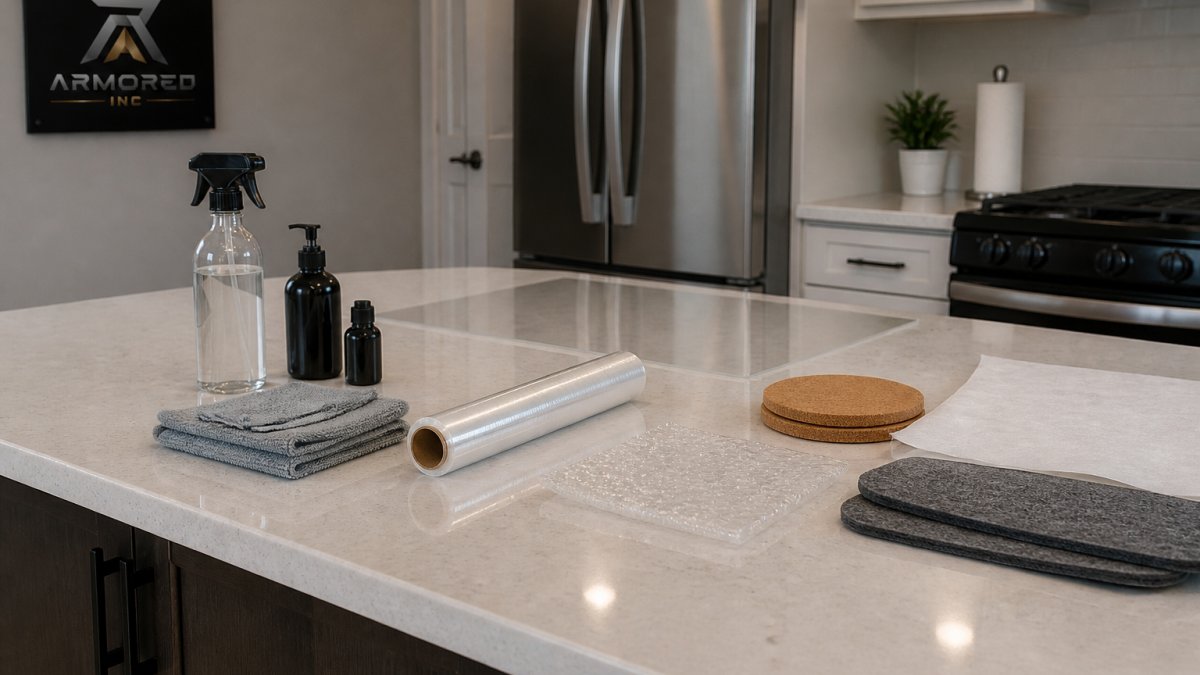
A removable countertop cover for renters is a peel-and-stick film or fitted mat that shields the surface without permanent alteration. Renters can view the Peelclear product page for peelable protective film. It is the single best option when a lease forbids permanent changes, because it lifts off without residue when done correctly.
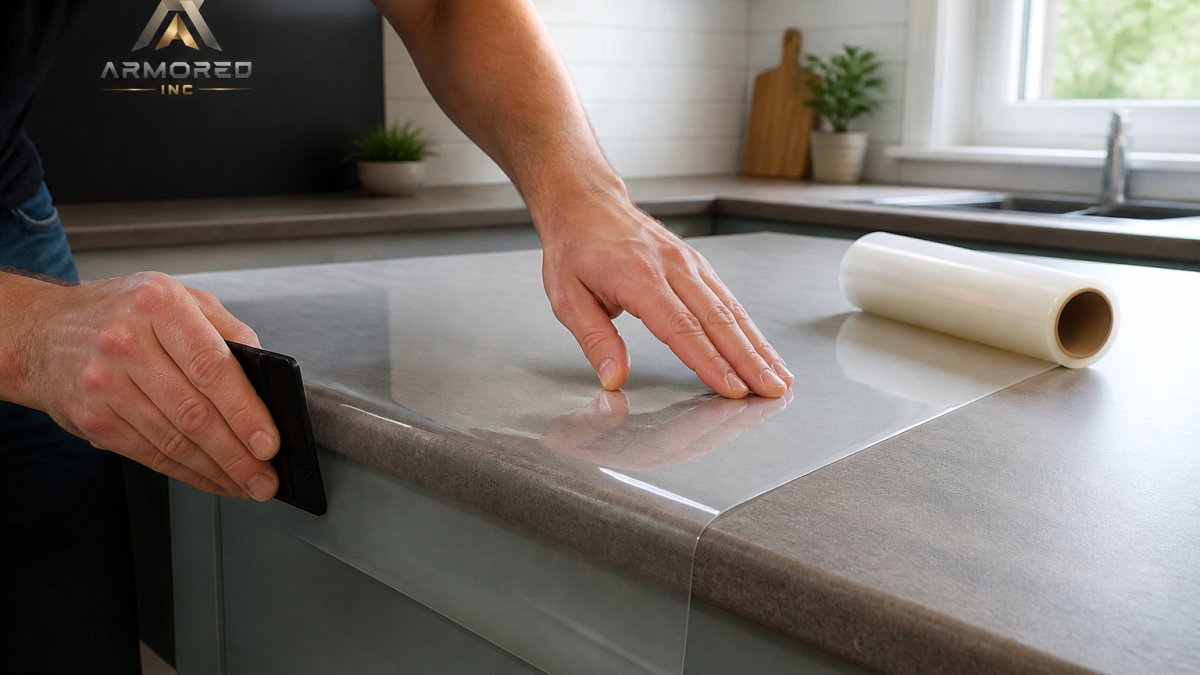
Here is how we would approach it:
- Clean and degrease the surface completely before application
- Apply film from one edge, smoothing air bubbles as you go
- Trim edges with a sharp blade against a straight edge
- Replace mats near the sink and stove more often, since heat and water shorten their life
Pros: reversible, renter-friendly, no landlord permission needed in most cases. Cons: film can lift at edges over time, and heat near the stove degrades it faster.
2. Countertop Protective Coating: Professional-Grade Sealing
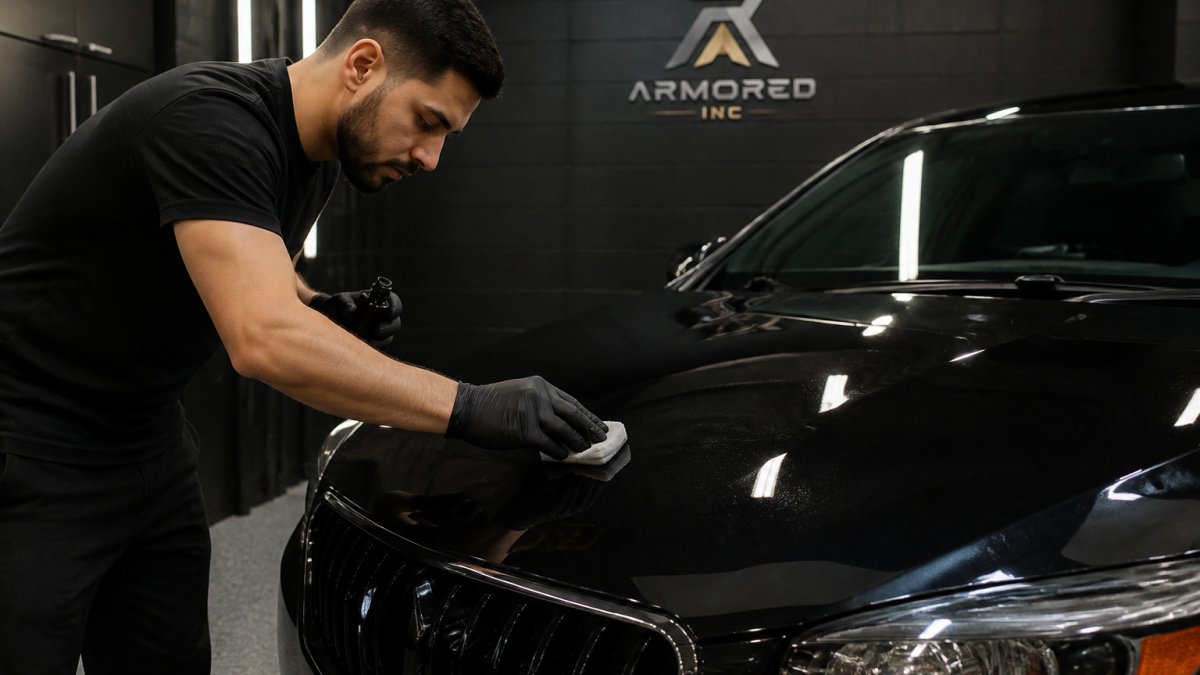
A countertop protective coating is a professionally applied sealer or film-forming layer that bonds to the surface and resists stains, moisture, and everyday wear. It lasts far longer than a peel-off film, which makes it attractive for landlords planning to hold a property long term.
Professional application matters here. A coating applied over a poorly cleaned surface traps grime and fails early. On porous stone like granite, sealing is close to mandatory; on quartz, a coating adds a sacrificial layer that takes the wear instead of the stone. For a dedicated countertop option, ceramic coatings offer a durable, low-maintenance layer once cured.
Pros: durable, low maintenance once cured. Cons: permanent, requires professional application, and not reversible.
3. How to Prevent Scratches on Countertops With Daily Habits
You prevent scratches on countertops by controlling what touches the surface, not by buying more products. A cutting board used every time, felt pads under small appliances, and a habit of lifting rather than sliding dishes eliminate most scratch damage before it starts.
The habits that matter most:
- Always use a cutting board, never cut directly on the counter
- Lift the coffee maker and mixer instead of dragging them
- Keep a trivet within reach of the stove
- Wipe up grit and crumbs, which act like sandpaper under a sliding pot
Watch out: sliding a heavy pot across a quartz surface can leave a dull scuff that no cleaner removes. That is abrasion, not a stain, and it needs professional attention.
4. Temporary Protection Methods Ranked by Countertop Material
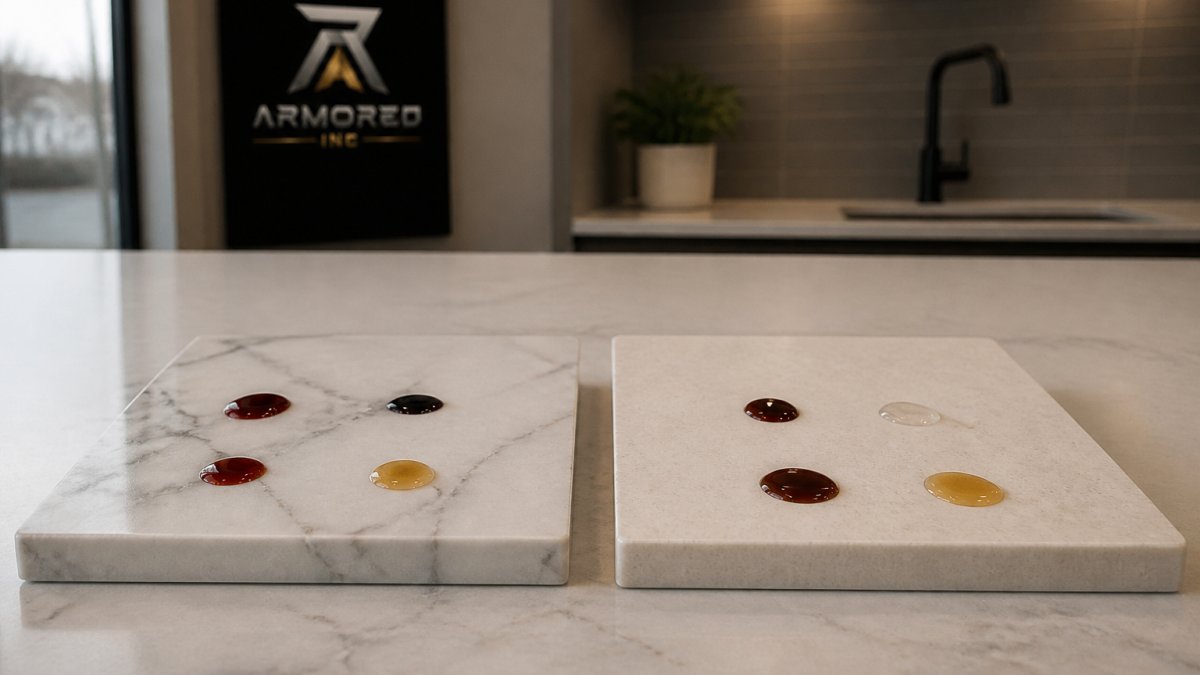
Temporary protection only works when it matches the material underneath. A method that suits laminate can stain butcher block, and a film that protects quartz can trap moisture on porous granite and leave a haze that needs professional polishing. The table below ranks reversible methods by material, then explains the mechanism behind each match and the Barrie rental context that affects the choice.
| Material | Best Temporary Method | Why It Works | Avoid | Approx. Cost (CAD) |
|---|---|---|---|---|
| Quartz | Clear removable film or fitted silicone mat | Non-porous surface means film adheres predictably and lifts cleanly | Abrasive cleaners and scouring pads that dull the resin finish | $25-$60 per mat; $40-$120 per film roll |
| Granite | Breathable cotton or silicone mat plus periodic sealer | Porous stone needs to breathe; sealed film can trap moisture and cloud the sealer | Non-breathable adhesive film left for months | $20-$50 per mat; sealer $30-$80 per bottle |
| Laminate | Silicone mat near sink and stove; felt pads under appliances | Heat and water are the main failure modes; silicone spreads heat and blocks water | Hot pans directly on the surface; adhesive films on low-grade laminate | $15-$40 per mat; $10-$20 per pack of pads |
| Butcher block | Mineral oil plus cutting-board discipline; breathable mat | Wood needs oil to repel water; trapped moisture causes warping and black stains | Bleach-based cleaners and standing water; non-breathable film | Mineral oil $10-$25 per bottle |
| Marble | Fitted felt-backed mat; coasters and trivets | Acid-sensitive surface etches from wine, citrus, and vinegar; mat blocks contact | Adhesive film on honed marble; acidic cleaners | $30-$70 per mat |
How to read the ranking. The safest reversible method is the one that blocks contact without sealing the surface. On non-porous quartz, a clear film is low-risk because there is no moisture exchange to worry about.
Barrie rental context. Many older rental units still have original laminate or butcher block rather than quartz. In winter, salt and grit tracked in from the hallway act like sandpaper under a sliding pot, so a mat by the entry-side counter and a habit of wiping grit before sliding anything matters more here than in a new-build.
What to avoid on each surface. Never use abrasive cream cleanser on quartz or laminate, it dulls the finish permanently. Never use vinegar or citrus cleaner on marble or granite sealer. Never leave a non-breathable film on granite for more than a few weeks. Never use bleach on butcher block.
In general, non-porous surfaces win on stains, porous stone needs sealing, and wood needs oil.
5. Tenant-Landlord Responsibilities and Permission for Surface Changes
Permission for surface changes should be settled in writing before any permanent protection goes down. Both sides should confirm obligations in the lease rather than assume. Permanent coatings and films generally need landlord consent. See why commercial property interior protection is necessary for context on surface changes.
The practical split:
- Tenant: daily habits, removable protection, reporting damage promptly
- Landlord: structural surfaces, permanent sealing, replacement decisions
- Both: a written record of condition at move-in and move-out
6. Installation, Removal, and Damage Risk for Each Method
Installation and removal risk separates the methods more than cost does. A $40 film that lifts cleanly after two years is cheaper than a $400 coating that fails and takes the finish with it. The table below compares realistic install time, removal difficulty, residue risk, and the damage scenario most likely to occur in a Barrie rental.
| Method | Install Time | Removal | Residue Risk | Most Likely Damage Scenario |
|---|---|---|---|---|
| Removable film | 30-60 min per counter run | Peel by hand; adhesive remover for edges | Low if removed within 12-24 months | Lifted edges trap crumbs; heat near stove degrades adhesive |
| Fitted mat | Under 5 min | Lift and wash | None | Water trapped under mat if not dried weekly |
| Professional coating | Half day, cured 24-48 hrs | Effectively permanent | Not applicable | Applied over cleaner residue; fails early and looks cloudy |
| Granite sealer | 30-60 min plus cure | Wears off over 6-12 months | Haze if over-applied | Over-application leaves streaks; needs redo |
| Daily habits | None | Not applicable | None | Tenant inconsistency; damage happens silently |
Removal reality check. Films are marketed as residue-free, but that holds only if the surface was degreased before application and the film is removed within the manufacturer's stated window. Left longer, adhesive can transfer to the counter and require a solvent-based remover that itself needs testing on an inconspicuous spot.
Damage risk by material. On quartz, the main risk is a dull scuff from sliding a heavy pot, abrasion, not a stain, and it needs professional attention. On granite, trapped moisture under a non-breathable film can cloud the sealer and require stripping and resealing.
Barrie-specific notes. Winter grit and road salt tracked into a rental act as an abrasive under anything that slides, so mats near entry-side counters wear faster and should be rinsed weekly.
A common mistake. Applying film over a surface that still has cleaner residue. It looks fine for a week, then lifts at the edges and traps grit. Degrease, rinse, and let the surface dry fully before any adhesive goes down.
Frequently Asked Questions
How can I protect countertops in a rental property without permanent changes?
Removable films, silicone mats, and cutting boards offer reversible countertop protection without altering the surface. Clear static-cling films peel off cleanly, while silicone mats grip without adhesive. For a longer-term option, ask your landlord about a professional ceramic coating, which bonds to the surface and adds a durable layer that resists stains and scratches. Always confirm permission before applying any adhesive or coating, and document the countertop's condition with photos before and after.
What is the most durable countertop option for a rental?
Quartz and porcelain rank among the most durable choices for rental kitchens. Quartz is non-porous, resists stains and scratches, and needs no sealing. Granite is similarly hard-wearing but porous, so it requires periodic sealing to prevent water and oil damage. Laminate costs less upfront but is vulnerable to heat and chipping. For landlords weighing upfront cost against long-term value, quartz often delivers the best return by reducing replacement and repair expenses between tenants.
Are countertop covers removable without damaging the surface?
Yes, most removable countertop covers for renters are designed to lift off without residue. Static-cling films, silicone mats, and fabric runners leave no adhesive behind when removed correctly. Avoid covers with strong permanent adhesives, which can pull up laminate layers or leave sticky residue on sealed stone. Before applying any film, clean and dry the surface thoroughly, and test a small corner first. When removing, peel slowly at a low angle to reduce the risk of lifting sealant or finish.
Can you put a protective coating on a countertop?
Professional ceramic coatings can add a durable, low-maintenance layer to countertops. For rentals, get written landlord approval first, since coatings are semi-permanent.
Rental countertops fail from small, repeated damage, not one big event. If you want a surface protection plan that holds up through turnover, Armored Inc. offers professional interior coatings, mobile service, and flexible scheduling across Barrie and the surrounding area. Get started with Armored Inc. and protect your countertops before the next tenant moves in.