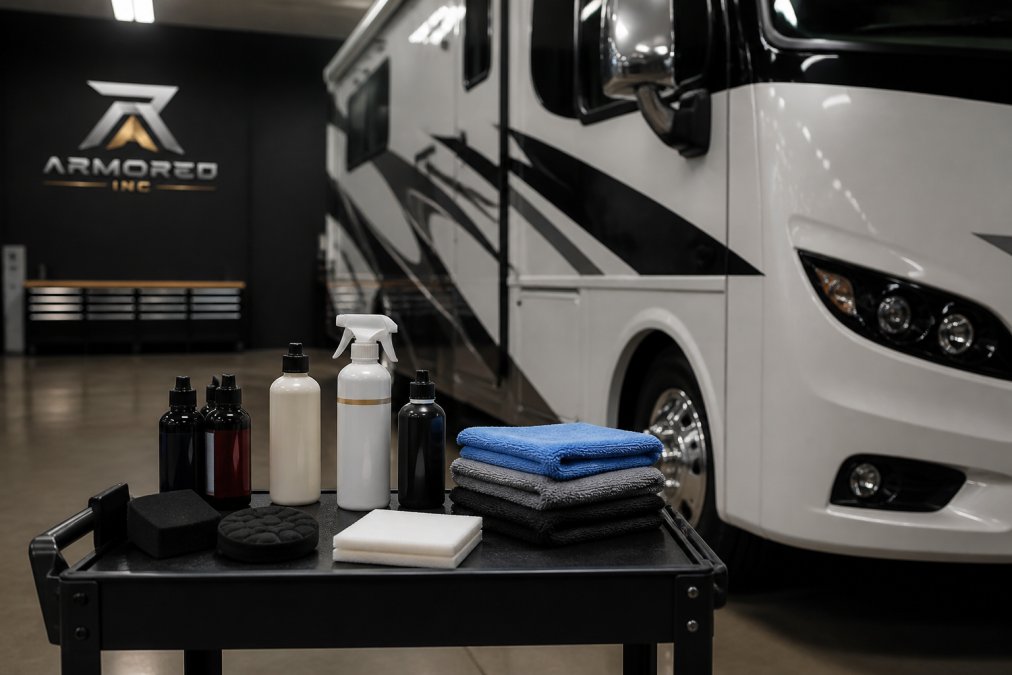
 comparison
RV Paint Protection Alternatives to Traditional Waxing
Table of Contents
- Why RV Owners Move Beyond Traditional Waxing
- Ceramic Coating for RVs: Long-Term Protection and Durability
- How Long Does Ceramic Coating Last on an RV
- RV Paint Protection Film Benefits and Performance
- Synthetic Sealants and Graphene Coatings as Wax Alternatives
- Ceramic Coating vs. Traditional Wax: Key Differences for RV Owners
- Choosing the Right Protection for Your RV Investment
- Frequently Asked Questions
Last Updated: September 22, 2026
Why RV Owners Move Beyond Traditional Waxing
RV paint protection alternatives have become essential for owners in Barrie and across Ontario who want durability that extends far beyond what traditional carnauba wax delivers. The shift away from conventional waxing isn't about abandoning a proven method, it's about recognizing that RVs face unique environmental challenges that standard wax simply cannot handle over extended periods.
Traditional wax requires reapplication every 3-6 months, which means constant maintenance cycles and repeated costs. More importantly, it offers limited protection against UV rays, salt spray, and the chemical fallout that accumulates on exterior surfaces. For RV owners who park their vehicles seasonally or use them year-round, this becomes a significant liability.
Modern RV paint protection alternatives solve this problem by creating barriers that last months or years instead of weeks. These solutions range from ceramic coatings that bond at a molecular level to synthetic sealants and paint protection films that shield against physical damage. Each option addresses specific pain points: some prioritize gloss and hydrophobic properties, others focus on scratch resistance, and some deliver both with minimal maintenance.
At Armored Inc. in Barrie, we've worked with RV owners who were frustrated with the constant waxing cycle. Understanding your options helps you choose the right solution for your investment and your lifestyle.
Ceramic Coating for RVs: Long-Term Protection and Durability
Ceramic coating for RVs represents a fundamental shift in how protective barriers work. Unlike wax that sits on the surface, ceramic coatings chemically bond to the clear coat, creating a hard, glass-like layer that becomes part of the paint structure itself.
This bonding process is what gives ceramic coatings their durability advantage. Once cured, they resist UV rays far more effectively than any wax alternative. The hydrophobic properties mean water beads and rolls off rather than pooling, which prevents mineral deposits and reduces water spotting, a critical benefit for RVs stored outdoors.
The real value emerges over time. While initial application costs are higher than wax, the extended lifespan means fewer reapplications. Most ceramic coatings maintain their protective properties for 2-5 years depending on the product grade and environmental exposure. In Barrie's climate, with seasonal temperature swings and winter salt exposure, this longevity offers significant benefits.
Ceramic coatings also enhance the visual appeal. They amplify gloss and depth in the paint, giving RVs that showroom finish long after purchase. The self-cleaning effect, where dirt and grime release more easily, reduces the frequency of full washes needed to maintain appearance.
The tradeoff is application complexity. Ceramic coating requires thorough surface preparation, including paint correction to remove existing oxidization and contamination. This is why professional installation is typically recommended rather than DIY application.
How Long Does Ceramic Coating Last on an RV
The lifespan of ceramic coating on an RV typically ranges from 2-5 years, though this varies based on several factors. Professional-grade coatings generally last longer than consumer-grade spray products, with premium formulations sometimes extending to 7 years under ideal conditions.
Climate plays a major role. RVs in Ontario experience significant seasonal stress, intense UV exposure in summer, salt spray from winter road treatment, and temperature fluctuations that cause paint expansion and contraction. These environmental pressures accelerate coating degradation compared to vehicles stored in climate-controlled garages.
Maintenance directly impacts longevity. Coatings that receive regular maintenance, proper washing with pH-neutral products, occasional ceramic booster applications, and protection from harsh chemicals, consistently outlast neglected ones. An RV that sits unused for months without protective measures will see coating performance decline faster than one that's actively maintained.
Application quality determines baseline durability. Ceramic coatings applied by technicians with proper equipment and controlled conditions offer optimal results. The curing process requires specific temperature and humidity ranges that professional facilities maintain. Maintaining this level of environmental control ensures the coating bonds effectively, much like the precision required when integrating campervan equipment upgrades to optimize energy independence.
RV Paint Protection Film Benefits and Performance
Paint protection film (PPF) addresses a different protection priority than ceramic coatings: physical damage. While ceramic coatings excel at UV and chemical resistance, PPF shields against scratches, rock chips, and abrasion from road debris, the daily wear that degrades paint clarity and finish.
PPF is a transparent urethane layer applied to vulnerable areas: the front bumper, hood, fenders, and headlight surrounds. On RVs, it protects high-impact zones that encounter road spray, gravel, and debris more frequently than standard vehicles. The film absorbs impact energy, preventing chips from reaching the underlying paint.
Modern PPF formulations include self-healing properties. Minor scratches and swirl marks disappear as the material softens slightly in warm conditions, essentially "remembering" its original surface. This capability distinguishes current PPF from older versions that remained permanently marked.
The hydrophobic nature of quality PPF also contributes to protection. Water beads on the film surface rather than pooling, which prevents water spots and mineral deposits from accumulating on protected areas. Combined with ceramic coating applied over the film, this creates a multi-layer defense system.
Installation requires precision. PPF must be cut and applied to match the exact contours of your RV's exterior. Professional installers use heat and specialized tools to ensure edges seal properly and the film adheres without bubbles or wrinkles. Improper installation leads to peeling, water infiltration, and premature failure.
Synthetic Sealants and Graphene Coatings as Wax Alternatives
Synthetic sealants occupy the middle ground between traditional wax and ceramic coatings. They deliver protection that outlasts wax without the complexity and cost of full ceramic installation. Synthetic sealants combine natural carnauba with synthetic polymers, creating a formula that bonds more durably than pure wax while remaining easier to apply.
These hybrid sealants typically last 4-6 months, significantly longer than carnauba wax but shorter than ceramic coatings. They provide genuine hydrophobic properties and UV protection without requiring professional installation. For RV owners who want something better than traditional wax but prefer DIY application, hybrids offer practical value.
Graphene-based coatings represent the newer frontier in this category. Graphene oxide enhances durability and heat resistance beyond what conventional sealants achieve. Graphene-based coatings apply as easily as a spray, making them accessible to DIY users while delivering enhanced performance.
The appeal of graphene coatings lies in their versatility. They work on paint, glass, trim, and plastic surfaces, allowing comprehensive protection with a single product. The spray application means no buffing or polishing required, just spray, let cure, and you're done.
Durability for graphene sprays typically ranges from 3-6 months, making them a middle-ground option. They're not as long-lasting as ceramic coatings, but they're significantly more durable than traditional wax and easier to reapply when needed.
| Product Type | Lifespan | Application Difficulty | Cost per Application | Best For |
|---|---|---|---|---|
| Traditional Carnauba Wax | 3-6 months | Easy | Low | Budget-conscious owners accepting frequent reapplication |
| Synthetic Sealant | 4-6 months | Easy | Moderate | DIY enthusiasts wanting better durability than wax |
| Graphene Spray Coating | 3-6 months | Very Easy | Moderate | Quick protection with minimal effort |
| Ceramic Coating | 2-5 years | Professional | High | Long-term protection and minimal maintenance |
| Paint Protection Film | 5-10 years | Professional | High | Physical damage prevention on high-impact areas |
Ceramic Coating vs. Traditional Wax: Key Differences for RV Owners
The fundamental difference between ceramic coating and traditional wax comes down to bonding mechanism and longevity. Wax sits on the paint surface as a removable layer that gradually degrades and washes away. Ceramic coating chemically bonds to the clear coat, becoming a semi-permanent protective layer that doesn't wash off or degrade uniformly.
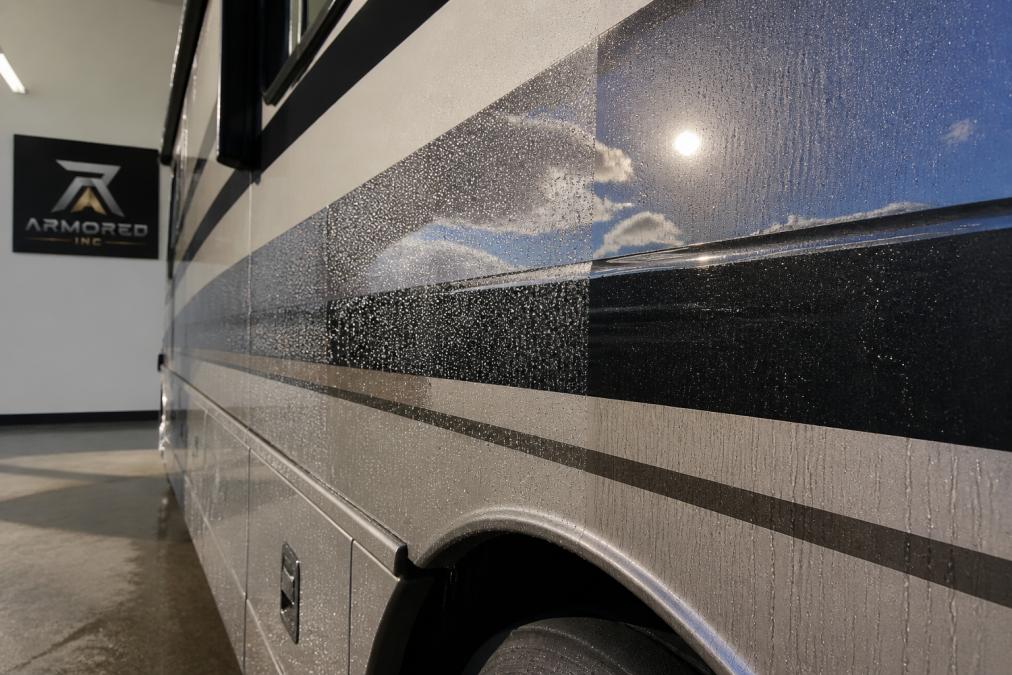
This bonding difference creates cascading advantages.
Choosing the Right Protection for Your RV Investment
Selecting the right RV paint protection depends on your priorities, budget, and long-term ownership plans. Start by assessing your RV usage. Year-round owners in harsh climates benefit most from ceramic coating's durability. Seasonal owners might find synthetic sealants sufficient. Those concerned about physical damage should prioritize paint protection film.
Frequently Asked Questions
How does ceramic coating compare to traditional RV wax?
Ceramic coating creates a semi-permanent glass-like layer that bonds to your RV's clear coat, lasting 2-5 years or longer. Traditional carnauba wax sits on the surface and requires reapplication every 3-6 months. Ceramic offers superior UV resistance, chemical resistance, and hydrophobic properties, while wax provides a warm aesthetic but demands frequent maintenance. For RV owners in harsh climates, ceramic coating delivers better long-term value despite higher upfront costs.
Is ceramic coating worth the investment for recreational vehicles?
Yes, particularly if your RV faces extended sun exposure or environmental contaminants. Ceramic coating reduces maintenance frequency significantly, you'll spend less time buffing and polishing over the coating's lifespan. The hydrophobic surface repels dirt, grime, and water, making cleaning easier and protecting against oxidization. For owners prioritizing paint preservation and resale value, the investment pays dividends over 3-5 years compared to repeated waxing cycles.
Can you use regular car wax on an RV?
While car wax can technically be applied to RV surfaces, it's not ideal. RVs have larger surface areas and often feature mixed materials like gel coat, fiberglass, and automotive paint. Regular car wax may not provide adequate protection for the extended exposure RVs endure. Specialized RV protection products and professional ceramic coatings are formulated for the unique demands of recreational vehicle ownership and deliver better durability and UV resistance across diverse exterior materials.
What are affordable alternatives to paint protection film?
Synthetic sealants and graphene nano-spray coatings offer budget-friendly protection without the cost of professional paint protection film installation. These products provide improved durability over traditional wax and are easier to apply. For DIY enthusiasts, graphene sprays offer enhanced water beading and chemical resistance. However, they won't last as long as multi-year ceramic coatings or PPF, making them best for owners seeking mid-range protection.