 comparison
What's the Best Floor Sealant for High Traffic Residential Areas?
Last Updated: October 27, 2026
Quick Summary
The best floor sealant for high traffic residential areas depends on the surface: a penetrating concrete sealer suits garages and driveways, while a polyurethane finish such as Bona Traffic HD suits wood floors. Match the floor sealant to the material, moisture exposure, and grit levels, because the wrong product fails regardless of quality.
- Epoxy garage coatings last seven to ten or more years when the slab is properly prepped and dry.
- Penetrating clear sealers leave no film, so nothing peels during Barrie freeze-thaw cycles.
- Acrylic film-forming sealers on driveways need recoating every one to three years.
- A garage slab under daily use needs a fresh coat every two to three years.
- Recoat exterior concrete in late summer or early fall, above 10°C for the cure window.
Table of Contents
- Best Floor Sealant for High Traffic Residential Areas: Quick Comparison
- Sealers, Coatings, and Sealants: What's the Difference?
- The Best Concrete Sealer for Garage Floors in Busy Homes
- Clear Concrete Floor Sealer: Where It Works and Where It Doesn't
- How to Prepare Concrete Floors for Sealing
- Concrete Sealer Maintenance and Reapplication Schedule
- Choosing the Right Sealant for Your Floor Condition and Climate
- Get a Professional Assessment for Your High-Traffic Floor
- Frequently Asked Questions
Best Floor Sealant for High Traffic Residential Areas: Quick Comparison
The best floor sealant for high traffic residential areas depends on the surface, but a penetrating concrete sealer for garages and a polyurethane finish for wood floors cover most homes.
| Option | Best Surface | Key Strength | Main Limitation |
|---|---|---|---|
| Penetrating concrete sealer | Garage floors, driveways | Breathes with freeze-thaw | No film, minimal gloss |
| Epoxy coating | Indoor garage floors | Abrasion and chemical resistance | Slippery when wet, needs dry slab |
| Polyurethane sealer | Wood and concrete | Versatile, wears well | Can amber over time |
| Clear acrylic sealer | Budget concrete | Easy to reapply | Shorter service life |
| PolishGuard | Polished concrete | Stain resistance | Polished systems only |
| Bona Traffic HD | Hardwood | Scuff and scratch resistance | Wood only, not concrete |
The right pick comes down to three things: what the floor is made of, how wet it gets, and how much grit walks across it. Get those wrong and no product saves you.
Sealers, Coatings, and Sealants: What's the Difference?
A sealer soaks into concrete pores and blocks moisture without leaving a film. A coating sits on top of the surface as a protective layer, like epoxy.
Penetrating sealers, including siliconate products, bond chemically inside the concrete. They keep the natural look, resist road salt, and let the slab breathe, which matters in a Barrie freeze-thaw cycle.
For a fuller breakdown of how coatings protect interior surfaces, see our guide to commercial floor coating benefits.
The Best Concrete Sealer for Garage Floors in Busy Homes
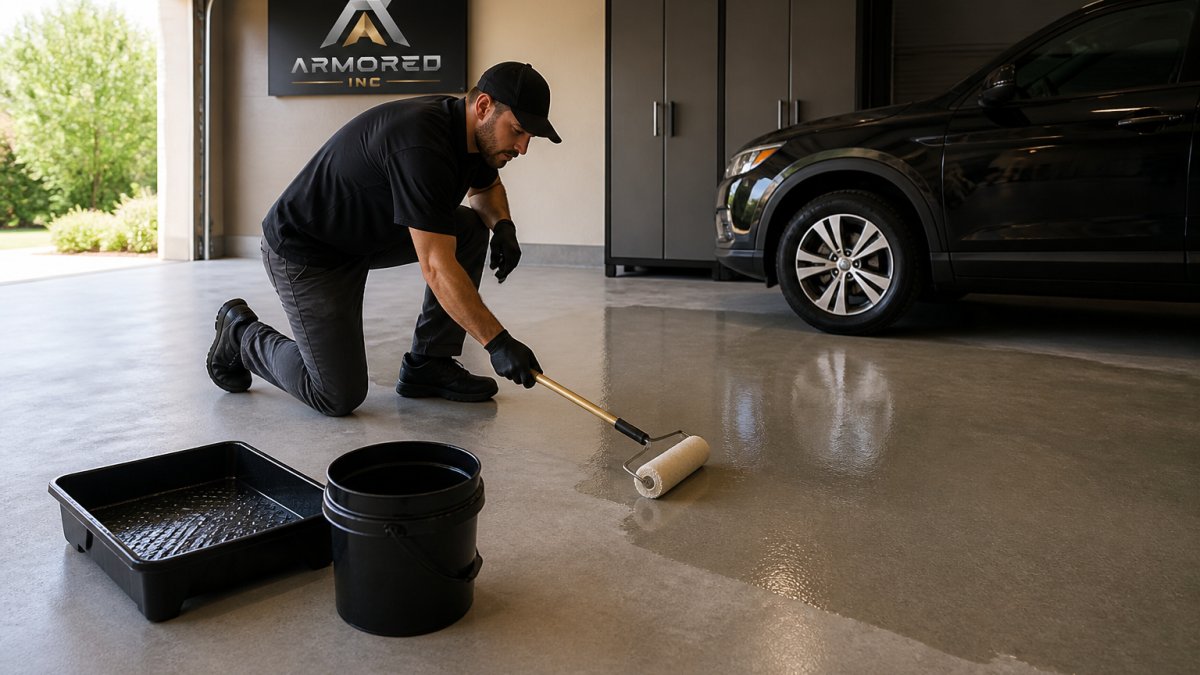
Epoxy floor coatings earn their reputation for good reason.
Best for: garages that stay dry and see heavy foot or tire traffic. Skip if: the slab has no vapor barrier or shows damp patches.
Clear Concrete Floor Sealer: Where It Works and Where It Doesn't
A clear concrete floor sealer is the right call when you want protection without changing the look of the slab. It works best on driveways, patios, garage slabs, and unfinished basement floors, and it fails on polished concrete and wood.
Clear sealers fall into two families, and they behave very differently in a Barrie winter:
- Penetrating clear sealers (silicate, siloxane, and siliconate products) react with free lime in the concrete to form a water-repellent barrier inside the pores. They leave no film, so there is nothing to peel when freeze-thaw cycles push moisture through the slab. They are the safer default for exterior concrete in Simcoe County.
- Film-forming clear sealers (acrylic and some solvent-based urethanes) sit on top of the surface and produce a sheen or gloss. They resist stains and abrasion better than penetrating products, but they trap moisture if the slab is damp, and they scuff, yellow, or peel under road salt and tire traffic. Acrylic is the budget option; expect to recoat every one to three years on a driveway.
Where clear sealer wins:
- Driveways and walkways exposed to road salt and snowmelt, a penetrating siloxane or siliconate sealer keeps chloride out of the pores and reduces scaling.
- Garage slabs that stay dry and see foot traffic more than tire traffic.
- Basement floors where you want a natural matte look and easy cleanup.
Where it fails:
- Polished concrete. A dedicated system product such as PROSOCO PolishGuard is formulated for densified, polished slabs; a generic clear sealer will cloud the finish and interfere with the polish. Match the product to the system.
- Wood floors. Clear concrete sealer has no business on hardwood, use a wood finish such as Bona Traffic HD.
- Damp slabs. Applying clear sealer over a slab with rising moisture traps water and causes cloudy patches, whitening, or flaking within a season. Always run a plastic-sheet moisture test first.
Coverage for a clear penetrating sealer is typically in the range of 200 to 400 square feet per gallon depending on porosity, and most products want two coats with a recoat window of a few hours. Read the label, coverage and recoat times vary widely between brands, and applying too thick a coat on a film-forming product is the most common cause of peeling.
If you want a sheen, choose a film-forming product deliberately and accept the maintenance. If you want low fuss and freeze-thaw resilience, a penetrating clear sealer is the better route.
How to Prepare Concrete Floors for Sealing
Preparation decides whether the sealer lasts one year or ten. How to prepare concrete floors for sealing comes down to five steps, and skipping any of them shortens the service life.
- Clear the floor and degrease any oil or tire marks.
- Repair cracks and patch spalls with a suitable filler.
- Etch or grind the surface so the sealer can bond.
- Test for moisture with a plastic sheet left overnight.
- Let the slab dry fully before application, often 24 to 48 hours.
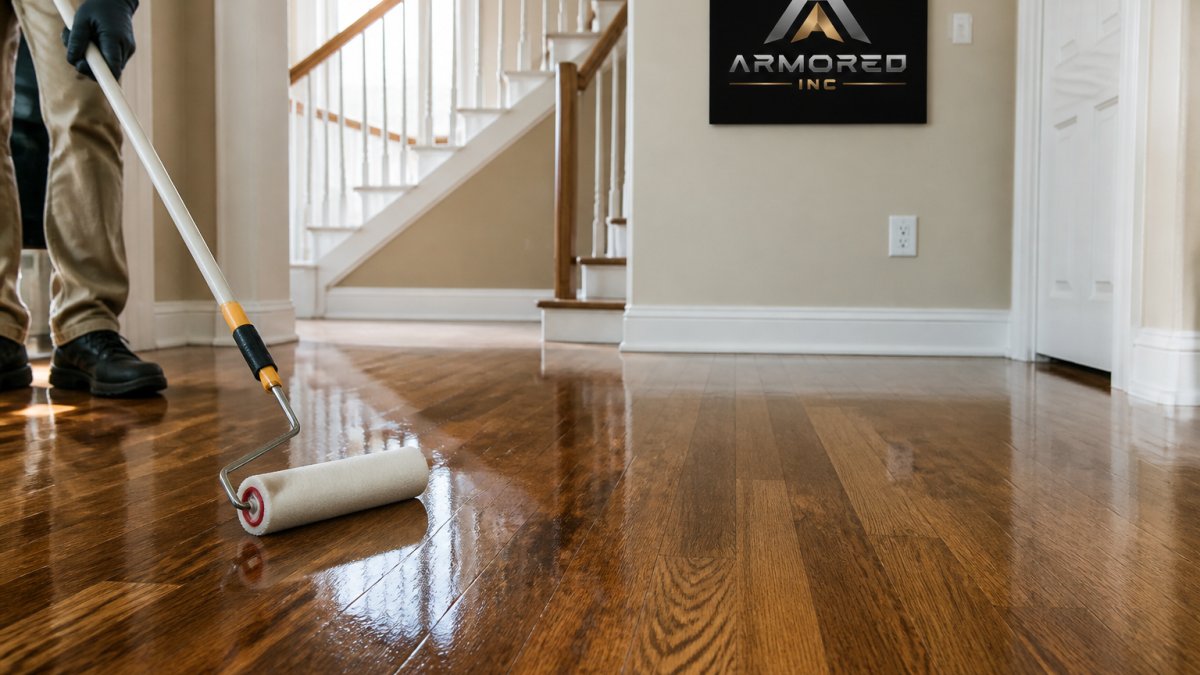
Coverage rate and drying time vary by product, so read the label. Most sealers apply with a roller or sprayer in thin, even coats. Cure time before foot traffic is typically a day, with vehicle traffic waiting longer.
Concrete Sealer Maintenance and Reapplication Schedule
Concrete sealer maintenance and reapplication keep a floor performing, and the schedule depends on traffic, exposure, and sealer type. A garage slab under daily use needs an annual inspection and a fresh coat every two to three years.
Schedule by sealer type and location:
| Sealer type | Typical recoat interval | Failure signal |
|---|---|---|
| Penetrating siloxane/siliconate (exterior) | 3-5 years | Water stops beading; salt scaling returns |
| Penetrating silicate (interior) | 5-10 years | Dusting returns; water absorbs instead of beading |
| Acrylic film-forming | 1-3 years | Dull patches, scuffs, peeling at edges |
| Polyurethane | 3-5 years | Ambering, worn tire paths, loss of gloss |
| Epoxy coating | 7-10+ years | Chipping, hot-tire marks, delamination |
Routine maintenance that actually extends life:
- Sweep or vacuum grit regularly. Sand and salt crystals act like sandpaper under foot and tire traffic and wear any film-forming sealer faster than anything else.
- Clean with a pH-neutral cleaner, not harsh acids. Acid etches the surface and strips penetrating sealer.
- Rinse road salt off garage and driveway slabs in spring. Chloride left on the surface keeps attacking the concrete long after winter ends.
How to tell it is time to recoat:
- Water-bead test. Sprinkle water on the surface. If it beads and rolls off, the sealer is working. If it soaks in or darkens the concrete, it is time.
- Visual check. Film-forming sealers show wear as dull patches, scuffs, or peeling at edges and tire paths. Penetrating sealers fade quietly, so the bead test is your best gauge.
- Salt test. On exterior slabs, look for white powdery scaling or surface flaking after winter, a sign the sealer has lost its chloride resistance.
Film-forming sealers need the old coat cleaned and any peeling areas removed before recoating, or the new coat will lift. Penetrating sealers can usually be reapplied directly after a clean and dry, which is one reason they are the lower-maintenance choice for high-traffic residential concrete.
Cost of maintenance is modest compared with replacement: a DIY recoat of a two-car garage slab typically runs well under a few hundred dollars in material, while a professional recoat is quoted per square foot.
Choosing the Right Sealant for Your Floor Condition and Climate
Climate and slab condition narrow the field fast. In Barrie, freeze-thaw cycles and road salt punish any sealer that traps moisture, so breathability matters as much as hardness.
Match the product to the surface. Polished concrete takes a system-specific product. Hardwood takes a wood finish such as Bona Traffic HD, cited for scuff, scratch, and chemical resistance.
Cost and warranty vary by product and installer, so ask for a written quote rather than guessing.
Get a Professional Assessment for Your High-Traffic Floor
If you are weighing whether professional protection is worth it, read why commercial property interior protection is necessary first.
We also protect the surfaces around your floor, from garage-adjacent vehicles to interior countertops and glass, using proven coating systems such as ceramic coatings for hard interior surfaces and window tint for glass.
Frequently Asked Questions
What can I seal a concrete floor with?
You can seal a concrete floor with a penetrating sealer (siliconate or silane), a film-forming sealer (acrylic, polyurethane, or epoxy), or a concrete coating. Penetrating sealers soak into the concrete pores and block moisture without changing the surface look. Film-forming sealers create a protective layer on top and add gloss. Epoxy coatings are the most durable for garages and high-traffic indoor areas, with a reported lifespan of seven to ten or more years. The right choice depends on traffic, moisture exposure, and whether you want a natural or gloss finish.
Which type of concrete sealer is best for a high-traffic residential floor?
For high-traffic residential floors, a polyurethane or epoxy coating offers the best abrasion and chemical resistance. Polyurethane concrete sealer is versatile and can last for years, making it a strong choice for busy garages and driveways. Epoxy is highly durable for garage floors and indoor high-traffic areas. If you prefer a natural look, a penetrating sealer protects against moisture and road salt without a surface film, but it won't resist abrasion as well as a coating. Match the sealer to the floor's exposure and your maintenance expectations.
Is epoxy or polyurethane better for a busy garage floor?
Epoxy provides a harder, more chemical-resistant surface and is often chosen for garage floors and high-traffic indoor areas. Polyurethane is more flexible, resists UV yellowing better, and works well as a topcoat over epoxy or as a standalone sealer for driveways. For a busy garage, epoxy offers excellent durability, but it can be slippery when wet unless an anti-slip additive is used. Polyurethane is a good alternative if the floor sees freeze-thaw cycles and road salt, as it handles movement and moisture better. Consider your climate and slip resistance needs.
How often should a concrete floor sealer be reapplied?
Reapplication depends on the sealer type and traffic. Penetrating sealers typically last three to five years on residential floors, while film-forming acrylics may need reapplication every one to two years in high-traffic areas. Epoxy and polyurethane coatings can last seven to ten or more years with proper maintenance. In Barrie's freeze-thaw climate, road salt and moisture break down sealers faster, so inspect your floor each spring for wear, water absorption, or dullness. Reseal when water no longer beads on the surface.
How do I prepare a concrete floor before sealing it?
Preparation is critical for adhesion. First, clear the floor and repair cracks or spalls. Clean thoroughly with a degreaser to remove oil, tire marks, and stains. Then etch the surface with a concrete etcher or mechanically grind it to open the pores. Rinse and let the floor dry completely, which can take 24 to 48 hours. Test for moisture by taping a plastic sheet to the floor for 24 hours; if condensation forms, address moisture before sealing. Apply the sealer in thin, even coats when the floor and air temperature are within the product's recommended range.
Sealing a high-traffic floor is a decision, not a purchase, and the wrong product costs more in the long run than the right one ever will. Armored Inc. brings professional surface protection to homes and businesses across Barrie and Ontario, with interior coating solutions, mobile service, and valet options that fit around your schedule. Get started with Armored Inc. and protect your floors with a system built for how your space actually gets used.