 ultimate-guide
Paint Protection Film for Cars: Barrie Owner's Guide
Table of Contents
- What Paint Protection Film Actually Does for Your Car
- Benefits of Paint Protection Film for EVs
- PPF vs Ceramic Coating: Which One Your Car Needs
- How Long Does Paint Protection Film Last?
- Why Ontario Winters Make PPF Worth It in Barrie
- The Professional Installation Process, Start to Finish
- Cost, Warranty and Resale Value: What to Expect
- Caring for Your Paint Protection Film
- Frequently Asked Questions
Last Updated: September 22, 2026
What Paint Protection Film Actually Does for Your Car
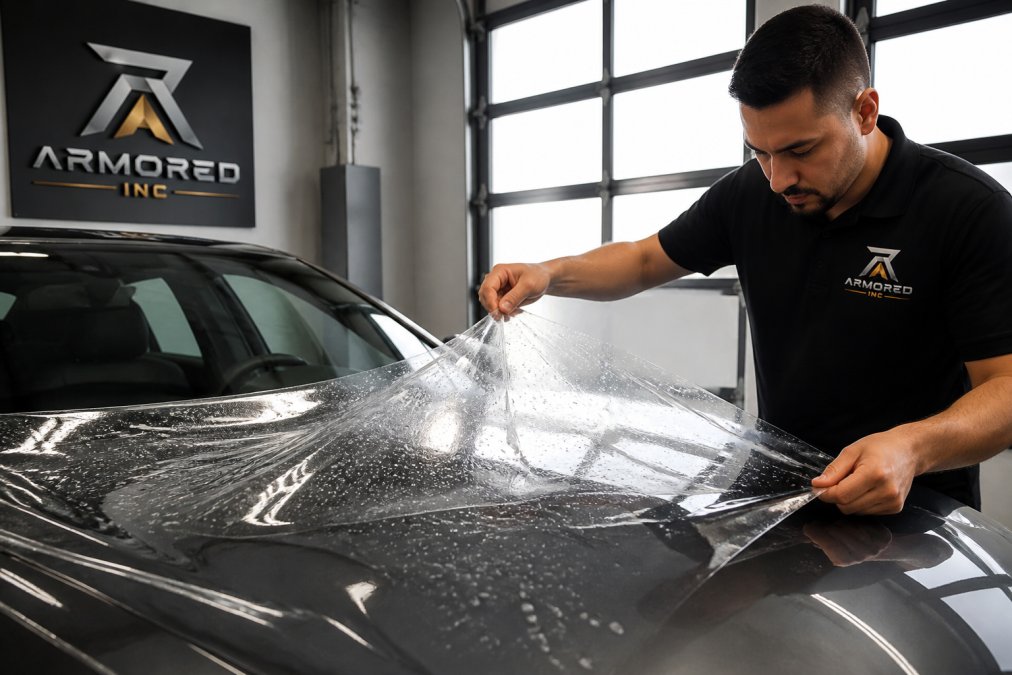
Paint protection film car owners rely on is a transparent thermoplastic polyurethane layer applied over factory paint to absorb the damage that road debris, stone chips, and environmental contaminants would otherwise inflict directly on your finish. At Armored Inc., we install these films on vehicles, and the difference between a protected and unprotected hood after three Ontario winters is not subtle.
How a Thermoplastic Polyurethane Film Works
Thermoplastic polyurethane, or TPU, is the base material behind every quality paint protection film on the market. The polymer structure gives the film two properties that matter most: elasticity, so it conforms to curves and complex body lines without lifting, and impact absorption, so stones and gravel lose energy in the film rather than the clear coat beneath.
Benefits of Paint Protection Film for EVs
The core benefits of paint protection film apply to every vehicle, but EV owners have a stronger case than most. EVs tend to carry more weight, accelerate harder from a standstill, and often run wider, stickier tires, all of which throw more road debris at the lower body panels and rear quarter panels. The front bumper, hood leading edge, and rocker panels take the worst of it.
The Benefits That Apply to Every Car
Strip away the EV-specific angle and the case for film rests on four concrete advantages:
- Impact protection. A quality TPU film absorbs stone chips, gravel strikes, and minor parking-lot scuffs that would otherwise chip or scratch the clear coat. The film takes the damage; the paint underneath stays intact.
- Preserved resale value. A car with original, unchipped factory paint presents better at trade-in than one with a repainted bumper or hood. Repainting rarely matches factory finish perfectly, and buyers and appraisers notice.
- Easier cleaning. The hydrophobic top layer sheds water and makes bird droppings, bug guts, and tree sap easier to remove before they etch the surface.
- UV and oxidation resistance. Modern TPU films block UV that dulls and oxidizes unprotected paint over time, which matters for cars parked outdoors year-round.
Insurance and Warranty Implications in Canada
This is where most guides go quiet, and it is worth understanding before you buy. In Canada, PPF is generally treated as a vehicle modification or accessory, not a safety feature, so it does not change your auto insurance premium the way a winter tire discount might. What it can affect is a claim. If your vehicle is damaged and the insurer pays to repaint a panel, the film on that panel is typically not covered unless you added it to your policy or purchased specific accessory coverage.
PPF vs Ceramic Coating: Which One Your Car Needs
PPF and ceramic coating solve different problems, and the honest answer is that many cars benefit from both. Paint protection film is a physical layer that absorbs impacts and resists scratches. A ceramic coating is a chemical layer that bonds to the surface and adds hydrophobicity, gloss, and easier cleaning, but it does not stop a stone chip.
| Feature | Paint Protection Film | Ceramic Coating |
|---|---|---|
| Primary purpose | Impact and scratch protection | Gloss, hydrophobicity, easy cleaning |
| Stops stone chips | Yes | No |
| Self-healing | Yes, with heat | No |
| Best applied | Front end, high-impact zones | Full vehicle over paint or film |
| Maintenance | Wash and inspect edges | Periodic decontamination wash |
How Long Does Paint Protection Film Last?
A professionally installed paint protection film typically lasts five to ten years, depending on film quality, sun exposure, and how well it is maintained. Cheaper films and poor installation shorten that window considerably. The film does not fail all at once; it degrades gradually as the top coat wears and the adhesive ages.
Self-Healing and Hydrophobic Properties Over Time
The self-healing top coat is what separates a good film from a great one. Light swirl marks and fine scratches disappear when heat is applied, whether from direct sun or warm water. That property fades as the top coat wears, which is why film on a car parked outdoors year-round ages faster than film on a garaged vehicle.
Why Ontario Winters Make PPF Worth It in Barrie
Barrie sits in one of the harshest winter driving corridors in Ontario. Lake-effect snow, heavy road salt, and sand applied to Highway 400 and the surrounding municipal roads create a sandblasting effect on your front bumper and hood every time you drive. Spring brings the second wave: loose gravel and debris left on the shoulders that gets thrown up at speed.
Road Salt, Sand Blasting and Spring Gravel
Road salt does not just cause rust on exposed metal; it degrades the clear coat and leaves a chalky residue that dulls the finish if it sits. Sand and gravel chips are the more visible problem. A film takes those impacts and, in many cases, self-heals the resulting marks. For anyone searching for paint protection film near me in Barrie, the local climate is the single strongest argument for installation, because the damage accumulates faster here than in milder regions.
The Professional Installation Process, Start to Finish
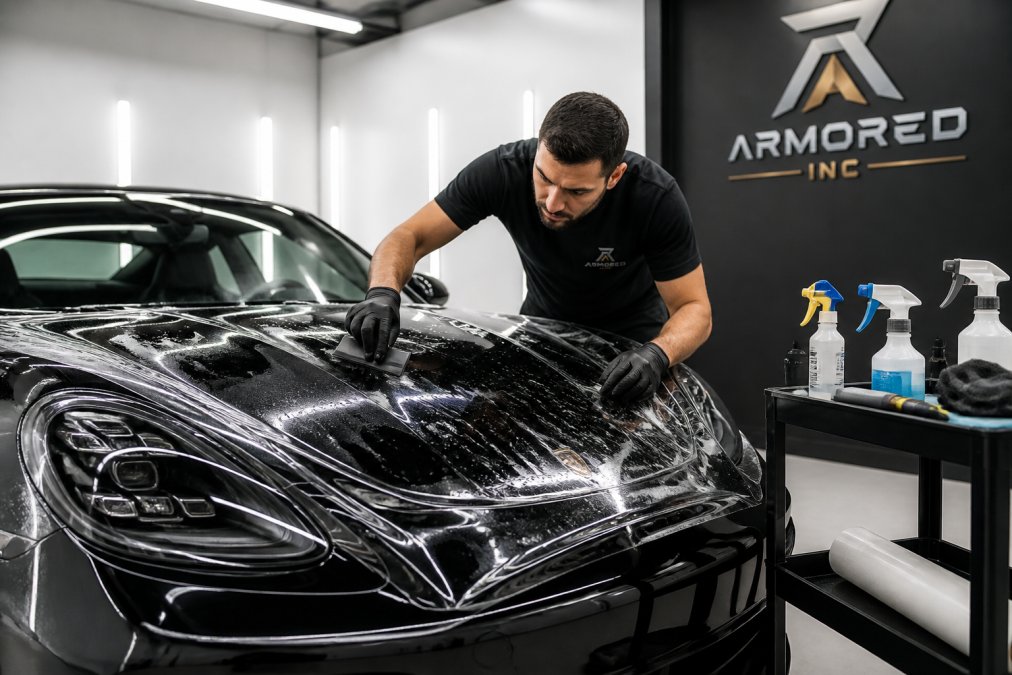
Professional installation is a controlled, multi-step process, not a quick wrap. Rushing any stage shows up later as lifted edges, trapped dust, or visible seams. Here is how a proper job unfolds.
Surface Preparation and Pre-Cut Patterns
Surface preparation decides the final result. The paint must be washed, decontaminated, and inspected for existing defects before any film touches it. If there are scratches or swirl marks, paint correction happens first, because film locks in whatever is underneath it.
Cost, Warranty and Resale Value: What to Expect
Pricing for paint protection film depends on coverage area, film brand, vehicle size, and the complexity of your body panels, so the only accurate figure comes from a quote based on your specific car. A partial front package costs less than full-body coverage, and matte or specialty finishes can carry a premium because they require different film and more careful handling.
What the Warranty Actually Covers
Warranty coverage varies by manufacturer and installer, but most quality films carry a multi-year warranty against yellowing, cracking, and delamination. That warranty usually depends on proper maintenance and professional installation, and it typically does not cover damage from accidents, misuse, or automatic brush car washes. Before you commit, ask three questions: What is the term in years? What specific defects are covered? And what voids the coverage?
The Insurance Angle Most Guides Skip
In Canada, PPF is generally treated as a vehicle modification or accessory, not a safety feature, so it does not change your auto insurance premium the way a winter tire discount might. What it can affect is a claim. If your vehicle is damaged and the insurer pays to repaint a panel, the film on that panel is typically not covered unless you added it to your policy or purchased specific accessory coverage.
How PPF Affects Resale Value
On resale, a car with intact factory paint and documented film protection tends to present better than one with a chipped, repainted front end. Repainting a bumper or hood rarely matches factory finish perfectly, and buyers notice. Film is a long-term investment in the value of the car, but the return depends on condition: film that is peeling, yellowed, or full of trapped debris can actually hurt a sale, which is why maintenance matters.
Caring for Your Paint Protection Film
Maintenance is straightforward once the film is on. Wash the car regularly with a pH-neutral soap, remove bird droppings and bug splatter promptly, and avoid automatic brush car washes that drag grit across the surface. For the full range of surface protection options, including ceramic coatings that pair well with film, the routine is similar.
A few habits keep film in good shape longer:
- Hand wash or use a touchless wash when possible
- Park in shade or a garage to slow top-coat aging
- Inspect edges after winter for lifting or trapped debris
- Treat the film like paint: it can still be scratched by neglect
Frequently Asked Questions
Is paint protection film worth it for Ontario driving conditions?
For most drivers in Barrie and the surrounding area, yes. Ontario winters bring road salt, sand and gravel that chip and dull a vehicle's finish, and PPF creates an invisible barrier against that debris. A quality paint protection film also guards against bug guts, bird droppings and UV fading in summer. If you drive a newer or higher-value vehicle, the protection helps preserve paint integrity and resale value over the years you own it.
How much does it usually cost to install PPF on a car in Barrie?
Pricing depends on how much of the vehicle you cover, the film brand and the shop's labor rate. A partial front-end package costs far less than a full-body wrap, and pre-cut patterns versus custom fit also affect the total. Armored Inc. does not publish flat rates because every quote depends on your vehicle and coverage level. Contact us for a current quote based on your make, model and the panels you want protected.
Can I go through a car wash with paint protection film installed?
Touchless car washes are generally safe for PPF, but brush-style washes can catch film edges and cause lifting over time. Hand washing with a pH-neutral soap and a soft mitt is the safest option. Avoid pressure washing directly at the film's edges, and skip wax products that contain abrasives. If you notice an edge lifting, have it checked before it collects dirt. Proper care keeps the film looking clear and helps it last its full rated lifespan.
What are the downsides of using paint protection film on cars?
The main drawbacks are upfront cost and the fact that film is not permanent. High-quality PPF typically lasts several years before it needs replacing, and cheaper films can yellow or peel sooner. Installation quality matters enormously; a poor job leaves visible edges or trapped moisture. PPF also does not stop deep dents from major impacts, only surface damage. Weighing those limits against the protection it provides helps you decide if it suits your vehicle.
Barrie winters are hard on paint, and the damage from salt, sand, and gravel adds up faster than most owners expect. Armored Inc. installs paint protection film, ceramic coatings, and window tinting for drivers across Barrie and the surrounding region, with mobile service, valet, and rental car options to keep the process convenient. If you want your finish protected before the next season hits, get started with Armored Inc. and keep your car looking the way it did the day you bought it.