 Comparison
Why Paint Protection Film Beats Ceramic Coating for Impact
Last Updated: November 11, 2026
Quick Summary
Paint protection film is the enhanced automotive alternative for ceramic coating when impact is the concern, because it is a clear urethane physical barrier that absorbs rock chips, road debris, and light scratches instead of your paint. Ceramic coating is only a chemical layer that adds gloss and water beading but cannot stop any impact damage. Many owners pair film on high-risk zones with a coating on top.
- Ceramic coating adds gloss, water beading, and UV protection but cannot stop a stone thrown up on Highway 400.
- Film can be paired with a coating on top, giving physical damage resistance and chemical resistance from one install.
- Synthetic polymer sealants generally last a few months per application, and less on a vehicle parked outside through an Ontario winter.
- For winter driving, the best protection is film on the impact zones plus a coating on top.
- Graphene coatings are marketed for added hardness and water-spotting resistance but remain a chemical layer, not a physical shield.
Table of Contents
- Why Ceramic Coating Alone Leaves Your Paint Exposed
- Paint Protection Film vs Ceramic Coating: What Each One Actually Does
- Car Paint Sealant vs Ceramic Coating: The Budget Middle Ground
- How Long Does Paint Protection Film Last in Ontario Conditions?
- The Best Car Paint Protection for Winter Driving
- Graphene Coatings, Spray Sealants, and Wax: What Else Is Worth Considering
- Choosing the Right Protection for Your Vehicle at Armored Inc.
- Frequently Asked Questions
Why Ceramic Coating Alone Leaves Your Paint Exposed
Ceramic coating is a chemical layer, not a physical shield. That distinction is the whole argument. On a Barrie commute, the threats that actually cost you money are rock chips, road debris, and impact damage, and a coating cannot stop any of them. This guide breaks down why paint protection film is often the smarter first layer for anyone who drives Ontario roads year-round.
Here is what most coating guides get wrong: they sell hardness as protection. For a closer look at what ceramic coating can and cannot do against scratches, read our breakdown. A cured coating adds gloss, makes water bead, and helps with chemical resistance. It does not absorb a stone thrown up by a transport truck on Highway 400.
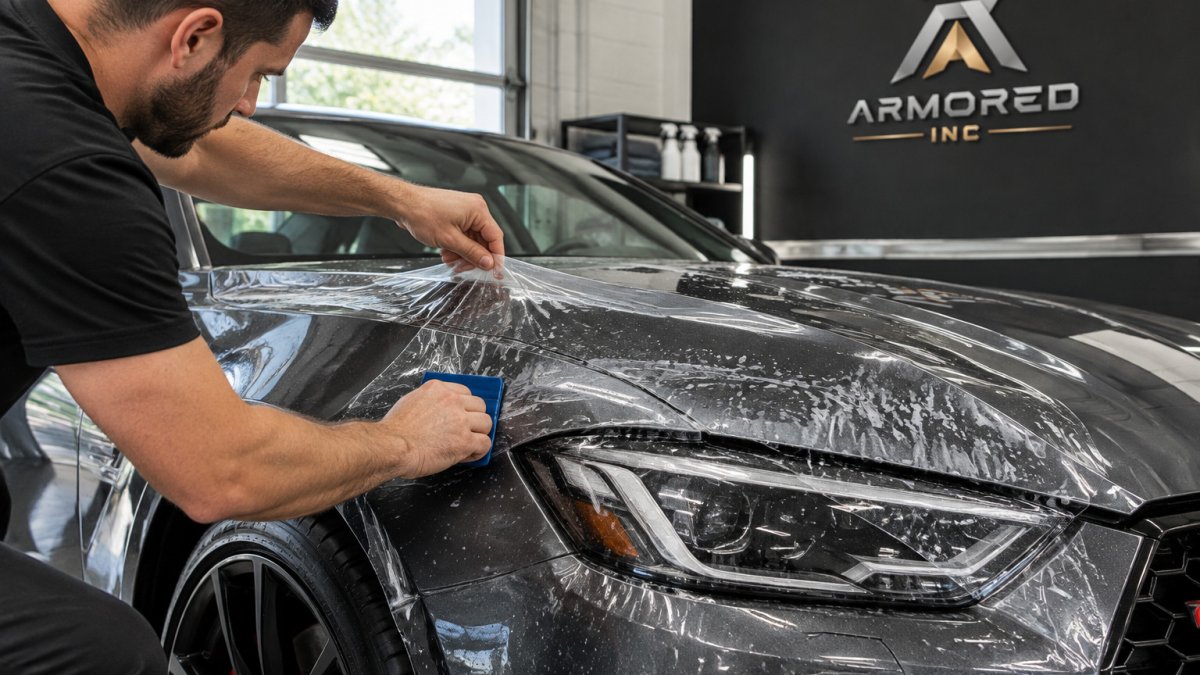
Paint protection film is a clear urethane layer bonded to your paint. It takes the hit so your paint does not. Below, we compare both, cover the budget sealant middle ground, and explain what actually survives an Ontario winter.
Paint Protection Film vs Ceramic Coating: What Each One Actually Does
The two products solve different problems. Paint protection film is a physical barrier against stone chips, scratches, and abrasion. Ceramic coating is a chemical layer that adds gloss, hydrophobic behavior, and UV protection. Comparing paint protection film vs ceramic coating is not a contest, it is a question of which threat you are trying to stop.
Where ceramic coating wins
Ceramic coating delivers shine, water beading, and easier washing across the whole vehicle. It resists environmental contaminants and bird droppings better than bare paint, and it adds a slick surface that reduces swirl marks during washing. For gloss enhancement on a garage-kept car, it is excellent value. Where it falls short is anything that arrives with force.
Where paint protection film wins
Film absorbs impact. Rock chips, road debris, and light scratches stop at the film instead of the paint. It also hides minor defects and protects high-risk zones like the bumper, hood, and mirrors. What most reviews miss is that film can be paired with a coating on top, giving you physical damage resistance and chemical resistance from one install.
| Feature | Paint Protection Film | Ceramic Coating |
|---|---|---|
| Stops rock chips | Yes, physical barrier | No |
| Adds gloss and shine | Mild | Strong |
| Water beading | With top coat | Yes |
| UV protection | Yes | Yes |
| Typical service life | Several years | Several years |
Car Paint Sealant vs Ceramic Coating: The Budget Middle Ground
A car paint sealant sits between wax and ceramic coating on both price and performance. Synthetic polymer sealants bond to the paint surface and deliver water beading, UV resistance, and a slicker finish than wax, but their service life is measured in months rather than years. Synthetic polymer sealants generally last a few months per application, and less on a vehicle parked outside through an Ontario winter. That reapplication cadence is the real cost driver, and it is the part most sealant-versus-coating comparisons leave out.
The car paint sealant vs ceramic coating decision usually comes down to three things: how long you plan to keep the vehicle, how much maintenance you are willing to do yourself, and whether the paint has physical impact risk that neither product solves. Sealant is a reasonable choice for a leased vehicle, a trade-in you will hand back in two or three years, or a second car that lives in a garage. A professional ceramic coating typically costs more up front, and pricing depends on the vehicle and the scope of work. Visit our website or request a quote for current pricing.
Here is a decision framework to consider:
- Lease or short ownership horizon (under three years): sealant refreshed twice a year is the lowest-commitment path. You get beading and UV protection without paying for years of durability you will not use.
- Long-term daily driver, no impact concern: a professional coating makes more sense because the per-year cost drops as the service life stretches out.
- Long-term daily driver with highway or winter exposure: neither sealant nor coating stops a rock chip, so budget for film on the impact zones first, then use sealant or coating as the maintenance layer over the rest.
- DIY owner who enjoys the process: spray sealants and wipe-on products let you top up protection on a Saturday without a pro install, at the cost of more frequent reapplication.
Watch out: sealant applied over contaminated or oxidized paint fails early, so a decontamination wash and clay treatment come first regardless of which product you choose. Skipping prep is the most common reason a sealant seems to 'disappear' after a few weeks.
If you are weighing the budget option against a full coating, our comparison of ceramic coating versus paint sealant explains how each holds up over time.
How Long Does Paint Protection Film Last in Ontario Conditions?
Expect several years of service from a quality film, with lifespan driven by film grade, installation quality, and how the vehicle is stored. How long does paint protection film last in Barrie specifically? Ontario conditions are hard on any surface: road salt, brine, freeze-thaw cycles, and heavy sun in summer all test durability.
Professional installation matters more than most owners realize. Edges that are not wrapped properly lift first, and lifted edges trap salt and grit. A garage-kept vehicle will typically outlast one parked outside through every storm. For a full breakdown of coverage options and lifespan, read our paint protection film guide for Barrie.
The Best Car Paint Protection for Winter Driving
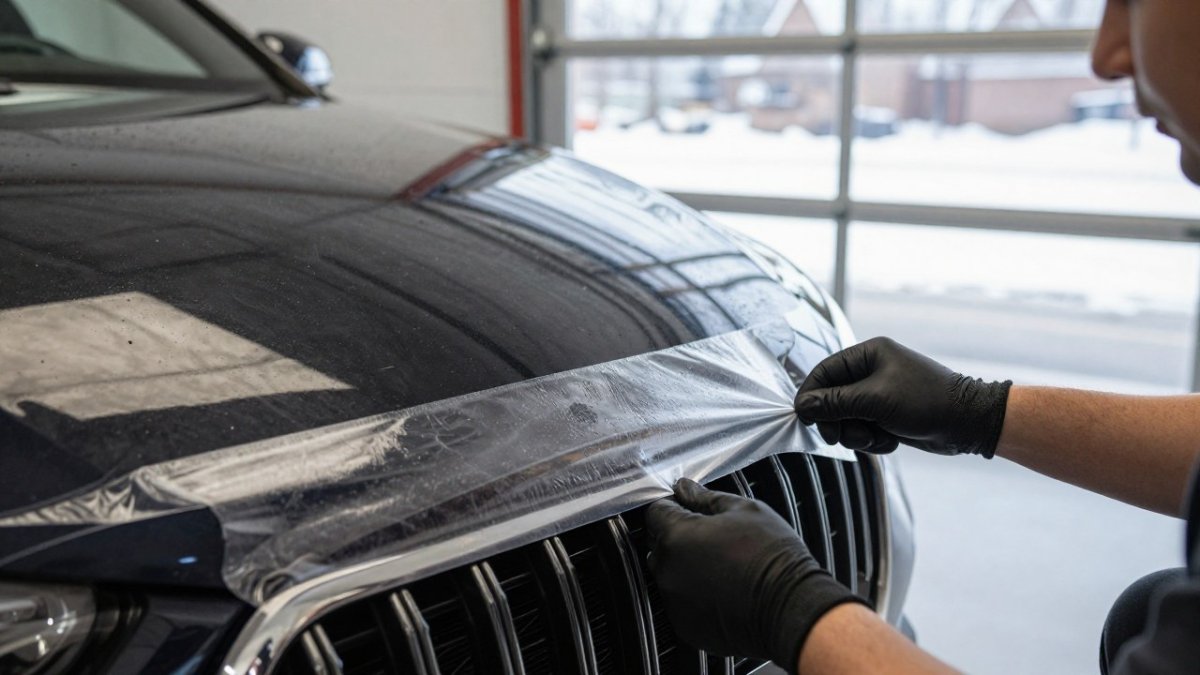
For winter driving, the best car paint protection for winter is film on the impact zones plus a coating on top. Road salt and brine are the real enemy, and they attack paint, plastic trim, and the leading edges of the body. Film takes the physical hits from sand and gravel spread on icy roads, while the coating makes decontamination washes easier.
Road salt, brine, and freeze-thaw cycles
Salt does not just sit on the surface. It works into chips and scratches, and freeze-thaw cycles push moisture into every minor defect. A decontamination wash and proper surface preparation before any protection goes on is not optional in this climate. Skipping it traps contaminants under the film.
Watch out: applying film or coating over a salt-contaminated panel traps grit and leads to early failure. Our seven steps to protect commercial vehicle paint from salt covers the winter routine in detail.
Graphene Coatings, Spray Sealants, and Wax: What Else Is Worth Considering
Graphene coating is the newest coating technology on the shelf, marketed for added durability and heat resistance over conventional ceramic coatings. Graphene coatings are marketed for added hardness and water-spotting resistance, and they remain a chemical layer rather than a physical shield.
Spray sealants occupy the convenience tier. Products like Spray sealants are generally wipe-on, wipe-off applications that a DIY owner can apply at home. Their durability is typically measured in weeks to a few months depending on exposure, so they work best as maintenance toppers over a coating or sealant rather than as standalone long-term protection.
Where each fits in a Barrie maintenance routine:
- Graphene or ceramic coating: base layer applied professionally, then maintained with gentle washes. Best for owners who want the longest interval between reapplications.
- Spray sealant: monthly or biweekly top-up after a wash, especially through winter when salt and brine degrade the surface layer faster.
- Wax: seasonal use or show-car gloss, not a winter protection strategy on its own.
These products are all surface protection, not impact protection. They improve shine, water beading, and ease of washing. None of them stop a rock chip, and none replace film on a vehicle you care about.
Watch out: layering a spray sealant over a dirty or salt-contaminated panel traps grit and can mar the finish during buffing, so wash and decontaminate first. For owners comparing total cost over several years, the cheapest product per bottle is rarely the cheapest per year of protection once reapplication time and frequency are counted.
Choosing the Right Protection for Your Vehicle at Armored Inc.
Choosing comes down to one question: what are you protecting against? If the answer is chips and impact, film is the answer. If it is gloss, easy washing, and UV protection, a coating delivers. Many owners choose both, film on the front end and a coating over the rest.
At Armored Inc., we install paint protection film and ceramic coatings for cars, marine vessels, and RVs, and we offer matte paint protection film. We also offer mobile services and valet or rental car options. If you have been searching for paint protection near me in Barrie, contact us to discuss the options for your specific vehicle. When you are ready to see how installation works, review our ultimate guide to paint protection film installation.
Ceramic coating will never stop a rock chip, and no amount of gloss changes that. If your paint is exposed on Ontario roads, film is the layer that protects it. Armored Inc. installs paint protection film and ceramic coatings in Barrie, with matte film expertise, mobile service, and valet or rental options to keep your schedule intact. Get started with Armored Inc. and give your paint the physical protection it has been missing.
Frequently Asked Questions
What is the best alternative to ceramic coating for a car?
It depends on what you need the protection to do. Paint protection film is the stronger alternative when rock chips, road debris, and scratches are your main worry, because it forms a physical barrier over the paint. A quality paint sealant or spray coating suits drivers who mainly want easier washing and water beading on a tighter budget. Many owners combine both: film on impact-prone panels like the bumper and hood, then ceramic coating over the rest for gloss and easy maintenance.
Is paint protection film better than ceramic coating?
Neither is better across the board. Paint protection film takes physical abuse that ceramic coating cannot, including stone chips, light scratches, and swirl marks from washing. Ceramic coating gives sharper gloss, stronger water beading, and easier cleaning, but it will not stop a rock. If your daily drive includes highway miles or gravel, film on the front end is the more practical choice. If your car mostly sits in a garage, a coating may be all you need.
What is the difference between ceramic coating and a paint sealant?
A paint sealant is a synthetic wax-style product that sits on top of the clear coat and typically lasts a few months per application. Ceramic coating bonds to the paint and lasts years, with better chemical resistance and a harder surface. Sealants cost less and are simple to reapply yourself. Coatings cost more and usually need professional application for a streak-free finish. Think of a sealant as short-term protection and a coating as a long-term commitment.
Can paint protection film and ceramic coating be used together?
Yes, and this combination is common on higher-end vehicles. The film goes on first over impact areas such as the bumper, hood, mirrors, and rocker panels, then a ceramic coating is applied over the film and the remaining paint. You get chip resistance where it matters plus gloss and easy washing everywhere. Ask your installer to confirm the coating is compatible with the specific film being used, since not every product pairing is recommended.