 comparison
Ceramic Coating vs Paint Protection Film: Which Wins?
Table of Contents
- ceramic coating vs ppf: A Quick Comparison
- What Each Protection Option Does Best
- ceramic coating vs PPF for winter driving
- how long does PPF last in Canada
- paint protection film cost Ontario
- Layering PPF and Ceramic Coating
- Which Protection Is Right for Your Vehicle?
- Frequently Asked Questions
Last Updated: September 4, 2026
The debate between ceramic coating vs paint protection film usually comes down to one misunderstanding: owners think they are choosing between two similar products when they are actually choosing between two different jobs. PPF is a physical armor layer that absorbs impacts from rocks and debris, while ceramic coating is a chemical shield bonded to the paint that repels contaminants and UV rays. At Armored Inc. in Barrie, Ontario, we install both daily, and the right answer depends on what your vehicle faces on the road. Below, we’ll break down exactly where each wins, where it falls short, and which one suits Canadian driving conditions.
ceramic coating vs ppf: A Quick Comparison
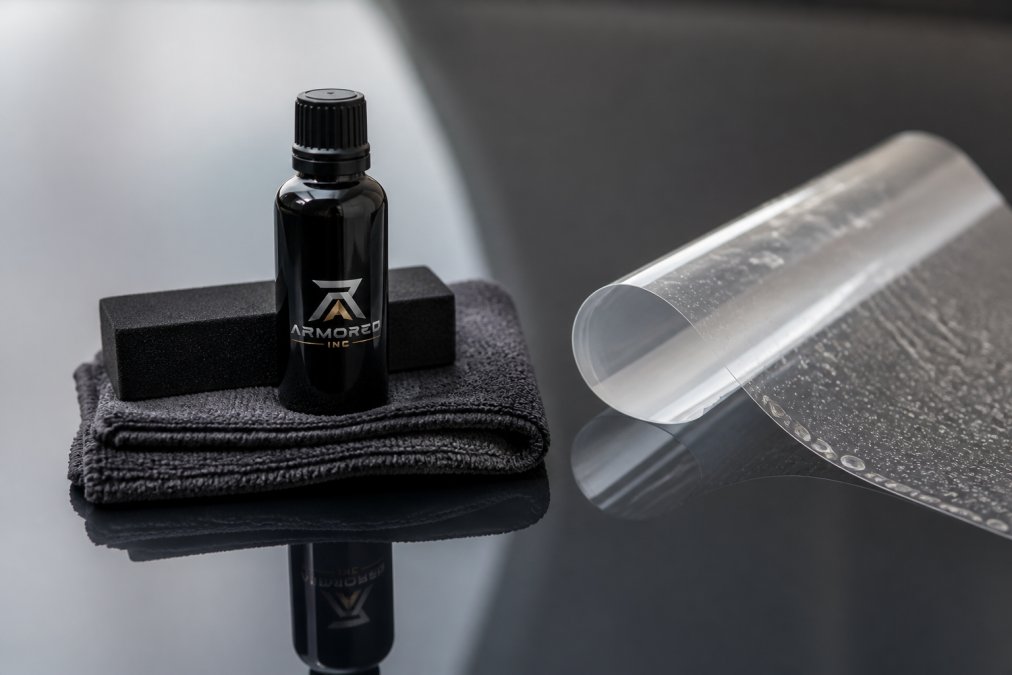
Paint protection film is a thick, self-healing polyurethane layer, while ceramic coating is a liquid polymer that bonds to your paint at a molecular level. The film measures in mils (thousandths of an inch) and takes the physical abuse; the coating measures in microns and provides a hard, glossy sacrificial layer. They are not competitors so much as complementary tools for different threats.
| Feature | Paint Protection Film | Ceramic Coating |
|---|---|---|
| Primary defense | Physical impacts, rock chips | Chemicals, UV, contaminants |
| Thickness | 8-10 mils (film layer) | 2-5 microns (bonded layer) |
| Self-healing | Yes, with heat | No |
| Hydrophobic | Moderate | Excellent |
| Gloss enhancement | Moderate | High |
| Durability | 5-10 years | 2-9 years |
| Best for | Hoods, bumpers, mirrors | Full-body environmental protection |
The quick verdict: if you drive on highways behind transport trucks, you want PPF on the front end. If you park outside under trees or near industrial areas, ceramic coating handles the fallout. Most of our clients in the Barrie area end up with both.
:::verdict Winner: It depends on the threat. Choose paint protection film for impact zones like the hood and bumper. Choose ceramic coating for chemical resistance and easier maintenance across the rest of the vehicle. For full protection, layer them. :::
What Each Protection Option Does Best
Both products share a goal: preserving your automotive finish. They achieve it through completely different mechanisms, and understanding that difference prevents expensive mistakes.
Paint Protection Film: Physical Impact Defense
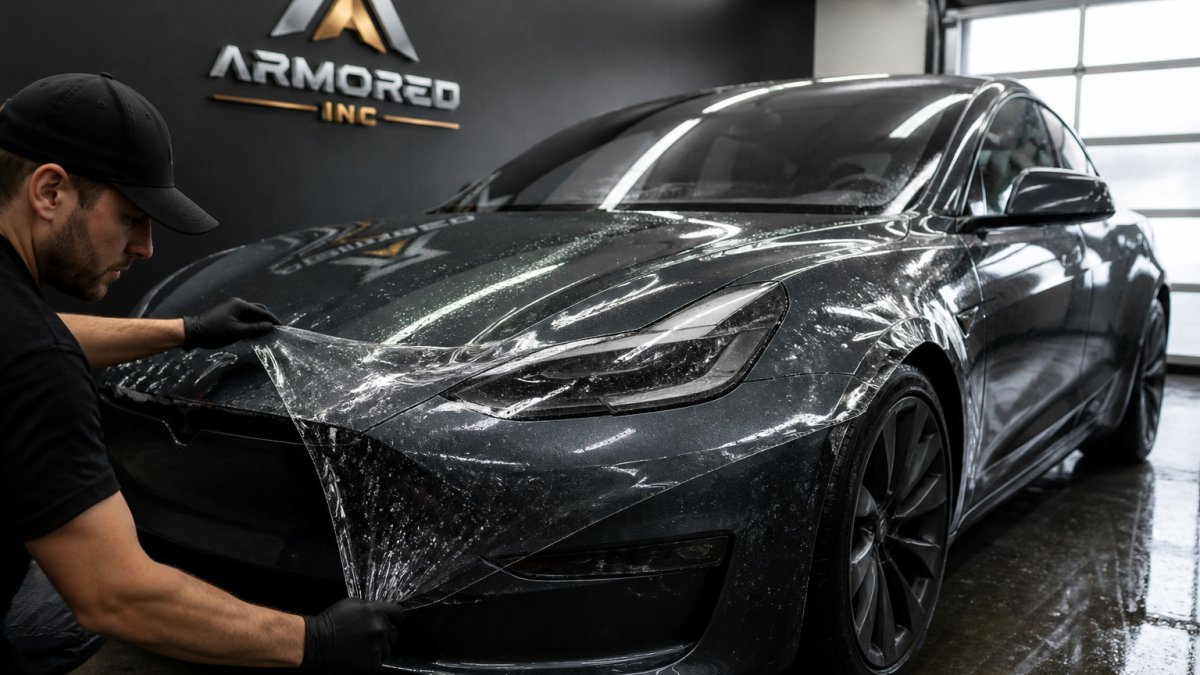
Paint protection film is the only product that stops rock chips, road debris, and minor scratches from reaching your paint. The polyurethane construction absorbs impact energy that would otherwise crack the clear coat. Premium films like XPEL Ultimate Plus include self-healing technology: apply heat from a hair dryer or heat gun, and light scratches disappear as the polymer relaxes back into shape (xpel.com).
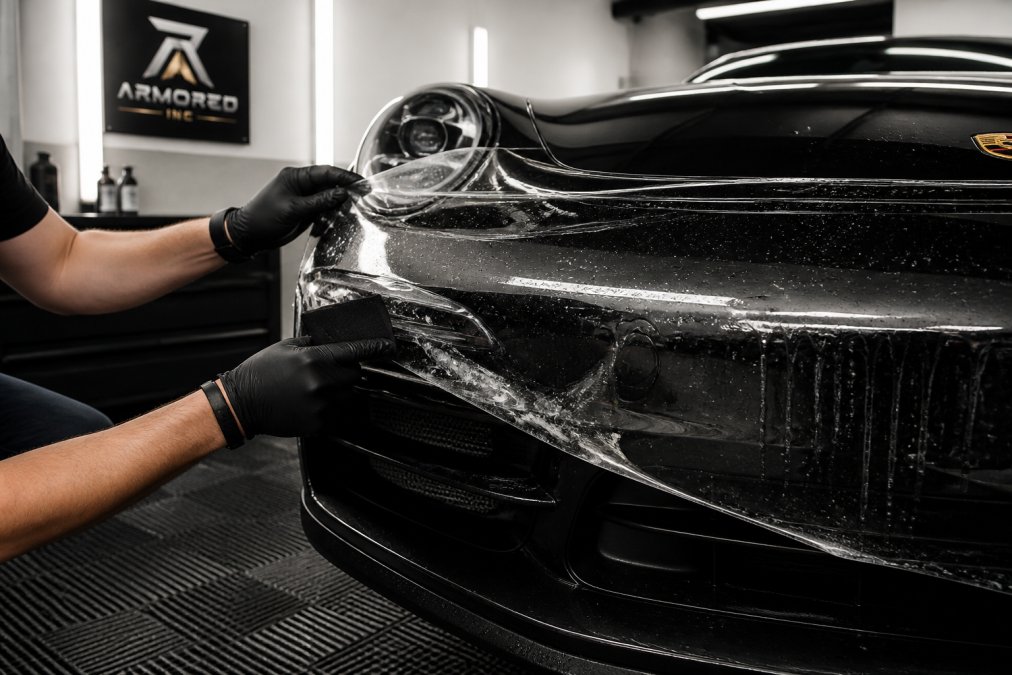
The trade-off is cost and coverage. Full-front PPF installation runs significantly higher than a ceramic coating because the material itself is expensive and the labor requires precision cutting and stretching around complex curves. Partial coverage, such as just the bumper and hood leading edge, offers a more budget-conscious entry point.
Ceramic Coating: Chemical and Environmental Shield
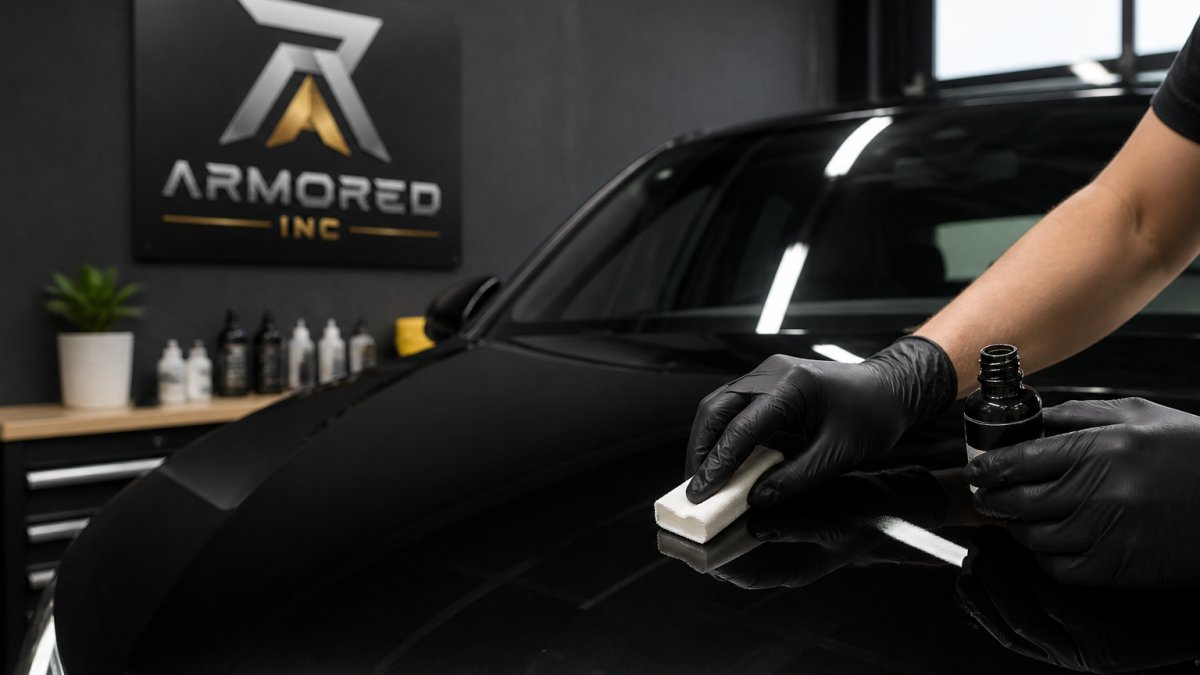
Ceramic coating is a nano-ceramic liquid that cures into a hard, transparent layer bonded to your clear coat. Its strengths are chemical resistance and hydrophobicity. Bird droppings, acid rain, and road salt struggle to etch the surface because the coating creates a barrier those contaminants cannot penetrate. The hydrophobic properties cause water to bead and roll off, carrying dirt with it, which dramatically reduces washing frequency.
Professional-grade coatings like Gtechniq Crystal Serum Ultra advertise hardness ratings around 10H and durability guarantees up to nine years (gtechniq.com). The catch: ceramic coating provides almost no protection against physical impacts. A rock traveling at highway speed will still chip through a coated surface because the coating is only microns thick. It simply cannot absorb that energy.
ceramic coating vs PPF for winter driving
Ontario winters present a unique threat matrix that most general automotive advice ignores. Road salt, sand, and gravel spread across highways create a constant barrage of physical debris and chemical exposure. For Barrie drivers commuting along Highway 400 corridor, the front end takes repeated impacts from sand and small stones kicked up by traffic.
For winter driving, paint protection film is the critical investment because it handles the physical abuse of sand and gravel, while ceramic coating protects against the corrosive effects of road salt. The film stops the chips; the coating makes the salt easier to wash off. Vehicles with only ceramic coating often show hood pitting within two seasons of heavy winter highway driving. Vehicles with PPF on the front end emerge from winter with the film scarred but the paint untouched, and the film can be replaced when it wears out.
The salt itself is a separate issue. Road salt chemically attacks unprotected clear coat, causing oxidation and etching over time (sciencedirect.com). Ceramic coating neutralizes this threat effectively, which is why we recommend it as a minimum for any vehicle driven through Canadian winters. The combination, however, is the gold standard for year-round protection in this climate.
how long does PPF last in Canada
Paint protection film typically lasts five to ten years in Canadian conditions, depending on film quality, installation, and exposure. Premium films from manufacturers like XPEL carry warranties in that range, and the self-healing top layer maintains appearance as long as the film is properly maintained.
The Canadian variable is winter severity. Constant freeze-thaw cycles, road salt, and abrasive sand accelerate wear on the film's exposed edges. A film that might last ten years in a mild coastal climate may show edge lifting or hazing after seven years of Barrie winters. Key factors that extend film life:
- Professional installation with wrapped edges, not cut-to-paint edges that trap moisture
- Regular washing to prevent salt buildup along film seams
- Avoiding automatic car washes with abrasive brushes
- Parking in a garage or covered area to reduce UV degradation
Ceramic coating longevity follows a similar curve. A nine-year-rated coating may realistically deliver seven strong years in Canadian conditions before requiring a maintenance top-up. The coating degrades gradually, losing hydrophobicity before it loses chemical resistance, which is why many detailers recommend an annual inspection.
paint protection film cost Ontario
Pricing for paint protection film in Ontario varies widely based on coverage area, film brand, and installer skill. A full-front kit covering the bumper, hood, fenders, and mirrors typically costs more than a ceramic coating application, while a full-body PPF wrap represents a significant investment that approaches a fraction of the vehicle's value.
Several factors drive the cost in Ontario specifically:
- Coverage area: Partial front ends cost less than full wraps
- Film quality: Premium films with self-healing and warranty cost more
- Paint correction: Any existing swirl marks or defects must be corrected before film application
- Installer experience: Precision cutting and wrapping complex curves takes skill
For current pricing on paint protection film in Ontario, contact a professional installer directly. At Armored Inc., we provide detailed quotes based on your vehicle and coverage requirements, and we serve clients across Barrie, Newmarket, and the surrounding regions.
Layering PPF and Ceramic Coating
The strongest protection strategy combines both products: paint protection film on high-impact areas and ceramic coating over the entire vehicle, including over the film itself. This layering approach is common among luxury and sports car owners who treat their vehicles as long-term investments.
The ceramic coating applied over PPF provides several benefits. It adds hydrophobic properties to the film surface, making it easier to clean. It protects the film from chemical contaminants and UV degradation, extending the film's lifespan. It also creates a uniform gloss across the vehicle, since the coating over bare paint and the coating over film will match in appearance.
The installation sequence matters. Paint correction comes first to perfect the surface. PPF is applied to designated impact zones. The entire vehicle, film included, then receives the ceramic coating. Curing time between steps is essential, and rushing the process compromises adhesion.
Which Protection Is Right for Your Vehicle?
Start with your driving conditions and your tolerance for paint damage. Owners who commute on highways, drive gravel roads, or park on busy streets where door dings are common need paint protection film on the most exposed panels. Owners who park outside, deal with tree sap and bird droppings, or simply want easier washing will benefit more from ceramic coating.
For most vehicles in the Barrie area, our recommendation is a hybrid approach: full-front PPF for impact protection and ceramic coating on the rest of the vehicle. New electric vehicle owners and performance car enthusiasts with Corvettes and Porsches frequently choose this route because the investment in protection matches their investment in the vehicle itself.
Resale value also factors into the decision. A vehicle with unblemished original paint, protected by PPF from day one, commands a premium in the used market. Buyers recognize that a protected finish indicates careful ownership, and documentation of professional installation adds credibility.
At Armored Inc., we specialize in both ceramic coatings and paint protection film installation, with expertise in matte film applications and marine-grade protection for vessels. Our team serves luxury and sports car owners, dealerships, and RV owners across Barrie, Newmarket, Aurora, and Muskoka, offering mobile services and valet options for your convenience.
Frequently Asked Questions
Should I get paint protection film or ceramic coating?
Choose paint protection film if your main concern is physical damage like rock chips and road debris, common on Ontario highways. Choose ceramic coating if you want easier cleaning, stronger gloss, and protection from environmental contaminants like acid rain and bird droppings. Many owners in Barrie combine both: PPF on high-impact areas and ceramic coating over the rest for complete coverage.
Which is better for rock chip protection, PPF or ceramic coating?
Paint protection film is the clear winner for rock chip protection. The thick polyurethane film absorbs and disperses the impact from stones and road debris, acting as a physical barrier. Ceramic coating is a thin glass-like layer that offers scratch resistance but will not prevent a rock from chipping your paint. For maximum defense against road debris, PPF is the necessary solution.
Can you apply ceramic coating over paint protection film?
Yes, you can apply ceramic coating over paint protection film. This combination is popular because the PPF provides impact protection while the ceramic coating adds hydrophobic properties, UV resistance, and makes the film easier to clean. The ceramic coating also helps prevent the PPF from yellowing and staining over time. Professional installation is recommended to ensure proper bonding and warranty compliance.
How does road salt in Barrie affect ceramic coatings versus PPF?
Both ceramic coating and PPF protect against road salt, but in different ways. Ceramic coating creates a chemical-resistant barrier that prevents salt from etching into your clear coat, making it easier to wash away. PPF acts as a physical sacrificial layer that withstands the abrasive impact of salt and sand spread on winter roads. For Barrie winters, PPF on the front end and rocker panels combined with a ceramic coating on the rest of the vehicle offers the most comprehensive seasonal defense.
Choosing between ceramic coating and paint protection film does not have to be a compromise when a professional can help you layer both for complete coverage. The Armored Inc. team brings professional-grade products, precision installation, and local knowledge of Ontario road conditions to every project. Contact Armored Inc. today for a consultation and protect your vehicle against whatever the roads throw at it.
This article was written using GrandRanker