 how-to
Paint Protection Parry Sound: PPF & Ceramic Guide
Last Updated: October 23, 2026
Quick Summary
Paint protection in Parry Sound means shielding your vehicle's factory finish from road salt, gravel spray, and UV exposure. Paint protection film absorbs physical impacts like stone chips, while ceramic coating repels water, dirt, and UV, and many owners pair both for full coverage.
- Paint protection film typically lasts 5-10 years, while ceramic coating lasts 2-5 years.
- PPF self-heals minor scratches; ceramic coating does not stop stone chips.
- Ask installers whether they wrap film around panel edges or stop at the edge.
- Hand wash film with pH-neutral soap and avoid automatic brush car washes.
- Skipping winter washes lets salt sit on film and work into lifted edges.
Table of Contents
- Why Paint Protection Matters in Parry Sound
- PPF vs Ceramic Coating: Which Protection Is Right for You?
- How Stone Chip Protection for Cars Works
- Paint Protection Film Cost in Ontario
- Paint Protection Film Maintenance: Keeping Your Film in Shape
- Choosing a Paint Protection Installer in Parry Sound
- Conclusion
- Frequently Asked Questions
Why Paint Protection Matters in Parry Sound
Paint protection is the practice of shielding a vehicle's factory finish from the damage that accumulates through daily driving, seasonal weather, and long-term environmental exposure. We see the same pattern across Ontario: vehicles that look flawless after two winters versus vehicles that need correction work after one. Parry Sound drivers face a specific combination of stressors, from road salt and sand in winter to gravel spray on Highway 400 and 69, plus summer sun that fades unprotected clear coat.
The damage is rarely dramatic. It shows up slowly: a dull finish, tiny chips along the front bumper, water spots that no longer wash out. By the time most owners notice, the clear coat is already compromised, and repairing it costs more than protecting it would have.
Below, we'll break down how paint protection works, what it costs in Ontario, and how to choose an installer near you. First, here's what most guides get wrong: they treat ceramic coating and paint protection film as interchangeable when they solve different problems.
PPF vs Ceramic Coating: Which Protection Is Right for You?
The right choice depends on what you're protecting against. Paint protection film, or PPF, is a thick, clear urethane layer applied to high-impact areas like the hood, bumper, mirrors, and rocker panels. Ceramic coating is a liquid polymer that bonds to the paint and adds a hard, slick, hydrophobic layer.
Here's the practical difference:
| Feature | Paint Protection Film (PPF) | Ceramic Coating |
|---|---|---|
| Primary job | Absorbs physical impacts | Repels water, dirt, and UV |
| Stops stone chips | Yes | No |
| Self-healing | Yes, minor scratches | No |
| Typical lifespan | 5-10 years | 2-5 years |
| Best for | Front-end, high-traffic areas | Whole-vehicle gloss and easy washing |
Many owners pair the two: PPF on the front end, ceramic on top of everything for gloss and easy cleaning. For a direct head-to-head breakdown, see our comparison of ceramic coating vs paint protection film to decide which fits your driving habits.
How Stone Chip Protection for Cars Works
Stone chip protection for cars works by placing a sacrificial layer of clear film over the paint so that gravel, sand, and road debris strike the film instead of the finish. The film absorbs the impact and, in many products, self-heals minor scuffs with heat from the sun or warm water.
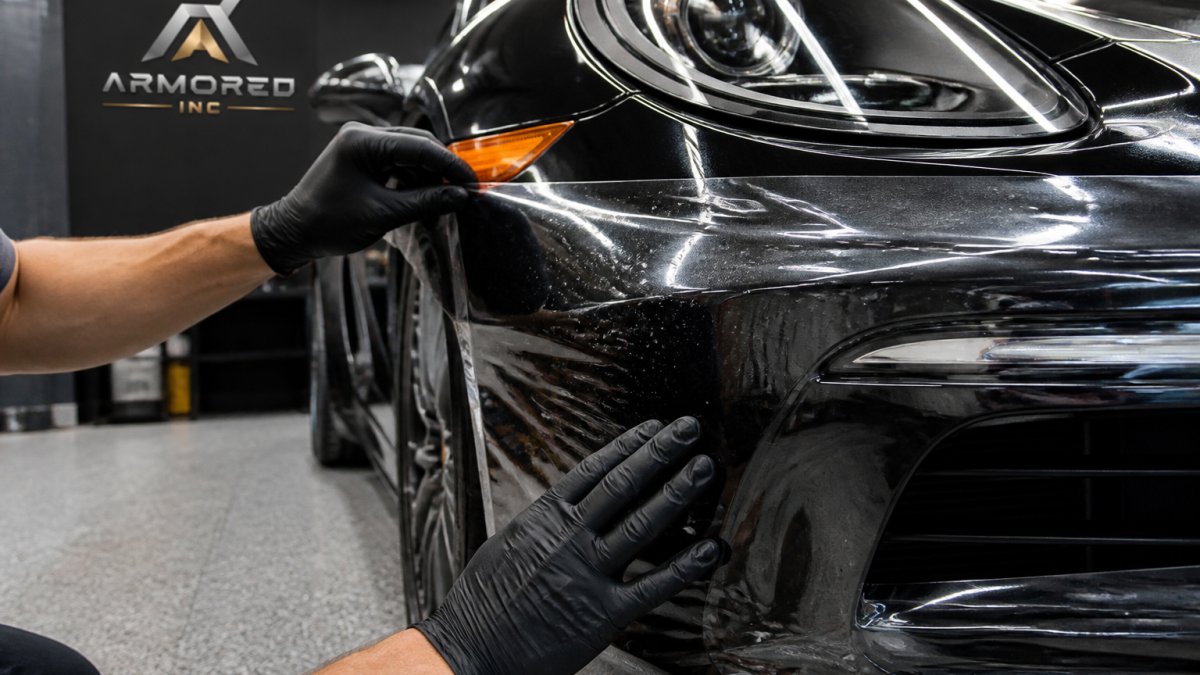
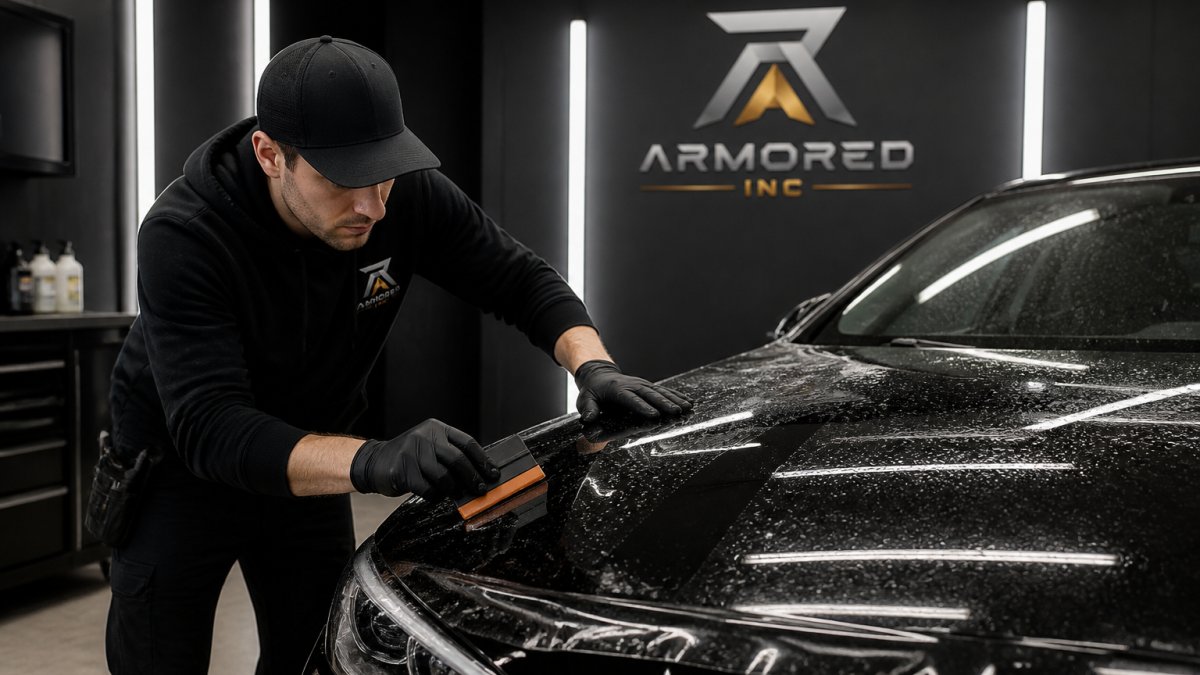
Application is where quality is won or lost. A proper install involves a full wash and decontamination, panel prep, precision cutting, and careful squeegeeing to remove every air bubble. A rushed job leaves edges that lift within a season. Plenty of vehicles come in with film that was cut short of the panel edge, and that gap is exactly where chips start.
If you're weighing whether the investment is worthwhile, our guide on the benefits of paint protection film covers the long-term case in detail.
Paint Protection Film Cost in Ontario
Paint protection film cost in Ontario varies widely by coverage area, film brand, and vehicle shape. A partial front kit costs less than a full-body wrap, and complex curves on sports cars take longer to install than flat panels on a truck.
Because pricing depends on your vehicle and coverage package, we quote each job individually rather than publish a flat rate. Factors that move the number:
- Coverage area: bumper only, partial front, full front, or full body
- Vehicle size and shape: more complex panels mean more labor
- Film grade: entry-level versus premium self-healing film
- Prep work: paint correction needed before film goes on
If you're comparing against ceramic coating pricing, our breakdown of the average cost to ceramic coat a car gives you a realistic starting point for that side of the decision. For an exact PPF quote on your vehicle, contact us directly.
Paint Protection Film Maintenance: Keeping Your Film in Shape
Maintaining paint protection film is simpler than most owners expect, but it is not maintenance-free. Hand washing with a pH-neutral soap and a soft mitt keeps the film clear and prevents contamination from bonding to the surface.
What to avoid:
- Automatic brush car washes, which can scuff the film
- High-pressure spray held close to edges, which can lift seams
- Harsh solvents or abrasive polishes
Rinse off bird droppings and bug splatter promptly, especially in summer, since acidic residue can stain film if left for days. A light ceramic topper over the film adds slickness and makes future washes easier. If you already run a coated vehicle, our ceramic coating maintenance guide covers the wash routine that keeps both coating and film performing.
Choosing a Paint Protection Installer in Parry Sound
Choosing an installer comes down to three things: film quality, installation method, and whether they can show you finished work on vehicles like yours. You can also read customer reviews to judge the business's work. Ask to see a completed install in person, not just photos, and check how the edges are finished.
Questions worth asking before you book:
- What film brand do you use, and what warranty comes with it?
- Do you wrap edges, or cut to the panel line?
- How do you handle paint prep before installation?
- Can I see a recent install on a vehicle similar to mine?
For owners in Barrie and the surrounding region, Armored Inc. offers paint protection film and ceramic coating with mobile service and valet options, so your vehicle is handled without disrupting your week.
Conclusion
Paint protection is one of those decisions where the cheapest option usually costs more later. A rushed install or a low-grade film shows its weaknesses within a season or two, right when Ontario road conditions are hardest on paint.
Armored Inc. installs paint protection film and ceramic coatings for drivers across Barrie and the Parry Sound area, with matte paint film expertise, mobile service, and valet or rental car options to keep you moving. If you want your finish protected properly the first time, contact us and we'll walk you through the right coverage for your vehicle.
Frequently Asked Questions
Is paint protection film worth it for driving around Parry Sound?
For many drivers in the Parry Sound area, yes. Winter road salt, sand and gravel from provincial highways, and summer construction debris all take a toll on a vehicle's front end. Paint protection film absorbs that impact so the paint underneath stays intact. If you drive a newer or luxury vehicle and plan to keep it several years, the film helps preserve resale value. The decision usually comes down to how much you drive and how much you care about keeping the factory finish unmarked.
What is the difference between paint protection film and ceramic coating?
Paint protection film is a thick, clear urethane layer that physically absorbs stone chips, scratches and road debris. Ceramic coating is a liquid polymer that bonds to the paint and adds gloss, water repellency and UV resistance, but it does not stop a rock. Many owners combine both: film on high-impact areas like the hood and bumper, ceramic coating over the rest for shine and easier washing. The right choice depends on whether you need impact protection, chemical and UV protection, or both.
How much does paint protection film cost in Ontario?
Pricing for paint protection film in Ontario varies based on the coverage area, the film brand, and the installer's labor rate. A partial front kit covering the bumper and part of the hood costs less than a full-body wrap. Armored Inc. does not publish fixed prices because every vehicle and coverage package is different. Request a quote from Armored Inc. with your vehicle make, model and the areas you want covered for an accurate figure.
How do you care for a car after paint protection film is installed?
Wait about a week before washing so the film can fully adhere. Hand wash with a pH-neutral soap and a soft mitt, and avoid pressure washing directly at film edges. Skip wax on the film itself; ceramic-coated film or a film-safe sealant works better. Remove bird droppings and tree sap promptly because they can stain the surface. Inspect edges and corners every few months, and book a professional check if you notice lifting or discoloration.