 how-to
How to Protect Quartz Countertops From Heat Stains
Table of Contents
- Understanding Quartz Heat Vulnerability
- Can You Put Hot Pans on Quartz Countertops
- Best Trivets for Quartz Countertops
- How to Remove Heat Marks From Quartz Countertops
- Quartz Countertop Care and Maintenance
- When to Seek Professional Assessment
- Frequently Asked Questions
Last Updated: October 15, 2026
Understanding Quartz Heat Vulnerability
Engineered quartz offers a durable surface, but understanding how to protect quartz countertops from heat stains is essential, as heat is its primary vulnerability.
Quartz countertops are composed of crushed quartz stone mixed with resin binders. The resin component is susceptible to damage: direct heat can soften and discolor it, leading to dark marks, sometimes appearing within seconds from a hot pan.
Why heat damage occurs on engineered quartz
Resin in quartz breaks down under extreme heat. Most quartz surfaces can withstand temperatures up to 150°C (approximately 300°F). However, a pan fresh from the stove often exceeds 200°C.
The resin does not simply melt; it undergoes a chemical change that alters its color, leaving a dark brown or black mark that can be permanent. This damage is particularly noticeable on lighter-colored quartz, where dark stains are highly visible, a common issue in Barrie, a region where lighter quartz is frequently chosen.
Thermal shock and sudden temperature changes
Thermal shock occurs when temperature changes too rapidly. Placing a hot pan on a cool quartz surface causes the material to contract suddenly, potentially leading to cracks in the stone or damage to the resin bond.
Pouring cold water onto a hot countertop can produce a similar effect, creating microscopic cracks that weaken the surface over time. To prevent thermal shock, allow hot items to cool slightly before placing them on the countertop, never pour cold water on a hot surface, and give the countertop time to adjust to temperature fluctuations.
Can You Put Hot Pans on Quartz Countertops
No. You should not place hot pans directly on quartz countertops. Hot cookware can cause permanent damage even from a single incident.
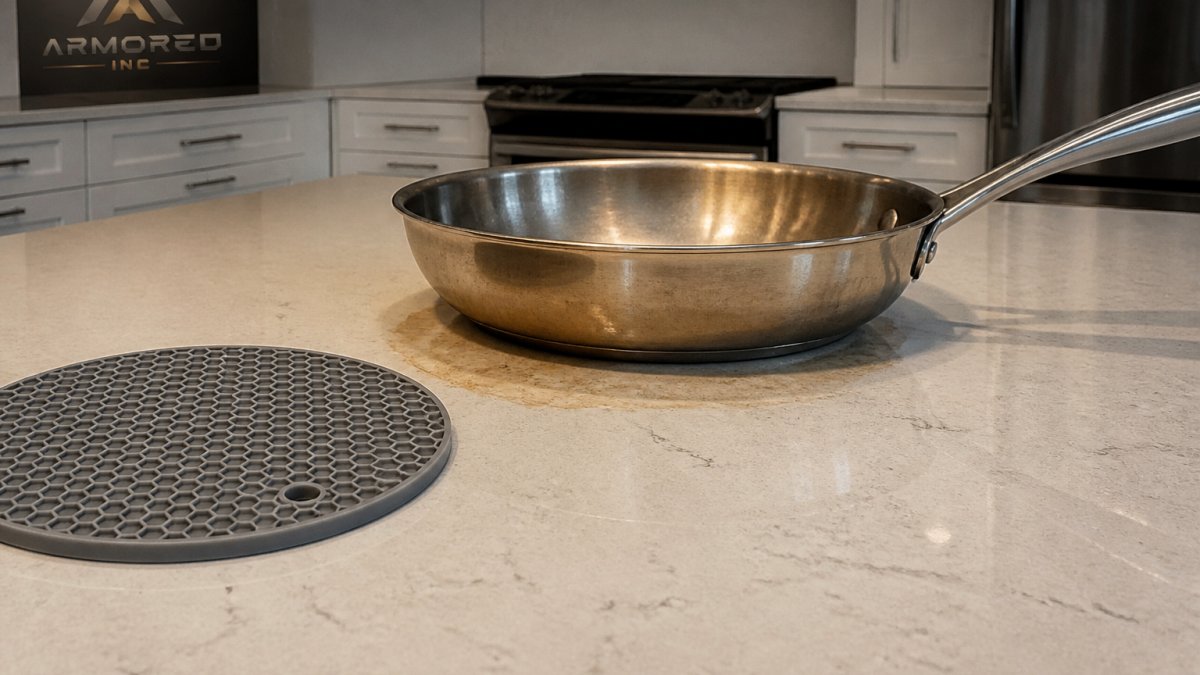
Most manufacturers specify that direct heat exposure voids the warranty, leaving you responsible for any repair costs.
Temperature limits and direct heat exposure
Most brands recommend keeping the surface temperature below 150°C. The damage can occur instantaneously, without warning. The resin softens and discolors before you can react to the pan's excessive heat.
Avoid these common mistakes:
- Placing hot cookware directly onto the countertop.
- Setting oven trays on the surface while they are still hot.
- Resting hot serving dishes on quartz.
Even brief contact can leave a mark; the duration of the pan's contact directly correlates with the severity of the damage.
Best Trivets for Quartz Countertops
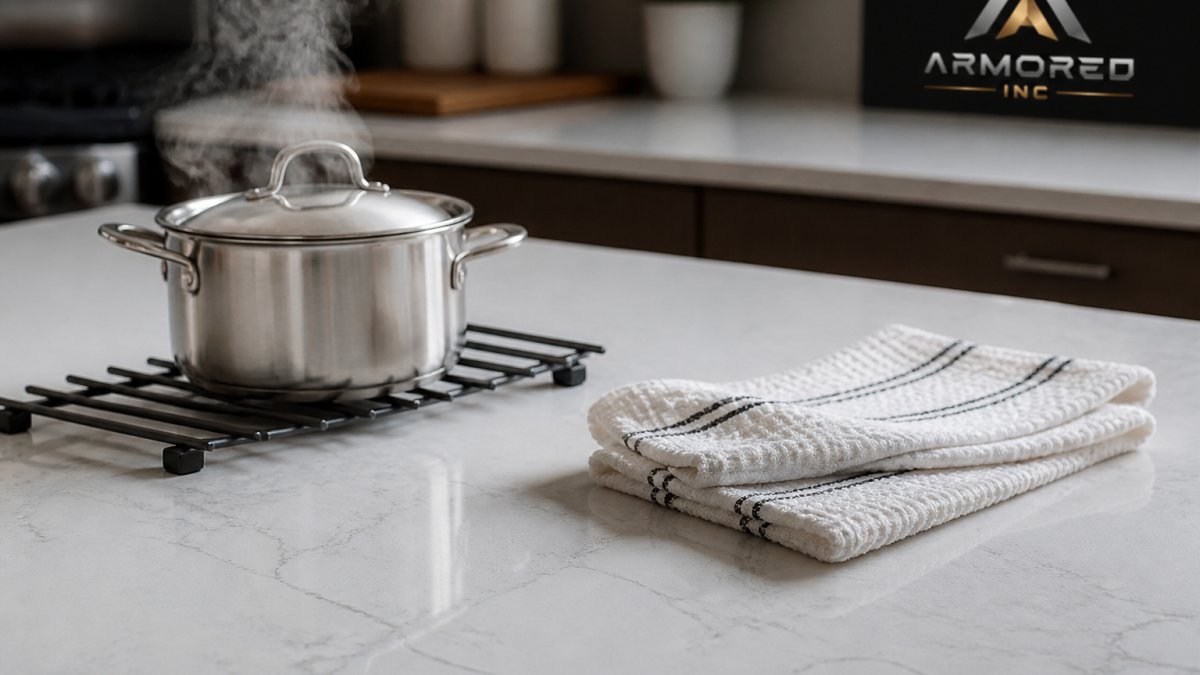
Using a trivet is the most effective way to protect quartz countertops from heat stains. A trivet acts as a barrier between the hot pan and the countertop surface, preventing heat from reaching the resin.
Choosing silicone mats and heat pads
Silicone trivets are highly effective and should be at least 1 cm thick for adequate insulation.
Silicone mats offer several advantages:
- They protect the countertop from heat.
- They do not scratch the surface.
- They are easy to clean.
Wooden trivets are also a suitable option. Opt for hardwoods such as bamboo or oak. Metal trivets can conduct heat to the quartz beneath them, so they should only be used as a last resort. Cork-backed trivets are excellent choices due to cork's insulating properties. The cork backing also prevents sliding.
Proper placement and cooling practices
Always use trivets for all hot items, including:
- Pans directly from the stovetop.
- Baking trays removed from the oven.
- Hot serving dishes.
Allow hot items to cool slightly before moving them. A pan from the stove typically requires 5-10 minutes to cool down. Never place a hot pan on the countertop to "cool down"; even cooling pans emit enough heat to damage quartz. Store trivets near your stove and oven for easy access.
How to Remove Heat Marks From Quartz Countertops
Heat marks can be stubborn, and incorrect cleaning methods can exacerbate the problem. Many marks that appear to be heat damage are actually food, oil, or dye stains, while others are true resin discoloration that no cleaner can rectify. The following sequence helps differentiate and address these issues.
Step 1: Let the surface cool completely
Do not attempt to clean a fresh heat mark while the quartz is still warm. The resin is softer when warm, and wiping or scrubbing can push discoloration deeper into the material. Wait at least 30 minutes, or longer if the contact was prolonged, until the surface has returned to room temperature.
Step 2: Diagnose the mark before you clean
Use this quick test to classify the mark:
- Damp-cloth test. Wipe the mark with a soft cloth dampened with warm water and a drop of mild dish soap. If the mark lifts, it is a surface food or oil stain, not heat damage.
- Fingernail test. Gently run a fingernail across the mark. If it catches on a ridge, pit, or crack, the surface itself is physically damaged, and cleaning will not resolve the issue.
- Color test. Light brown or amber marks often indicate early resin discoloration, while dark brown or black marks shaped like a pan base are typically permanent heat damage.
Step 3: Try the gentlest safe method first
For marks that pass the damp-cloth test as food or oil stains, use a baking soda paste:
- Mix 3 parts baking soda with 1 part water to create a thick paste.
- Apply a thin layer of the paste over the mark.
- Let it sit for 5-10 minutes. For dye stains, cover the area with plastic wrap and leave it for 30-60 minutes.
- Gently wipe the area with a soft cloth or a non-abrasive pad.
- Rinse thoroughly with clean water and dry with a microfiber cloth.
For everyday grease and fingerprints, a pH-neutral quartz cleaner and a microfiber cloth are usually sufficient. Avoid any products labeled "scrubbing" or "heavy-duty."
Step 4: Know when to stop
Stop cleaning and reassess the situation if:
- The mark has not lightened after two gentle cleaning attempts.
- The surface feels rougher than the surrounding area.
- You can observe a faint crack, crazing, or a dull halo around the mark.
Continuing to scrub a genuine heat mark will only dull the finish and create additional problems. At this stage, the mark is likely permanent resin discoloration and requires professional assessment.
Products and methods to avoid on any mark
Never use the following on quartz, even for stubborn stains:
- Scouring powders and abrasive creams.
- Steel wool, metal scrubbers, or abrasive pads.
- Bleach-based cleaners left to sit on the surface.
These substances can etch the surface, strip the finish, or dissolve the resin binder, making the countertop more susceptible to future heat damage and staining.
What a fresh heat mark actually looks like over time
A true heat mark often appears most severe in the first 24-48 hours. Light amber marks may fade as the resin cools, but dark brown or black marks generally do not.
Quartz Countertop Care and Maintenance
Routine care is crucial for preventing most issues and maintaining the pristine appearance of your quartz countertops.
Daily spill cleanup and surface protection
Clean spills immediately. Unattended spills can seep into microscopic cracks and cause staining.
Daily care steps:
- Wipe spills promptly with a damp cloth.
- Use mild dish soap and warm water for cleaning.
- Dry the surface thoroughly after cleaning.
Weekly deep cleaning:
- Use a pH-neutral countertop cleaner.
- Lightly spray the surface.
- Wipe clean with a soft cloth.
Protect the surface during cooking:
- Use cutting boards (avoid cutting directly on quartz).
- Employ trivets for all hot items.
- Promptly wipe up food debris.
Avoid placing excessively heavy objects on quartz: concentrated weight can lead to cracks, so refrain from standing on the countertop.
Manufacturer guidance and warranty protection
Review your warranty carefully. It outlines what is covered and what actions will void your protection.
Most quartz warranties cover:
- Manufacturing defects.
- Structural cracks resulting from normal use.
- Staining from reasonable use.
Most warranties do NOT cover:
- Heat damage from hot pans.
- Damage caused by improper cleaning methods.
- Cracks resulting from dropping heavy items.
Heat damage is almost universally excluded from warranty coverage. This underscores the importance of prevention. Once a heat mark appears, you will likely bear the cost of repair or replacement.
Keep your warranty documents for proof of coverage and contact the manufacturer before attempting any repairs. Professional maintenance every 1-2 years is beneficial: a technician can inspect for cracks and reapply sealant if necessary. In Barrie, Armored Inc. offers professional surface protection services, including Ceramic Coatings, to assess damage and recommend the best approach for maintaining your surfaces.
When to Seek Professional Assessment
Not every mark necessitates professional intervention, but some do. The objective is to avoid two costly errors: paying for a repair you could have handled yourself, or further damaging the countertop by attempting a fix that requires expert knowledge.
A simple decision framework
Work through these questions sequentially:
- Did the mark appear after contact with a hot pan, tray, or appliance? If yes, treat it as heat damage until proven otherwise.
- Did it respond to baking soda paste or a pH-neutral cleaner? If the mark lifted, it was a stain. If not, it is likely resin discoloration.
- Can you feel a depression, ridge, or crack? If yes, the surface is physically damaged, and cleaning will not resolve it.
- Is the mark dark brown or black and shaped precisely like the pan base? If yes, it is almost certainly permanent.
- Is the countertop still under warranty? If yes, contact the manufacturer or installer before proceeding with any action. DIY repairs can void coverage.
If you answered yes to questions 1, 3, 4, or 5, it is time to consult a professional.
Signs the damage is permanent
- Dark brown or black discoloration that precisely matches the footprint of a pan.
- A dull, matte patch that cannot be wiped clean.
- A visible crack, chip, or crazing surrounding the mark.
These indicators suggest that the resin has undergone a permanent molecular change. No cleaner, paste, or scrubbing agent can reverse this.
Signs it might still be fixable
- The discoloration is light amber or tan, rather than black.
- The mark appeared within the last few days.
- It is small and isolated.
Even fixable marks require careful handling. If you are uncertain, a professional assessment is a more economical choice than countertop replacement.
What professional repair actually involves
A qualified fabricator or stone restoration specialist possesses options unavailable to homeowners:
- Sanding and refinishing. The top layer of resin is carefully sanded and re-polished, effectively removing light surface discoloration and restoring the sheen. This method is most effective for shallow marks.
- Spot repair with resin. For deeper marks, a technician fills and blends matching resin, then polishes it flush with the surrounding surface. This technique requires precise color matching.
- Section replacement. If the damage is extensive or the countertop is cracked, replacing the affected section may be the only reliable solution. This is the most costly option and typically necessitates matching the original slab or a very close dye lot.
Costs vary based on the size of the damage, the brand of quartz, and slab availability. In Ontario, small spot repairs generally range from a few hundred dollars, while section replacement can cost thousands. Always request a written quote and confirm whether the work will impact your warranty.
Finding a qualified professional in Barrie and Ontario
Look for a fabricator or stone restoration specialist who:
- Has specific experience with engineered quartz, not just natural stone.
- Can provide local references from completed kitchen projects.
- Understands the warranty terms of your specific countertop brand.
Your original installer is often the best initial point of contact, as they are familiar with the slab, brand, and warranty. In Barrie and the surrounding Ontario region, Armored Inc. offers professional assessment for interior surfaces, including quartz countertops, evaluating damage and recommending repair or replacement based on the actual needs of the surface.
Warranty and documentation checklist
Before authorizing any repair, gather the following:
- Your original purchase or installation invoice.
- The manufacturer's warranty document.
- Any care and maintenance guide provided with the countertop.
While most quartz warranties exclude heat damage, some may cover manufacturing defects that present similarly. Having your documentation readily available will expedite the assessment process and protect you if the damage is indeed covered.
Quartz countertop care and warranty guidance from a Canadian stone industry association
Frequently Asked Questions
Can hot pans cause stains or damage on quartz countertops?
Yes, hot cookware can damage quartz countertops. Engineered quartz contains resin that softens under sustained heat above 150°C (300°F). Direct contact with hot pans, oven trays, or cookware can cause discoloration, thermal shock, and permanent surface damage. Always use trivets or heat pads between hot cookware and your countertop surface.
What should I put under a hot pan on a quartz countertop?
Use silicone mats, rubber trivets, or heat pads designed for kitchen use. These protective measures create a barrier between hot cookware and your countertop surface, preventing thermal shock and discoloration. Ensure the trivet fully supports the pan's base to avoid contact with the quartz. Allow hot cookware to cool before placing it directly on the surface.
How do I remove a heat mark from my quartz countertop?
First, determine if it's a heat mark or a food stain (turmeric, oil, or food residue appear different). For light heat marks, create a baking soda paste with water, apply gently with a non-abrasive cloth, and rinse thoroughly. Avoid abrasive cleaners, scouring pads, or harsh chemicals, as these damage the surface. If the mark persists after gentle cleaning, contact a professional for assessment.
Does sealing quartz countertops protect them from heat?
Quartz countertops are non-porous and do not require sealing like natural stone. However, proper maintenance and protective measures are essential. Use trivets under hot cookware, clean spills promptly with gentle methods, and follow the manufacturer's care guidance to maintain your warranty. Protective coatings for interior surfaces can be applied by professionals.
Heat stains on quartz countertops are preventable. Use trivets, avoid direct heat, and clean spills promptly. These simple steps protect your investment. If damage does occur, professional assessment helps you understand your options. Armored Inc. provides comprehensive interior surface protection and repair services throughout the Barrie area. Contact us for a consultation on protecting or restoring your quartz countertops.