 how-to
Boat Detailing Near Me: A Complete Guide
Table of Contents
- What Boat Detailing Includes
- Boat Detailing Preparation: Getting Ready
- Interior Detailing and Upholstery Care
- Exterior Detailing: Hull, Deck, and Gel Coat
- How Often to Detail a Boat
- Boat Detailing Cost: Professional vs. DIY
- When to Hire Professional Marine Detailing
- Seasonal Care for Ontario Waters
- Frequently Asked Questions
Last Updated: October 14, 2026
What Boat Detailing Includes
Boat detailing near me encompasses a complete restoration and protection process that goes far beyond a simple wash. At Armored Inc., we approach boat detailing as a multi-stage service designed to preserve your vessel's appearance, protect its surfaces, and extend its lifespan against the harsh conditions of Ontario waters.
A comprehensive boat detailing service typically includes interior cleaning, exterior restoration, protective coating application, and ongoing maintenance guidance. The interior work addresses upholstery, carpets, vinyl surfaces, and cabin finishes. The exterior process tackles the hull, deck, gel coat, and any metal fittings exposed to saltwater, sun, and environmental contaminants.
What sets professional boat detailing near me apart from DIY efforts is the equipment, products, and expertise involved. Professional detailers understand how different materials respond to various cleaning agents and polishing techniques.
The goal of boat detailing is threefold: restore the original finish, protect against future damage, and maintain the vessel's resale value. A well-detailed boat commands premium pricing in the market and performs better in the water due to reduced drag and improved hull condition.
Boat Detailing Preparation: Getting Ready
Assess Your Boat's Current Condition
Before beginning any boat detailing near me work, evaluate what you're working with. Walk around your vessel and note areas of oxidation, water spots, staining, or damage. Oxidation appears as a chalky, dull coating on fiberglass surfaces. Water spots indicate mineral deposits left behind by evaporation. Staining might come from mildew, rust, or algae growth.
Pay particular attention to the gel coat condition. Gel coat is the protective outer layer of fiberglass that gives your boat its color and shine. If it's cracked, peeling, or deeply oxidized, you may need professional restoration rather than standard detailing. Run your hand across the surface, rough, chalky texture means oxidation; smooth but dull means the protective layer has worn thin.
Check your upholstery and vinyl for mold, mildew, or salt residue. These thrive in the damp marine environment and can become permanent if not addressed promptly. Document any problem areas with photos so you can track improvement as you work through the detailing process.
Gather Your Tools and Materials
Proper boat detailing near me requires specific tools designed for marine surfaces. General automotive detailing products often don't work well on fiberglass or marine vinyl because the chemistry is different.
Essential tools include:
- Soft-bristled brushes for delicate surfaces
- Microfiber towels for drying and buffing
- Foam pads for polishing
- Orbital buffer or polisher for larger areas
- Pressure washer with adjustable nozzle (use low pressure on gel coat)
- Stainless steel cleaner for fittings
- Marine-grade upholstery cleaner
- Vinyl protectant specifically formulated for marine use
For materials, marine-specific products outperform automotive equivalents. Marine wax and sealants are engineered to withstand saltwater exposure, UV radiation, and temperature fluctuations. Gel coat restorers address oxidation without the harsh abrasives that damage fiberglass. Upholstery cleaners formulated for marine vinyl won't degrade the material or leave residue that attracts dirt.
Interior Detailing and Upholstery Care
Interior boat detailing near me focuses on restoring cabin finishes, cleaning upholstery, and protecting vinyl surfaces from further deterioration. The interior is where your crew spends time, and it's also where moisture, salt residue, and mildew accumulate fastest.
Start with upholstery by vacuuming thoroughly to remove loose debris, salt crystals, and dirt. Use a soft brush attachment to avoid damaging fabric fibers.
Vinyl surfaces require different treatment than fabric. Marine vinyl is more durable but still prone to mildew and salt accumulation. Clean with a vinyl-specific cleaner, then apply a UV-protective vinyl conditioner.
Cabin wood finishes, whether teak, mahogany, or other marine woods, need gentle care. Saltwater and humidity cause wood to swell, crack, and lose its finish. Clean wood with a damp cloth and mild soap, then dry immediately.
Don't overlook carpeting. Marine carpets are designed to resist mildew, but they still need regular cleaning to prevent permanent staining. Shampooing with a marine-grade carpet cleaner removes salt residue and prevents odor buildup in enclosed spaces.
Exterior Detailing: Hull, Deck, and Gel Coat
The exterior is where boat detailing near me becomes most critical. Your hull and deck are constantly exposed to UV radiation, saltwater spray, and environmental contaminants. Gel coat, the colored outer layer of your fiberglass, bears the brunt of this exposure.
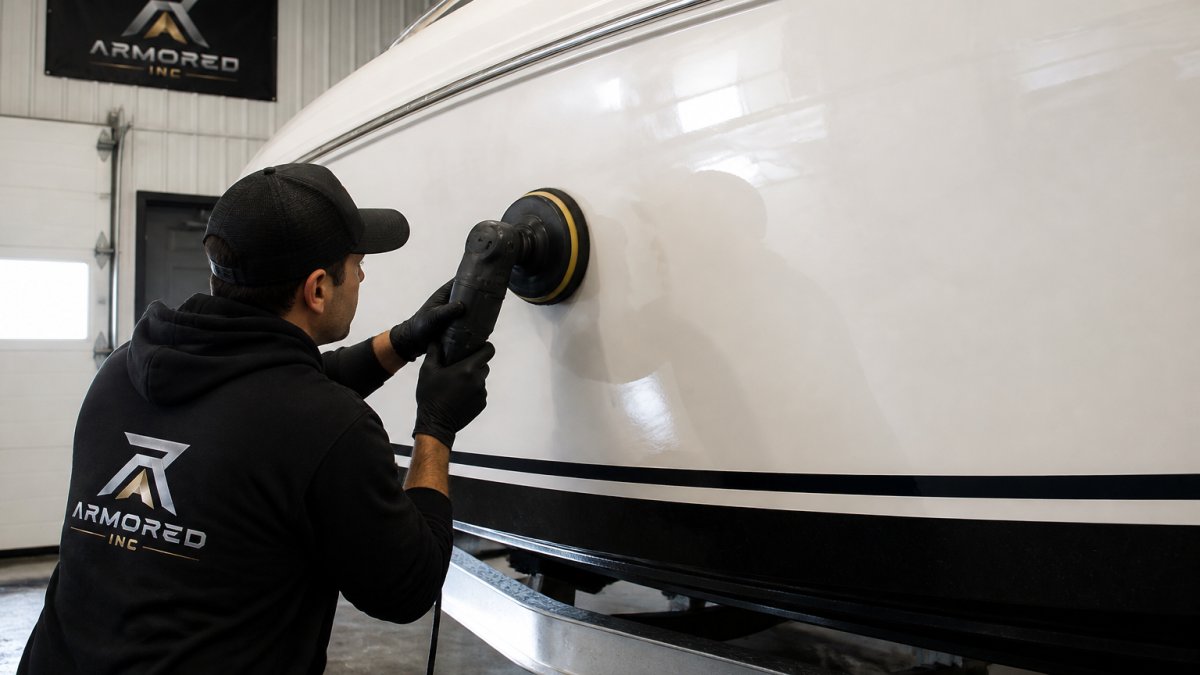
Start by washing the entire exterior with fresh water and a pH-neutral marine soap. Saltwater residue left on the surface accelerates oxidation and corrosion. Use a soft-bristled brush to avoid scratching the gel coat. Pay special attention to waterline areas where salt spray concentrates.
Removing Oxidation and Water Spots
Oxidation is the enemy of gel coat. It appears as a chalky, dull coating that dulls your boat's appearance and compromises the protective layer underneath. Water spots are mineral deposits that etch into the surface if left untreated.
Removing oxidation requires a multi-step approach. A marine oxidation remover breaks down the chalky layer without excessive abrasion. Apply it to a small test area first to ensure it doesn't cause hazing or discoloration. Work in sections, using a soft foam pad and light pressure. Aggressive scrubbing can damage the underlying gel coat.
Water spots respond to a combination of approaches. For light spotting, a clay bar treatment removes mineral deposits without damaging the surface. For stubborn spots, a gentle rubbing compound followed by polishing restores clarity. Always follow up with fresh water rinsing to remove all product residue.
Polishing and Buffing for Gloss Restoration
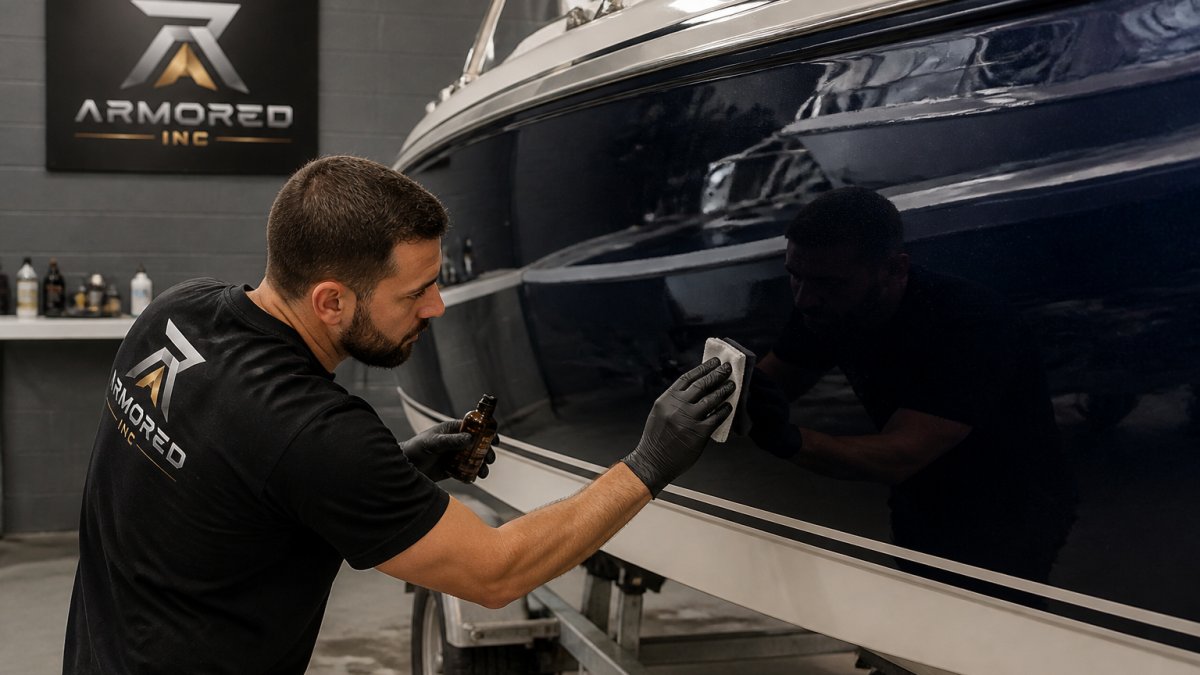
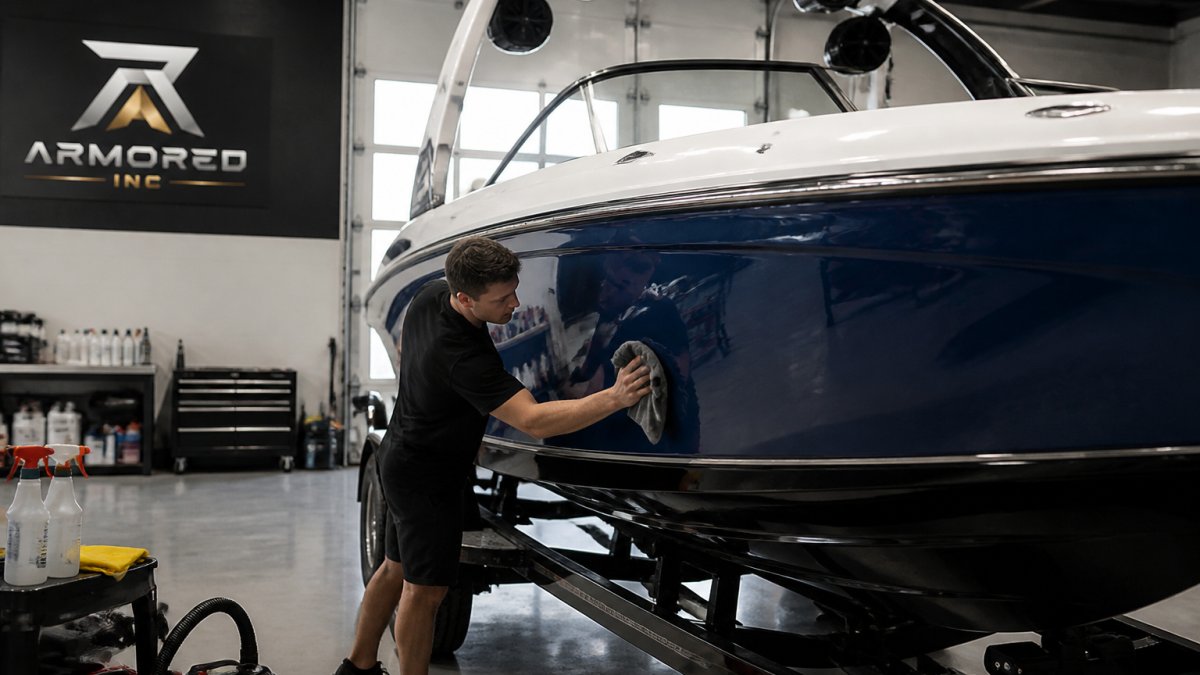
Once oxidation and water spots are removed, polishing and buffing restore the gel coat's original shine. Polishing removes fine scratches and prepares the surface for protection. Buffing applies a protective layer that enhances gloss and provides hydrophobic properties.
Marine polishing compounds are formulated to be less aggressive than automotive products because gel coat is more delicate than automotive clear coat. Use a foam pad on an orbital buffer at moderate speed, high speeds can generate heat that damages gel coat. Work in overlapping circular motions, maintaining consistent pressure.
Buffing applies the protective layer that gives your boat that showroom shine. Marine wax or sealant creates a barrier against UV, saltwater, and environmental contaminants. Sealants typically provide better water beading, which indicates hydrophobic protection.
For boat owners in Barrie seeking professional results, Armored Inc. offers ceramic coating options. Ceramic coatings create a hard, durable layer that resists scratching, oxidation, and UV damage while maintaining a high-gloss finish.
How Often to Detail a Boat
The frequency of boat detailing near me depends on your usage patterns, storage location, and environmental exposure. A boat stored indoors during winter requires less frequent detailing than one exposed year-round to Georgian Bay or Lake Simcoe conditions.
Boats in active use during summer months benefit from quarterly detailing, roughly every three months. This schedule removes accumulated salt residue, prevents oxidation buildup, and maintains protective coatings before they degrade. Monthly freshwater rinsing between detailing sessions extends the time between full detailing appointments.
Seasonal boats that are winterized and stored indoors can often get by with semi-annual detailing, spring and fall. Spring detailing removes winter grime and prepares the boat for the season. Fall detailing protects the vessel before storage and prevents mildew during dormant months.
Environmental factors matter significantly. Boats on saltwater or brackish water need more frequent attention than those on freshwater lakes. UV exposure in summer months accelerates gel coat oxidation. Boats in shaded storage age more slowly than those in direct sunlight.
Regular maintenance detailing can help prevent the need for major restoration.
Boat Detailing Cost: Professional vs. DIY
The decision between professional boat detailing near me and DIY work involves weighing cost, time, expertise, and results. DIY detailing appeals to budget-conscious owners, but hidden costs often make professional services the better value.
DIY boat detailing requires purchasing marine-grade tools and products. Marine-specific products cost more than automotive equivalents because they're engineered for saltwater environments.
Time is the often-overlooked cost. A thorough boat detailing near me takes significant time depending on boat size and condition.
Professional boat detailing services handle the labor, expertise, and product costs. They work efficiently because they perform the same tasks repeatedly. They know which products work best for different surfaces and conditions. They have industrial-grade equipment.
The key advantage of professional detailing is consistency and protection. A professional detailer applies sealants and coatings correctly, ensuring they bond properly.
For boat owners in Barrie seeking professional results without the learning curve, Armored Inc. provides marine detailing services that protect your investment with ceramic coatings and protective films designed specifically for harsh Ontario conditions.
When to Hire Professional Marine Detailing
Certain situations make professional boat detailing near me the clearly better choice. If your gel coat is severely oxidized, cracked, or peeling, professional restoration is necessary. Attempting to polish severely damaged gel coat can make it worse.
If you lack the time or physical ability to spend 30-40 hours on detailing work, professional services are the practical option. Boat ownership should be enjoyable, not a constant maintenance burden.
Professional detailing is beneficial if you're preparing your boat for sale. Buyers often expect a pristine appearance.
If your boat is high-value or features exotic materials like carbon fiber, teak, or specialty finishes, professional expertise is worth the cost. These materials require specialized knowledge to clean and protect properly without damage.
Boats stored year-round in harsh conditions, exposed to saltwater, intense UV, or temperature extremes, benefit from professional detailing every season.
Seasonal Care for Ontario Waters
Boat detailing near me in Ontario requires understanding the specific challenges posed by local water conditions and climate. Georgian Bay and Lake Simcoe present unique demands that differ from southern or coastal environments.
Spring detailing after winter storage removes mildew, salt residue from road salt spray, and corrosion that developed during dormant months.
Summer presents the highest UV exposure and saltwater spray intensity. Monthly freshwater rinsing removes salt accumulation. If your boat is in saltwater or brackish conditions, weekly rinsing is ideal but often impractical.
Fall detailing prepares your boat for winter storage. Remove all salt and mineral deposits, treat any mildew or staining, and apply fresh protective coatings. This prevents corrosion and mildew growth during the storage season.
Winter storage in Ontario requires attention to moisture control. Even indoors, boats can develop mildew if humidity isn't managed. Use dehumidifiers in storage spaces and ensure air circulation.
The seasonal cycle in Ontario, freeze-thaw cycles, intense summer sun, and extended winter storage, makes regular detailing essential. Professional boat detailing services that understand these local conditions provide the expertise needed to protect your investment year-round.
Boat detailing is essential maintenance for any vessel exposed to Ontario's challenging water and weather conditions. Contact us for a consultation on how ceramic coating and professional detailing can protect your boat investment for years to come.
Frequently Asked Questions
What does a full boat detail include?
A full boat detail covers interior and exterior surfaces. Exterior work includes hull cleaning, gel coat restoration, oxidation removal, polishing, buffing, and protective coating application. Interior detailing addresses upholstery cleaning, carpet and vinyl restoration, and stain removal. Professional marine detailing services often include dockside or mobile application, ensuring your boat's fiberglass, deck, and all marine surfaces are restored to high-end finish standards.
How often should a boat be detailed?
Boats exposed to water year-round in Ontario conditions benefit from detailed maintenance every 6 to 12 months, depending on usage and storage. Vessels kept in the water on Georgian Bay or Lake Simcoe face harsh sun and salt exposure, requiring more frequent attention. Seasonal boats should be detailed before storage and after launch. Regular detailing prevents oxidation buildup, maintains gloss, and protects gel coat, extending your vessel's lifespan and appearance.
How much does boat detailing cost?
Boat detailing pricing depends on vessel size, surface condition, and whether you choose professional service or DIY. Professional marine detailing typically costs more than basic cleaning but saves time and delivers superior results, especially for gel coat restoration and protective coating application. Mobile detailing services add convenience. For an accurate quote based on your boat's specific needs, contact a professional detailer in your area to discuss your vessel's condition and desired finish.
What should I ask a boat detailer before booking?
Ask about their experience with your boat type and gel coat condition, whether they offer mobile or dockside service, turnaround time, and warranty on protective coatings. Confirm they use marine-grade products suitable for salt and sun exposure. Ask about their process for oxidation removal and whether they apply sealant or ceramic coating for long-term protection. Verify they handle high-traffic inventory if you're a dealership, and clarify pricing structure so there are no surprises.