 how-to
Paint Protection Midland: PPF & Ceramic Coating Guide
Table of Contents
- Paint Protection Midland: What Actually Protects Your Vehicle
- PPF vs Ceramic Coating: Which Protection Fits Your Vehicle
- Full Front PPF: The Coverage Most Drivers Choose First
- Paint Protection Film Coverage Options From Partial to Full Body
- Paint Protection Film Cost: What Drives the Price
- Marine, RV, and Matte Paint: Protection Beyond the Daily Driver
- Conclusion
- Frequently Asked Questions
Last Updated: October 12, 2026
Paint Protection Midland: What Actually Protects Your Vehicle
Paint protection is the practice of applying a sacrificial layer over your vehicle's clear coat so that stone chips, road salt, and UV exposure hit that layer instead of your factory finish. At Armored Inc., we work on this every day in Barrie, Ontario, and the honest answer is that no single product does everything. Two categories dominate: paint protection film, a thick urethane sheet that absorbs physical impacts, and ceramic coating, a liquid polymer that bonds to the surface and adds chemical resistance and hydrophobic behavior.
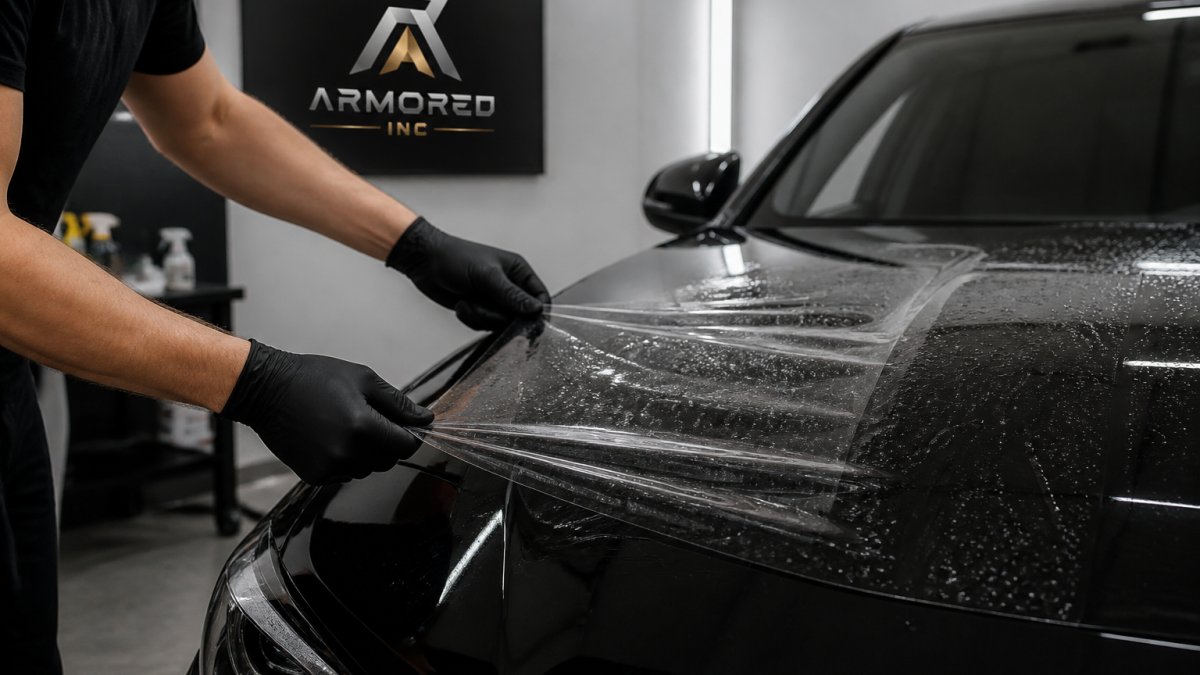
Midland sits close enough to Georgian Bay that winter brings a steady diet of sand, brine, and freeze-thaw cycles. That combination is hard on paint. Transport Canada's vehicle safety and road maintenance guidance explains how road salt and abrasive materials are used through Ontario winters, and those same materials are what strip wax and dull unprotected clear coat season after season.
So which one do you actually need? That depends on what you're defending against. A daily driver on Highway 400 faces a different threat than a garage-kept Corvette, which is why we rarely recommend the same setup twice.
PPF vs Ceramic Coating: Which Protection Fits Your Vehicle
The short answer: PPF stops physical damage, ceramic coating resists chemical and environmental damage, and the two solve different problems. Choosing between them is the central decision in any paint protection plan, and getting it wrong usually means paying for a product that never addresses your actual risk.
How Each Option Handles Rock Chips, UV, and Winter Road Salt
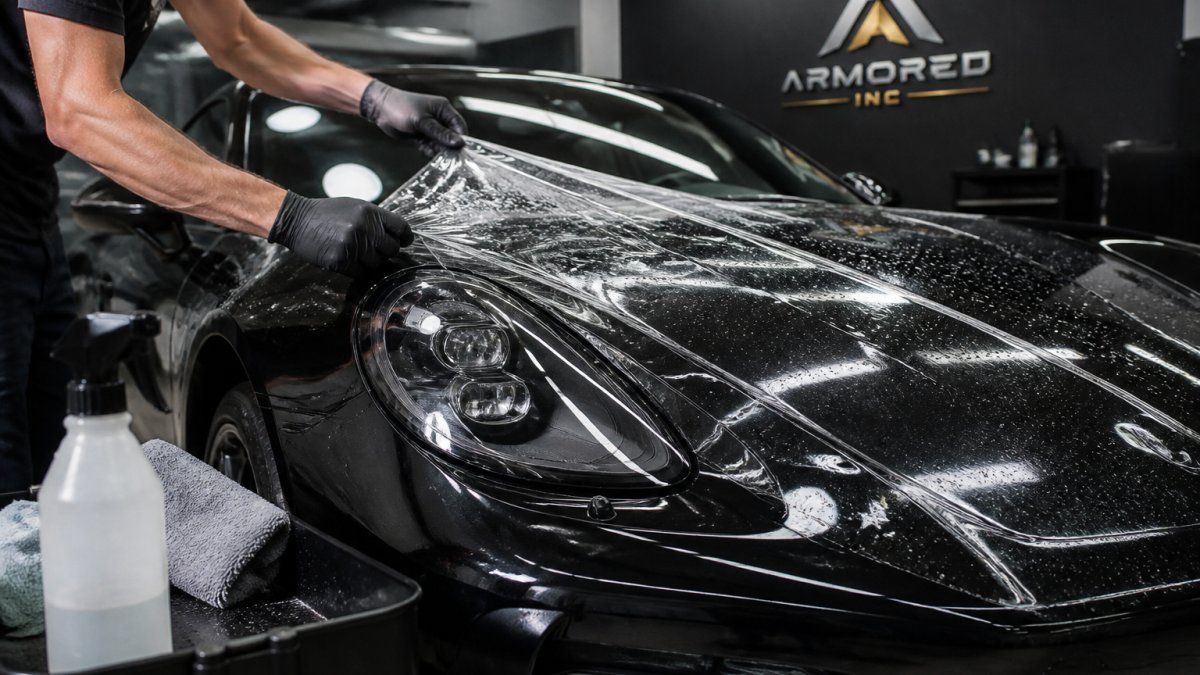
Paint protection film is a thick, flexible urethane layer that takes the hit from gravel and debris. It self-heals minor swirls with heat, and it is the only one of the two that offers real impact resistance.
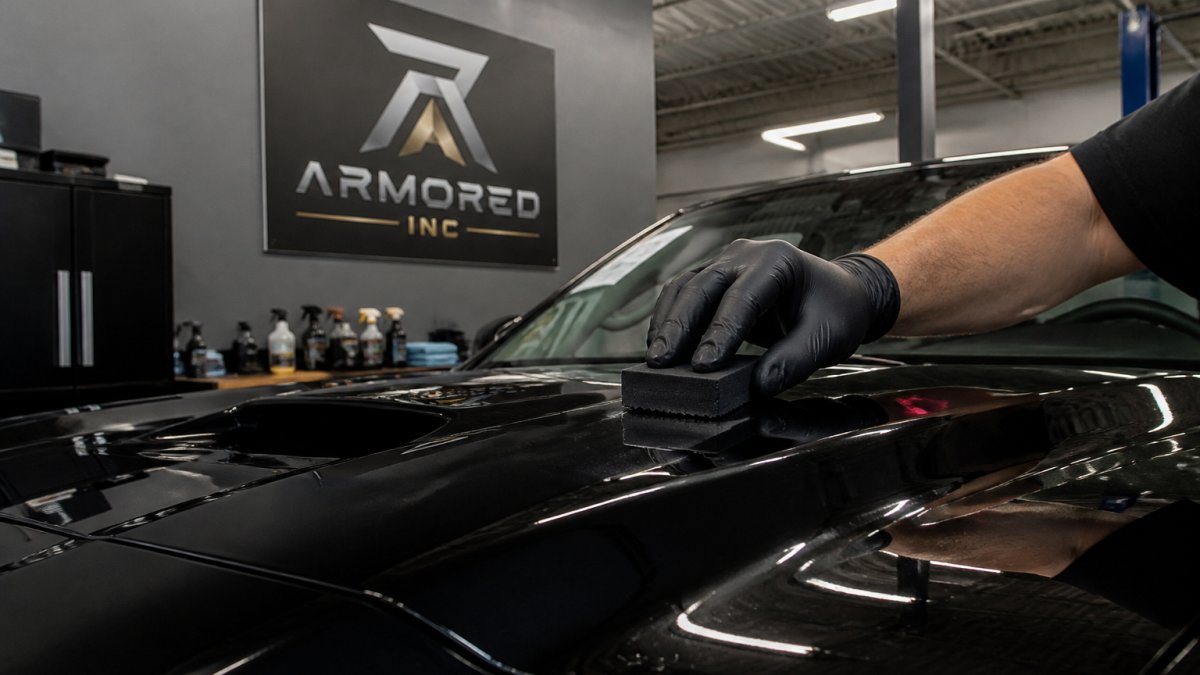
Ceramic coating is a thin, semi-permanent layer that bonds to your clear coat. It makes washing easier, adds gloss, and blocks UV and chemical staining. What it does not do is stop a rock.
| Threat | PPF | Ceramic Coating |
|---|---|---|
| Rock chips and gravel | Strong protection | Little to none |
| UV fading | Blocks it | Blocks it |
| Winter road salt | Physical barrier | Chemical resistance |
| Swirl marks | Self-heals light marks | Reduces wash marring |
| Gloss and hydrophobics | Adds some | Adds the most |
A common mistake is buying ceramic coating expecting chip protection. It won't deliver that, and no amount of marketing changes the physics.
Can You Apply Ceramic Coating Over Paint Protection Film?
Yes. In fact, this is the setup we recommend most often for new vehicles, and it is the one area where the two products genuinely complement each other.
The film handles impact. The coating goes on top to add hydrophobics, gloss, and easier cleaning. You get the durability of film with the slick finish of ceramic. The order matters: film first, coating second, always. Applying film over a coated surface can trap contaminants and lead to lifting at the edges.
Full Front PPF: The Coverage Most Drivers Choose First
Full front PPF covers the hood, front fenders, bumper, mirrors, and headlights. It is the coverage package most daily drivers pick first because the front of the car absorbs the vast majority of road debris. For anyone commuting through Barrie, Newmarket, or the Muskoka corridor, this is where the damage happens.
Why the front? Because that's where the impacts land. Following distance, highway speed, and winter gravel all concentrate damage on the leading surfaces. Protecting the front end first gives you the highest return on the money you spend.
If you're weighing options, full front PPF sits in the middle of the range. It costs more than a partial kit but far less than a full-body wrap, and it covers the areas that actually take abuse.
Paint Protection Film Coverage Options From Partial to Full Body
Coverage options run from a small partial kit up to a full-body wrap, and the right choice depends on how and where you drive. Here is how the tiers break down.
- Partial front: Bumper and part of the hood. Best for leased vehicles or tight budgets.
- Full front: Bumper, full hood, fenders, mirrors, headlights. The most popular choice for daily drivers.
- Track or high-impact package: Full front plus rocker panels and rear bumper load area.
- Full body: Every painted panel wrapped. For show cars, exotics, and matte finishes.
For a matte-finish sports car, full-body coverage is often the only sensible option. Matte paint cannot be polished or spot-repaired the way gloss can, so once it's damaged, your options are limited. We handle matte paint protection film specifically because matte surfaces demand different film and different technique than gloss.
Paint Protection Film Cost: What Drives the Price
There is no single price for paint protection film. Cost depends on coverage area, vehicle size and complexity, film brand and thickness, and labor time. We quote every vehicle individually because a compact sedan and a full-size truck present very different work.
Factors That Change Your Quote
Several variables move the number up or down. Knowing them helps you compare quotes fairly instead of chasing the cheapest sticker.
- Coverage area: More panels means more film and more labor.
- Vehicle shape: Curves, vents, and complex bumpers take longer to wrap cleanly.
- Film grade: Thicker, self-healing films cost more than basic gloss film.
- Paint condition: Panels needing correction first add prep time.
- Install method: Bulk wrapping takes more skill than pre-cut kits.
If a quote seems dramatically lower than others, ask what film is being used and whether edges are wrapped. Cheap film and cut corners show up within a year, usually as yellowing or lifting.
Marine, RV, and Matte Paint: Protection Beyond the Daily Driver
Boats, RVs, and matte-finish vehicles need protection built for their conditions, not a car product stretched to fit. A vessel that sits in the water through an Ontario season faces constant UV, salt, and water exposure that a car never sees. Marine coatings are formulated for that environment.
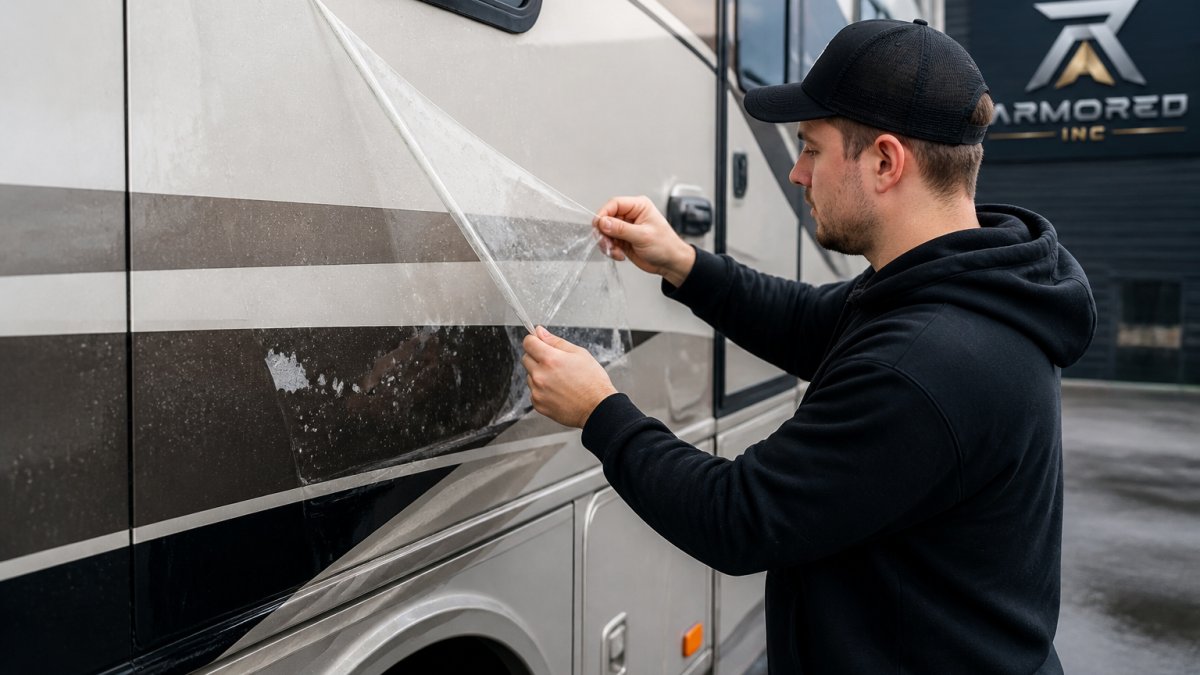
RVs and travel trailers deal with a different problem: large, flat panels that take sun and road debris over long distances. Coverage on an RV is often about the front cap and lower body, where damage concentrates.
Matte paint is its own category. It needs film designed for matte surfaces and installers who understand that the finish cannot be corrected after the fact. If a shop has never worked with matte, that's a risk you don't want to take.
Conclusion
Protecting your paint comes down to matching the product to the threat. Film stops impact, ceramic coating resists chemicals and UV, and the two work best together. Whether you drive a daily commuter through Barrie or keep a matte-finish sports car in the garage, the right coverage depends on how you use the vehicle.
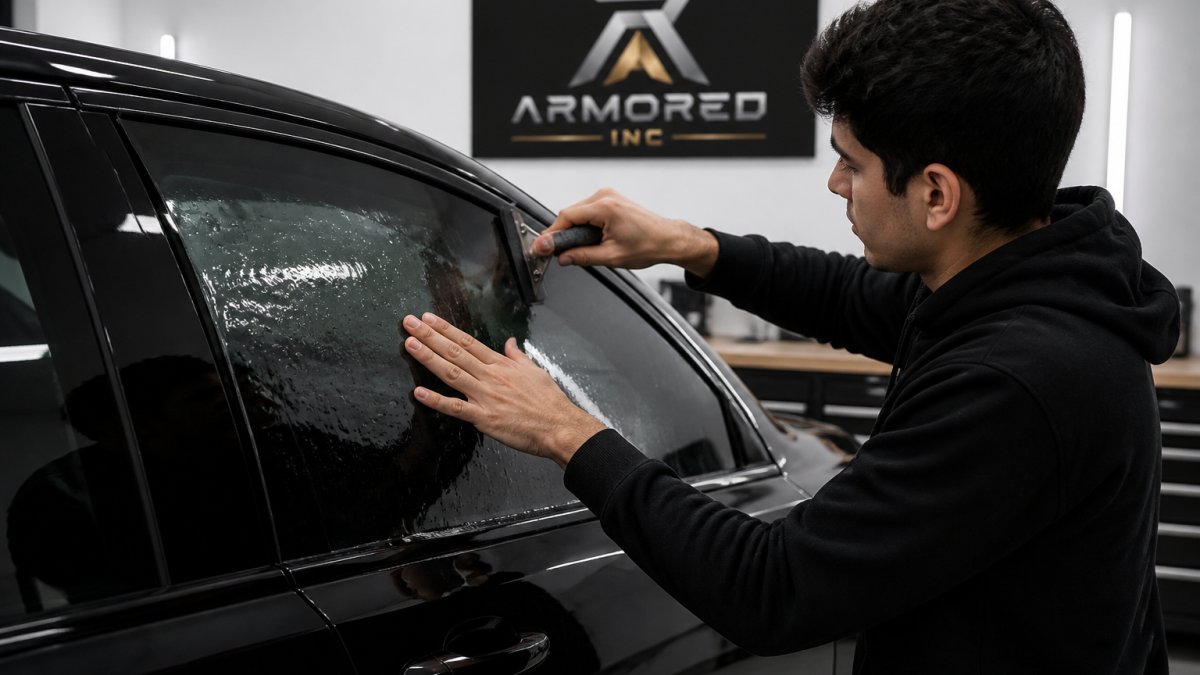
At Armored Inc., we offer paint protection film, ceramic coatings, and window tinting for cars, marine vessels, and RVs across the Barrie area, with mobile service and valet options to fit your schedule. If you're searching for paint protection near me in Midland or the surrounding region, our team can walk you through the coverage that fits your vehicle and budget.
Frequently Asked Questions
What is the best paint protection for a car in Midland, Ontario?
There's no single best option because it depends on your driving and where you park. Paint protection film gives the strongest defense against rock chips, scratches, and road debris, which matters on Highway 400 and around Midland's waterfront. Ceramic coating adds gloss, makes washing easier, and boosts UV and chemical resistance. Many owners combine both: film on high-impact areas, coating over the rest.
How much does paint protection film cost in Midland?
Paint protection film cost depends on the coverage you choose, your vehicle's size and shape, and the film brand. A full front PPF package costs less than a full-body wrap because it uses less material and labor. Smaller partial kits sit at the lower end. Armored Inc. can provide a quote based on your specific vehicle and the coverage level you want.
Is paint protection film worth it for a new car?
For a new car, PPF is worth considering if you plan to keep it long-term or care about resale value. It absorbs the damage that would otherwise hit your paint: stone chips, bug acids, and light scratches. Once paint is chipped, it can't be fully restored without repainting. Installing film early, while the finish is still flawless, protects that original condition.
How long does paint protection film last?
A quality paint protection film typically lasts five to ten years, depending on the brand, how the vehicle is stored, and how it's maintained. Films with top-coat technology resist yellowing and staining better than older generations. Regular hand washing with pH-neutral soap and avoiding automatic brush washes will help you get the most life out of the film.
Get a clear answer on which protection suits your vehicle before you spend a dollar. Contact Armored Inc. for a quote on paint protection film, ceramic coating, or a combined setup, and we'll help you protect the finish you've invested in.