 ultimate-guide
Marine Ceramic Coating for Boats: Complete Guide
Table of Contents
- What Is Marine Ceramic Coating and How It Works
- Ceramic Coating vs Marine Wax: Which Offers Better Protection
- Boat Surface Preparation Steps Before Application
- Marine Ceramic Coating Application Process
- Marine Ceramic Coating Durability: What to Expect
- Maintenance and Aftercare for Long-Term Protection
- Troubleshooting Common Application Issues
- Conclusion
Last Updated: August 23, 2026
What Is Marine Ceramic Coating and How It Works
Marine ceramic coating is a liquid polymer that chemically bonds to your boat's gel coat or paint, creating a protective layer that hardens into a durable shield. Unlike traditional waxes, ceramic coatings form a permanent bond at the molecular level, providing long-term protection against salt spray, UV rays, and oxidation.
Once applied and cured, the coating creates a hydrophobic surface where water and contaminants roll off rather than pooling on the hull. This self-cleaning effect reduces washing frequency and prevents mineral deposits and salt buildup that accelerate deterioration in marine environments.
The nano-ceramic particles in the coating provide 9H hardness, a measurement of surface resistance to scratching and chemical damage. This means the coating resists the wear that typically degrades unprotected gel coat within months of regular use.
The application process involves surface decontamination, paint correction if needed, and precise application using proper applicator techniques. The coating requires 24 to 48 hours of curing before the vessel can safely return to the water, during which polymers cross-link and harden into their final protective form (peer-reviewed research).
Ceramic Coating vs Marine Wax: Which Offers Better Protection
Marine wax creates a sacrificial layer that sits on top of your gel coat, providing decent water beading and some UV protection. However, it degrades relatively quickly, typically requiring reapplication every 3 to 6 months depending on water conditions and sun exposure.
Ceramic coating bonds chemically to the surface and doesn't degrade like wax. Once cured, it remains stable for years without wearing off, maintaining consistent long-term protection through multiple seasons of use.
The durability difference becomes obvious over time. While ceramic coating requires a larger upfront investment than wax, it eliminates frequent reapplication. Over 3 to 5 years, the total cost of ceramic coating often comes out comparable to or lower than repeated waxing when you factor in time and labor costs.
Wax does offer one advantage: it's easier to remove if you need to switch approaches. Ceramic coating is permanent, so proper surface preparation and application technique are critical before committing to it.
For saltwater vessels that sit in the water year-round, ceramic coating typically outperforms wax. Constant salt exposure accelerates wax degradation, while ceramic's chemical bond resists salt spray and mineral buildup more effectively.
Boat Surface Preparation Steps Before Application
Surface preparation determines whether your ceramic coating will bond properly and deliver years of protection. This step cannot be rushed.
The first phase is pressure washing and chemical decontamination. Your boat's surface has accumulated salt deposits, algae, oxidized gel coat, and embedded contaminants that prevent bonding. After pressure washing, use isopropyl alcohol or specialized marine decontaminants to remove salt residue and mineral deposits that water alone cannot lift.
Next, inspect for oxidation and damage. Oxidation appears as a chalky, dull layer on the gel coat. Mild oxidation can be addressed through polishing or light buffing. Severe oxidation may require paint correction to restore the gel coat's integrity and gloss.
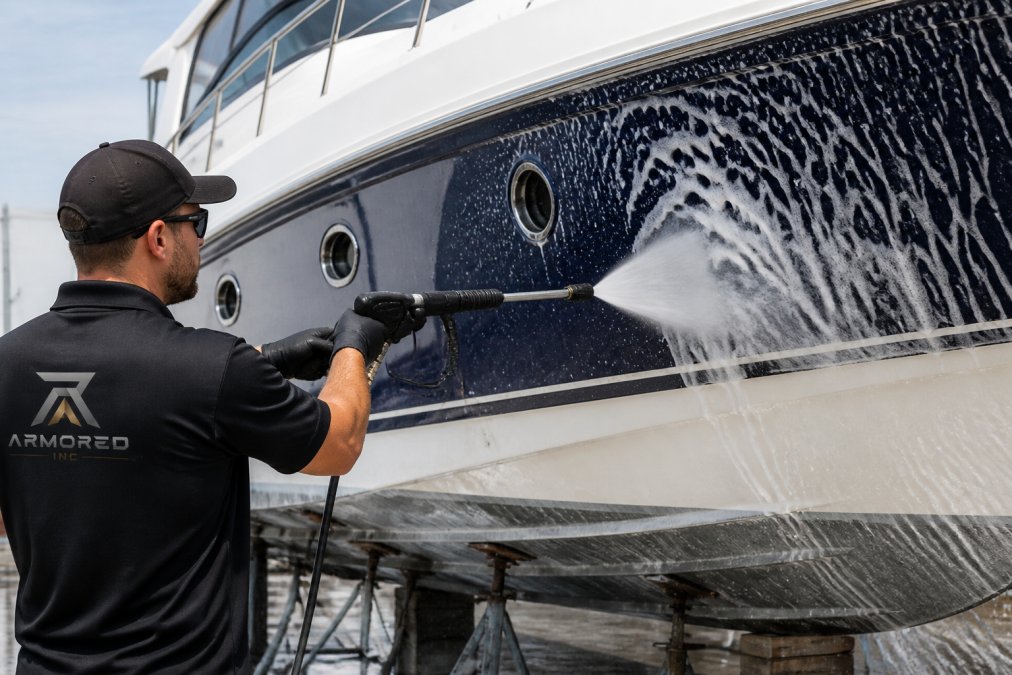
The final stage is critical: the surface must be completely dry and free of residue. Allow 24 hours of dry time after washing, then wipe the entire surface with a microfiber towel dampened with isopropyl alcohol. This removes any dust or particles that settled during drying. Any remaining contaminant will create a barrier between the ceramic and gel coat, resulting in poor adhesion.
Work in conditions between 15°C and 25°C with relative humidity below 80% (iso.org). Cold temperatures slow chemical reactions and can trap moisture. High humidity can cause water droplets to form on the surface, interfering with bonding.
Marine Ceramic Coating Application Process
Applying marine ceramic coating requires precision, proper technique, and controlled environmental conditions. Professional application delivers superior results compared to amateur attempts.
Begin with masking. Protect any areas you don't want coated, trim, rubber seals, windows, or hardware, with painter's tape and protective sheeting. This prevents overspray and ensures the coating covers only intended surfaces.
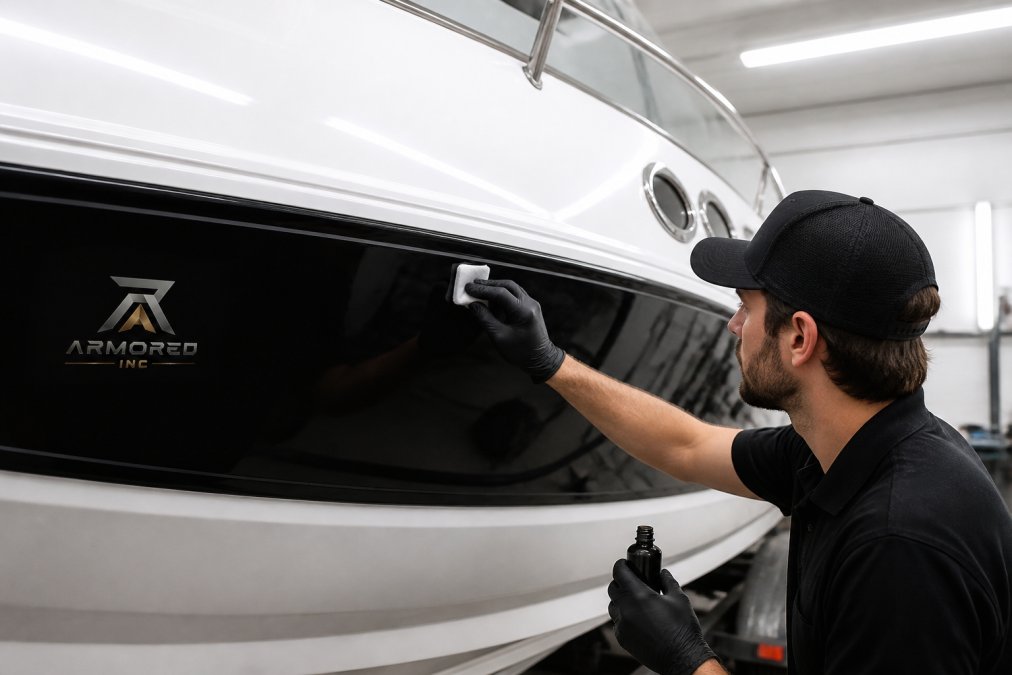
The ceramic coating is applied with a specialized microfiber applicator pad, working in small sections of approximately 60 by 60 centimetres in overlapping motions. The goal is a thin, uniform layer, not a thick coating. Too much product creates streaking, hazing, or uneven curing.
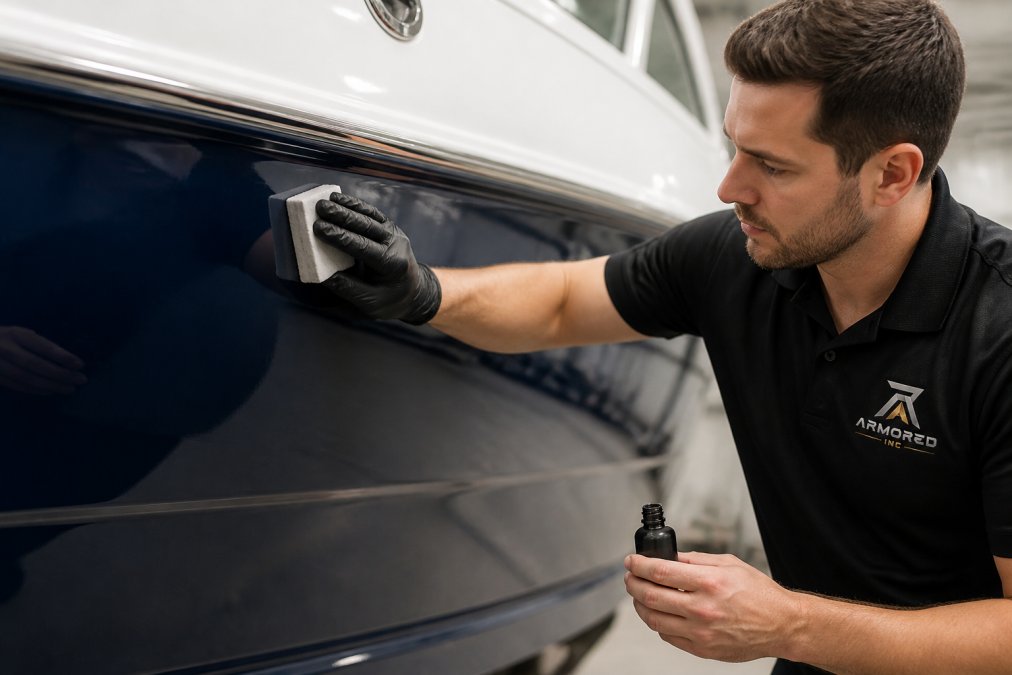
Timing between application and buffing is critical. Most marine ceramic coatings require 5 to 15 minutes of flash time before excess product is buffed away using a clean microfiber towel. Buffing too early leaves excess coating that hardens into streaks. Buffing too late makes removal difficult.
The entire hull typically requires multiple coats. A single coat provides baseline protection, but two or three coats deliver significantly better durability and gloss. Each coat must cure fully before the next is applied, usually 24 hours between coats. essential yacht maintenance.
Environmental conditions during application are non-negotiable. Wind, rain, or temperature fluctuations compromise the coating's ability to harden properly. Temperature below 15°C or above 25°C slows or accelerates curing unpredictably, and humidity above 80% can trap moisture.
After the final coat, the vessel must remain out of the water for at least 48 hours, though 72 hours is safer. This allows the ceramic to fully cross-link and harden.
Marine Ceramic Coating Durability: What to Expect
A properly applied marine ceramic coating lasts 3 to 5 years before showing significant degradation (peer-reviewed research). In harsh saltwater environments, you might see the first signs of wear after 2 to 3 years.
The coating doesn't fail suddenly. Instead, water beading becomes less pronounced, gloss dulls slightly, and self-cleaning properties diminish. This doesn't mean failure; it means the outer layer is beginning to oxidize.
Constant saltwater immersion is the primary factor accelerating degradation. Boats that spend most time in freshwater or are hauled out seasonally see significantly longer coating life. UV exposure also matters; boats in southern locations with intense year-round sun experience faster oxidation.
Maintenance directly impacts durability. A ceramic coating that's regularly rinsed with fresh water and washed monthly lasts noticeably longer than a neglected one. Salt deposits left on the surface accelerate chemical degradation.
The thickness of the coating application affects durability too. A single coat provides baseline protection but degrades faster than two or three coats. Professional applications typically include two coats minimum.
Maintenance and Aftercare for Long-Term Protection
The first 48 hours after application are critical. The coating is still hardening, and any water contact can compromise adhesion. Keep boats out of the water during the curing window.
Once fully cured, regular fresh water rinsing is the most important maintenance practice. Salt deposits accumulate constantly, especially in saltwater. A quick rinse after each use prevents salt buildup and reduces oxidation rates.
Monthly washing with pH-neutral marine soap keeps the coating clean and extends its life. Avoid harsh detergents or acidic cleaners that attack the ceramic polymer. A soft microfiber wash mitt and low-pressure water are sufficient.
Drying after washing prevents mineral deposits from etching into the surface. A microfiber drying towel removes water quickly. In areas with hard water, a final rinse with deionized water followed by immediate drying eliminates mineral deposits.
Inspect the coating regularly for damage. Small scratches don't compromise the entire coating, but they do expose underlying gel coat to oxidation. Minor damage can be touched up with ceramic coating repair products.
Avoid acidic cleaners, harsh solvents, and abrasive polishes that break down the polymer structure. Hand washing or professional marine detailing services are safer approaches.
If your boat is hauled out for winter, rinse and dry it thoroughly before storage. A light coat of marine wax applied over the ceramic coating provides additional protection during storage periods.
Troubleshooting Common Application Issues
Streaking or hazing on the cured coating indicates improper buffing technique or excess product application. Minor hazing can sometimes be improved by polishing with specialized ceramic coating polish. Severe streaking usually requires professional remediation.
Peeling or lifting within weeks of application signals inadequate surface preparation. The ceramic didn't bond properly because contaminants or moisture prevented direct contact with the surface. Proper prep eliminates this problem entirely.
Poor water beading immediately after curing suggests the coating didn't fully harden. This can result from application in cold temperatures, high humidity, or insufficient curing time before water exposure. If the boat was launched too soon, beading may improve as the coating continues to harden. If beading remains poor after 72 hours, the coating likely failed to cure properly.
Dull or hazy appearance developing within the first few months usually indicates salt residue accumulation rather than coating failure. A thorough fresh water rinse and wash often restores gloss. If dullness persists after cleaning, oxidation may have begun.
Coating failure in specific areas, typically where water pools or salt accumulates, points to incomplete coverage or inadequate prep in those zones. Future applications should focus extra attention on vulnerable spots.
Protecting your boat from saltwater degradation and UV damage requires a strategic approach. Marine ceramic coating has proven itself as one of the most effective long-term solutions available. The investment in proper surface preparation, professional application, and consistent maintenance pays dividends through years of preserved gloss, reduced oxidation, and minimal maintenance demands.
At Armored Inc., we specialize in marine ceramic coating applications that deliver the durability and protection your vessel deserves. Our team understands the specific challenges saltwater environments present and applies coatings engineered specifically for these conditions. We handle complete surface preparation, multi-coat application with proper curing protocols, and provide guidance on maintenance practices that extend your coating's lifespan. Whether you're protecting a luxury yacht, recreational boat, or commercial vessel, our professional marine detailing services ensure your boat maintains its pristine appearance and structural integrity season after season. Contact Armored Inc. today to discuss how marine ceramic coating can transform your boat's protection strategy.
Frequently Asked Questions
Are ceramic coatings good for boats?
Yes. Marine ceramic coating creates a hydrophobic, hard protective layer that resists UV rays, oxidation, salt spray, and staining. It bonds chemically to the gel coat or fiberglass, offering durability that traditional marine wax cannot match. The self-cleaning properties and enhanced gloss make it ideal for vessels in harsh saltwater environments.
How long does marine ceramic coating last on a boat?
Marine ceramic coating durability typically ranges from 2 to 5 years, depending on environmental exposure, maintenance routine, and water type. Saltwater vessels experience faster degradation than freshwater boats. Regular washing with proper marine-grade sealant maintenance and avoiding abrasive buffing extends the coating's lifespan significantly.
Can I apply marine ceramic coating myself?
While DIY application is possible, professional application is strongly recommended. Improper surface preparation, incorrect curing time, environmental contamination, or technique errors can result in streaking, hazing, or premature failure. Professional technicians have the tools, experience, and controlled environment to ensure even coverage and maximum durability.
What is the downside of ceramic coating on boats?
Ceramic coating requires meticulous surface preparation and cannot be applied in all weather conditions. Once cured, it's difficult to remove if you want to change finishes. The upfront cost is higher than traditional wax, though the extended durability often justifies the investment over 5-10 years. Regular maintenance is still necessary to prevent marine growth and salt buildup.
This article was written using GrandRanker