 how-to
How to Safeguard Exotic Car Paint From Scratches and Road Debris
Last Updated: October 30, 2026
Quick Summary
Paint protection film is the most direct defense for exotic car paint, bonding a clear urethane layer that absorbs rock chips, road debris, and minor scratches before they reach the finish. Film protects against physical damage while ceramic coating handles contamination and easier washing, so the strongest setup combines both.
- Wax sits on top of paint and washes away, offering a temporary shine rather than a shield.
- Some modern films self-heal small swirls and light scratches when heat is applied.
- Garage queen cars often need only front bumper and mirror coverage.
- Film stops rock chips and self-heals, while ceramic coating repels water and dirt.
- Keep the pressure washer nozzle back and never aim at a film edge or seam.
Table of Contents
- Why Exotic Car Paint Needs More Than Wax
- How Paint Protection Film Shields Against Rock Chips and Scratches
- Paint Protection Film Coverage Options for Collector Cars
- Paint Protection Film vs Ceramic Coating: Which Protects What
- How to Maintain Paint Protection Film Through Ontario Winters
- Realistic Limits: What Film and Coatings Cannot Prevent
- Book a Paint Assessment for Your Exotic Car
- Frequently Asked Questions
Why Exotic Car Paint Needs More Than Wax
Wax sits on top of your paint and washes away. That is the whole problem. Collectors can compare best paint protection for sports cars before reading on.
Low-slung cars make this worse. A Corvette or Porsche sits close to the road, so the front bumper, hood, and mirrors take a direct hit from everything the tires kick up. Low-slung cars that spend time on highways and back roads take this kind of impact regularly.
Exotic car paint is also thin and expensive to correct.
What Road Debris Actually Does to a Low-Slung Finish
Road debris does three things to a low car: it chips, it scratches, and it etches. Stone chips crack the clear coat. Grit and sand grind fine scratches into the surface. Road salt and tar leave marks that eat into the finish over time.
The damage adds up quietly. Most collectors notice it after a season of driving, when the front end looks sandblasted under direct light.
Ontario Driving Conditions That Test Collector Paint
Ontario is hard on paint. Winter road salt, sand spread on icy roads, and spring gravel all hit the lower panels and front end. Summer brings bugs, tar, and UV that fade unprotected clear coat.
Barrie sits right in the middle of it. Highway 400 traffic throws up grit year-round, and the freeze-thaw cycles push salt into every seam.
How Paint Protection Film Shields Against Rock Chips and Scratches
Paint protection film is a clear urethane layer that bonds to your paint and absorbs impacts before they reach the finish. It is the most direct defense against rock chips, road debris, and minor scratches.
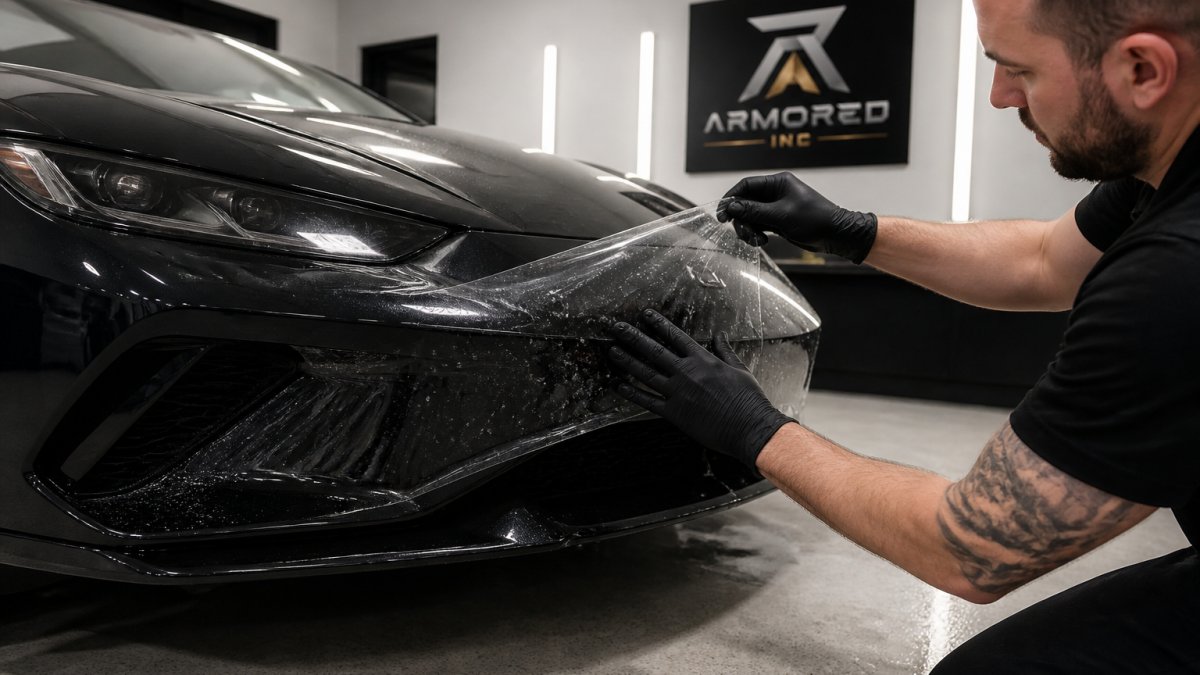
Here is how it works in practice:
- Impact absorption: The film takes the hit from stone chips so the paint underneath does not.
- Scratch resistance: Light abrasions from washing and road grit land on the film, not the clear coat.
- Self-healing: Some modern films use a top layer that can relax small swirls and light scratches when heat is applied.
- Invisible protection: Quality film is clear, so the factory finish and color still show through.
The self-healing property is the part most people underestimate. Fine marks that would need polishing on bare paint often disappear on their own after a warm day in the sun or a gentle heat application.
Paint Protection Film Coverage Options for Collector Cars
Coverage is where collectors make the biggest decision. You can protect the high-impact areas only, or wrap most of the car. The right choice depends on how you drive, what your finish is, and what you want to spend.
Match Coverage to How the Car Is Driven
A garage-kept weekend car and a car that commutes on Highway 400 do not need the same film. A common pattern among collectors:
- Garage queen / show car: Front bumper and mirrors only, or a partial hood. The car rarely sees highway speed, so full-body film is often money better spent on paint correction and a coating.
- Weekend driver: Front-end coverage (bumper, full hood, fenders, mirrors) plus rocker panels. This is the sweet spot for cars that see occasional highway time and back roads around Simcoe County.
- Regular road use / touring: Track pack, front end plus rockers, rear wheel arches, and the leading edge of the roof or A-pillars where debris deflects. Add the rear bumper top for cars that get loaded and unloaded.
- Track or autocross use: Full front plus high-impact zones, and consider film on the rear haunches where tire kick-up lands.
- Full body: Every painted panel covered. Best for rare finishes, cars with custom or repainted panels, and collectors who want uniform protection and easier washing across the whole car.
The Budget Trade-Off, Honestly
If budget is fixed, spend it on the highest-impact zones first and add coverage later; film can be extended panel by panel. For budgeting full or partial film, see paint protection film pricing in Ontario.
Finish-Specific Considerations
Matte and satin owners need a dedicated matte film. Standard film adds gloss and will ruin a flat factory finish. Our matte paint protection film is designed for matte and satin finishes. Custom, repainted, or older finishes deserve a paint inspection and a compatibility check before any film goes on, more on that below.
For current prices or a quote, contact Armored Inc. directly, as pricing depends on the vehicle and the coverage chosen.
Paint Protection Film vs Ceramic Coating: Which Protects What
Film and coating do different jobs, and the honest answer is that they are not competitors. Film protects against physical damage. Ceramic coating helps against contamination and makes cleaning easier.
| Feature | Paint Protection Film | Ceramic Coating |
|---|---|---|
| Stops rock chips | Yes | No |
| Blocks scratches | Yes, absorbs minor abrasions | Limited, adds a slick layer |
| Self-healing | Yes | No |
| Repels water and dirt | Some | Strong |
| UV and chemical resistance | Some | Strong |
| Best use | High-impact areas | Whole exterior, on top of film |
The strongest setup for a collector car is film on the high-impact areas, then ceramic coating over the film and the rest of the paint. You get chip protection where it matters and easy washing everywhere.
For a deeper head-to-head, read our breakdown of ceramic coating vs paint protection film.
How to Maintain Paint Protection Film Through Ontario Winters
Film is durable, but Ontario winters still demand care. Salt, sand, gravel, and freeze-thaw cycles are the main threats, and how you wash makes the difference between film that lasts and film that peels. This is the part most guides skip: film-safe washing, seasonal timing, and what to inspect.
Wash Steps That Are Safe for Film
- Rinse the film before you scrub. A pressure rinse lifts loose grit so you do not grind it into the surface.
- Wash with a pH-neutral soap. Harsh detergents break down the film's top coat.
- Rinse the underside and lower panels. Salt collects where debris hits hardest.
- Dry with a soft microfiber towel. Do not let water spots bake on in the sun.
- Skip the automatic brush wash. Brushes and spinning bristles scratch film and paint alike.
- Remove bird droppings and bug splatter fast. They etch if left to sit.
What to Avoid
- No brushes, abrasive pads, or cutting compounds on film. They dull the top coat and defeat the self-healing layer.
- No wax on matte film. Wax adds gloss and can leave residue in the texture.
- No high-heat drying or hot-water blasting on a cold panel. Rapid temperature change stresses edges.
- No leaving salt film on the car for weeks. Rinse the lower panels after winter road exposure even if you are not doing a full wash.
Ontario Winter Timing
Salt and sand are spread on Barrie-area roads through the freeze-thaw season, and spring gravel lingers on shoulders and back roads. Rinse the lower panels and wheel arches after heavy salt exposure, and plan a full decontamination wash once the roads are swept in spring. Highway 400 traffic throws grit year-round, so front-end film benefits from a rinse after long drives.
Inspect the Film Seasonally
A quick inspection catches lifted edges before winter salt gets underneath. Check the edges of the bumper, hood, mirrors, and rockers for lifting, bubbling, or discoloration. If an edge lifts, have it addressed promptly, salt and grit trapped under film cause more damage than the lift itself.
Long-Term Ownership
Film has a service life, and removal is part of ownership. A qualified installer can remove film safely, but film left on too long or applied over failing paint can be harder to remove. Ask about expected film lifespan and removal at installation so there are no surprises years later.
Realistic Limits: What Film and Coatings Cannot Prevent
No product makes paint invincible, and any shop that says otherwise is overselling. Film and coatings reduce damage. They do not erase it.
What film will not stop:
- Hard, fast impacts: A large rock at highway speed can still damage paint under the film.
- Deep dents: Film protects the surface, not the metal beneath it.
- Neglect: Leftover salt, tar, and droppings will still cause problems if you never wash.
- Poor installation: Bad prep or a rushed job leads to peeling and bubbles, no matter how good the film is.
This is why professional installation and surface preparation matter. Film applied over a dirty or uncorrected surface traps problems underneath.
Book a Paint Assessment for Your Exotic Car
Every car is different, and so is every collector's driving routine. A weekend car that lives in the garage needs different coverage than one that commutes on Highway 400. That is why we start with a hands-on paint assessment. Before requesting an assessment, you can use the visualizer to see film coverage on your car.
At Armored Inc., we serve collectors with paint protection film, ceramic coatings, and matte-safe film for exotic finishes. We offer mobile services, valet options, and rental cars to make the process as convenient as possible.
Frequently Asked Questions
What is the best way to protect an exotic car from road debris?
Paint protection film on the front end is the most direct defense. Film absorbs the impact of stone chips and small road debris before they reach the paint, and some modern films have top coats that can relax light scratches with heat. Pair it with a ceramic coating on top for easier washing and extra UV resistance. For a collector car driven regularly around Barrie, full front coverage plus rocker panels covers the areas most exposed to gravel and winter sand.
Does paint protection film prevent scratches on exotic cars?
Film prevents most minor abrasions, door-edge scuffs and wash-induced marring because the sacrificial layer takes the damage instead of the paint. It will not stop a deep key scratch or a heavy impact, and no film makes a car scratch-proof. What it does is keep the original finish intact underneath, which matters for resale and for collector cars where original paint carries value.
Is paint protection film or ceramic coating better for protecting car paint?
They solve different problems. Paint protection film provides physical protection against rock chips, road debris and scratches. Ceramic coating is a liquid polymer layer that adds hydrophobicity, UV resistance and easier cleaning but offers no impact protection. For exotic car paint, film on high-impact areas with a ceramic coating over the whole car is the usual combination, since each covers a gap the other leaves.
How should I wash an exotic car with paint protection film?
Hand wash with pH-neutral shampoo, two buckets and a soft microfiber mitt, and rinse the film thoroughly before contacting it to lift grit. Avoid automatic brush washes and pressure washers held close to film edges. Dry with a clean microfiber towel or filtered blower. In Ontario winters, rinse road salt off promptly and never scrape ice from filmed panels.
Is paint protection film worth it for a collector car driven in Barrie?
For a car that sees regular road use, film usually pays for itself by preserving original paint, which is one of the largest factors in collector value. Barrie's winter sand and gravel, plus highway driving on Highway 400, put the front end at constant risk. For a trailer-queen that never leaves the garage, the case is weaker. Match coverage to how the car is actually used.
Your exotic deserves protection that matches how you actually drive it. Get started with Armored Inc. and safeguard your paint with professional film and ceramic coating installed by a team that works on exotic and collector cars every day.