 blog
blog
Best Paint Protection for Sports Cars
Table of Contents
- Why Paint Protection Matters for High-Performance Vehicles
- Ceramic Coating vs PPF for Sports Cars
- Paint Protection Film Cost and Value in Barrie
- Protecting Against Rock Chips, Swirl Marks, and UV Damage
- Best Paint Protection for Winter Driving in Ontario
- Professional Installation vs DIY Application
- Maintenance and Aftercare Requirements
- Impact on Resale Value and Insurance
Last Updated: August 29, 2026
Why Paint Protection Matters for High-Performance Vehicles
Sports cars represent significant investments. Whether you're driving a Corvette, Porsche, or any high-performance vehicle, protecting that paint finish is essential. The difference between a well-maintained exterior and one weathered by road debris, UV exposure, and environmental contaminants can mean thousands of dollars in resale value.
High-performance vehicles face unique challenges. These cars spend more time at higher speeds, exposing them to rock chips, insect impacts, and road tar. Winter driving in Ontario introduces salt spray and chemical de-icers that accelerate oxidation. A sports car's paint is the first line of defense against corrosion and structural degradation.
At Armored Inc., we've worked with luxury and sports car owners across Barrie and Ontario who discovered that standard factory clear coat falls short for high-value vehicles. The best paint protection combines proven technology with professional installation to preserve both appearance and value.
This guide covers ceramic coatings and paint protection film, explaining how to choose the right solution for your vehicle and driving conditions.
Ceramic Coating vs PPF for Sports Cars
How Each Method Works
Ceramic coatings and paint protection film serve the same goal but operate through different mechanisms.
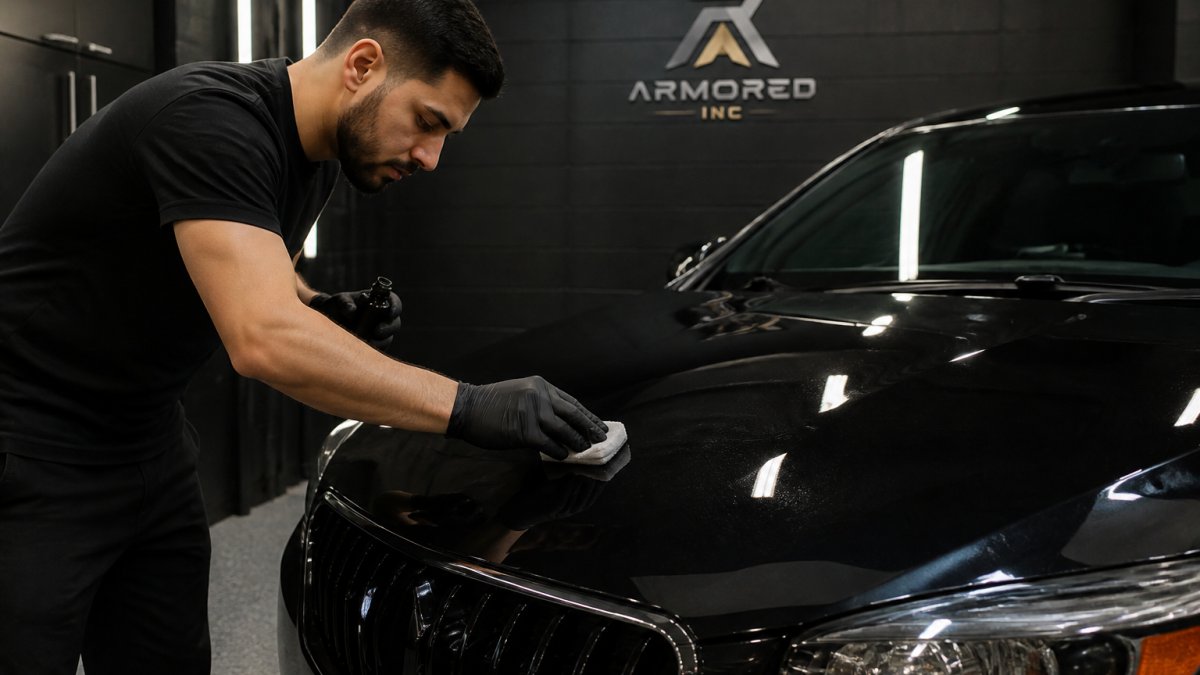
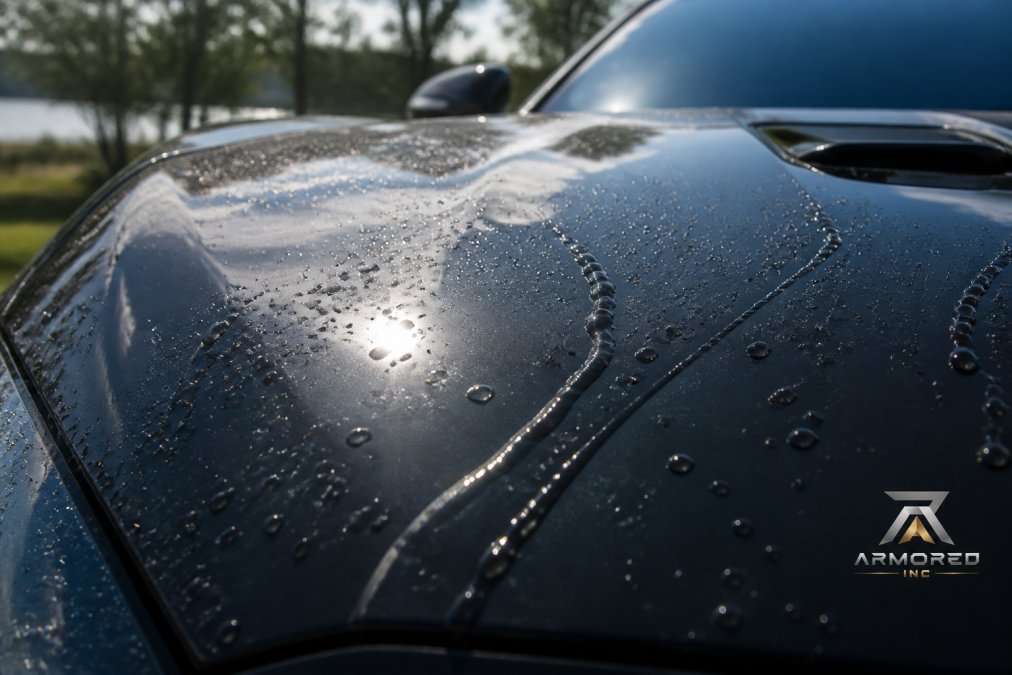
Ceramic coatings are liquid nanotechnology products applied directly to clean paint. The coating cures to form a hard, glass-like layer bonded to the clear coat. This layer is hydrophobic, water and contaminants bead up and roll off rather than sitting on the surface. The coating provides UV protection, chemical resistance, and enhanced gloss. However, it remains vulnerable to physical damage and won't stop a rock chip.
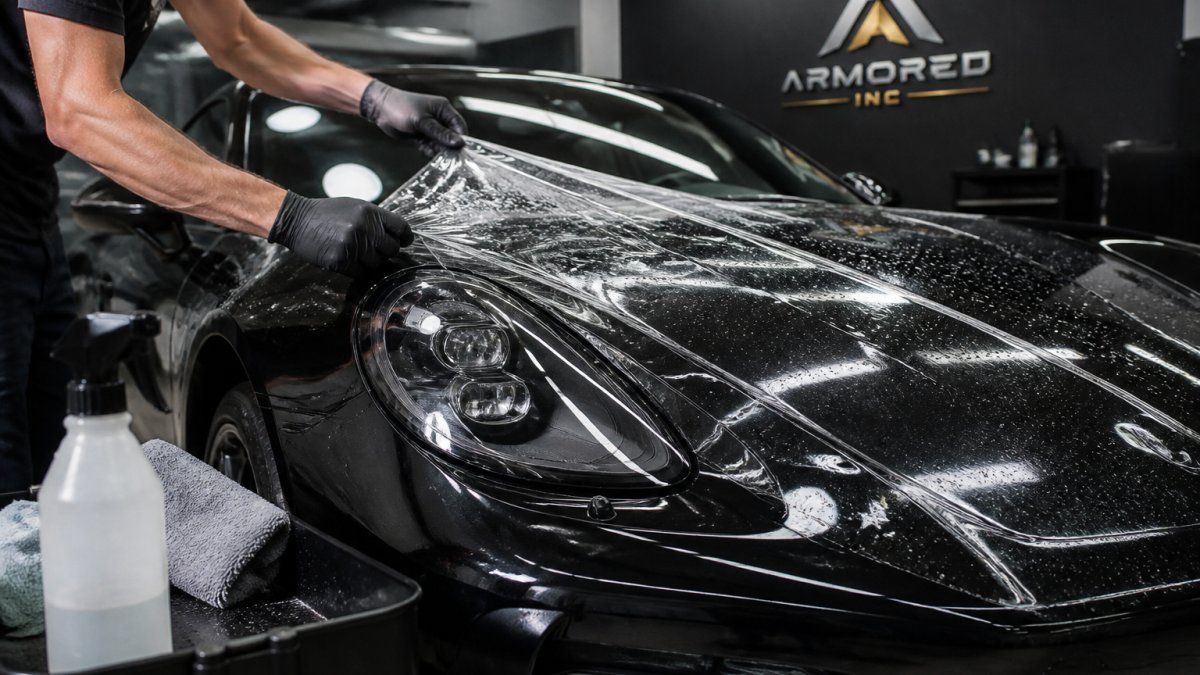
Paint protection film (PPF) is a thermoplastic urethane layer applied over the paint. It's a sacrificial barrier that absorbs damage rather than the paint beneath. Quality PPF includes self-healing properties, minor scratches disappear when exposed to heat. The film is nearly invisible when professionally installed and provides superior impact resistance.
Many owners choose both: PPF on high-impact zones (front bumper, hood, fenders) combined with ceramic coating on remaining surfaces for complete protection.
Durability and Longevity Comparison
Ceramic coatings typically last 2-5 years depending on environmental exposure and maintenance (peer-reviewed research). Ontario's freeze-thaw cycles and salt exposure accelerate degradation.
Paint protection film lasts significantly longer, typically 7-10 years or more (peer-reviewed research). For owners planning to keep their sports car long-term, PPF's durability often justifies the higher upfront cost.
Paint Protection Film Cost and Value in Barrie
Paint protection film pricing depends on coverage scope and film grade. For current pricing, please contact Armored Inc. directly.
The Resale Value Equation: A sports car with visible paint damage loses resale value. A well-protected finish with documented professional PPF installation can help maintain higher asking prices.
Ontario-Specific Cost Factors: Winter driving accelerates paint damage through salt spray and freeze-thaw cycles. Vehicles without protection may require paint correction. PPF can help eliminate this recurring expense.
Insurance and Warranty Considerations: Most comprehensive auto insurance policies don't explicitly discount premiums for PPF, but documented protection may strengthen damage claims by proving proper maintenance. Quality PPF carries manufacturer warranties covering yellowing, peeling, and clarity loss. This warranty may transfer to subsequent owners, adding resale appeal.
The true cost of PPF is not the installation price, it's the cost of not protecting a high-value asset. For sports car owners in Barrie and Ontario, the investment protects against the region's harshest environmental threats while preserving financial value.
Protecting Against Rock Chips, Swirl Marks, and UV Damage
Rock chips occur at highway speeds when small stones strike the front bumper, hood, or fenders. A single chip exposes bare paint to moisture and oxygen, triggering oxidation. Paint protection film prevents chips from reaching the paint surface entirely.
Swirl marks develop during washing through improper technique. Ceramic coatings reduce swirl visibility by providing a harder surface. PPF eliminates the concern because swirl marks occur on the film's surface, not the paint.
Ultraviolet rays degrade clear coat and paint pigments over time, causing fading and oxidation. Ceramic coatings reflect UV radiation and slow this process. PPF blocks UV entirely since the film sits between the sun and the paint.
The most comprehensive approach: PPF on high-impact zones combined with ceramic coating on the entire vehicle for UV and chemical protection.
Best Paint Protection for Winter Driving in Ontario
Winter driving in Ontario presents specific challenges that standard paint protection often underestimates.
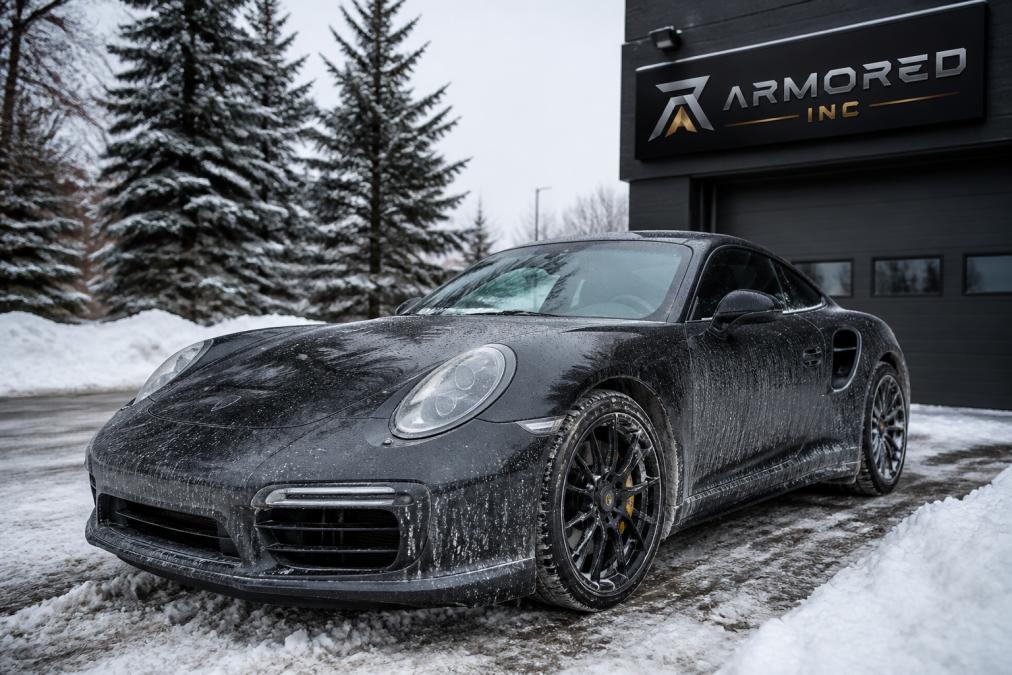
Road salt accelerates corrosion. Salt spray penetrates micro-cracks in the clear coat and attacks underlying layers. Chemical de-icers containing calcium chloride and magnesium chloride are hygroscopic, absorbing moisture and creating a corrosive environment directly on your paint (the EPA).
Freeze-thaw cycles cause expansion and contraction in both paint and protective coatings. Paint protection film, being flexible, adapts to these cycles without failure.
For winter driving in Ontario, paint protection film is the stronger choice. The film's physical barrier prevents salt and chemical spray from reaching the paint. After winter, a thorough rinse removes salt deposits from the film's surface without damage.
Many Barrie and Ontario sports car owners adopt a combined strategy: full PPF coverage combined with ceramic coating for year-round gloss and hydrophobic properties. This combination ensures paint survives Ontario's harshest conditions.
Professional Installation vs DIY Application
The difference between professional and DIY installation determines whether you get protection or an expensive mistake.
Professional installation requires controlled environment, specialized tools, and years of experience. Technicians prepare the surface meticulously through clay bar treatment, paint correction if needed, and thorough cleaning to remove all contaminants. Improper surface preparation causes adhesion failure.
Application technique matters enormously. PPF installation requires precise cutting to fit panel contours, proper heat application to set the film without wrinkles, and careful squeegee work to remove air bubbles. Ceramic coating application demands streak-free technique and proper curing conditions.
DIY ceramic coating application produces inferior results with streaking and uneven coverage. PPF is essentially impossible to install correctly without professional equipment and experience.
For high-value sports cars, professional installation is non-negotiable. The cost difference between DIY attempts and professional work is minimal compared to the cost of repainting or living with visible defects. transporting classic cars.
Maintenance and Aftercare Requirements
Ceramic-coated and PPF-protected surfaces require different maintenance approaches.
Ceramic coatings demand proper washing technique. Use pH-neutral car wash soap, two-bucket method, and soft microfiber wash mitts. Avoid automatic car washes with brushes. In Ontario winters, weekly washing removes salt and chemical residue.
Paint protection film requires similar care but is more forgiving. The film's surface is harder than ceramic, so minor swirl marks are less visible. The film's self-healing property means minor scratches disappear with heat exposure.
Both protection methods benefit from periodic inspection. Check for edge separation, discoloration indicating contamination, or damage requiring repair. Minor PPF damage can be patched. Ceramic coating damage requires localized reapplication.
Avoid harsh chemicals, automated car washes, and abrasive polishing compounds. Hand washing with quality products is the standard for maintained sports cars.
Impact on Resale Value and Insurance
Paint condition is one of the first visual assessments buyers make when evaluating a used sports car. A pristine finish signals responsible ownership; visible damage signals neglect.
Resale Value Impact: Sports cars with visible paint defects may lose market value compared to identical vehicles with flawless paint. Conversely, vehicles with documented professional paint protection may justify higher asking prices because buyers perceive lower maintenance risk and longer-term durability.
For Ontario sports car owners, this premium is especially significant. The region's harsh winters and road salt make paint protection a visible investment. Buyers recognize this and reward well-protected vehicles accordingly.
Track-Day and High-Mileage Scenarios: Sports car owners who frequently track their vehicles face accelerated paint damage. Paint protection film becomes essential insurance. A vehicle with documented PPF coverage maintains resale value even after track use, because the film absorbs damage that would otherwise require expensive paint correction.
Insurance Claim Mechanics: Most comprehensive auto insurance policies in Ontario cover paint damage only if it results from a covered peril. Damage from road debris is typically excluded. However, documented paint protection may change the claim calculus:
-
With PPF: If rock chips damage the film rather than the paint, many insurers may approve claims for PPF replacement or repair under collision coverage. This may be a more cost-effective solution than repainting.
-
Without PPF: Paint damage from road debris is typically classified as wear-and-tear and excluded from coverage.
Some Ontario insurers may offer discounts on collision deductibles for vehicles with documented professional-grade paint protection.
Long-Term Ownership Cost Analysis: Over a 10-year ownership period, paint protection can contribute to overall savings by reducing the need for frequent paint corrections and helping to preserve resale value.
Local Climate Advantage: Ontario's freeze-thaw cycles and road salt create unique paint degradation pressures that paint protection directly mitigates. Buyers in the Barrie and Ontario market specifically value paint protection because they understand these regional environmental threats. A sports car with documented professional PPF installation is perceived as better-prepared for Ontario ownership, justifying premium pricing at resale.
Documentation and Proof of Protection: Keep all installation receipts, warranty certificates, and before/after photos. This documentation proves to future buyers that paint protection was professionally applied and maintained. It supports insurance claims by demonstrating preventative measures. When selling your sports car, this documentation justifies higher asking prices and accelerates the sale process.
=== FAQ ANSWERS (audit these too, same rules) ===
[1] Q: What's the difference between ceramic coating and paint protection film for sports cars? A: Ceramic coatings create a hydrophobic layer that enhances gloss and repels water and contaminants, but offer limited impact resistance. Paint protection film (PPF) is a sacrificial layer that absorbs damage from rock chips and scratches, protecting the underlying paint. PPF provides superior physical protection; ceramic coatings provide superior aesthetics and ease of maintenance. Many owners combine both for maximum protection and appearance.
[2] Q: Is paint protection film worth the cost for sports cars? A: For sports cars, PPF typically pays for itself through preserved resale value and avoided paint correction costs. High-performance vehicles face constant exposure to road debris, UV rays, and environmental contaminants. The investment protects your vehicle's finish and maintains the investment value of the car. Professional-grade PPF with proper installation offers long-term durability that justifies the upfront expense.
[3] Q: How does winter weather in Ontario affect paint protection choices? A: Ontario's winter brings salt spray, freeze-thaw cycles, and harsh UV exposure that accelerate oxidation and paint damage. Paint protection film excels in these conditions, shielding against salt-induced corrosion and impact from road debris. Ceramic coatings enhance chemical resistance but require more frequent maintenance washing to remove salt residue. A combination approach, PPF on high-impact zones and ceramic coating for overall protection, performs best in cold climates.
[4] Q: How long does professional paint protection last? A: Quality ceramic coatings typically last 2-5 years depending on maintenance and climate exposure. Professional-grade paint protection film can last 7-10 years or longer with proper care. Durability depends on UV exposure, maintenance frequency, and environmental factors like salt and harsh weather. Regular maintenance washing extends the lifespan of both products significantly.
Frequently Asked Questions
What's the difference between ceramic coating and paint protection film for sports cars?
Ceramic coatings create a hydrophobic layer that enhances gloss and repels water and contaminants, but offer limited impact resistance. Paint protection film (PPF) is a sacrificial layer that absorbs damage from rock chips and scratches, protecting the underlying paint. PPF provides superior physical protection; ceramic coatings provide superior aesthetics and ease of maintenance. Many owners combine both for maximum protection and appearance.
Is paint protection film worth the cost for sports cars?
For sports cars, PPF typically pays for itself through preserved resale value and avoided paint correction costs. High-performance vehicles face constant exposure to road debris, UV rays, and environmental contaminants. The investment protects your vehicle's finish and maintains the investment value of the car. Professional-grade PPF with proper installation offers long-term durability that justifies the upfront expense.
How does winter weather in Ontario affect paint protection choices?
Ontario's winter brings salt spray, freeze-thaw cycles, and harsh UV exposure that accelerate oxidation and paint damage. Paint protection film excels in these conditions, shielding against salt-induced corrosion and impact from road debris. Ceramic coatings enhance chemical resistance but require more frequent maintenance washing to remove salt residue. A combination approach, PPF on high-impact zones and ceramic coating for overall protection, performs best in cold climates.
How long does professional paint protection last?
Quality ceramic coatings typically last 2-5 years depending on maintenance and climate exposure. Professional-grade paint protection film can last 7-10 years or longer with proper care. Durability depends on UV exposure, maintenance frequency, and environmental factors like salt and harsh weather. Regular maintenance washing extends the lifespan of both products significantly.
This article was written using GrandRanker