 how-to
7 Steps to Protect Commercial Vehicle Paint From Salt
Last Updated: October 24, 2026
Quick Summary
To protect commercial vehicle paint from salt, pre-rinse top-down before soap touches the surface, rinse the undercarriage and splash areas, and wash in a heated bay above 0°C. Then dry door seams and lock cylinders, and apply a ceramic coating or paint protection film as a sacrificial layer.
- Salt settles first in rocker panels, wheel wells, frame rails and trailer landing gear.
- Rinse the undercarriage along the full frame length, then wheel arches from the inside.
- Never use a high-pressure wand on lock cylinders, door seals or trailer wiring connectors.
- A truck on salted roads needs a lower-panel rinse at least weekly in peak winter.
- Photograph lower panels at season start and spring melt to track corrosion.
Table of Contents
- How Road Salt and Brine Attack Commercial Vehicle Paint
- What You'll Need Before the First Winter Wash
- Step 1: Pre-Rinse and How to Wash Road Salt Off a Truck
- Step 2: Rinse the Undercarriage and Splash Areas
- Step 3: Winter Fleet Vehicle Washing Without Freezing Lines
- Step 4: Ceramic Coating for Work Trucks as a Sacrificial Layer
- Step 5: Paint Protection Film for Commercial Vehicles in High-Impact Zones
- Step 6: Paint Protection Versus Undercoating: What Each One Covers
- Step 7: Build a Winter Maintenance Schedule and Inspect Regularly
- Frequently Asked Questions
How Road Salt and Brine Attack Commercial Vehicle Paint
Road salt and brine attack commercial vehicle paint by drying on the surface and pulling moisture into the clear coat, starting corrosion on any exposed metal underneath.
Salt damage is rarely dramatic at first, dull patches, white crusting around wheel arches, tiny blisters near rocker panels. By the time rust is visible, it has been working under the paint for a while.
Where Salt Settles First on Trucks and Trailers
Salt settles first in the places that trap spray and never fully dry:
- Rocker panels along the bottom of the doors
- Wheel wells and the inner edges of mudguards
- The lower tailgate and rear bumper step
These spots hold salt buildup because airflow can't reach them. A truck that looks clean after a drive-through wash often still has salt brine crusted in the wheel wells, eating into the clear coat.
What You'll Need Before the First Winter Wash
Before the first hard freeze, stock a simple winter wash kit so you're not scrambling in a Barrie snowstorm. A common mistake is buying heavy equipment first and skipping the basics that actually remove salt.
- A pressure washer with a wide fan tip
- A dedicated undercarriage rinse attachment
- Two buckets with grit guards
Keep the kit indoors so hoses and nozzles stay flexible. Cold rubber cracks, and a frozen line wastes a whole wash day.
Step 1: Pre-Rinse and How to Wash Road Salt Off a Truck
To wash road salt off a truck, start with a thorough top-down pre-rinse before any soap touches the paint, loosening surface contamination so you don't grind salt crystals into the clear coat.
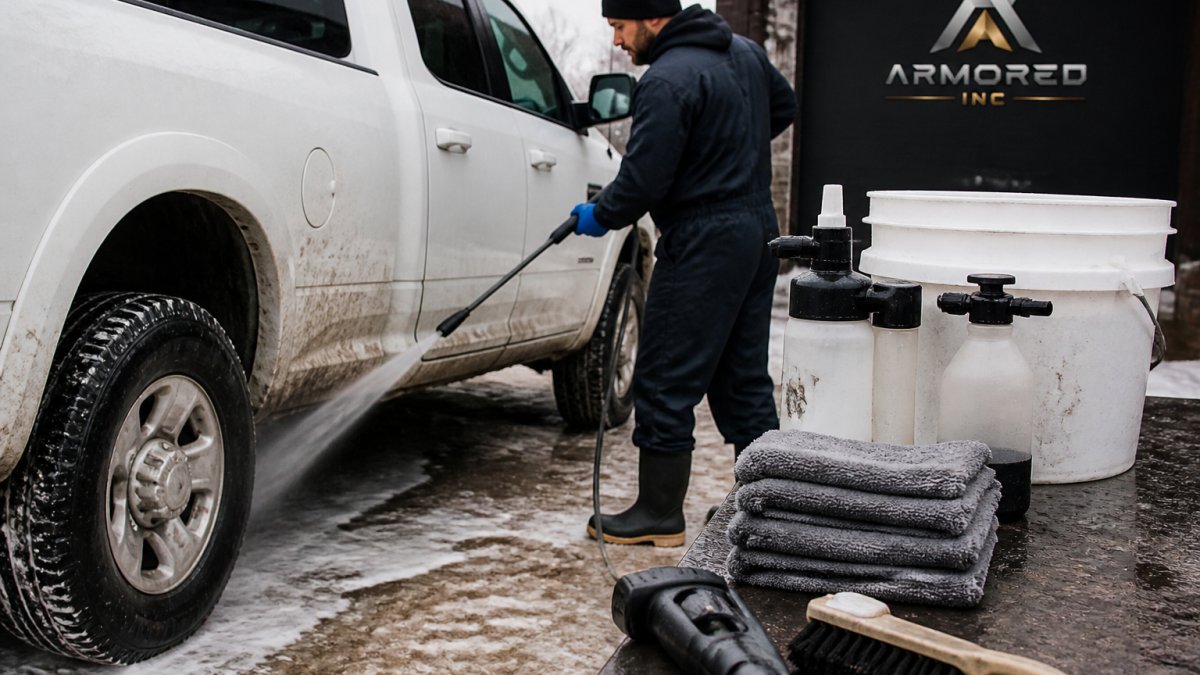
Work in sections and keep the wand moving: roof, then sides, then lower body panels last, so dirty water never runs over clean paint. Expect to spend most of your time on the lower third of the truck.
Cleaning Lower Body Panels, Rocker Panels and Wheel Wells
Lower body panels, rocker panels and wheel wells need the most attention because they collect the heaviest salt. Use a dedicated wheel and well brush, rinse each area again, and reach behind mudguards and splash guards where salt packs in tight.
Step 2: Rinse the Undercarriage and Splash Areas
Rinsing the undercarriage and splash areas removes salt brine clinging to frame rails, axles and cross members. An angled undercarriage attachment reaches these hidden surfaces without lifting the truck. Move slowly along the full frame length, then hit the wheel arches from the inside.
Winter fleet vehicle washing should always include the undercarriage, not just the visible body, that's where rust prevention is won or lost.
Step 3: Winter Fleet Vehicle Washing Without Freezing Lines
Winter fleet vehicle washing without freezing lines comes down to timing, temperature, facility choice and a repeatable shutdown routine. In Barrie and across Simcoe County, where freeze-thaw cycles can swing temperatures by 10°C or more in a day, the wash is only half the job, the other half is keeping water out of hoses, wands, locks and door seals once the truck rolls back outside.
Choosing a Wash Facility in Cold Weather
Not every wash bay is built for winter fleet work. Before committing a truck around Barrie, check for:
- Heated indoor bay with drainage, the floor should slope to a trench drain, not pool water under the vehicle where it refreezes.
- Above-freezing air temperature, aim to wash when the bay stays above 0°C for the full session, including the drying stage.
- Separation between wash and dry zones, a truck that leaves a warm bay wet will have water freeze in door seams and lock cylinders within minutes outdoors.
If no heated bay is available, wash mid-day when temperatures peak and avoid days with a rapid forecast drop. A truck washed at 2°C and parked overnight at −15°C is a frozen-lock and cracked-seal risk.
A Cold-Weather Wash Sequence That Prevents Freezing Damage
Use the same order every time so drivers and wash staff do not improvise:
- Pre-rinse top down with a wide fan tip, working lower panels and wheel wells last.
- Contact wash with a pH-neutral shampoo and a soft mitt, keeping soap off glass and out of door seams where it can trap moisture.
- Undercarriage rinse along the full frame length, then wheel arches from the inside out.
- Final rinse with spot-free or filtered water if the facility offers it, which reduces the need to towel-dry seams.
- Dry the seams, not just the panels, blow out door jambs, lock cylinders, mirror housings, fuel filler doors and trailer landing gear with compressed air or a dedicated drying blower.
- Apply a spray-on wax or sealant while the surface is cool and dry, not hot from a heated bay.
Preventing Frozen Doors, Locks and Lines After the Wash
A wash is only successful if the truck is still operable the next morning. Build these habits into every winter session:
- Drain hoses and the pressure washer after each use, and store them indoors so rubber stays flexible.
- Never leave water in a wand or hose overnight, a frozen line can split and waste a full wash day.
- Treat lock cylinders with a graphite or silicone lock lubricant after washing, not a water-displacing spray that can attract dirt.
Batching Washes for a Fleet
For a fleet, batch washes into a weekly schedule so trucks rotate through the bay instead of piling up. Group vehicles by route so the dirtiest units, typically those on highway spray corridors, go first while the bay is warmest. A truck running daily on salted roads around Barrie should get a lower-panel rinse at least weekly and a full wash with undercarriage rinse every one to two weeks during peak winter.
Step 4: Ceramic Coating for Work Trucks as a Sacrificial Layer
Ceramic coating for work trucks acts as a sacrificial layer that salt and brine attack instead of your paint. It forms a chemical barrier over the clear coat, so salt spray beads up and rinses away instead of bonding, and it fills the microscopic pores that let moisture and salt creep in.
At Armored Inc., we apply ceramic coatings designed to hold up through Ontario winters. For a full look at ceramic coating types, benefits and application, see our paint protection guide. If you're weighing it against a traditional finish, our comparison of ceramic coating versus wax for Canadian winters covers how each one holds up.
Step 5: Paint Protection Film for Commercial Vehicles in High-Impact Zones
Paint protection film for commercial vehicles shields the high-impact zones where salt, gravel and road debris strike hardest. PPF is a clear urethane film that absorbs chips and abrasion, so the paint underneath stays intact.
A paint chip is an open door for salt: once the clear coat breaks, brine reaches bare metal fast, and PPF stops that chain before it starts. For installation details, see our guide to installing paint protection film, and read whether PPF is worth it if you're weighing the investment for a fleet.
Step 6: Paint Protection Versus Undercoating: What Each One Covers
Paint protection and undercoating cover different surfaces, and a serious winter fleet needs both. Paint protection guards visible body panels, clear coat and high-impact zones; undercoating and rustproofing protect hidden metal, frame rails, floor pans and inner panels that salt brine reaches but paint never touches.
| Protection | What It Covers | Best For |
|---|---|---|
| Ceramic coating | Clear coat, body panels | Salt shedding, easier washes |
| Paint protection film | High-impact zones | Chips and abrasion |
| Undercoating | Frame, hidden metal | Rust prevention underneath |
If you're deciding between the two paint-side options, our breakdown of ceramic coating versus paint protection film helps you pick the right fit. Neither replaces undercoating, and undercoating doesn't protect your paint. Treat them as partners, not rivals.
Step 7: Build a Winter Maintenance Schedule and Inspect Regularly
A winter maintenance schedule keeps protection working all season, but for a commercial fleet it has to be tied to vehicle utilization, route exposure and inspection findings, not just a calendar. A fleet procedure needs to answer three questions: which trucks get washed when, what a wash technician inspects, and what happens when damage is found.
A Season-Long Schedule for Barrie and Simcoe County Winters
Salt exposure here runs from the first sustained snowfall through the spring melt, when residual brine and sand still sit on roads. Build the schedule around that window, not a fixed month:
- Pre-season (before first sustained snow): full wash, decontamination, paint inspection, coating or sealant application, undercoating check, and mudguard/splash guard inspection.
- Peak winter (heavy salt weeks): lower-panel and wheel-well rinse at least weekly; full wash with undercarriage rinse every one to two weeks depending on route.
- Thaw cycles: extra wash after any freeze-thaw event, because melting brine re-wets panels that had dried.
What to Inspect After Every Wash
Give wash staff a short, repeatable inspection checklist so problems are caught while they're cheap to fix:
- Rocker panels and lower door edges, look for white crusting, dull patches or tiny blisters under the paint.
- Wheel wells and behind mudguards, check for packed salt that a drive-through wash missed.
- Paint chips on bumper, hood edge and lower doors, any chip that exposes metal is a salt entry point.
Tracking Wash Dates and Damage Per Truck
A fleet that logs its maintenance catches corrosion while it's still cheap to fix. At minimum, record per vehicle:
- Date and type of each wash (rinse only vs. full wash with undercarriage)
- Inspector initials and any damage noted
- Photos of new chips, blisters or rust spots
Review the log monthly and flag any truck with repeat damage in the same area. A unit that keeps blistering at the same rocker panel may have a coating failure or spray pattern problem that washing alone won't solve.
When to Escalate Beyond Washing
Washing slows salt damage but doesn't stop it once paint is breached. Escalate a truck for paint correction, chip touch-up, coating renewal or film replacement when you see:
- Rust that has broken through the paint surface
- Blisters that spread after a wash
- A coating that no longer beads water on lower panels
Catching these at the monthly review keeps a small repair from becoming a panel replacement and keeps fleet downtime predictable instead of reactive.
Frequently Asked Questions
How does road salt damage commercial vehicle paint?
Road salt and brine dry on the clear coat and leave a crust that traps moisture against the surface. That moisture works into microscopic pores and paint chips, and the salt speeds up corrosion once bare metal is exposed. On a work truck used daily, salt buildup on lower body panels, rocker panels and wheel wells is where damage starts first. Rinsing often and keeping a protective coating on the paint slows the process, but salt left sitting for weeks will get through.
How often should you wash a work truck during winter in Barrie?
In Barrie and Simcoe County, a maintenance wash every one to two weeks is a practical baseline when roads are heavily salted, and after any long highway run through slush. Vehicles on the 400 corridor or on rural roads with heavy brine use need the shorter end of that range. The goal is to stop salt accumulation rather than wait for a full detail. A quick pre-rinse of the lower panels and undercarriage between full washes helps on weeks when the weather blocks a proper wash.
Does ceramic coating protect vehicle paint from road salt?
A ceramic coating for work trucks adds a hydrophobic sacrificial layer that salt brine struggles to cling to, so rinsing removes more of it in one pass. It does not replace washing, and it will not stop corrosion on bare metal or inside seams. Think of it as a chemical barrier that buys time between washes and makes each wash more effective. For a fleet, the payoff is faster maintenance washes and less salt sitting on the paint after each storm.
Is paint protection film worth it for work trucks?
Paint protection film for commercial vehicles pays off where chips come from, such as the front bumper, hood leading edge, mirror backs and lower doors that catch gravel and road debris. A paint chip breaks the clear coat and gives salt a direct path to metal, so covering those zones removes the entry point. Trucks that run gravel roads or tow trailers benefit most. Pair film on impact zones with a coating on the rest of the body and schedule both before the first heavy salting.
Barrie winters are hard on commercial paint, and salt doesn't take days off. If you'd rather hand the job to a team that does this every season, Armored Inc. offers professional ceramic coatings, paint protection film and mobile service across Barrie and Simcoe County. Our technicians handle fleet volume, come to you, and back the work with coatings built for Ontario conditions. Get started with Armored Inc. and keep your fleet's paint protected from the first snowfall to the spring melt.