 listicle
How to Get Professional Glass Surface Protection Benefits
Last Updated: November 2, 2026
Quick Summary
Professional glass surface protection bonds a thin hydrophobic coating to glass so water beads and rolls off, taking loose dirt with it. This blocks minerals, soap oils, and body products from bonding to bare glass, so treated surfaces need only a squeegee pass and an occasional mild wipe instead of soaking and scraping.
- A protective coating bonds to glass and leaves a hydrophobic layer that makes water bead.
- Stain prevention blocks contaminants from bonding, so harsh chemical cleaners become unnecessary.
- Glass coating repels water and stains, while protective film blocks impact, UV, and visibility.
- Coatings typically need reapplication every 1-3 years, and reapplication is part of the plan.
- Most DIY failures trace back to skipped surface preparation, not bad product.
Table of Contents
- 1. How Protective Glass Coatings Work
- 2. Stain Prevention and Easier Cleaning
- 3. Hard-Water Stain Protection for Glass in Barrie Homes
- 4. How Long Does Glass Coating Last?
- 5. Glass Coating vs. Protective Film: Which Fits Your Glass
- 6. DIY vs. Professional Glass Coating
- 7. Protecting Clarity, Shine, and Glass Lifespan
- Book Your Professional Glass Surface Protection Consultation
- Frequently Asked Questions
1. How Protective Glass Coatings Work
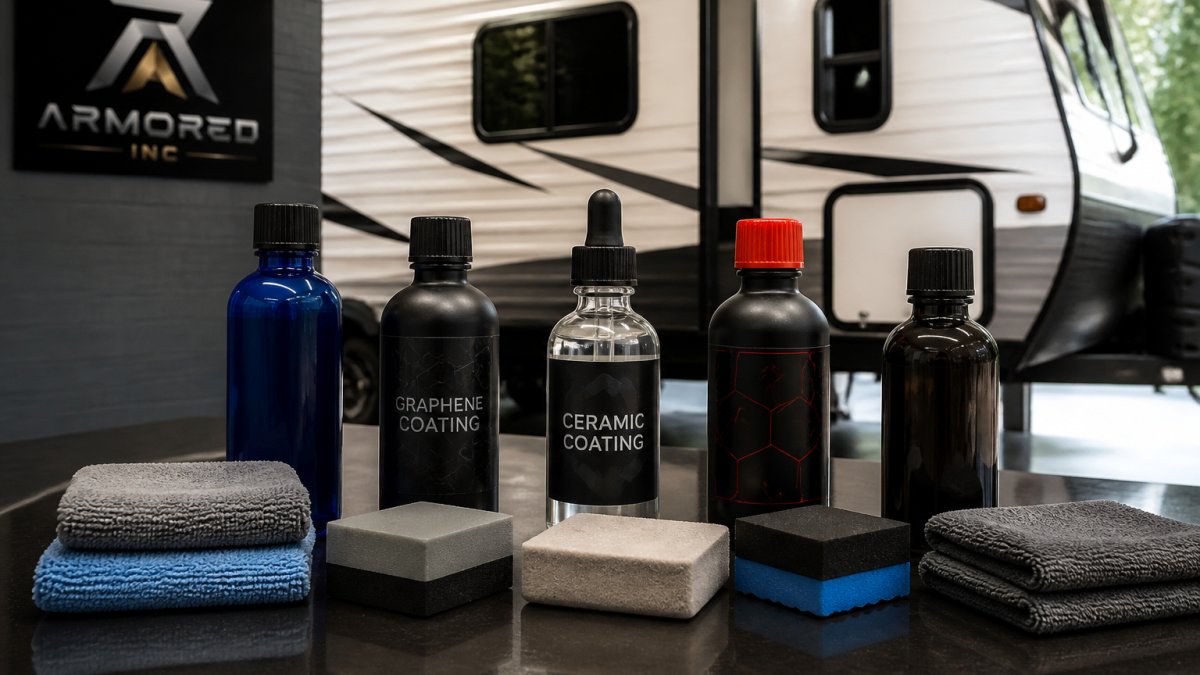
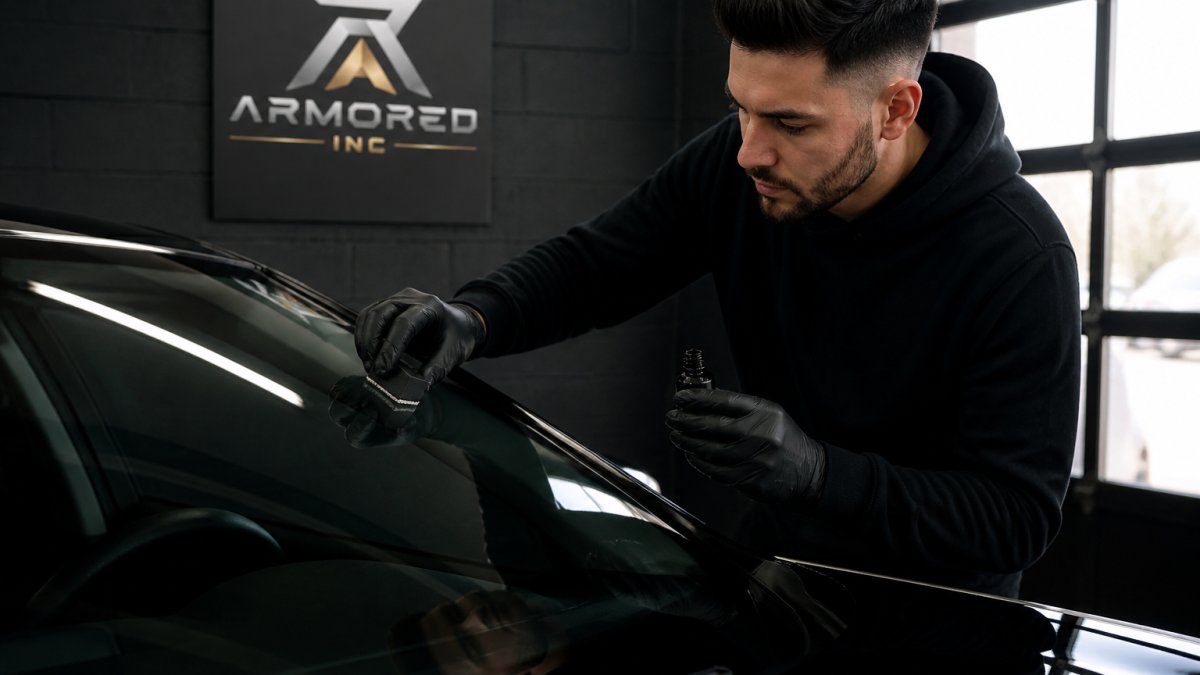
Professional glass surface protection is the application of a thin, bonded coating that changes how a glass surface interacts with water, oils, and contaminants. Professional glass coatings are applied to shower doors, windows, mirrors, and commercial glass. The goal is simple: keep glass clearer for longer with far less scrubbing.
A protective glass coating works at the molecular level. A coating of this kind bonds to the glass and leaves behind a hydrophobic layer. Water beads up instead of spreading. Dirt and soap residue sit on top of the coating rather than gripping the surface.
Water Repellency and Water Beading
Water repellency is the coating's headline feature. On untreated glass, water spreads into a flat film that dries into spots. On a treated surface, water beads into droplets and rolls off, taking loose dirt with it. Water beading is why treated glass can stay clearer between cleanings.
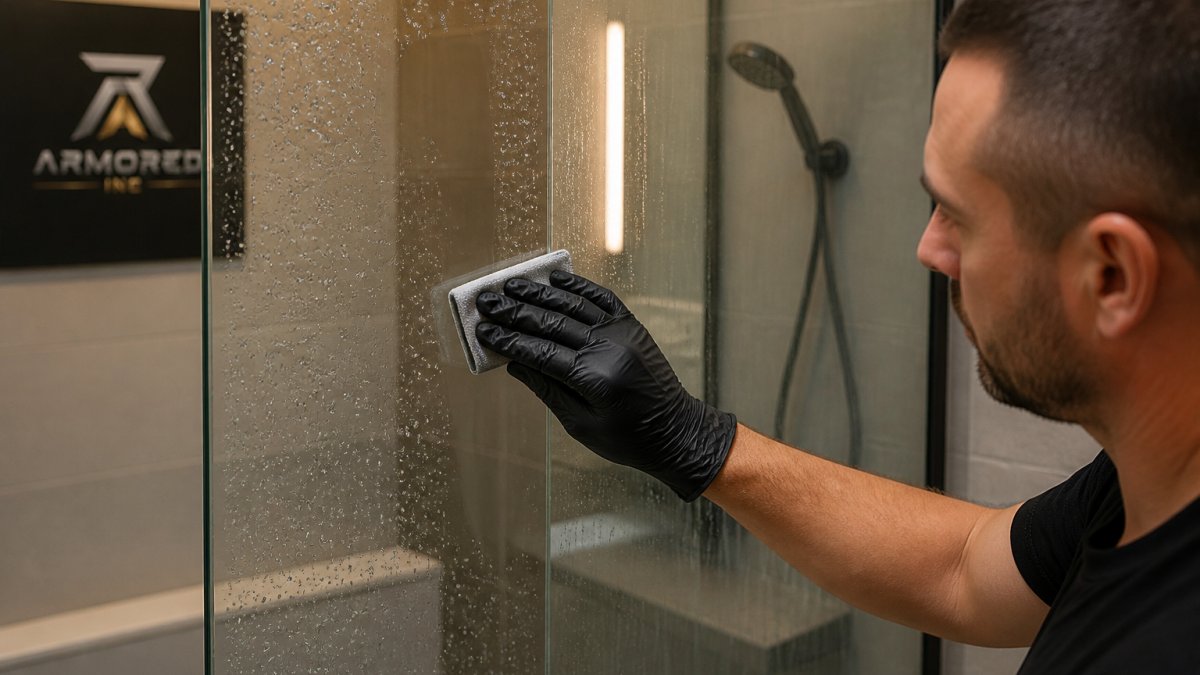
2. Stain Prevention and Easier Cleaning
Stain prevention is where glass coating pays for itself in daily effort. Minerals in water, soap oils, and body products all want to bond to bare glass. A coating blocks that bond, so contaminants stay on the surface until you wipe them away.
That changes the cleaning routine. Instead of soaking and scraping, most treated surfaces need a squeegee pass and an occasional wipe with a mild product. Harsh chemical cleaners become unnecessary, which also protects the coating itself. Consistent adherence to these simplified protocols ensures the longevity of your investment, particularly when applying these principles to routine office glazing maintenance.
Resistance to Soap Scum, Dirt, and Mineral Deposits
Soap scum forms when body oils and soap residue combine with calcium in the water. On untreated glass it hardens into a cloudy film that ordinary spray cleaner can struggle to remove.
Hard-water deposits and limescale are a common concern on glass. For a deeper guide to the best glass shower door coatings for hard water, see our dedicated article.
3. Hard-Water Stain Protection for Glass in Barrie Homes
We see the pattern constantly: shower doors that look frosted within a year, exterior windows that hold water marks after every storm. A professionally applied coating gives Barrie homeowners a realistic defense against both.
4. How Long Does Glass Coating Last?
How long glass coating lasts depends on the product, the surface, and the environment.
Reapplication is part of the plan, not a failure.
5. Glass Coating vs. Protective Film: Which Fits Your Glass
Glass coating and protective film solve different problems. A coating is a liquid that bonds to the glass and repels water and stains. Protective film is a physical layer applied over the surface that can add privacy or UV blocking.
| Feature | Glass Coating | Protective Film |
|---|---|---|
| Primary job | Repel water, stains, minerals | Block impact, UV, visibility |
| Best for | Shower glass, windows, mirrors | Privacy glass, high-impact areas |
| Appearance | Nearly invisible | Visible tint or frost option |
| Maintenance | Squeegee and mild cleaner | Gentle cleaning, no abrasives |
| Reapplication | Every 1-3 years | Replace when damaged |
If privacy and UV reduction are your priority, window tinting may be the better fit.
6. DIY vs. Professional Glass Coating
DIY glass coating kits exist, and for a single mirror or a rental bathroom they can work. The catch is preparation. Coatings bond poorly to glass that still carries soap film, hard-water scale, or old product residue. Most DIY failures trace back to skipped prep, not bad product.
Professional application generally includes surface preparation before any coating is applied. At Armored Inc., mobile services are available.
7. Protecting Clarity, Shine, and Glass Lifespan
Clarity is the whole point. A coated surface can help maintain a clear finish by limiting contaminant buildup. Learn more about the benefits of ceramic coating for enhanced protection and durability. Etching is permanent damage: minerals actually eat into the silica, and no cleaner reverses it. Coating is prevention, not repair.
Book Your Professional Glass Surface Protection Consultation
Glass that stays clear takes less work than glass that has been neglected. The challenge is choosing the right coating, prepping the surface properly, and knowing when to reapply. That is the part most homeowners and property managers would rather hand off.
Armored Inc. offers mobile services for added convenience. Book a consultation to see how much easier your glass maintenance can be. You can also browse our gallery to see real results of our glass and surface protection work.
Frequently Asked Questions
What are the benefits of professional glass surface protection?
A glass surface protection coating is designed to repel water and limit the buildup of soap scum, hard-water deposits, and minerals on shower doors, windows, and mirrors.
How long does glass coating last on shower doors and windows?
How long a glass coating lasts depends on the product, the surface preparation, and how the glass is cleaned afterward. For the expected service life of a specific coating, contact Armored Inc. directly.
Does glass protection prevent hard-water stains and etching?
Glass coatings are generally intended to reduce hard-water staining, though they do not make glass immune to mineral damage.
What is the difference between glass coating and protective film?
Glass coating is a liquid treatment that cures into a thin hydrophobic layer, so it changes how water and stains behave on the glass without adding visible thickness. Protective film is a physical sheet applied to the surface that adds impact and scratch resistance. Coating and film serve different purposes, so the right choice depends on the glass and the goal.
Ready to stop scrubbing hard-water stains? Get started with Armored Inc. and protect your glass with a coating built to last.