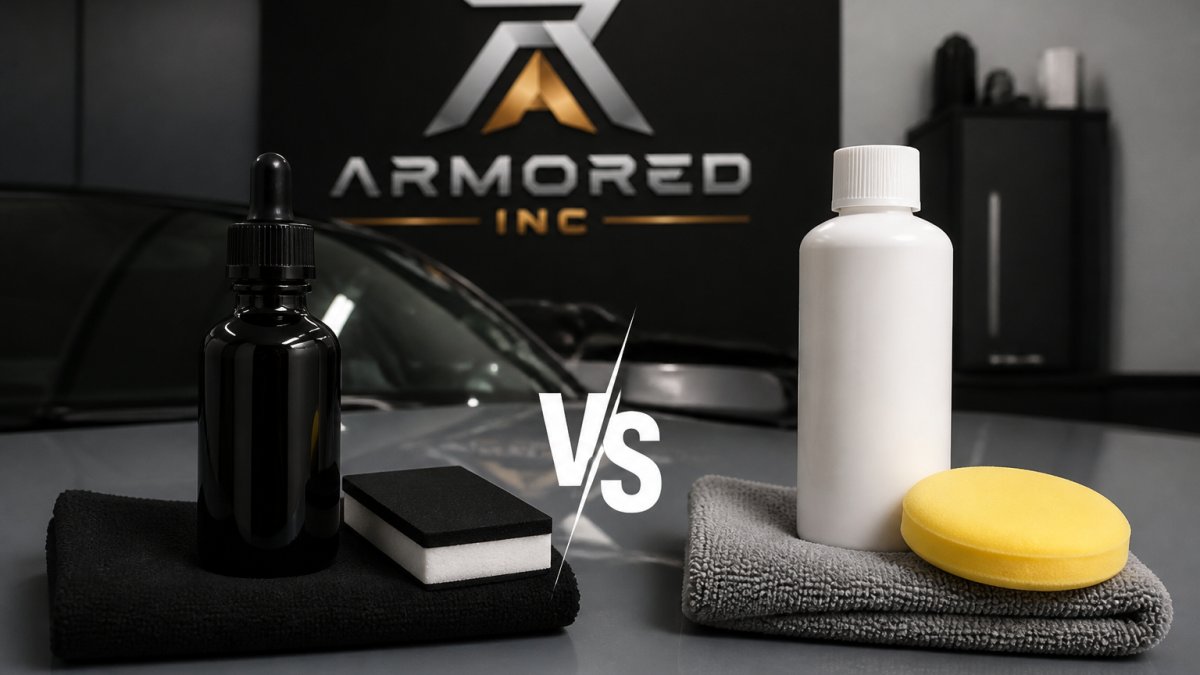
 comparison
Best Glass Shower Door Coatings for Hard Water
Table of Contents
- How Water-Repellent Coatings Protect Shower Glass
- Best Glass Treatment for Showers: Product Comparison
- Making Shower Glass Water Repellent: Application and Durability
- How to Clean Glass Shower Doors With Vinegar and Baking Soda
- How Often to Reapply Shower Glass Coating for Best Results
- Hard-Water Stains and Mineral Deposits: Prevention Strategies
- When a Coating Won't Solve Your Shower Glass Problem
- Frequently Asked Questions
Last Updated: October 16, 2026
How Water-Repellent Coatings Protect Shower Glass
Glass shower door coatings create an invisible protective barrier on shower glass that fundamentally changes how water and mineral deposits interact with the surface.
The science is straightforward: these coatings form a hydrophobic layer that repels water molecules. When hard water, water with high concentrations of calcium and magnesium minerals, hits coated glass, it doesn't spread into a thin film that dries and leaves deposits. Instead, it forms droplets that slide off almost immediately.
What makes this technology valuable in areas like Barrie, where hard-water mineral deposits are a persistent problem, is that it reduces the cleaning burden dramatically. Without a coating, you're fighting mineral buildup constantly. With one, you're maintaining a surface that actively resists the conditions that create stains in the first place.
The right protective coating can transform shower maintenance from a weekly chore into occasional touch-ups. The coating doesn't eliminate the need to clean, soap scum and grime still require attention, but it prevents the permanent etching and clouding that makes hard-water damage so frustrating to reverse.
Best Glass Treatment for Showers: Product Comparison
The market for glass shower door coatings includes several established options, each with different application methods, durability claims, and price points. Understanding the trade-offs between them helps you choose the right fit for your situation.
Diamon-Fusion Shower Glass Treatment
Diamon-Fusion positions itself as a professional-grade treatment specifically marketed for hard-water stain protection. The product is designed to create an invisible protective layer that resists mineral deposits, soap scum, and water spots.
Pros:
- Directly addresses hard-water stains in its marketing and product positioning
- Professional application available through authorized dealers
- Designed specifically for shower-door glass
Cons:
- Pricing and application details are not publicly listed; you'll need to contact an installer for a quote
- Durability timeline and reapplication frequency are not clearly stated in available information
- Limited information on performance in high-mineral-content water areas
Best for: Homeowners seeking a professional installation from a brand explicitly focused on hard-water protection.
EnduroShield Shower Glass Coating
EnduroShield markets its coating as a long-lasting solution that reduces cleaning time by repelling water, soap scum, and grime. The company emphasizes ease of maintenance and positions the product as trusted for over 20 years.
Pros:
- Clear focus on reducing cleaning effort and time
- Established brand with longevity in the market
- Marketed to address both water spots and soap residue
Cons:
- Specific durability period is not disclosed in available information
- Pricing structure is not transparent; contact required for quotes
- Limited technical details on hard-water performance specifically
Best for: Homeowners prioritizing ease of cleaning and willing to work with an established brand for professional application.
AquaGlideXP
AquaGlideXP is one of two protective coating options offered by Basco, a shower-door manufacturer. It's positioned as a water-repellent treatment that also minimizes mildew growth.
Pros:
- Offered by a manufacturer with direct expertise in shower doors
- Water-repellent properties and mildew resistance are key benefits
- Available through the manufacturer's distribution network
Cons:
- Product-specific performance data is minimal in available sources
- Pricing and application instructions are not publicly detailed
- Limited independent reviews or third-party testing information
Best for: Customers purchasing a new Basco shower door who want to add protection at the same time.
Nanotekas Nano Glass Coating 2-in-1 Kit
Nanotekas offers a DIY-friendly kit that uses nanotechnology to create a protective barrier against soap residue and hard-water stains. The kit is marketed for both glass and ceramic surfaces.
Pros:
- DIY application means no professional installation cost
- Explicitly targets hard-water stains and soap residue
- Works on both glass and ceramic surfaces
- One-time purchase model with no subscription fees
Cons:
- Durability and reapplication frequency depend heavily on application quality
- DIY application requires careful technique to avoid streaks or uneven coverage
- Limited information on how long the protection actually lasts in high-use bathrooms
- Customer success varies based on surface preparation and application skill
Best for: Budget-conscious homeowners comfortable with DIY installation who want to treat multiple surfaces.
| Coating Type | Application | Best For | Key Advantage | Main Limitation |
|---|---|---|---|---|
| Diamon-Fusion | Professional | Hard-water focus | Specialist brand | Pricing unclear |
| EnduroShield | Professional | Ease of cleaning | 20+ year track record | No durability timeline |
| AquaGlideXP | Professional | New shower doors | Manufacturer-direct | Limited data |
| Nanotekas | DIY | Budget buyers | Affordable, works on ceramic | Durability uncertain |
Making Shower Glass Water Repellent: Application and Durability
The application method you choose directly affects how long the coating lasts and how well it performs. Professional applications generally deliver more consistent results, while DIY kits offer cost savings at the expense of durability and ease.
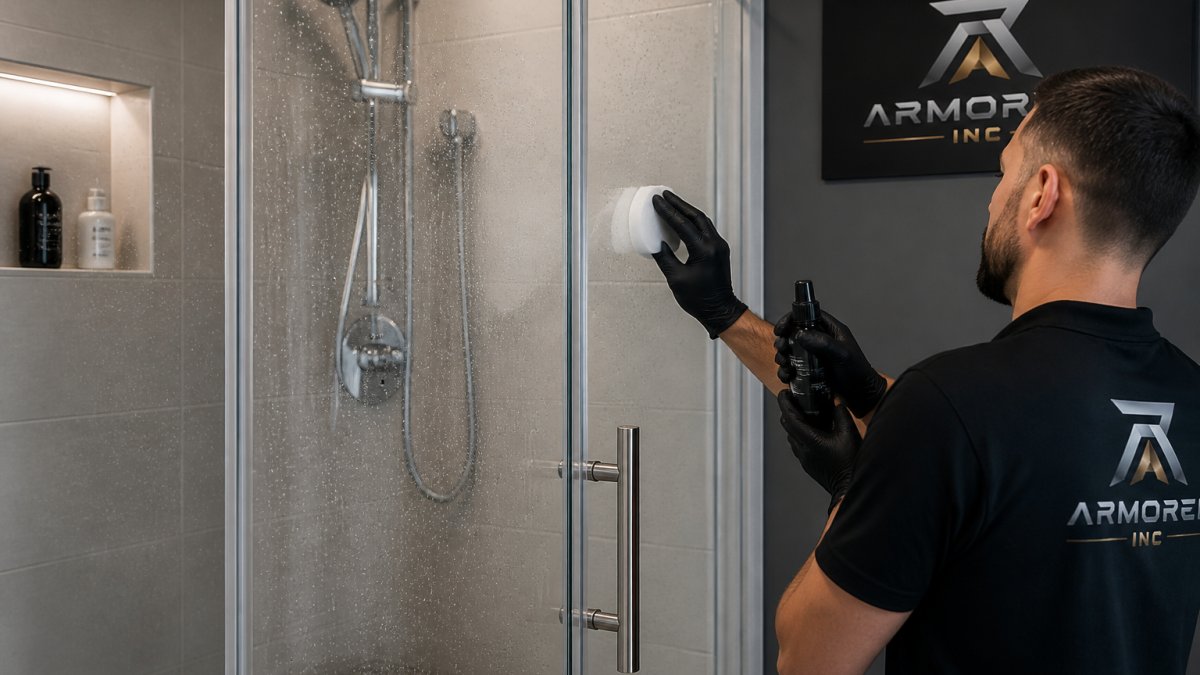
Professional installers apply coatings using controlled techniques that ensure even coverage and proper curing time. They clean and prepare the glass surface thoroughly, removing all soap residue, hard-water deposits, and mineral buildup, before applying the coating.
DIY application with a kit like Nanotekas requires the same preparation but depends entirely on your technique. Uneven application, insufficient curing time, or improper buffing can leave streaks, hazing, or incomplete coverage. For those seeking professional-grade results without the guesswork, ceramic coatings applied by experienced installers can offer superior durability and consistency compared to DIY options.
Durability varies significantly. Professional coatings typically last 1-3 years depending on water hardness, cleaning frequency, and the specific product. In areas with extremely hard water, like parts of Barrie where mineral content is particularly high, coatings may degrade faster.
The key to extending coating life is avoiding abrasive cleaners and hard scrubbing, which can scratch the hydrophobic layer. Using soft cloths and pH-neutral cleaners preserves the coating longer than aggressive scouring.
How to Clean Glass Shower Doors With Vinegar and Baking Soda
Vinegar and baking soda are effective for cleaning coated shower glass without damaging the protective layer. This method works because it's gentle enough to preserve the coating while strong enough to dissolve mineral deposits and soap scum.
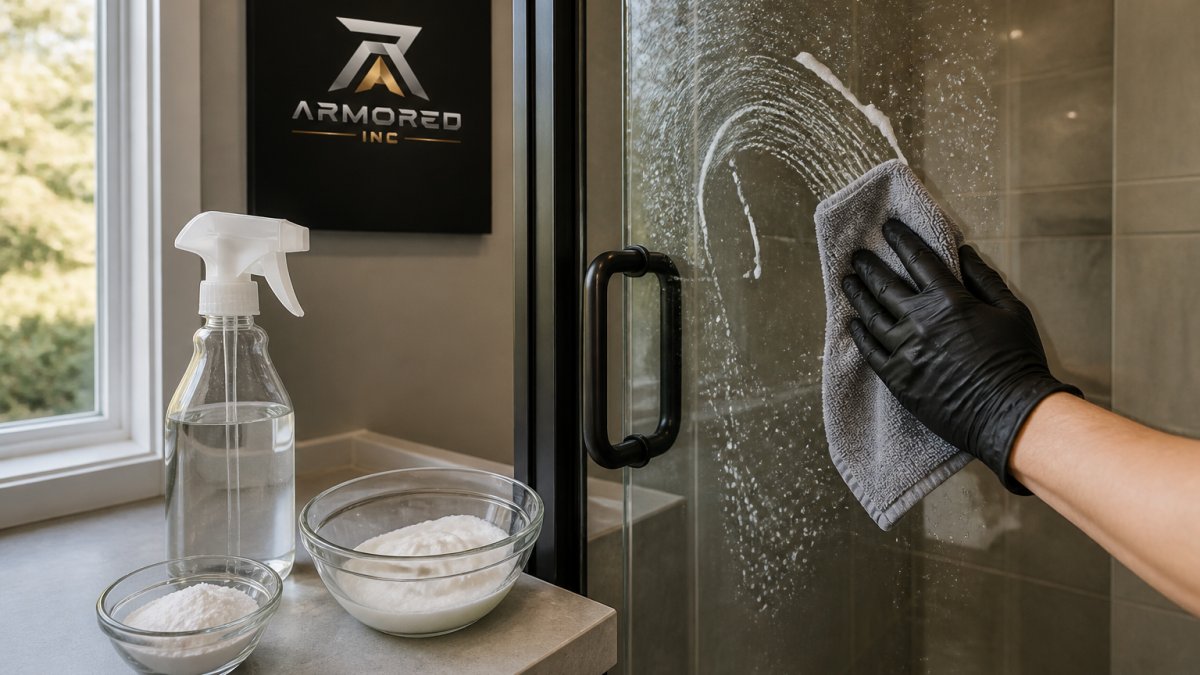
Start by mixing baking soda with a small amount of water to form a paste. Apply it directly to stubborn hard-water stains and soap scum buildup. Let it sit for 10-15 minutes to soften the deposits.
Use a soft cloth or non-abrasive sponge to gently wipe the glass. The combination of vinegar's acidity and baking soda's mild abrasive action removes deposits effectively.
This method is safe for coated glass because neither vinegar nor baking soda scratches or degrades the protective layer. Avoid bleach-based cleaners and scouring powders, which can damage the coating and reduce its water-repellent properties.
For regular maintenance between deeper cleanings, simply spray the glass with vinegar and wipe dry. This prevents mineral deposits from accumulating and keeps the glass clearer longer.
How Often to Reapply Shower Glass Coating for Best Results
The reapplication schedule depends on water hardness, usage frequency, and the specific coating product. Most professional coatings require reapplication every 1-3 years, while DIY kits typically need refreshing every 6-12 months.
In Barrie and surrounding areas where hard water is common, mineral content accelerates coating degradation. You'll notice the coating losing effectiveness when water no longer beads up as readily and starts spreading into sheets again. This is the signal that reapplication is approaching.
Some users maintain their coatings more frequently, applying a fresh layer annually, to ensure consistent water beading year-round. Others wait until performance noticeably drops. The more aggressive your water hardness, the more frequently you'll benefit from reapplication.
Professional reapplication is simpler than the initial coat because the underlying glass is already sealed. Installers simply clean the surface, apply a fresh layer, and cure it. This takes significantly less time and cost than the initial treatment.
For DIY users, reapplication follows the same process as the initial application: thorough cleaning, careful application, and proper curing time. Many find that maintaining the coating with regular vinegar-and-water cleaning extends the time between reapplications.
Hard-Water Stains and Mineral Deposits: Prevention Strategies
Hard-water stains form when mineral-rich water dries on glass, leaving behind calcium and magnesium deposits. These deposits are nearly impossible to remove once they've etched into the glass surface, which is why prevention through coating is far more effective than trying to restore damaged glass.
A water-repellent coating prevents stains by stopping the water from drying on the glass in the first place. Instead of spreading into a thin film that evaporates and leaves minerals behind, coated glass causes water to bead and run off before it can dry.
Beyond coating, several maintenance practices reduce hard-water damage:
- Squeegee after each shower: Removing standing water immediately prevents mineral deposits from forming. This single habit makes an enormous difference, even on uncoated glass.
- Ventilate the bathroom: Running the exhaust fan during and for 20 minutes after showers reduces moisture and slows mineral accumulation.
- Use distilled water for final rinses: If you're dealing with particularly hard water, a final rinse with distilled water eliminates minerals that tap water would leave behind.
- Dry the glass regularly: Wiping the glass dry with a soft towel after cleaning prevents new mineral deposits from forming as water evaporates.
These strategies work best in combination with a protective coating. The coating handles the heavy lifting by repelling water; your maintenance habits keep the surface in optimal condition.
When a Coating Won't Solve Your Shower Glass Problem
Water-repellent coatings are highly effective for prevention, but they cannot restore glass that's already severely etched by hard-water damage or correct other underlying problems.
If your glass is already cloudy, pitted, or visibly damaged from years of hard-water exposure, a coating will not restore clarity. The damage is permanent at that point.
Coatings also won't help if the underlying issue is mold or mildew growth caused by poor ventilation or moisture control. While some coatings claim to minimize mildew, they address the symptom, not the cause.
If your shower door has a textured or frosted finish, applying a coating is more difficult and less effective. The texture traps moisture and product residue, making even coverage nearly impossible.
For extremely hard water conditions, where mineral content is exceptionally high, even a well-maintained coating may require more frequent reapplication than standard recommendations. In these cases, combining a coating with aggressive maintenance habits (daily squeegee, regular vinegar cleaning, excellent ventilation) delivers the best results.
Keeping shower glass clear and protected requires the right approach for your water conditions. Contact us for a consultation on how a professional coating can work for your home.
Frequently Asked Questions
What is the best glass treatment for showers in hard-water areas?
The best treatment depends on your water hardness and maintenance preference. Diamon-Fusion and EnduroShield are both designed specifically for shower glass and hard-water stain prevention. Diamon-Fusion focuses on invisible protection against mineral deposits, while EnduroShield emphasizes ease of cleaning. For DIY application, Nanotekas offers a 2-in-1 kit. Professional application through services like Armored Inc.'s ceramic coating expertise ensures proper surface preparation and durability. Hard water in your area makes any water-repellent coating valuable, the coating causes water to bead and roll off rather than pooling and leaving mineral residue.
How often should you reapply a shower glass water-repellent coating?
Most shower glass coatings last 6 to 12 months with regular use, though durability varies by product and water hardness. EnduroShield is described as long-lasting, while Diamon-Fusion's lifespan depends on cleaning frequency and water chemistry. Hard water and aggressive cleaning products can shorten reapplication intervals. Monitor water beading, when water stops forming beads and begins spreading flat across the glass, it's time to reapply. Professional coatings may last longer than DIY kits. Check your product's instructions and local water hardness to determine your specific reapplication schedule.
Can you apply a water-repellent coating to existing shower glass?
Yes, most coatings can be applied to existing shower glass, but surface preparation is critical. The glass must be thoroughly cleaned to remove soap scum, mineral deposits, and hard-water stains, vinegar and baking soda or a commercial glass cleaner works well. Some coatings, like Diamon-Fusion, are designed as aftermarket treatments for installed doors. Professional application ensures proper preparation and adhesion. If your glass already has an old coating, it may need removal first. Professional services can assess compatibility with your specific glass type and existing finishes before application.
Do shower glass coatings prevent hard-water spots completely?
Coatings significantly reduce hard-water spot formation but don't eliminate it entirely. They work by making water bead and roll off rather than pooling on the surface, which prevents mineral deposits from drying and bonding to the glass. However, water that sits in corners, along seals, or in textured areas can still leave some spotting. Coatings also reduce cleaning effort, spots that do form are easier to wipe away. Hard water quality varies by location; areas with very high mineral content may see faster coating degradation. Regular maintenance with squeegees and gentle cleaning extends both the coating's life and your glass clarity.