 listicle
5 Best Ceramic Coating Products for Travel Trailers
Table of Contents
- Why Ceramic Coating Matters for Travel Trailers
- Quick Comparison Table
- How to Prepare RV Surface for Ceramic Coating
- 1. Glidecoat RV Ceramic Coating: Gelcoat and Fiberglass Specialist
- 2. Undrdog Hybrid Ceramic Coating: Versatile DIY Option
- 3. R1 Coatings Street RV/Trailer Package: Size-Specific Coverage
- 4. Gtechniq Crystal Serum Light: Professional-Grade Durability
- 5. Griot's Garage 3-in-1 Ceramic Wax: Budget-Friendly Maintenance
- Ceramic Coating vs. Traditional Wax: What Actually Matters
- Durability and Longevity Expectations
- UV Protection and Oxidation Prevention
- Frequently Asked Questions
Last Updated: October 1, 2026
Why Ceramic Coating Matters for Travel Trailers
Travel trailers face relentless environmental stress from UV rays, road salt, oxidation, and weather exposure. Ceramic coatings bond chemically to the surface, lasting 2-5 years compared to traditional wax's 3-6 month lifespan. For Ontario owners, this means fewer maintenance cycles and superior long-term surface preservation.
Selecting the best ceramic coating product is essential for protecting your trailer. Below, we'll walk you through the 5 best ceramic coating products for travel trailers, surface preparation, and what to expect from each option.
Quick Comparison Table
| Product | Best For | Application Type | Key Benefit |
|---|---|---|---|
| Glidecoat RV Ceramic Coating | Gelcoat and fiberglass protection | Professional application | Up to 2 years UV protection |
| Undrdog Hybrid Ceramic Coating | DIY enthusiasts | User-friendly spray | Versatile across multiple surfaces |
| R1 Coatings Street RV/Trailer Package | Size-specific coverage | Complete kit | Nano-ceramic bonding technology |
| Gtechniq Crystal Serum Light | Maximum durability | Professional-grade | Industry-leading chemical resistance |
| Griot's Garage 3-in-1 Ceramic Wax | Budget-conscious maintenance | Easy spray-on application | Cost-effective regular upkeep |
How to Prepare RV Surface for Ceramic Coating
Surface preparation determines whether a ceramic coating bonds properly or fails prematurely. Improper preparation traps contaminants beneath the coating, creating a dull appearance and compromised protection that cannot be easily remedied.
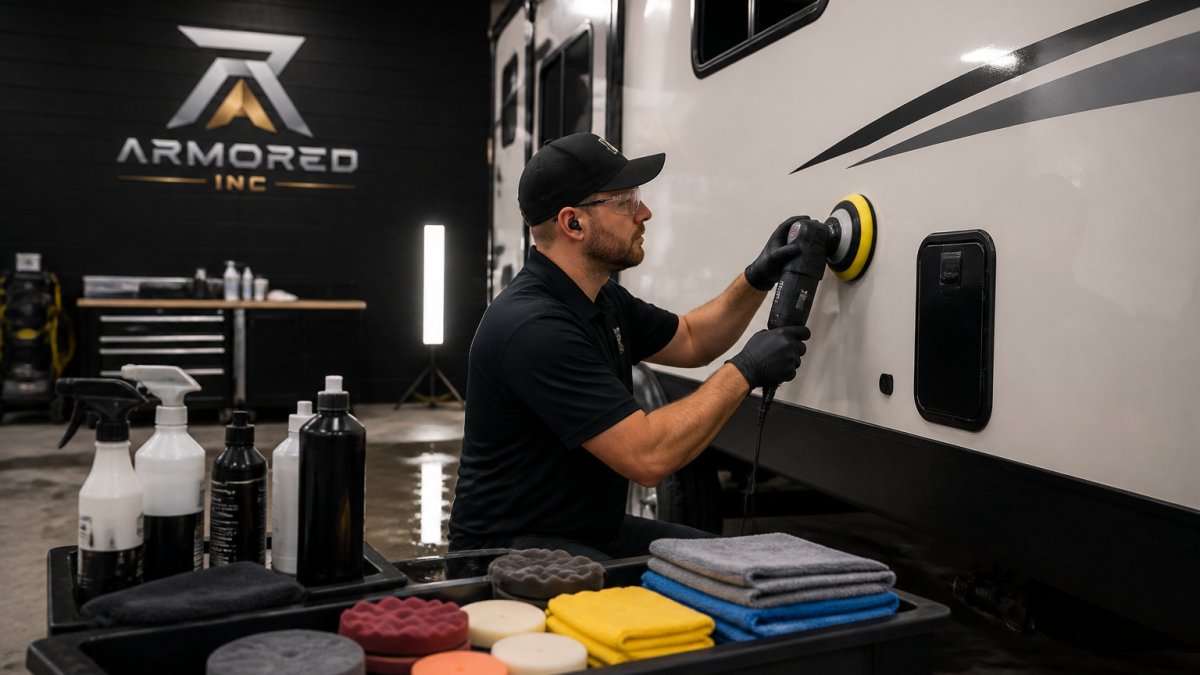
The Four-Stage Preparation Process:
Stage 1: Initial Wash and Decontamination
Start with a thorough wash using pH-neutral RV soap and a pressure washer set below 1500 PSI. High pressure damages fiberglass and gel coat. Work top to bottom to rinse contaminants downward.
Remove all road contaminants, oxidation, and buildup, paying special attention to trim, seams, and the lower third where road spray concentrates. For Ontario trailers, use a soft-bristle brush to gently agitate embedded salt deposits, then rinse thoroughly.
Stage 2: Clay Bar Treatment (for oxidized surfaces)
Clay bar treatment removes embedded contaminants that washing alone misses. This step is non-negotiable for trailers over 5 years old or those with visible oxidation. Skipping it means the coating bonds to oxidized gel coat rather than sound surface, resulting in premature failure.
Stage 3: Paint Correction (if needed)
Light paint correction removes swirl marks and water spots using a dual-action polisher. For most trailers, light polish is sufficient.
Stage 4: Final Decontamination and Drying
DIY vs. Professional Preparation: The Real Trade-offs
Curing and Post-Preparation Care
1. Glidecoat RV Ceramic Coating: Gelcoat and Fiberglass Specialist
Glidecoat RV Ceramic Coating is purpose-built for gelcoat and fiberglass, providing up to 2 years of UV protection. It cures in 8-12 hours and inhibits rusting on metal trim. Choose this if your trailer's exterior is primarily fiberglass or gel coat.
Pros:
- Specifically formulated for large RV surface areas
- Reduces frequent waxing requirements
- Strong protection against oxidation and UV
Cons:
- Requires thorough surface preparation for optimal bonding
- Not ideal for painted surfaces if your trailer has a custom paint finish
2. Undrdog Hybrid Ceramic Coating: Versatile DIY Option
Undrdog Hybrid Ceramic Coating bridges professional coatings and consumer waxes for accessible DIY application. It works across multiple surface types, paint, fiberglass, vinyl, and metal trim, making it ideal for mixed-material trailers.
Pros:
- User-friendly spray application
- Works on multiple surface materials
- High-gloss finish enhancement
Cons:
- Requires more frequent maintenance than professional-only coatings
- Not as durable as nano-ceramic alternatives over extended periods
3. R1 Coatings Street RV/Trailer Package: Size-Specific Coverage
R1 Coatings Street RV/Trailer Package comes in size-specific options (up to 28 feet or 48 feet), eliminating overspending on unused product. Nano-ceramic technology provides deep bonding and exceptional durability. The package includes all application tools.
Pros:
- Convenient sizing based on trailer length
- Includes all necessary application components
- Nano-ceramic technology for superior bonding
Cons:
- Significant time investment required for large trailers
- Steep learning curve for first-time applicators
4. Gtechniq Crystal Serum Light: Professional-Grade Durability
Gtechniq Crystal Serum Light is engineered for maximum durability and chemical resistance. It delivers a high-gloss finish, resists wash-induced marring, and can be layered with EXO V5 for enhanced hydrophobic properties. It outperforms consumer-grade alternatives against harsh detergents and road salt.
Pros:
- Industry-leading durability
- Strong hydrophobic properties
- Excellent resistance to chemical damage
Cons:
- More demanding application process for beginners
- Higher cost than consumer-grade options
5. Griot's Garage 3-in-1 Ceramic Wax: Budget-Friendly Maintenance
Griot's Garage 3-in-1 Ceramic Wax bridges traditional wax and ceramic protection with spray-on, wipe-off application. It provides ceramic-level protection in minutes with minimal surface preparation, ideal for budget-conscious owners and maintenance between substantial coating applications.
Pros:
- Extremely easy application
- Cost-effective for regular maintenance
- Quick turnaround between applications
Cons:
- Lower durability than true ceramic coatings
- Better suited for maintenance than primary protection
Ceramic Coating vs. Traditional Wax: What Actually Matters
Ceramic coatings create chemical bonds lasting years, while wax breaks down in months. In Ontario's harsh climate, ceramic coatings justify their cost through extended maintenance intervals. Over five years, ceramic coating costs less than repeated waxing cycles. Use wax for maintenance between ceramic applications.
Durability and Longevity Expectations
Ontario-Specific Climate Factors:
Realistic Ontario Durability Timeline:
- Professional-grade coatings (Gtechniq, R1 nano-ceramic): 24-36 months with regular maintenance; 18-24 months if stored outdoors year-round
- Mid-tier coatings (Glidecoat, Undrdog): 18-24 months with regular maintenance; 12-18 months if exposed to heavy salt or outdoor storage
- Maintenance-tier products (Griot's Garage): 6-12 months between reapplication
Factors that extend ceramic coating life in Ontario:
- Winter storage indoors or under breathable cover (critical in provinces with road salt)
- Immediate rinsing after exposure to road salt, do not wait for spring cleanup
- pH-neutral soap washing every 2-4 weeks during winter months to remove salt residue
- Avoiding high-pressure washing (above 1500 PSI) which can strip the coating prematurely
- Application of a maintenance ceramic wax (like Griot's Garage) every 3-4 months to reinforce hydrophobic properties
Factors that reduce coating life in Ontario:
- Year-round outdoor storage without cover
- Infrequent washing during winter salt season (allowing salt to accumulate)
- Pressure washing at high PSI to remove salt buildup (damages the coating)
- Exposure to harsh chemical deicers beyond standard road salt
- Neglecting the coating during spring when salt residue is heaviest
The investment in a professional-grade coating (Gtechniq or R1) pays dividends in Ontario because the superior chemical resistance and hydrophobic durability withstand salt exposure longer than consumer-grade alternatives. A mid-tier coating reapplied every 18-24 months will cost less upfront but require more frequent professional service or DIY effort over a five-year ownership period.
UV Protection and Oxidation Prevention
UV protection is where ceramic coatings excel. The SiO2 (silicon dioxide) base that most ceramic coatings use reflects UV rays rather than allowing them to penetrate the gel coat or fiberglass. This prevents the oxidation that turns white fiberglass dull and chalky.
Frequently Asked Questions
Is ceramic coating worth the investment for a travel trailer?
Yes, ceramic coating protects fiberglass and gelcoat from UV oxidation, road contaminants, and environmental damage. Most travel trailer owners see reduced maintenance needs and preserved exterior finish over 2-3 years. The hydrophobic properties also make cleaning easier. However, the benefit depends on your usage frequency and local climate exposure. Trailers stored year-round in harsh conditions benefit most from ceramic coating protection.
Can I apply ceramic coating to my travel trailer myself?
Some products like Undrdog Hybrid Ceramic Coating and R1 Coatings kits are designed for DIY application and include tools for large surface areas. However, success depends on proper surface preparation, which is critical for bonding. Professional application ensures paint correction, thorough decontamination, and even coverage. If you're inexperienced with detailing, professional application reduces the risk of streaking or hazing that can occur with DIY application.
What is the difference between ceramic wax and professional-grade ceramic coating?
Ceramic wax like Griot's Garage 3-in-1 offers quick, easy maintenance and costs around $28 CAD per application. Professional-grade coatings like Gtechniq Crystal Serum Light provide deeper SiO2 bonding, longer durability (2+ years), and superior chemical resistance. Ceramic wax is ideal for regular upkeep between professional applications, while true ceramic coatings provide the foundation protection. Many owners use both: professional ceramic coating for base protection and ceramic wax for monthly maintenance.
How long does ceramic coating last on a fiberglass RV?
Durability varies by product and maintenance. Glidecoat RV Ceramic Coating provides up to 2 years of UV protection with proper care. Gtechniq Crystal Serum Light offers longer-lasting protection when maintained regularly. Factors affecting longevity include climate exposure, washing frequency, and whether you use maintenance products. Trailers stored indoors or in shaded areas typically see longer coating life. Regular ceramic wax maintenance extends the base coating's effectiveness.
What are the main benefits of ceramic coating for RVs in Canada's climate?
Ceramic coatings provide UV protection against intense sun exposure and shield gelcoat from oxidation. They offer hydrophobic properties that repel road salt, water spots, and contaminants. In Canadian conditions with seasonal temperature swings and moisture, ceramic coatings reduce corrosion risk on metal trim and prevent gel coat degradation. The beading and sheeting properties make winter maintenance easier by shedding water and reducing ice adhesion. Chemical resistance protects against road salt spray common on northern highways.