 How-to
Marine Ceramic Coating for Year-Round Boat Protection
Last Updated: November 6, 2026
Quick Summary
Marine ceramic coating is a liquid polymer that bonds to gelcoat, paint, metal and glass, forming a semi-permanent layer that repels water and resists UV damage. It fills the microscopic pores in gelcoat so water beads and rolls off instead of drying into spots, and it slows UV-driven oxidation and fading year-round, including during winter storage.
- Gelcoat is porous at a microscopic level, so water, minerals and organic matter work into the pores and dull the surface.
- Winter damage comes from freeze-thaw cycling, condensation under covers and UV exposure through the off-season.
- Keep the surface dry for the initial cure window, typically 12 to 24 hours depending on humidity.
- Spring and early fall are the practical application windows in Barrie; mid-summer work needs a shaded bay and early starts.
- Rinse after every use and wash with a pH-neutral shampoo, skipping abrasive compounds and heavy-duty degreasers that strip the coating.
Table of Contents
- What Marine Ceramic Coating Does for Gelcoat and Paint
- Why Year-Round Protection Matters on Lake Simcoe
- Boat Gelcoat Preparation Before Any Coating Goes On
- Marine Ceramic Coating Application: A Step-by-Step Workflow
- Marine Ceramic Coating Longevity: What to Realistically Expect
- Ceramic Coating Maintenance for Boats Through Every Season
- Freshwater Versus Saltwater Performance and Cost Over Time
- Booking Your Marine Coating Assessment
- Frequently Asked Questions
What Marine Ceramic Coating Does for Gelcoat and Paint
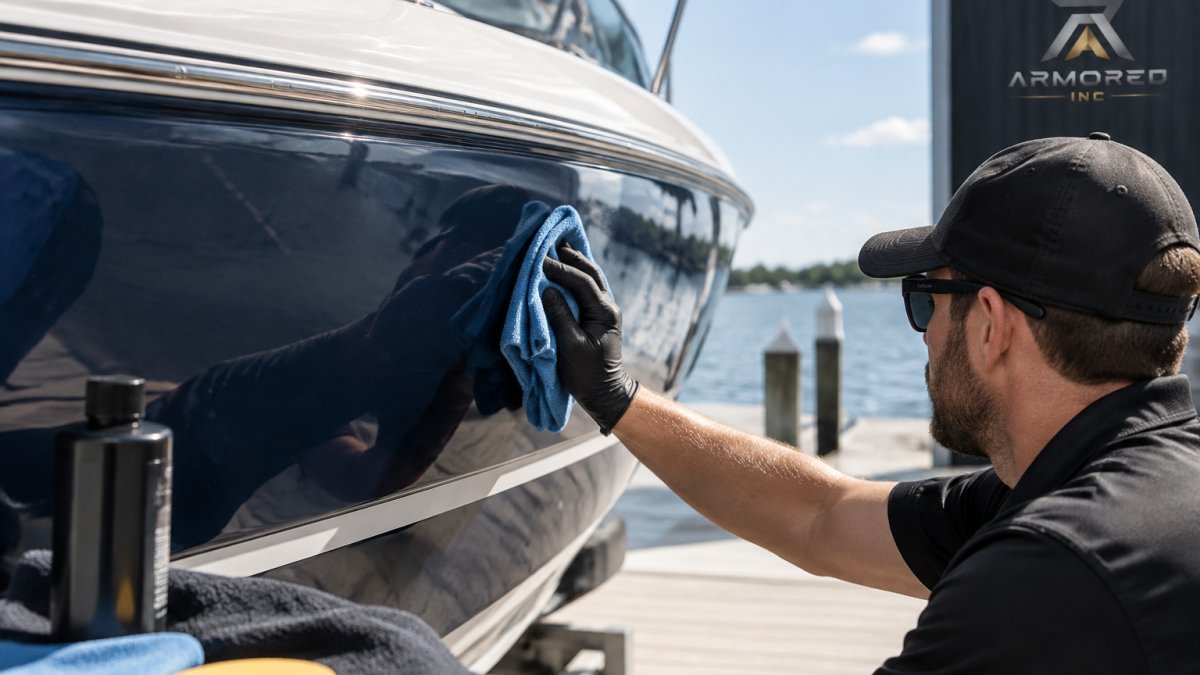
Marine ceramic coating is a liquid polymer that bonds to gelcoat, paint, metal and glass, leaving a semi-permanent layer that repels water and resists UV damage.
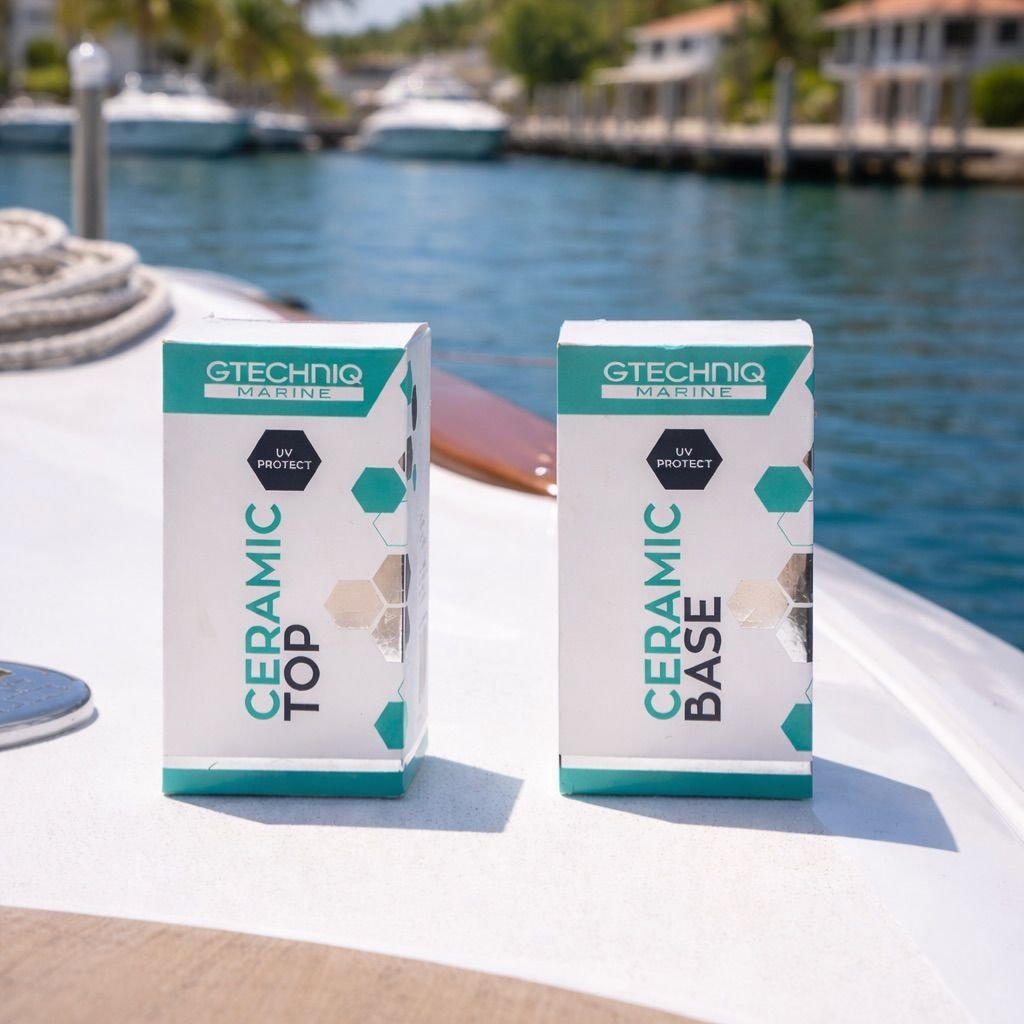
Gelcoat is the glossy outer layer on most fiberglass hulls, and it is porous at a microscopic level.
A ceramic layer fills those pores and forms a slick finish, so water beads and rolls off instead of drying into spots.
You can read more about the marine coating products we apply before deciding.
Why Year-Round Protection Matters on Lake Simcoe
Lake Simcoe boaters deal with a short, intense season and a long off-season, a combination that punishes an unprotected hull in ways warmer climates never do.
Summer brings heavy UV, algae blooms and warm water that accelerates organic growth. Fall brings leaf tannins and debris.
Without protection, gelcoat oxidizes, chalky residue builds up, and the hull needs compounding just to look presentable.
What Winter Storage Actually Does to an Unprotected Hull
Winter is where unprotected gelcoat loses the most ground. Three mechanisms do the damage:
- Freeze-thaw cycling. Water trapped in microscopic pores expands when it freezes and contracts when it thaws, widening pores and opening the surface to oxidation.
- Condensation under covers. A sealed tarp traps moisture against the hull, pushing it into the gelcoat and leaving a dull, chalky film by spring.
- UV exposure through the off-season. Boats stored outdoors without a breathable cover take UV damage all winter, and oxidation that starts in storage is harder to correct.
A ceramic layer fills those pores and forms a slick barrier, so water beads and rolls off instead of sitting and freezing in place. It also slows UV-driven oxidation even when the boat is not in the water.
Winter Preparation Checklist for a Coated Boat
If the coating is going to carry the hull through storage, the prep before storage matters as much as the prep before application:
- Wash the hull with a pH-neutral shampoo and rinse thoroughly
- Decontaminate with a clay bar or chemical iron remover to clear mineral and organic deposits
- Dry the hull completely, including hatches, rub rails and areas under the cover line
Watch out: sealing a damp hull under a non-breathable tarp is worse than leaving it exposed. Trapped moisture causes more oxidation and staining than open air.
Spring Recommissioning: Where Year-Round Protection Pays Off
Spring is when the coating proves its value. A protected hull usually comes out of storage needing a wash and an inspection, not a full correction. An unprotected hull often needs compounding before it can even be assessed for coating.
The spring sequence we recommend:
- Wash and rinse the hull, then inspect the finish under bright light
- Check water beading on horizontal surfaces, which take the most UV
- Top up the coating where beading has weakened, especially on the bow, gunwales and swim platform
- Catch oxidation early with a light polish on any dull patches before they spread
- Recoat metal and glass surfaces if the previous layer has worn thin
Year-round protection means the coating works in the water and still protects the surface under a cover. The goal is fewer correction jobs and a hull that holds its shine season after season.
Boat Gelcoat Preparation Before Any Coating Goes On
Surface preparation decides whether a marine ceramic coating lasts two seasons or five. Coating over oxidation, old wax or mineral deposits traps contamination under a sealed layer, and the coating fails from underneath.
Here is the preparation sequence we follow:
- Wash the hull with a strip wash to remove old wax, sealants and oils
- Decontaminate with a clay bar or chemical iron remover
- Remove rust stains and mineral deposits from metal and gelcoat
Skipping the polish step is the most common mistake. A coating locks in whatever finish sits beneath it, so swirl marks and dull patches stay visible for the life of the coating.
Glass, metal and propeller surfaces get their own prep. Stainless steel needs a dedicated metal polish, and glass needs a fine abrasive to clear water spots before coating.
Marine Ceramic Coating Application: A Step-by-Step Workflow
Application is straightforward but demands a controlled space and patience. Marine ceramic coating application works best indoors or under cover, away from wind, dust and direct sun.
Total time: roughly one to two days for a typical recreational boat, including prep and cure time.
Step 1: Set Up the Space
Move the boat into a shaded or indoor bay. Surface temperature should be stable and out of direct sunlight so the product does not flash too fast.
Step 2: Apply in Small Sections
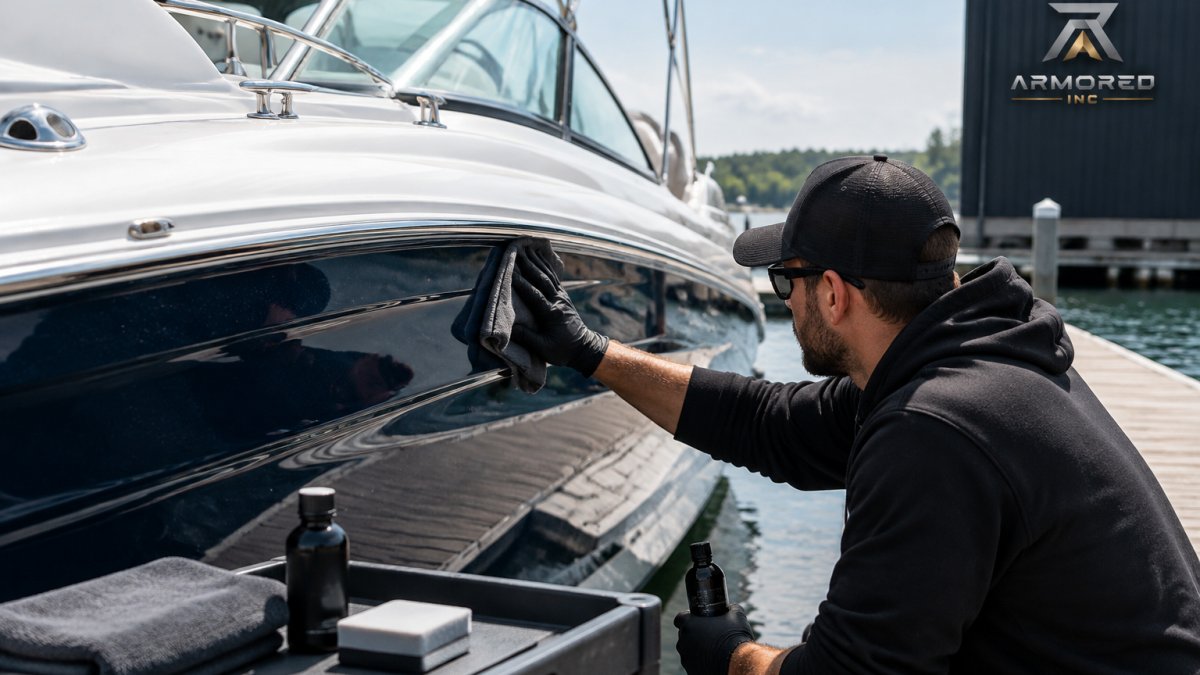
Work one panel at a time, roughly a square metre. Apply a thin, even layer with an applicator pad, then level it with a microfiber towel before it flashes.
Step 3: Check Coating Thickness
Thin and even beats thick and patchy. High spots cure into a hazy film that needs polishing off, which wastes product and time.
Step 4: Observe Curing Time
Keep the surface dry for the initial cure window, typically 12 to 24 hours depending on humidity. Full cure takes longer, and no water contact during that window is non-negotiable.
Step 5: Apply a Top Layer Where Specified
Some systems use a base coat plus a top coat for added hydrophobicity. Follow the product's own layering instructions rather than improvising.
If you want a deeper walkthrough of each pass, our step-by-step hull coating guide covers the full sequence in more detail.
Weather and Temperature Constraints in Barrie
Barrie's application window is narrower than most boat owners expect.
Most marine ceramic products want moderate surface temperatures and humidity below a set threshold.
Spring and early fall are the practical windows here. Mid-summer work needs a shaded bay and early-morning starts.
Watch out: applying coating in the open on a windy day near the water invites dust and pollen onto a wet surface.
Here is the application workflow we follow, from setting up the space to the final top layer.
| Step | What to do | Key detail |
|---|---|---|
| Set up the space | Move boat into shaded or indoor bay | Stable surface temperature, out of direct sunlight |
| Apply in small sections | Work one panel at a time, about a square metre | Thin even layer, level with microfiber towel |
| Check thickness | Thin and even beats thick and patchy | High spots cure hazy and need polishing off |
| Observe curing time | Keep surface dry for initial cure window | Typically 12 to 24 hours depending on humidity |
| Apply top layer | Base coat plus top coat where specified | Follow the product's own layering instructions |
Marine Ceramic Coating Longevity: What to Realistically Expect
Longevity depends on preparation quality, product system, sun exposure and storage.
Boats stored indoors and washed regularly hold up noticeably better than boats left uncovered. Saltwater use, heavy sun and abrasive cleaning all shorten service life.
We tell customers to think in terms of realistic service life rather than a permanent fix. If you want to weigh that against what a full job costs, our marine coating cost per foot review breaks down the investment.
Ceramic Coating Maintenance for Boats Through Every Season
Ceramic coating maintenance for boats is simple, but it is not nothing.
In season: rinse after every use, wash with a pH-neutral shampoo, and dry with a microfiber towel to prevent water spots.
Mid-season: apply a coating-safe maintenance spray or topper to refresh hydrophobicity. This takes minutes and extends the protective layer.
Storage: keep the cover fitted and check periodically for condensation.
Spring recommissioning: wash, inspect the finish, and top up the coating where beading has weakened.
Freshwater Versus Saltwater Performance and Cost Over Time
Freshwater and saltwater are not the same test. Lake Simcoe boats avoid salt corrosion entirely, which helps coating longevity, but freshwater brings its own challenges that most coating guides ignore because they are written for coastal boaters. Freshwater exposure also makes seasonal care, from managing moisture to planning winter boat storage, part of protecting a boat through Okanagan Lake weather.
What Changes in Freshwater
Saltwater introduces chloride attack on metal, faster corrosion on propellers and fittings, and heavier mineral deposits. Coated metal resists this better, but saltwater boats need more frequent rinsing and more attention to anodes and stainless hardware.
Freshwater brings different problems:
- Algae and organic staining. Warm shallow water near shore promotes growth on hulls that sit in a slip all season. Lake Simcoe's algae blooms in mid-summer can leave a film on hulls within days.
- Mineral content. Lake water carries dissolved minerals that leave water spots and scale on gelcoat and glass, especially on surfaces that dry in the sun.
- Zebra mussels and other fouling. Freshwater hulls in the Great Lakes basin deal with mussel attachment on running gear and hull bottoms, which is a different fouling profile than barnacles.
A freshwater boat on a protected inland lake can stretch coating service life compared with a saltwater boat kept in a slip, because the metal-corrosion load is lower.
Cost and Value Over Time
DIY path: A consumer kit requires its own strip wash, clay bar, iron remover, compound, polish, applicator pads and microfiber towels.
Professional path: A professional job bundles prep, correction and application, which is where most of the labor sits.
Maintenance cost: Coated or not, a boat needs washing. The difference is what washing costs in time and products.
If you boat in salt water or split time between both, our salt water coating guide covers the extra steps.
Booking Your Marine Coating Assessment
Every hull is different, and the honest answer to "how much and how long" comes from looking at the boat. Oxidation level, existing coating, surface area and storage setup all change the plan.
Armored Inc. offers mobile services, valet options and rental cars to keep your season moving.
If you are ready to move from cleaning and compounding every spring to a finish that holds up, book a marine coating assessment and we will walk the hull with you, check the gelcoat condition and give you a straight answer on what the surface needs.
The pattern we see every spring is the same: boats stored unprotected come out needing correction before they can be coated.
Frequently Asked Questions
Does marine ceramic coating protect a boat year-round in Ontario?
A properly applied marine ceramic coating forms a bonded barrier that resists UV rays, water spots, and contaminants through the boating season. It does not replace winterization. For year-round protection, combine the coating with proper layup: haul out, wash, cover the boat, and inspect the hull before spring launch. The coating reduces oxidation and makes spring cleanup faster, but it still needs periodic washing and inspection to hold up through freeze-thaw cycles.
Can you apply marine ceramic coating over oxidized gelcoat?
No. Oxidation must be removed first through compounding and polishing, because the coating bonds to the surface it is applied to. If chalky, faded gelcoat is left in place, the coating traps the dull layer underneath and fails early. Boat gelcoat preparation, including decontamination and machine correction, is the step that determines how well the coating performs and how long marine ceramic coating longevity actually lasts.
How long does marine ceramic coating last on boat gelcoat?
Durability depends on product grade, coating thickness, sun exposure, and how the boat is stored. Freshwater boats that are covered in winter generally see the longest service life. Salt water, constant mooring, and heavy UV exposure shorten it. Annual inspections and proper ceramic coating maintenance for boats, including pH-neutral washes, keep the barrier working longer.
Is professional ceramic coating worth it for a boat in Barrie?
It depends on how you use the boat and how long you plan to keep it. Pricing depends on vessel size and condition, so request a quote from Armored Inc. for current rates. For boats stored outdoors through Ontario winters, the easier cleaning and reduced oxidation usually justify the investment over several seasons.