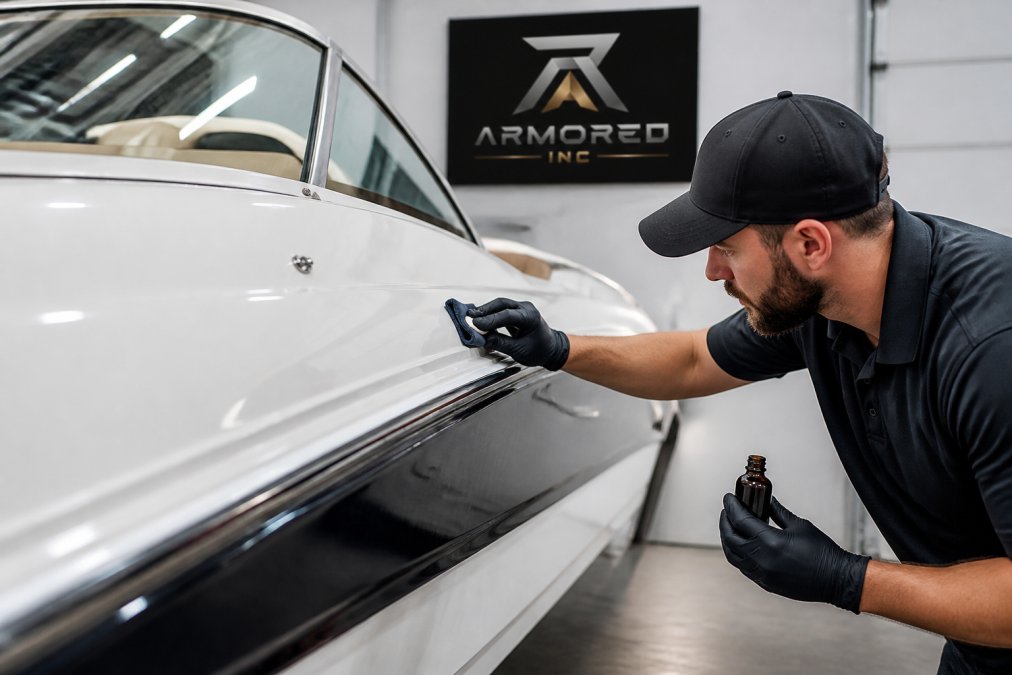
 comparison
Is Professional Boat Ceramic Coating Worth It? 2026 Review
Table of Contents
- Ceramic Coating vs Marine Wax Longevity
- What Professional Boat Ceramic Coating Actually Delivers
- Marine Ceramic Coating Cost Ontario
- The Pros and Cons of Professional Application
- How to Maintain Ceramic Coated Boat Surfaces
- Why Surface Preparation Determines Long-Term Results
- Regional Climate Considerations for Barrie and Ontario Waters
- Conclusion: Is Professional Boat Ceramic Coating Worth It?
- Frequently Asked Questions
Last Updated: September 25, 2026
Ceramic Coating vs Marine Wax Longevity
Marine ceramic coating is a liquid polymer applied to a boat's gelcoat or painted surfaces that chemically bonds into a semi-permanent protective layer. Whether professional boat ceramic coating is worth it starts here: wax lasts weeks, while a properly applied coating holds for years.
| Protection Type | Typical Durability | Reapplication | Water Behavior |
|---|---|---|---|
| Traditional marine wax | Weeks to a few months | 2-4 times per season | Sheeting, breaks down fast |
| Polymer sealant | 3-6 months | 1-2 times per season | Better beading, moderate life |
| Marine ceramic coating | Multiple years | Annual inspection | Strong hydrophobic beading |
What Professional Boat Ceramic Coating Actually Delivers
A professional application delivers three things wax cannot match: hydrophobic properties, gloss enhancement, and UV protection that resists oxidation.
Hydrophobic Properties and Gloss Enhancement
Hydrophobic means the surface repels water instead of absorbing it. Water beads and rolls off, carrying dirt and salt with it, fewer water spots, less scrubbing, and a cleaner hull between washes.
UV Protection and Oxidation Resistance
Oxidation is the chalky, faded film that forms when UV light breaks down gelcoat, the biggest cosmetic problem for boats stored outdoors. A ceramic layer absorbs and reflects UV before it reaches the gelcoat beneath.
Marine Ceramic Coating Cost Ontario
Pricing for marine ceramic coating in Ontario depends on vessel length, surface condition, and prep work required. A boat with heavy oxidation needs more labor than a well-kept hull, and that shows up in the quote. Most shops price by inspection rather than a flat rate, reflecting three variables: length, current gelcoat condition, and whether the job includes paint correction.
Where the Money Actually Goes
The sticker price is mostly the labor that makes the coating last. A professional job breaks into roughly these buckets:
- Decontamination wash and chemical strip: Removes salt, algae, mineral deposits, and old wax or sealant.
- Mechanical decontamination: Clay or a decontamination pad pulls embedded fallout out of the gelcoat.
- Paint correction: Machine polishing to remove oxidation, swirl marks, and scratches. This is the single largest labor line on an oxidized hull and can take longer than the coating application itself.
- Coating application and leveling: Applying the product evenly and wiping it down before it flashes.
- Cure time and inspection: The boat typically needs to stay dry and out of direct sun while the coating cross-links.
DIY vs. Professional: The Real Cost Breakdown
A DIY kit looks cheap next to a professional quote, but the comparison is product-plus-labor versus product-plus-labor. The DIY owner supplies the labor, space, tools, and risk.
- Product cost: A consumer marine ceramic kit is a fraction of a professional quote, but it usually covers less area and offers less working time.
- Prep cost: Polishers, pads, compounds, clay, and decontamination chemicals add up, and most owners do not already own them.
- Facility cost: A coating needs a clean, dust-controlled, shaded space to cure. A driveway or open marina slip is not that.
- Risk cost: If prep is incomplete, the coating fails early and the money is gone. A professional job usually carries some form of workmanship accountability; a DIY job does not.
Does It Add Resale or Insurance Value?
Ceramic coating is a maintenance and appearance investment, not a titled upgrade like an engine or electronics, so it has no standardized resale line item. What it affects is how the boat presents:
- Resale: A hull that beads water and holds gloss signals a well-maintained boat. Buyers and marine surveyors read that as evidence of care, which can support the asking price even if no one pays a separate "coating premium."
- Insurance: In Canada, marine insurance premiums are driven by hull value, vessel type, navigation area, and claims history, not by whether the gelcoat is coated. Do not expect a discount for coating. What a coating can do is reduce the likelihood of cosmetic claims and make the boat easier to keep in insurable condition.
- Documentation: Keep the application record and any annual inspection notes. A paper trail of professional care is what a buyer or insurer can actually verify.
Ongoing Cost After Application
The recurring cost drops but does not hit zero. Budget for pH-neutral boat soap, microfiber towels, and an annual inspection. If a section stops beading, a professional decontamination and touch-up is far cheaper than a full re-coat. The savings come from eliminating two to four wax jobs per season and the detailing that goes with them.
The Pros and Cons of Professional Application
Professional application wins on durability and finish quality, but costs more upfront and requires a shop you trust.
Pros:
- Multi-year protection instead of seasonal reapplication
- Stronger hydrophobic effect and easier cleaning
- UV protection that slows oxidation and fading
- Deeper gloss that improves the boat's appearance
- Less time spent on maintenance each season
Cons:
- Higher upfront cost than wax or sealant
- Requires professional prep and application for best results
- Not a permanent fix; it still needs periodic inspection
- Poor prep or a rushed job can fail early
How to Maintain Ceramic Coated Boat Surfaces
Maintenance on a coated boat is simpler than on a waxed one, but not zero-effort: clean gently and avoid anything abrasive. What most guides miss is that maintenance in Barrie and across Ontario is seasonal, the routine that works in July is wrong for November.
In-Season Care (May to October)
- Wash with a pH-neutral boat soap, never dish detergent. Dish soap strips the layer over time.
- Use a soft wash mitt and rinse before scrubbing so you are not grinding grit into the surface.
- Dry with a microfiber towel to prevent water spots. Simcoe and the surrounding Kawartha and Georgian Bay lakes carry minerals that leave rings when water evaporates.
- Skip abrasive polishes and harsh chemical cleaners. If the surface needs correction, that is a professional job, not a Saturday project.
- Rinse after every outing if you can, and always after extended exposure to algae-heavy shallows.
- Inspect the surface each season for dulling or reduced beading.
The Ontario Winter Problem
Boats in Ontario sit for five to seven months, and storage threats differ from on-water threats:
- Freeze-thaw cycles: Water trapped in seams, fittings, and covered areas expands and contracts. A coated hull sheds water better, but standing water in a cockpit or under a cover still causes damage.
- Ice and snow load: Weight on a covered boat stresses gelcoat and can trap moisture against the surface for months.
- Indoor vs. outdoor storage: A heated indoor space is the easiest on a coating. A cold outdoor shrink-wrap or tarp traps condensation, which is harder on the layer than sun.
- Spring recommissioning: The first wash of the season should be a full decontamination, not a quick rinse. Winter storage leaves a film that, if scrubbed in, dulls the coating.
What to Avoid Year-Round
- Automatic brush car washes and stiff-bristle brushes
- Acid-based hull cleaners, which etch the coating
- Solvent-heavy bug and tar removers left to dwell
- Washing in direct sun, which lets water spot before you can dry it
- Storing with a wet cover against the hull
Why Surface Preparation Determines Long-Term Results
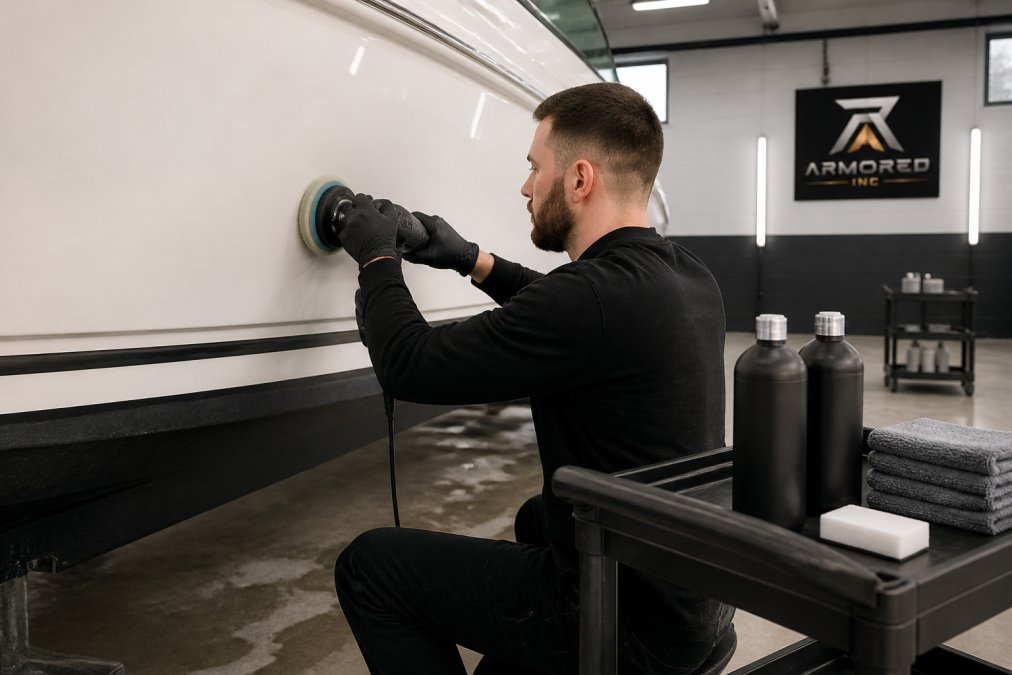
Surface preparation decides whether a coating lasts years or fails in months. It bonds to clean, corrected gelcoat, not to oxidation, old wax, or embedded contamination.
Common Causes of Application Failure
Application failure almost always traces back to prep, not the product. The most common causes:
- Incomplete decontamination: Dirt and salt trapped under the coating
- No paint correction: Coating over oxidation seals in the chalk
- Wrong environment: Dust, humidity, or direct sun during curing
- Rushed curing time: Handling or washing before the coating sets
- Poor technique: Uneven coverage leaves weak spots
Coating over an oxidized or contaminated surface is the fastest way to waste money. The coating peels or dulls within a single season, and fixing it means stripping everything and starting over.
Regional Climate Considerations for Barrie and Ontario Waters
Boats in Barrie and across Ontario face a mix of conditions that shortens the life of unprotected surfaces: hot, UV-heavy summers, cold winters with freeze-thaw cycles, and a short but intense boating season.
Conclusion: Is Professional Boat Ceramic Coating Worth It?
Professional boat ceramic coating is worth it if you keep your boat for several seasons, store it outdoors, and want to spend less time waxing and more time on the water. It is not worth it if you sell within a year or expect a coating to fix a hull that needs serious restoration first.
Contact Us to get a quote for your vessel.
Frequently Asked Questions
Are professional ceramic coatings worth the money?
For boats kept in the water or exposed to harsh sun and salt, professional boat ceramic coating typically pays off by cutting cleaning time and protecting the gelcoat for multiple seasons. The upfront cost is higher than wax, but when you factor in fewer reapplication cycles and reduced oxidation repair, the long-term value becomes clear. Whether it is worth it depends on how long you keep the vessel and how much you value easier upkeep.
How much does it cost to ceramic coat a boat in Ontario?
Marine ceramic coating cost Ontario varies based on vessel length, gelcoat condition, and whether paint correction is needed before application. Pricing depends on the amount of surface preparation required and the coating system chosen. Contact Armored Inc. directly for a quote tailored to your boat rather than relying on generic estimates, since every hull presents different prep demands.
How long does professional ceramic coating last on a boat?
Most professional marine ceramic coatings last two to five years, depending on the product, number of layers applied, and how well the boat is maintained. Coatings on vessels stored indoors or covered tend to last longer than those on boats kept in open slips. Following the manufacturer's maintenance schedule and avoiding abrasive cleaners will help you get the full lifespan from your investment.
What is the best professional ceramic coating for boats?
The best coating depends on your vessel type, storage situation, and how much upkeep you want to do. Professional application by an experienced installer matters more than the brand name, because surface preparation and curing determine real-world performance.
Is there a downside to ceramic coating?
The main downsides are the upfront cost and the need for professional application to get proper results. A poorly prepped surface will cause the coating to fail early, and once cured, the coating cannot be spot-repaired the way wax can. Some owners also expect the coating to make the boat maintenance-free, which it does not; you still need regular washing and occasional inspections to protect the investment.
Pros and Cons Summary
| Option | Best For | Main Trade-Off |
|---|---|---|
| Traditional marine wax | Budget-conscious, frequent sellers | Short life, constant reapplication |
| DIY ceramic kit | Hands-on owners, small boats | Higher risk of prep and application errors |
| Professional ceramic coating | Owners keeping boats for years | Higher upfront cost, needs skilled prep |