 How-to
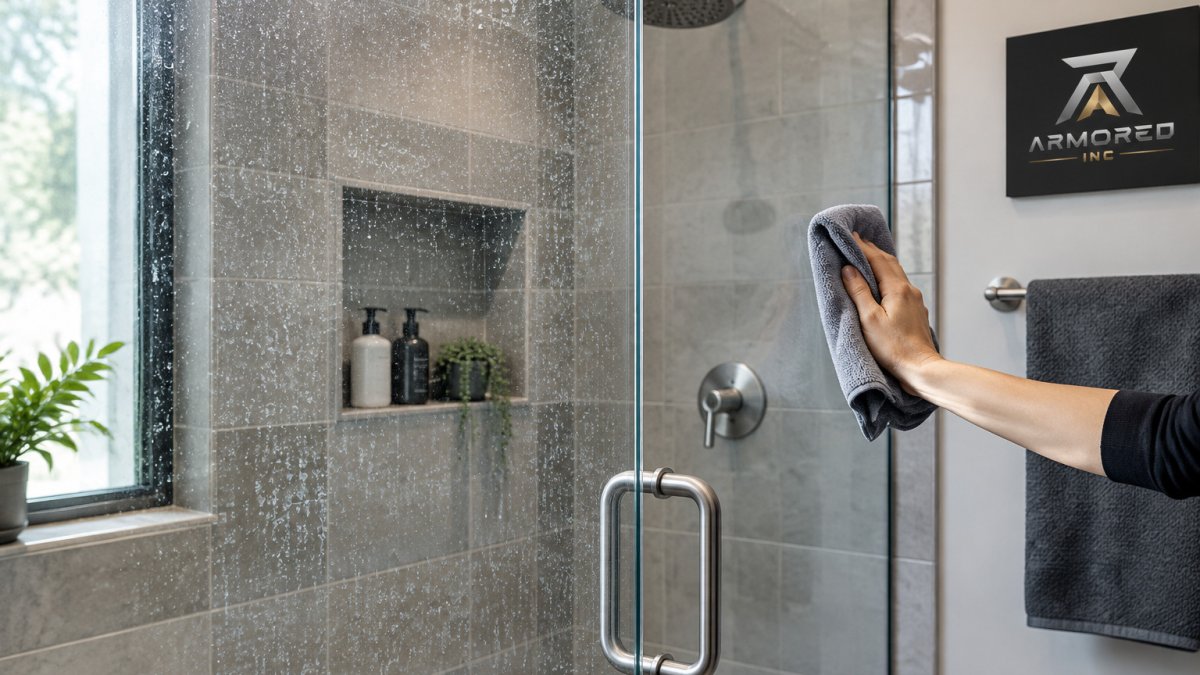
How to Prevent Water Stains on Interior Glass Shower Doors
Last Updated: November 7, 2026
Quick Summary
Prevent water stains on shower glass by removing water before it dries: squeegee the glass top to bottom after every shower, wipe the edges and hinges with a microfiber cloth, and leave the door open for 20 minutes so air circulates. A water repellent coating helps water bead and roll off, but it does not replace daily squeegeeing.
- Hard water leaves stains because dissolved calcium and magnesium remain when droplets dry on the glass.
- Rinse the glass with warm water, squeegee in overlapping strokes, and dry edges and hinges with a microfiber cloth.
- Replace a squeegee blade when it starts leaving lines; silicone blades tend to last longer than rubber.
- Clean with non-abrasive products such as dish soap and warm water or diluted white vinegar, and never mix vinegar and bleach.
- Run the exhaust fan and leave the door open so the shower dries in minutes rather than hours.
Table of Contents
- Why Hard Water Leaves Stains on Shower Glass
- Your Daily Shower Door Squeegee Routine
- How to Clean Glass Shower Doors Without Damaging Them
- Shower Glass Water Repellent Coating: What It Does and Doesn't Do
- Best Way to Remove Hard Water Spots from Shower Glass
- Shower Design and Ventilation Factors That Reduce Stains
- Book a Professional Glass Coating Consultation
- Frequently Asked Questions
Why Hard Water Leaves Stains on Shower Glass
Hard water leaves stains on shower glass because it carries dissolved calcium and magnesium.
The same thing happens on your car's glass and paint after a rainy drive. Water evaporates, minerals remain.
Preventing interior glass shower water stains comes down to one principle: get the water off the glass before it dries.
The chemistry is the same whether it's a shower door or a windshield.
Barrie's Water and Seasonal Effects on Glass
Barrie's municipal water runs on the harder side, and that matters for your shower glass. If you want to check your own supply, the City of Barrie water quality reports publish hardness figures by area.
Season makes it worse. In winter, indoor air gets dry and showers run hotter and longer. Steam condenses on cooler glass, then dries in place.
A common mistake is blaming the soap. The water is usually the bigger culprit.
Your Daily Shower Door Squeegee Routine
The best prevention is a squeegee kept inside the shower. Thirty seconds of work after every shower removes most of the water before minerals can dry.
Here's the routine we recommend:
- Rinse the glass with warm water before you step out.
- Squeegee top to bottom in overlapping strokes.
- Wipe the squeegee blade with your hand or a cloth between passes.
- Dry the edges and hinges with a microfiber cloth.
- Leave the door open for 20 minutes to let air circulate.
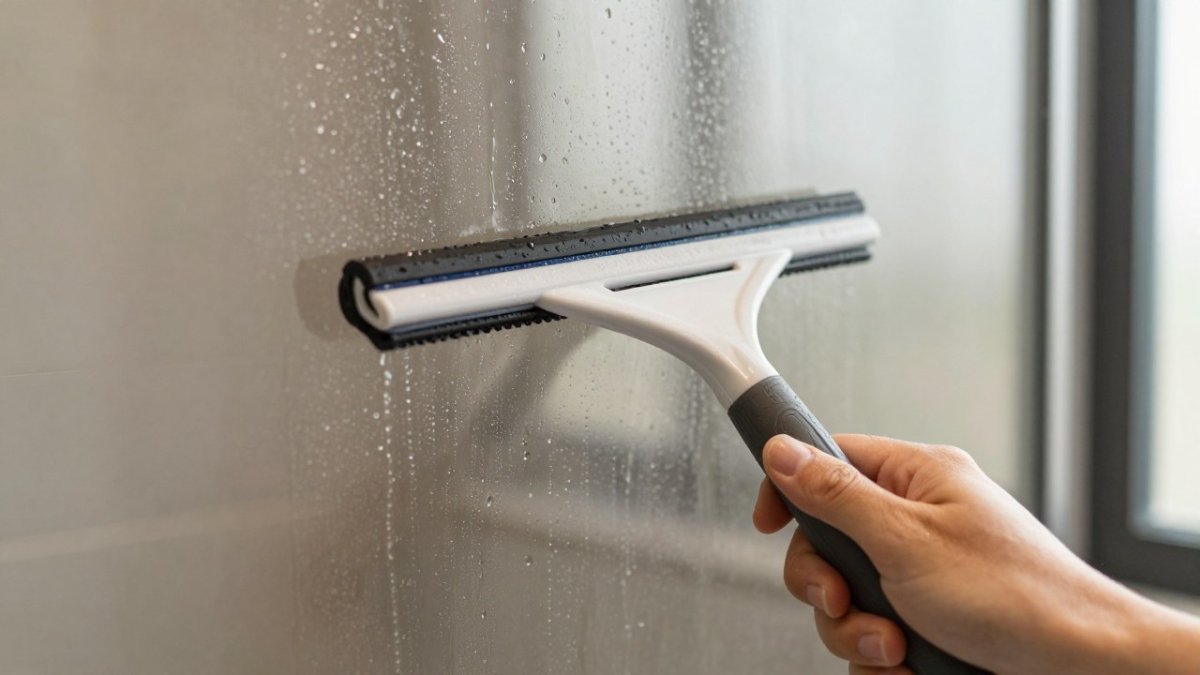
What most guides miss is the blade itself. A worn, nicked squeegee smears water instead of removing it. Replace the blade when it starts leaving lines.
Match the Tool to Your Glass Finish
Not every shower door should be treated the same way. Manufacturer-applied coatings, aftermarket hydrophobic treatments, and bare uncoated glass each respond differently to daily wiping.
- Coated or treated glass: use a soft silicone squeegee and a clean microfiber cloth. Avoid abrasive pads and acidic sprays, which can degrade the factory coating faster than daily squeegeeing ever would. Check the glass or enclosure care instructions before using vinegar on a coated surface.
- Uncoated glass: a standard rubber squeegee and microfiber cloth are fine, and you have more latitude with mild acidic cleaners for mineral haze.
- Framed enclosures: dry the frame and track edges with the cloth after squeegeeing, because trapped water in the tracks feeds mineral buildup and grime even when the glass itself is spotless.
Watch out: pressing hard with a dry squeegee on coated glass can drag grit across the surface and leave fine scratches, so rinse first and let the blade do the work.
A Realistic Prevention Schedule
One-off deep cleans don't prevent stains; consistent small habits do. Here's a schedule that fits a normal household:
| Frequency | Task | Time |
|---|---|---|
| After every shower | Squeegee glass, wipe edges and hinges | 30 seconds |
| Daily (last shower of the day) | Leave door open and run the exhaust fan | 0 minutes of active work |
| Weekly | Vinegar or dish-soap spray and soft scrub | 10 minutes |
| Monthly | Deep clean tracks, hinges, and squeegee blade | 20 minutes |
| Seasonally | Inspect coating and reapply if needed | Varies |
If you're coming from a quick spray-and-go habit, expect the squeegee to feel like extra work for the first week. Then it becomes automatic. The households that avoid stains aren't cleaning harder, they're removing water before it dries, every single time.
How to Clean Glass Shower Doors Without Damaging Them
Clean glass shower doors with non-abrasive products and a soft cloth. Using a soft cloth with the right glass-cleaning tools helps prevent scratches and water spots, while Bay Roberts Vape and Glass Shop offers a natural next step in choosing what to keep on hand.
A simple weekly clean keeps the surface clear:
- Dish soap and warm water for light film and soap scum
- White vinegar diluted with water for mild mineral haze
- A microfiber cloth or soft sponge for scrubbing
- A rinse and squeegee to finish
Avoid steel wool, gritty cleaners, and anything labeled for heavy-duty scouring. The Canadian Centre for Occupational Health and Safety notes that mixing cleaning products, especially those containing bleach and acid, can create dangerous fumes.
Watch out: never combine vinegar and bleach in the same cleaning session. Rinse thoroughly between products.
Shower Glass Water Repellent Coating: What It Does and Doesn't Do
A shower glass water repellent coating makes water bead and roll off instead of clinging. That means fewer droplets left to dry and fewer minerals bonding to the glass.
What it does:
- Sheds water so droplets run off faster
- Makes squeegeeing quicker and more effective
- Reduces soap scum adhesion
- Keeps glass clearer between cleanings
What it doesn't do:
- Replace daily squeegeeing
- Remove existing hard-water stains
- Last forever without upkeep
A hydrophobic coating, sometimes called a protective coating or glass treatment, works on the same principle as a rain repellent on a windshield. It lowers surface tension so water can't spread and settle.
Coated, Treated, and Uncoated Glass: What's Safe
Before you apply any repellent or cleaner, know what's already on your glass. Many shower doors ship with a manufacturer-applied protective coating, and layering a harsh product over it, or scrubbing it with an abrasive pad, can strip the factory protection and leave the glass more prone to spotting than before.
- Factory-coated glass: follow the enclosure manufacturer's care instructions. Mild dish soap and water, a soft cloth, and a silicone squeegee are the safe default. Avoid abrasive pads, scouring powders, and strong acids unless the manufacturer explicitly permits them.
- Aftermarket-treated glass: reapplication intervals depend on the product and on how hard the shower is used. High-traffic showers and harsh cleaners shorten coating life, so expect to refresh more often in a busy family bathroom.
- Uncoated glass: you have the most freedom with cleaners, but also the least built-in protection, which makes a coating and a consistent squeegee habit more valuable.
Watch out: never mix cleaning products, especially bleach and acid-based cleaners such as vinegar, in the same session, because the combination can create dangerous fumes. The Canadian Centre for Occupational Health and Safety notes this risk for household cleaning products generally.
Realistic Longevity and Trade-Offs
Coatings wear down. That's the honest limitation most product pages skip. A coating reduces how often minerals bond, but it doesn't eliminate the need to remove water after each shower, and it won't rescue glass that already has etched or heavily mineralized surfaces.
For a deeper look at specific products, see our comparison of the best glass shower door coatings for hard water. If you'd rather skip the DIY route, our guide to professional glass surface protection benefits explains what a pro-applied coating involves.
Best Way to Remove Hard Water Spots from Shower Glass
The best way to remove hard water spots from shower glass is a vinegar soak followed by gentle scrubbing.
Try this method:
- Mix equal parts white vinegar and warm water in a spray bottle.
- Spray the glass and let it sit for 10 to 15 minutes.
- Wipe with a microfiber cloth using light pressure.
- Scrub remaining spots with a non-scratch pad.
- Rinse and squeegee dry.
For heavier mineral buildup, a paste of baking soda and water lifts deposits without abrasives. Apply it, let it sit, then rinse.
Automotive glass cleaner can work on shower glass in a pinch, since it's formulated for mineral film. Just confirm it's safe for any coating on your door.
When Stains Are Etching, Not Deposits
Some stains aren't sitting on the glass. They've eaten into it. Etching happens when acidic residue or long-term mineral contact permanently damages the surface. The glass looks cloudy or hazy, and no amount of scrubbing fixes it.
How to tell the difference:
- Deposits feel slightly raised and come off with vinegar and effort
- Etching feels smooth and stays after cleaning
- Deposits look white and powdery
- Etching looks frosted or permanently cloudy
If you've cleaned thoroughly and the haze remains, it's likely etching. At that point, cleaning won't help. Cleaning cannot reverse surface damage such as etching.
Shower Design and Ventilation Factors That Reduce Stains
Ventilation decides how fast your glass dries, and drying speed decides how much spotting you get. A well-vented shower dries in minutes.
Improve airflow with these steps:
- Run the exhaust fan during and after every shower
- Leave the shower door open between uses
- Crack a window when weather allows
- Wipe down walls and glass after the last shower of the day
- Keep the fan clean so it actually moves air
Shower design matters too. Glass that sits in direct spray collects more droplets. A slight slope on frameless doors helps water run off.
A practical prevention schedule keeps everything on track:
| Frequency | Task | Time |
|---|---|---|
| After every shower | Squeegee and wipe edges | 30 seconds |
| Weekly | Vinegar spray and soft scrub | 10 minutes |
| Monthly | Deep clean tracks and hinges | 20 minutes |
| Seasonally | Check coating and reapply if needed | Varies |
If you want a surface that sheds water on its own, a water-repellent coating is worth considering.
Book a Professional Glass Coating Consultation
Some stains are easy to prevent and hard to undo. If your glass is already clouded, or you want protection that outlasts store-bought repellents, a professional assessment tells you what's possible.
Armored Inc. offers interior coating services for residential and commercial properties.
We also offer mobile service, valet, and rental options so the process fits your schedule. You can review our full range of commercial and residential interior coatings and PPF or contact us to book a consultation.
Your shower glass won't stay clear on its own. Barrie's hard water and long winters work against you, and store-bought sprays only go so far.
Frequently Asked Questions
How do you prevent water stains on glass shower doors?
Preventing water stains on shower glass comes down to removing water before it evaporates. Squeegee the entire door after every shower, then wipe the edges and hinges with a microfiber cloth. Leave the door open and run the exhaust fan for 15 to 20 minutes to reduce humidity. A water-repellent coating can make droplets bead and slide off, but it does not replace daily drying. For hard water, a monthly vinegar soak helps dissolve minerals before they bond to the surface.
Should you squeegee shower glass after every use?
Yes, squeegeeing after every shower is the single most effective habit for preventing hard-water stains. It takes about 30 seconds and removes most of the water that would otherwise dry and leave mineral deposits. Use a squeegee with a continuous rubber blade and start from the top, overlapping strokes downward. Finish by wiping the blade and the door frame with a microfiber cloth. If you skip a day, address the spots promptly before they harden.
What causes hard water spots on shower glass?
Hard water contains dissolved calcium and magnesium. When water droplets evaporate on shower glass, these minerals stay behind as white, chalky spots. Over time, the deposits can bond to the glass and become harder to remove. Soap scum, which forms when soap reacts with minerals in water, adds a cloudy film. In areas with harder water, spots appear faster and require more frequent cleaning or a protective coating to keep the glass clear.
Does a water-repellent coating prevent shower glass stains?
A shower glass water repellent coating reduces staining by making the surface hydrophobic, so water beads and runs off instead of drying in place. It also makes cleaning easier because minerals and soap scum have less chance to stick. However, no coating makes the glass maintenance-free. You still need to squeegee and clean regularly. Coatings typically last months to a few years depending on the product and water quality, and they work best when applied to clean, mineral-free glass.