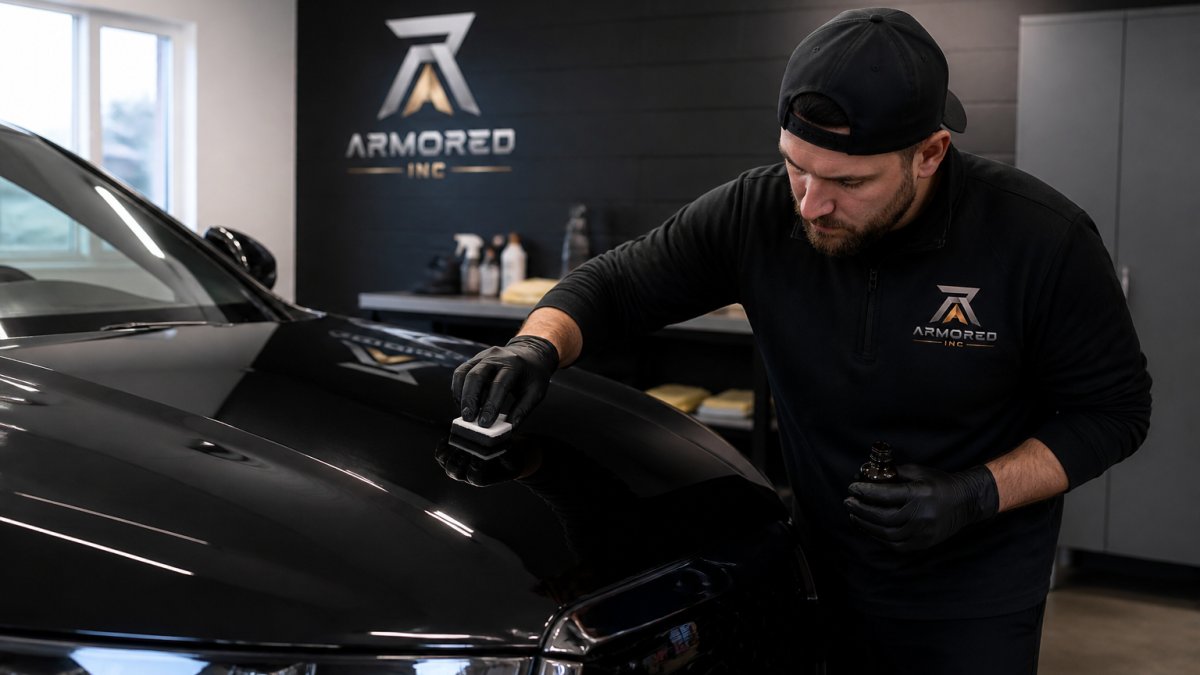
 ultimate-guide
Ceramic Coatings: A 2026 Guide
Table of Contents
- What Are Ceramic Coatings?
- Key Benefits of Ceramic Coatings
- Ceramic Coating vs Wax: Which Offers Better Protection?
- Types of Ceramic Coatings for Vehicles, Marine, and Interiors
- Ceramic Coating Maintenance Tips for Long-Term Performance
- Professional Ceramic Coating Application: Step-by-Step
- Paint Protection Film and Ceramic Coatings in Barrie
- Understanding Ceramic Coating Cost in Ontario
- Frequently Asked Questions
Last Updated: September 30, 2026
What Are Ceramic Coatings?
Ceramic coatings are liquid polymer treatments that form a protective glass-like layer on vehicle paint, marine surfaces, and interior materials. When applied and cured, these coatings bond to the surface at a molecular level, creating a hydrophobic barrier that repels water, dirt, and contaminants. Unlike traditional wax, which sits on top of paint, ceramic coatings actually integrate with the surface, offering durability that can last multiple years with proper maintenance.
The chemistry behind ceramic coatings relies on silicon dioxide (SiO2) as the primary active ingredient. This compound creates a hard, transparent shield that enhances gloss while protecting against UV damage, oxidation, and minor scratches. At Armored Inc., we work with premium ceramic coating formulations designed for the demanding Ontario climate, where winter salt, summer UV exposure, and temperature fluctuations challenge protective finishes constantly.
Ceramic coatings come in different formulations for different applications. Automotive ceramic coatings protect vehicle paint with varying levels of hardness and gloss enhancement. Marine ceramic coatings resist saltwater corrosion and algae growth. Interior ceramic coatings protect countertops, tile, glass, and other surfaces from staining and etching. Each type is engineered for its specific environment and use case.
Key Benefits of Ceramic Coatings
The primary advantage of ceramic coatings is their exceptional water beading and hydrophobic properties. Water sheets off treated surfaces rather than pooling, which minimizes water spotting and accelerates drying. This hydrophobic effect also reduces the adhesion of dirt, bird droppings, and tree sap, making regular cleaning easier and less aggressive on the underlying surface.
Ceramic coatings provide UV protection that prevents paint fading and oxidation. Sunlight degrades unprotected paint over time, particularly in vehicles exposed to extended outdoor storage. The UV-blocking properties of ceramic coatings slow this degradation significantly, preserving the original color and depth of your paint for years longer than uncoated surfaces.
Scratch resistance is another critical benefit. While ceramic coatings won't prevent deep gouges from rock impacts, they do resist light scratches and swirl marks from washing and drying. This means your paint maintains a clearer, more pristine appearance between professional details. For luxury and sports cars in Barrie where owners take pride in their vehicles' appearance, this protection matters.
Enhanced gloss and depth are aesthetic benefits that shouldn't be overlooked. Ceramic coatings amplify the reflective properties of paint, creating a richer, deeper finish that looks freshly detailed long after application. This visual enhancement is particularly striking on darker colors and matte finishes.
Chemical resistance protects surfaces from etching caused by acidic contaminants like bird droppings, tree sap, and road salt. Without this protection, these substances can permanently damage clear coat and paint. Ceramic coatings create a sacrificial barrier that absorbs this chemical assault, preserving the underlying finish.
Ceramic Coating vs Wax: Which Offers Better Protection?
Ceramic coatings and wax both provide hydrophobic protection, but they differ fundamentally in durability and performance. Traditional wax sits on the paint surface and typically lasts 2-3 months before requiring reapplication. Ceramic coatings bond to the paint itself and can protect for 2-5 years depending on the product quality and maintenance routine.
The longevity difference is significant for vehicle owners who want to minimize maintenance frequency. Wax requires regular reapplication throughout the year, particularly in Ontario's harsh winters when salt and road chemicals accelerate breakdown. Ceramic coatings reduce this burden substantially. You'll still need to maintain them through proper washing and occasional top-coat applications, but the frequency is far lower.
Wax offers easier application and removal. Most car owners can apply wax themselves with basic tools and patience. Ceramic coatings typically require professional application because improper application can leave streaks, hazing, or uneven coverage. This professional requirement adds cost but ensures proper curing and maximum protection.
Hardness and scratch resistance favor ceramic coatings. Wax is softer and more susceptible to light scratches and swirl marks. Ceramic coatings create a harder surface that resists these minor imperfections better. For owners of luxury vehicles in Barrie who want paint that stays pristine between details, this difference is meaningful.
Cost per year of protection generally favors ceramic coatings despite higher upfront expense. When you factor in the cost of repeated wax applications over several years, ceramic coatings often deliver better value. However, wax remains the better choice if you prefer flexibility and low commitment.
Types of Ceramic Coatings for Vehicles, Marine, and Interiors
Automotive ceramic coatings vary in hardness, gloss enhancement, and durability. Consumer-grade ceramic coatings offer 1-2 years of protection and can be applied at home with careful technique. Professional-grade automotive coatings provide 3-5 years of protection and are formulated for application by trained technicians. These premium products deliver superior hardness, gloss, and hydrophobic properties that justify their higher cost.
Marine ceramic coatings address the unique challenges of saltwater and freshwater environments. Salt accelerates corrosion and promotes algae and barnacle growth on hulls and exposed surfaces. Marine coatings resist these biological and chemical attacks while maintaining hydrophobic properties that reduce drag and fuel consumption. For recreational boat owners in Ontario, marine ceramic coatings protect both aesthetics and performance.
RV and trailer ceramic coatings protect large surfaces from UV damage, oxidation, and weathering. These vehicles often sit idle for extended periods, making them vulnerable to environmental damage. Ceramic coatings reduce maintenance requirements and preserve resale value by protecting the exterior finish.
Interior ceramic coatings protect countertops, tile, glass, and other hard surfaces from staining, etching, and daily wear. Kitchen and bathroom countertops benefit from protection against water spots, oil stains, and acidic spills. Glass shower enclosures stay clearer longer when treated with hydrophobic interior ceramic coatings.
Ceramic Coating Maintenance Tips for Long-Term Performance
Proper maintenance is essential for ceramic coatings to deliver their full lifespan. The first critical step is allowing adequate curing time after application. Most ceramic coatings require 24-48 hours of curing before exposure to water or washing. During this period, avoid driving in rain, parking under trees, or exposing the vehicle to moisture. Rushing this step compromises the bond between coating and paint.
Professional Ceramic Coating Application: Step-by-Step
Professional ceramic coating application begins with thorough surface preparation. The technician washes the vehicle with specialized cleaners to remove all contaminants, then performs a clay bar treatment to extract embedded particles that washing alone cannot remove. This preparation is critical because any contaminant trapped under the coating will create a permanent defect.
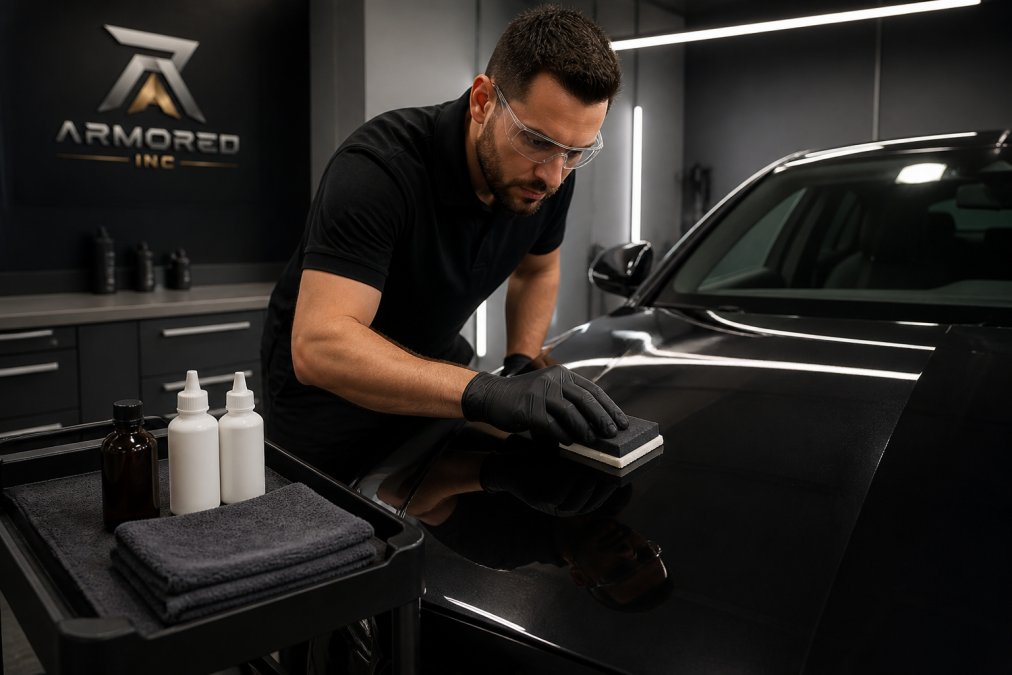
Paint Protection Film and Ceramic Coatings in Barrie
Paint protection film (PPF) and ceramic coatings serve complementary but different purposes in vehicle protection. PPF is a transparent urethane film applied to vulnerable areas like the front bumper, hood, fenders, and mirrors. It absorbs impact energy from rocks, debris, and minor collisions, protecting paint from chips and scratches. Ceramic coatings protect the entire vehicle surface from UV damage, oxidation, water spotting, and chemical etching.
Understanding Ceramic Coating Cost in Ontario
Ceramic coating cost in Ontario varies based on vehicle size, paint condition, coating quality, and whether paint correction is needed. Professional ceramic coating application typically ranges from several hundred to several thousand dollars depending on these factors. Luxury vehicles with larger surface areas and those requiring extensive paint correction naturally cost more than compact cars with minimal correction needs.
Frequently Asked Questions
How long does a professional ceramic coating last in Ontario's climate?
Quality ceramic coatings typically last 2 to 5 years depending on application quality, maintenance habits, and exposure to harsh conditions. Ontario winters with road salt and UV exposure can shorten lifespan, but proper maintenance extends durability. Professional-grade coatings last longer than consumer products. Regular washing and avoiding abrasive cleaners preserve the coating's hydrophobic properties throughout its lifespan.
What is the difference between ceramic coating and paint protection film?
Ceramic coatings form a liquid glass layer on surfaces, providing shine and water beading but minimal physical protection. Paint protection film (PPF) is a transparent polyurethane layer that shields against scratches, rock chips, and road debris. Many vehicle owners combine both: PPF on high-impact areas like the hood and front bumper, ceramic coating over the entire vehicle for hydrophobic benefits and enhanced gloss.
Is ceramic coating worth the cost for vehicles in Barrie?
Ceramic coatings offer strong value for luxury and sports cars exposed to harsh weather, road salt, and UV damage. The cost varies based on vehicle size and coating grade, but protection against oxidation, water spots, and contaminants justifies the investment for owners protecting long-term vehicle value. For commercial fleets and dealership inventory, professional ceramic coating reduces detailing labor and maintains resale appeal.
How do I maintain my ceramic coating after installation?
Wash your coated surfaces every 2 weeks using a pH-neutral car wash soap and soft microfiber towels to avoid scratching. Avoid automatic brushes and harsh chemicals. Dry thoroughly to prevent water spotting. Apply a ceramic coating maintenance spray every 3 to 6 months to boost hydrophobic properties. Park in shade when possible to reduce UV exposure, and avoid parking under trees where sap and bird droppings can damage the coating.
Can ceramic coating be applied to marine vessels and RVs?
Yes. Marine-grade ceramic coatings protect boats and RVs from salt spray, UV rays, and oxidation. These specialized formulations resist saltwater corrosion better than standard automotive coatings. RV coatings protect gel coat, fiberglass, and metal surfaces. Application process is similar to automotive but may require additional surface preparation for marine environments. Professional application ensures proper curing and maximum durability against harsh outdoor conditions.
Does ceramic coating protect against salt and road grime in Barrie?
Ceramic coatings provide excellent protection against road salt, grime, and contaminants by creating a hydrophobic barrier that repels water and prevents corrosive materials from bonding to surfaces. In Barrie's winter climate, this reduces salt damage to paint and undercarriage. Regular washing removes accumulated salt before it causes oxidation or pitting. Combined with paint protection film on vulnerable areas, ceramic coating significantly extends the life of your vehicle's finish.
What should I know about ceramic coating costs in Ontario?
Ceramic coating pricing depends on vehicle size, coating grade, surface condition, and whether additional services like paint correction are needed. Luxury vehicles and commercial fleet applications typically cost more. Pricing also varies by application method and curing time. Contact Armored Inc. for a detailed quote based on your specific vehicle or property. Investment in professional application ensures proper surface preparation and long-term performance that consumer products cannot match.