 how-to
Does Ceramic Coating Prevent Scratches? The Truth
Table of Contents
- Does Ceramic Coating Prevent Scratches or Just Swirl Marks?
- The Truth About 9H Hardness and Scratch Resistance
- What Ceramic Coating Actually Protects Against
- Ceramic Coating vs Paint Protection Film: The Real Difference
- Paint Correction Before Ceramic Coating: Why It Matters
- How Long Does Ceramic Coating Last in Ontario Winters?
- Maintenance vs Prevention: Protecting Your Paint Daily
- Cost-Benefit Analysis for Daily Drivers
- Frequently Asked Questions
Last Updated: September 9, 2026
Does Ceramic Coating Prevent Scratches or Just Swirl Marks?
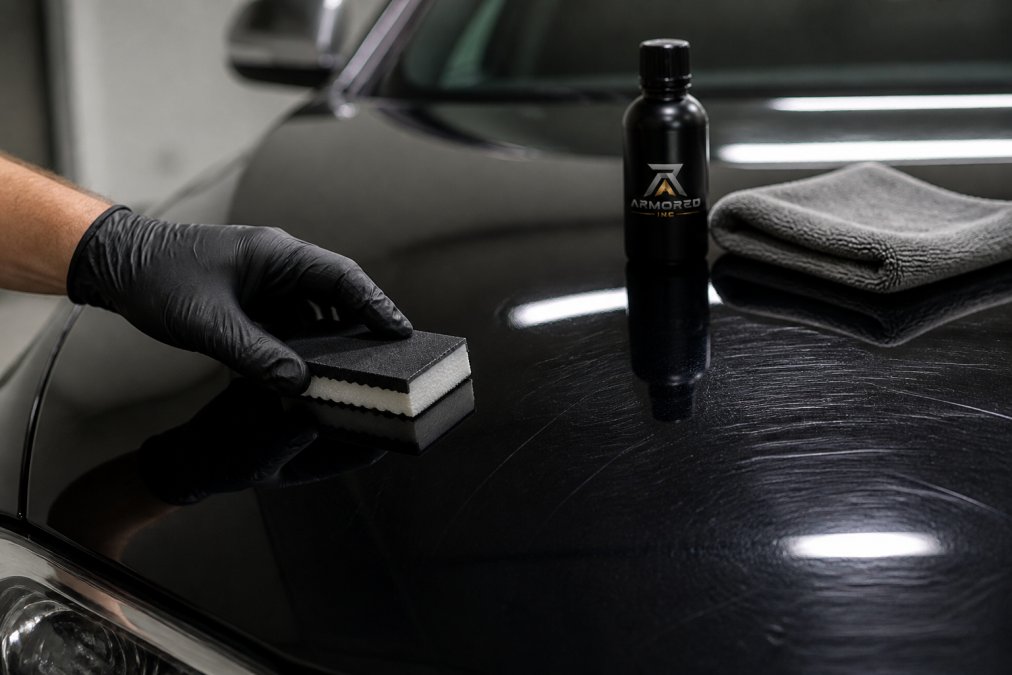
The short answer to the question does ceramic coating prevent scratches is that it does not prevent scratches from physical impact, but it dramatically reduces the surface marring that causes swirl marks and light etching. A ceramic coating is a nano-ceramic polymer that chemically bonds to your clear coat, creating a sacrificial layer with hydrophobic properties and increased surface hardness. At Armored Inc. in Barrie, Ontario, we apply these coatings daily, and the most common misconception we correct for customers is that this product turns their paint into an indestructible shield. It does not, and understanding the distinction between a scratch and a swirl mark is the difference between realistic expectations and disappointment.
What most guides get wrong is treating scratch resistance as a single category. A rock chip from highway debris is a physical impact event, while a swirl mark from a dirty wash mitt is a surface abrasion. Ceramic coating addresses the second far better than the first.
The Truth About 9H Hardness and Scratch Resistance
The "9H" rating on ceramic coating marketing refers to pencil hardness, a test standard borrowed from the coatings industry. It measures how resistant a surface is to being scratched by pencils of increasing hardness, with 9H being the hardest grade. However, this rating does not translate to impact resistance, and it does not mean the coating is immune to rock chips or key scratches.
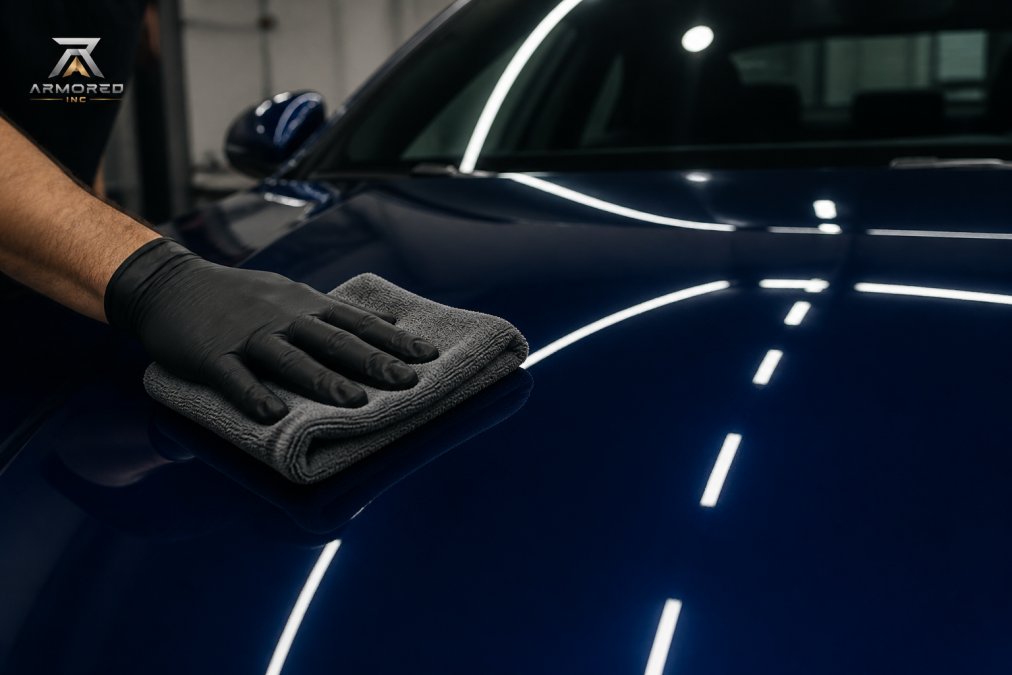
In practice, the 9H hardness primarily protects against micro-marring from routine contact, such as brushing against the paint with a jacket zipper, light contact from branches in a car wash, or the friction of a dirty microfiber towel. The coating absorbs this minor abrasion so the clear coat underneath stays pristine.
What Ceramic Coating Actually Protects Against
Ceramic coating is best understood as environmental armor rather than physical armor. Its primary job is to protect your clear coat from chemical and environmental contaminants that cause oxidation, etching, and staining. The coating's chemical bond creates a non-porous surface that repels water, so contaminants like bird droppings, tree sap, and bug splatter have a harder time bonding to the paint.
The coating also provides meaningful UV resistance. Prolonged sun exposure degrades clear coat over time, leading to oxidation and a dull, chalky appearance. A ceramic coating blocks a significant portion of UV radiation, preserving gloss and paint depth.
Ceramic Coating vs Paint Protection Film: The Real Difference
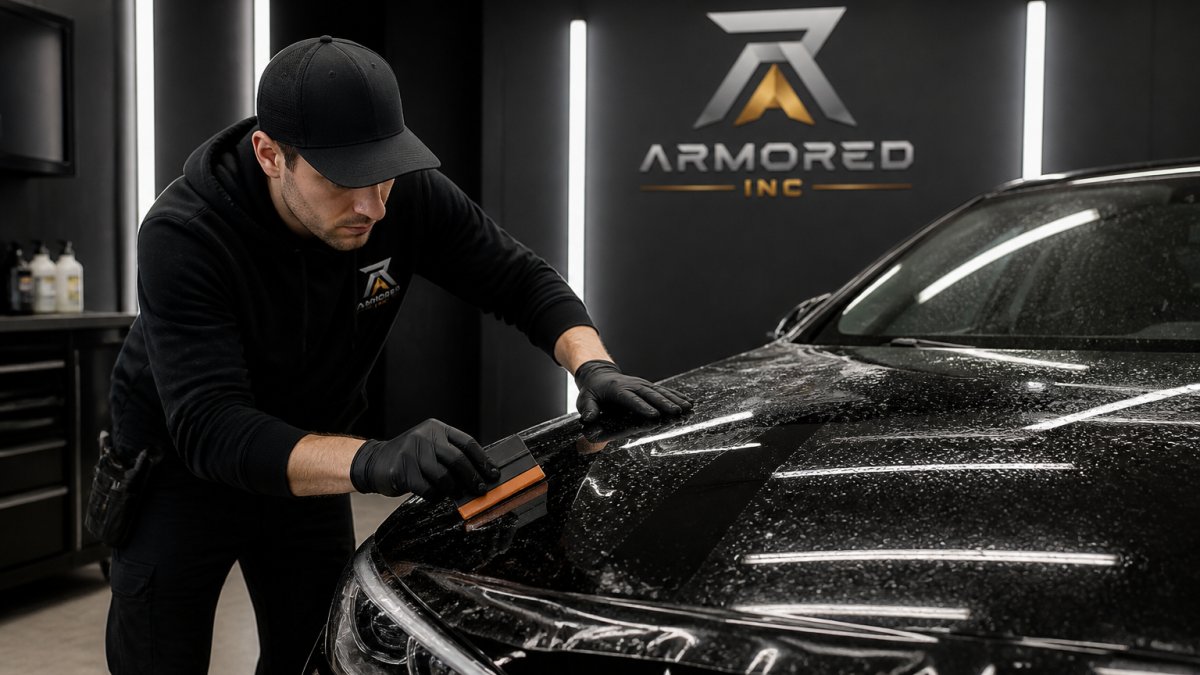
The choice between ceramic coating and paint protection film comes down to a single question: are you protecting against chemistry or physics? Ceramic coating excels at chemical resistance and ease of maintenance, while paint protection film is a physical barrier designed to absorb impact.
For a daily driver that spends time on Highway 400 or the 407, where gravel and sand are constant threats, PPF offers the only real defense against rock chips. Many owners in the Barrie area choose a hybrid approach: PPF on high-impact zones like the front bumper, hood, and mirror caps, with ceramic coating applied over the entire vehicle, including the PPF.
| Protection Method | Primary Defense | Best For | Limitations |
|---|---|---|---|
| Ceramic Coating | Chemical & UV resistance | Gloss, easy washing, contaminant repellency | Limited impact resistance |
| Paint Protection Film | Physical impact absorption | Rock chips, road debris, high-wear zones | Does not self-clean, higher cost |
| Hybrid (PPF + Coating) | Both chemical and physical | Daily drivers, luxury vehicles | Highest investment |
Paint Correction Before Ceramic Coating: Why It Matters
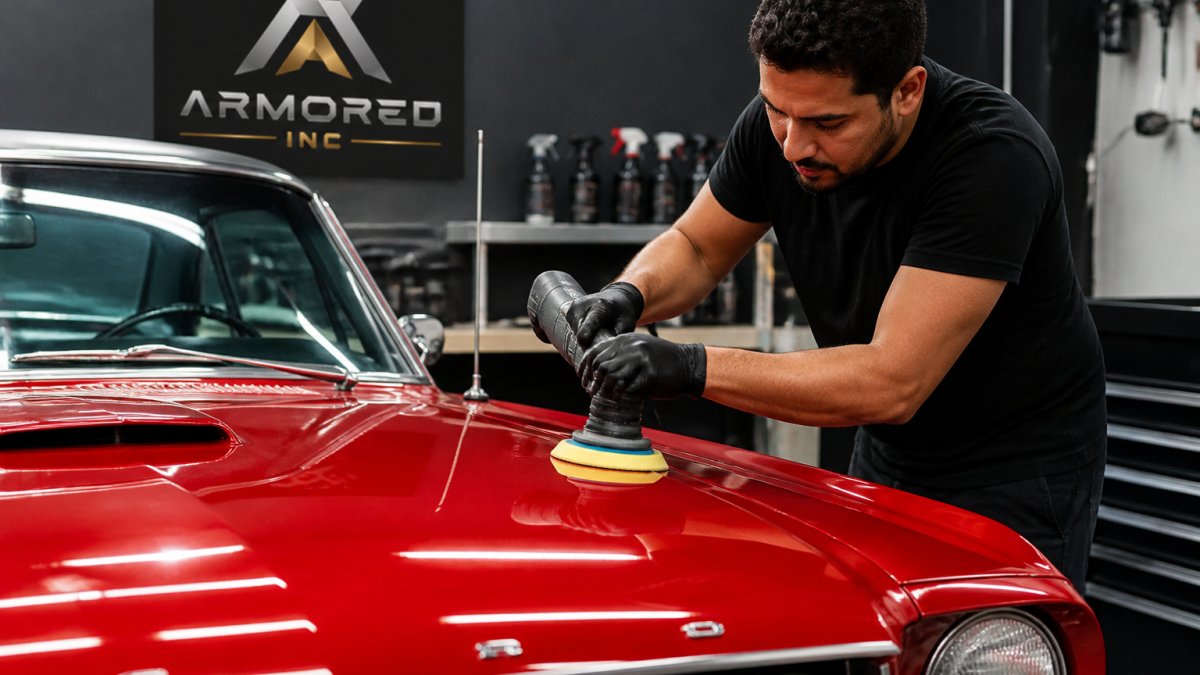
A ceramic coating does not hide existing paint defects; it locks them in. If your paint has swirl marks, micro-marring, or light scratches before application, the coating will permanently seal those imperfections beneath it. This is why paint correction before ceramic coating is not optional if you care about the final result.
The level of correction needed depends on the condition of your paint. A single-stage polish may suffice for light oxidation and haziness, while deeper scratches and swirl marks require a two-stage process with a compound followed by a finer polish. Skipping this step to save money is a common mistake that leads to disappointment.
How Long Does Ceramic Coating Last in Ontario Winters?
Ontario winters are a brutal test for any automotive finish, but the specific conditions in Barrie and Simcoe County accelerate coating degradation in ways generic guides rarely address. The combination of road salt, sand, and gravel spread on local roads creates an abrasive slurry that acts like liquid sandpaper on your paint.
A quality ceramic coating, properly maintained, will last three to five years in these conditions, but its longevity depends heavily on the preparation and the maintenance routine. The curing process is critical; a coating that is not allowed to fully cure before exposure to moisture or cold will underperform significantly.
The durability difference between a professionally applied coating and a DIY kit is substantial. Professional-grade coatings are formulated with higher solid content and require controlled application conditions to bond correctly. A DIY application in a garage during a Barrie November will struggle to cure properly in the cold, damp air.
After application, the coating's lifespan is extended by routine maintenance washes that remove salt and contaminants before they can etch the surface. Most practitioners recommend a touchless rinse or gentle hand wash every two to three weeks during the winter months, focusing on the lower panels and wheel wells where salt accumulation is heaviest.
Many owners find that a coated vehicle is noticeably easier to keep clean through the winter, since the hydrophobic properties cause salt spray and slush to bead and slide off rather than baking onto the surface. However, this self-cleaning effect diminishes as the coating ages. Each winter season gradually degrades this sacrificial layer, which is why a professional inspection and potential top-up application every two to three years is a common recommendation for daily drivers in the Barrie region.
For vehicles parked outdoors in Barrie's winter sun, the UV component of coating degradation is less of a concern than the chemical assault from de-icing agents. Calcium chloride, commonly used on Ontario highways, is particularly aggressive and can leave white residue that bonds to the coating surface if not removed promptly. The province of Ontario's regulations on winter maintenance, such as those found in O. Reg. 190/08 under the Public Transportation and Highway Improvement Act, outline the types of materials used for winter road treatment.
The honest expectation for a daily driver in Barrie is that a professionally applied ceramic coating will provide meaningful protection for three to five years, but the coating will show wear first in the areas most exposed to winter abuse: the front bumper, hood leading edge, and lower door panels.
Maintenance vs Prevention: Protecting Your Paint Daily
The distinction between maintenance and prevention is where most vehicle owners lose the plot. A ceramic coating is a thin, transparent layer, typically 1 to 3 microns thick, that chemically bonds to your clear coat. This layer is not indestructible; it is designed to be the first point of contact for abrasion, absorbing damage that would otherwise reach your clear coat.
When a swirl mark appears on a coated vehicle, it is almost always in the coating itself, not the clear coat beneath it. This is the sacrificial layer working as intended. A coating that has accumulated swirl marks over two years of automatic car washes can often be restored with a light polish and a top-up application.
Ceramic coating is a maintenance product, not a prevention product. It makes keeping your paint clean easier and safer, but it does not eliminate the need for proper washing technique. You still need to use the two-bucket method, quality microfiber mitts, and proper drying techniques to avoid introducing new swirl marks.
Prevention, on the other hand, is about avoiding the situation entirely. Parking away from other cars in lots, avoiding automatic car washes with spinning brushes, and addressing bird droppings or bug splatter quickly are all prevention habits that protect your paint regardless of whether it is coated.
For luxury car and sports car owners in Barrie, Newmarket, and Muskoka, this combined strategy is the difference between a car that looks new for years and one that shows its age within a season. Parking in a heated garage rather than outside, using a touchless wash during the coldest months, and applying a spray sealant or quick detailer after each wash are all prevention habits that extend the life of both the coating and the paint beneath it.
The sacrificial layer concept also explains why ceramic coating does not prevent rock chips. A rock chip is a high-impact event that delivers enough energy to penetrate the coating and the clear coat in a single instant. The coating's hardness, rated at 9H on the pencil hardness scale, resists light abrasion but does not absorb kinetic energy from a sharp impact.
The most successful protection strategy in the Barrie region combines a professionally applied ceramic coating with disciplined maintenance habits and strategic PPF application on the highest-impact areas. The coating handles chemistry and routine abrasion; the film handles physics and impact; and your washing habits determine how long both last.
Cost-Benefit Analysis for Daily Drivers
Deciding whether ceramic coating is worth the investment for a daily driver requires an honest look at how the vehicle is used and how long you plan to keep it. The coating's value is highest for owners who care about the vehicle's appearance, plan to keep it for several years, or want to maximize its resale value.
The cost of professional ceramic coating is not insignificant, and pricing depends on vehicle size, paint condition, and the specific coating product chosen. For a daily driver that accumulates highway miles and sits outside in the elements, the coating pays for itself through reduced detailing costs and preserved paint condition. For owners who do not care about minor imperfections or plan to replace the vehicle in a couple of years, the investment is harder to justify. A coating is also not a substitute for PPF on high-impact areas; if rock chips are your primary concern, allocate your budget toward film first and coating second.
The honest truth is that ceramic coating does not prevent scratches in the way most buyers hope. It prevents swirl marks, micro-marring, chemical etching, and environmental degradation, and it makes your paint dramatically easier to maintain. For those protections, it is an excellent investment. For impact protection against rock chips and physical damage, you need paint protection film.
Frequently Asked Questions
Will a ceramic coating cover existing scratches on my car?
No. Ceramic coating bonds to your clear coat and adds a sacrificial layer, but it does not fill or hide existing scratches. Those imperfections remain visible after application. This is why paint correction before ceramic coating is essential. A professional installer will machine polish the paint to remove swirl marks and light scratches first, then apply the coating to lock in that flawless finish.
What is the difference between ceramic coating and paint protection film?
Ceramic coating is a liquid polymer that chemically bonds to your paint, adding hardness and hydrophobic properties. It resists swirl marks from washing and light marring, but it cannot stop rock chips. Paint protection film (PPF) is a thick, clear urethane layer that absorbs impact. For real protection against stone chips and physical scratches, PPF is the only option. Many owners combine both: PPF on high-impact areas and ceramic coating over the entire vehicle.
How long does a professional ceramic coating last in the Barrie climate?
A quality professional ceramic coating, properly maintained, offers significant longevity. Ontario winters are harsh: road salt, sand, and gravel all take a toll. Regular maintenance washes during winter remove corrosive contaminants that can degrade the coating's hydrophobic properties over time.
Can I wash my car normally after applying a ceramic coating?
Yes, but a touchless or two-bucket wash method is best. The coating makes the surface slick, so dirt and grime release more easily. Use a pH-neutral car shampoo and microfiber mitts to avoid introducing new swirl marks. Avoid automatic car washes with rotating brushes, as they can still scratch the coating. The self-cleaning effect means you will wash less often, but when you do, proper technique matters.