 ultimate-guide
Professional Paint Protection Film Installation Guide
Table of Contents
- What Is Paint Protection Film and Why It Matters
- The PPF Installation Process Step by Step
- Benefits of Professional Paint Protection Film Installation
- Paint Protection Film Cost: What Shapes Your Quote
- How Long Does Paint Protection Film Last
- Choosing a Certified Installer and Avoiding Common Defects
- PPF Maintenance and Aftercare
- Conclusion
Last Updated: August 19, 2026
What Is Paint Protection Film and Why It Matters
Paint protection film is a transparent, multi-layer barrier applied directly over a vehicle's painted surfaces to shield them from rock chips, road debris, UV degradation, and environmental contaminants. Originally developed for military and aerospace applications, the technology has evolved into one of the most effective long-term paint preservation solutions available for passenger vehicles, marine vessels, and recreational vehicles.
At Armored Inc., we work with paint protection film daily across many vehicles, from daily drivers to high-value Corvettes and Porsches. The difference between a protected finish and an unprotected one becomes obvious after a single season on Ontario roads.
Material Composition: Thermoplastic Polyurethane Explained
Thermoplastic polyurethane (TPU) is the core material in modern paint protection film. It is a flexible, high-impact polymer that bonds to a vehicle's clear coat through a pressure-sensitive adhesive layer, creating a durable shield without altering the appearance of the underlying paint.
A standard PPF construction includes several functional layers:
- Top coat: A hydrophobic, scratch-resistant surface that repels water, dirt, and UV rays
- TPU film body: The primary impact-absorbing layer, typically 6 to 8 mil thick
- Adhesive layer: A repositionable, pressure-sensitive compound that bonds to the clear coat
- Release liner: A protective backing removed during installation
The top coat is what gives premium films their self-healing capability and long-term visual clarity. Lower-grade films often omit a proper top coat, which dramatically shortens their service life and makes them prone to staining and yellowing.
Self-Healing Properties and UV Resistance
The self-healing property in quality TPU films works through thermoelastic memory. When the film surface receives a light scratch or swirl mark, ambient heat from sunlight or a heat gun causes the polymer chains to return to their original orientation, effectively erasing the mark. According to 3M's automotive films technical documentation, the self-healing response is directly tied to the film's top coat formulation and cross-link density.
UV resistance is equally important for vehicles in Ontario, where summer sun intensity and long daylight hours accelerate paint oxidation. Quality PPF blocks a significant portion of UV radiation before it reaches the clear coat, preserving paint depth and gloss over the long term.
The PPF Installation Process Step by Step
Professional paint protection film installation is not a DIY task. The process demands a controlled environment, calibrated tools, and a trained installer who understands how film behaves under tension, heat, and moisture.
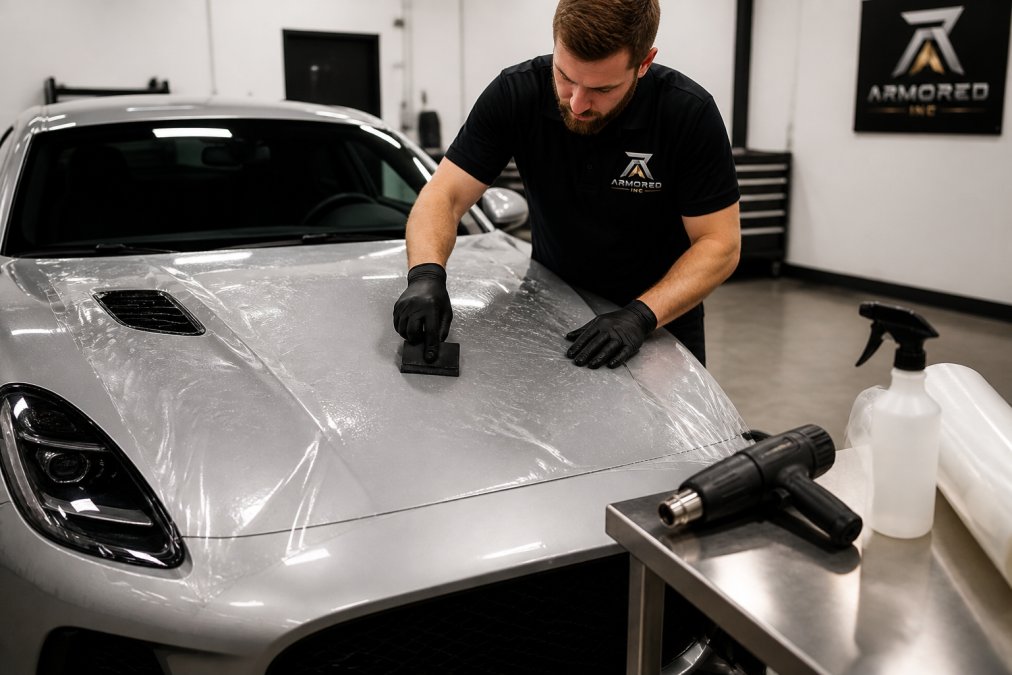
Surface Decontamination and Paint Correction
Surface decontamination removes bonded contaminants, iron particles, tar, and industrial fallout that would otherwise create lumps and adhesion failures beneath the film. A proper decontamination sequence includes a pH-neutral wash, an iron remover soak, and a clay bar treatment.
Paint correction follows if the vehicle's clear coat carries swirl marks, light scratches, or oxidation. PPF locks in whatever condition the paint is in at installation, so applying film over imperfect paint permanently preserves those imperfections under a glossy, magnifying surface.
Wet Method vs. Dry Method Application
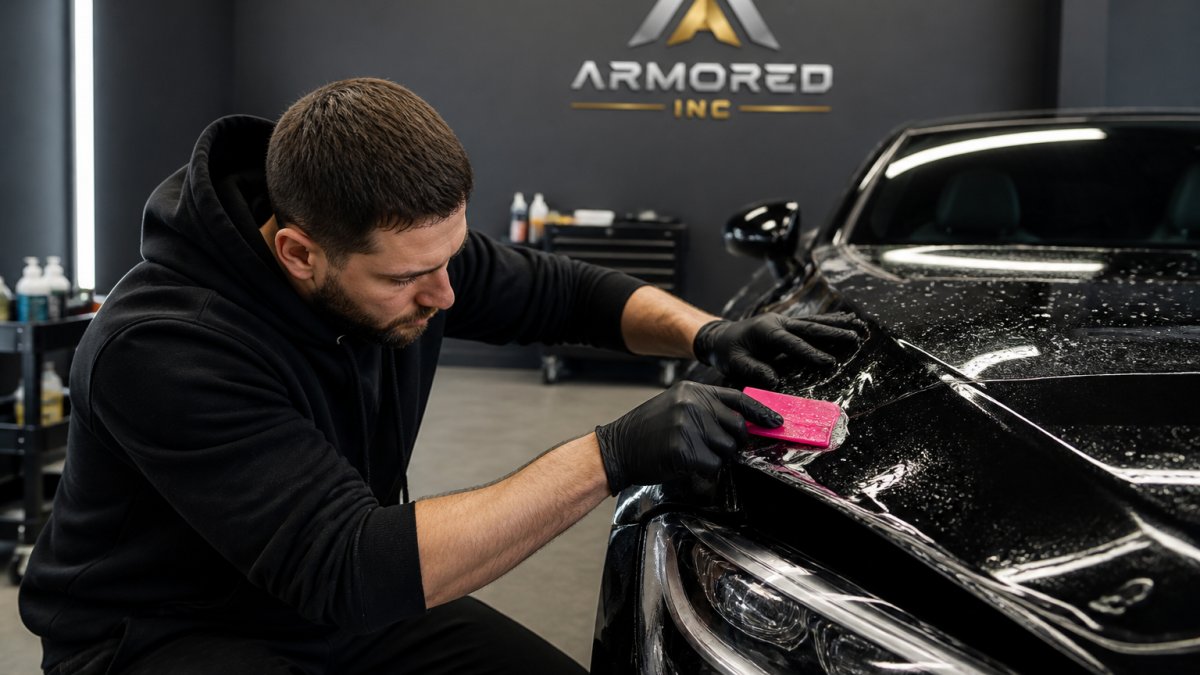
Wet method (slip solution): The installer mists the vehicle panel and the adhesive side of the film with a diluted slip solution, typically water and baby soap. This allows the film to slide and reposition before final squeegee-out. Wet application is preferred for large panels like hoods and roofs.
Dry method (tack solution): The installer uses a light tack solution that allows limited repositioning before the adhesive bonds. Dry application suits smaller, complex areas like bumpers and mirrors where the film needs to conform tightly to curves and edges.
Most skilled installers use both methods on a single vehicle, selecting the technique that best suits each panel's geometry.
| Application Method | Best For | Key Advantage | Main Challenge |
|---|---|---|---|
| Wet (slip solution) | Large flat panels, hoods, roofs | Easy repositioning | Longer cure time |
| Dry (tack solution) | Bumpers, mirrors, complex curves | Tight conformity | Less time to reposition |
| Combination | Full-vehicle installations | Optimal per panel | Requires experienced installer |
Computer-Cut Patterns and Edge Wrapping
Modern PPF shops use a computer-cut plotter and a vehicle-specific pattern database to pre-cut film pieces before installation. This eliminates the need to cut on the paint surface, reducing the risk of scoring the clear coat. professional automotive services.
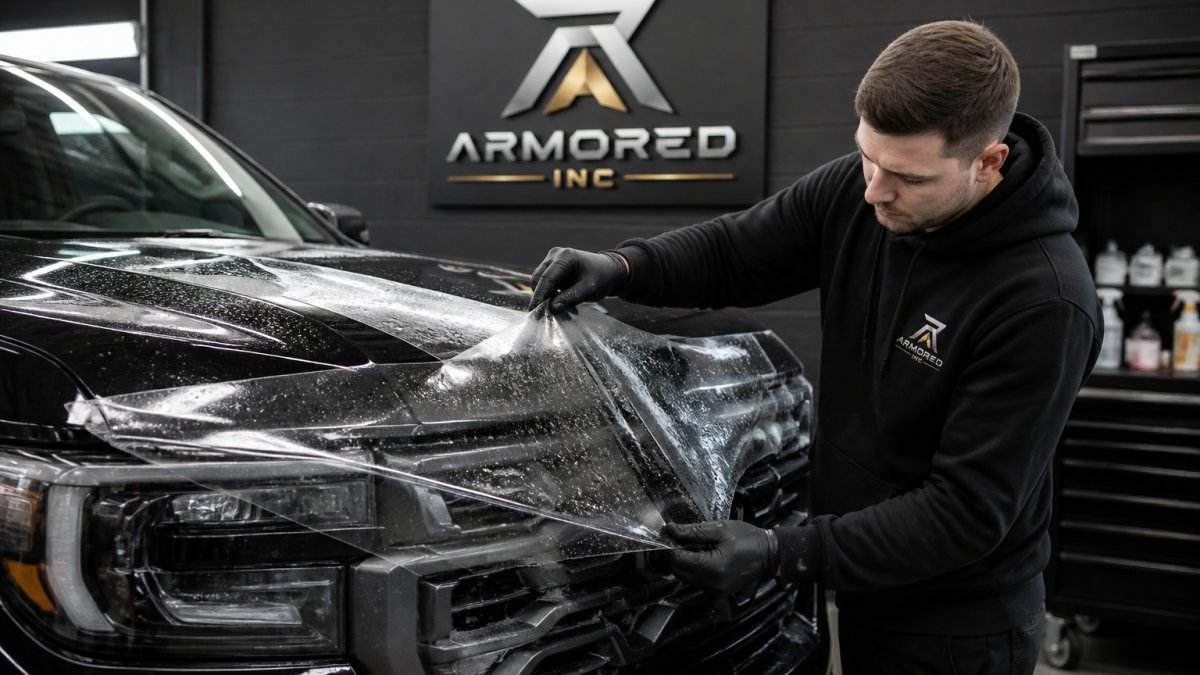
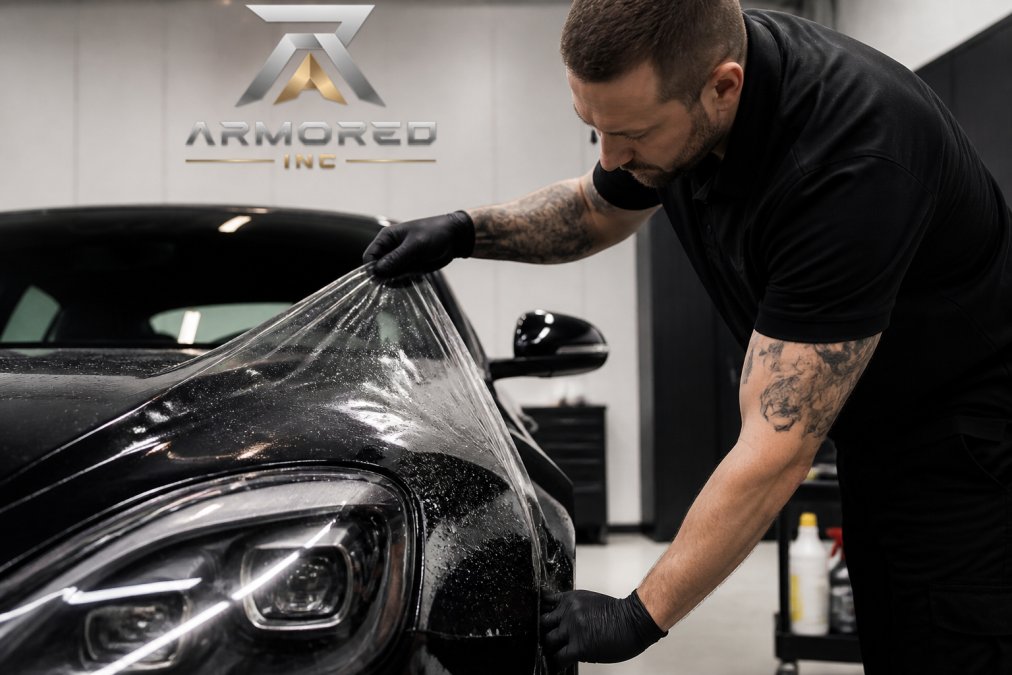
Edge wrapping is the technique of folding the film around panel edges and into door jambs rather than terminating it flush at the edge. Wrapped edges prevent moisture and debris from lifting the film from underneath and give the installation a nearly invisible finish. Quality edge wrapping requires a heat gun to relax the film around tight radii and a trained hand to avoid stretching the film unevenly.
Benefits of Professional Paint Protection Film Installation
Professional paint protection film installation preserves an asset that depreciates the moment a rock chip, UV fade, or chemical stain appears.
Professional installation delivers:
- Rock chip protection: TPU absorbs impact energy that would otherwise transfer directly to the clear coat and paint layer
- Hydrophobic surface: The top coat sheds water, road grime, and bird droppings, making maintenance easier
- UV resistance: Blocks UV radiation that degrades paint pigment and causes oxidation
- Impact resistance: Protects against door dings, debris, and minor abrasions
- Visual clarity: Properly installed film is optically clear and does not distort the vehicle's color
- Paint depth preservation: Maintains the original paint's gloss and depth for the vehicle's service life
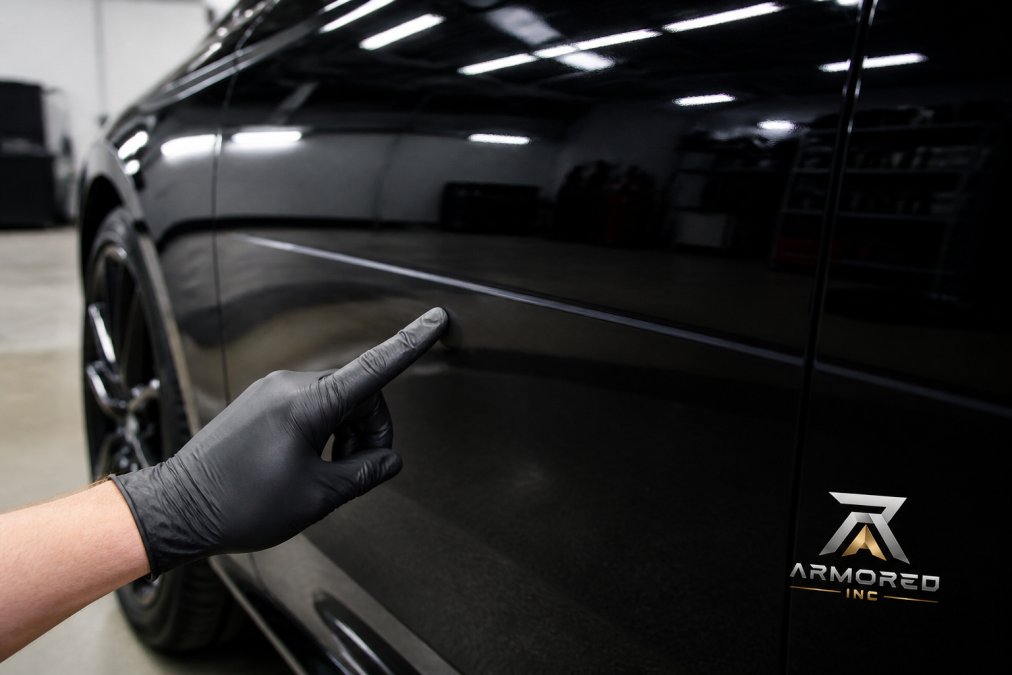
Full-front coverage typically includes the hood, front bumper, fenders, mirrors, and headlights, the highest-impact zones. Comprehensive packages extend coverage to the entire vehicle.
Paint Protection Film Cost: What Shapes Your Quote
PPF installation cost varies depending on material quality, coverage area, and installer expertise.
Key variables include:
- Film brand and grade: Premium films with advanced self-healing top coats and extended warranties cost more but deliver measurably better long-term performance
- Coverage area: Partial front-end packages cost less than full-vehicle wraps
- Vehicle complexity: High-end sports cars and vehicles with complex body lines require more installation time
- Paint correction requirements: Significant correction adds to the total
- Installer certification: Certified installers with manufacturer-backed training typically charge more, but their work is backed by material warranties
Armored Inc. provides custom quotes based on the specific vehicle, coverage package, and film grade. Contact the team directly for accurate pricing.
How Long Does Paint Protection Film Last
Quality paint protection film lasts between five and ten years under normal conditions, with premium films often carrying warranties in that range. Longevity depends on film quality, installation technique, environmental exposure, and maintenance consistency.
Vehicles that see frequent highway driving, heavy winter road salt exposure, or prolonged sun exposure will experience more wear. A properly installed and maintained film will outlast any unprotected paint finish by a significant margin. According to XPEL's PPF product warranty and care documentation, proper maintenance is a condition of warranty coverage.
PPF Compatibility with Ceramic Coatings
Paint protection film and ceramic coatings are complementary layers that work together to deliver the highest level of surface protection available.
The correct sequence is PPF first, ceramic coating second. The ceramic coating is applied over the cured film surface, adding an additional hydrophobic layer that makes the film easier to clean, more resistant to chemical staining, and longer-lasting.
Ceramic coatings applied directly to bare paint before PPF installation create an adhesion problem. The coating's hydrophobic properties prevent the PPF adhesive from bonding correctly, leading to lifting and edge failures. Always clarify the intended protection sequence with your installer before either product is applied.
Long-Term Removal and Film Replacement
Paint protection film is designed to be removable. A properly installed film on a healthy clear coat should come off cleanly without damaging the paint. The standard removal process involves applying heat to soften the adhesive, then peeling the film back at a low angle.
Adhesive residue left after removal is normal and is removed with isopropyl alcohol or a dedicated adhesive remover. Most installers recommend replacing film before it reaches the end of its rated lifespan rather than waiting for visible yellowing or delamination.
Choosing a Certified Installer and Avoiding Common Defects
Not all PPF shops are equal. The film itself is only as good as the installation, and installation quality varies dramatically between certified professionals and untrained operators.
A certified installer has completed manufacturer-backed training, works with a verified pattern database, and installs film in a dedicated, climate-controlled installation bay that minimizes dust contamination. According to SEMA's industry standards for automotive film installation, controlled environment installations produce measurably fewer defects.
Questions worth asking before booking:
- What film brands do you install, and are you manufacturer-certified?
- Do you use computer-cut patterns or cut on the vehicle?
- What does your surface decontamination and paint correction process include?
- What warranty do you provide on installation labor?
Troubleshooting Common Installation Defects
Silvering or lifting edges: The film has not adhered fully at panel edges, caused by insufficient heat during edge wrapping or inadequate surface preparation. Requires relifting and re-sealing.
Contamination bubbles: Dust or debris trapped beneath the film creates small, hard bubbles that do not dissipate. Unlike moisture bubbles, which typically flatten within 30 days, contamination bubbles are permanent and require section replacement.
Stretch marks or stress lines: Visible tension lines indicate the film was stretched unevenly during installation, often on complex curves. This is an installer technique issue.
Yellowing: Premature yellowing before the film's rated service life indicates either a low-grade film without a proper UV-resistant top coat, or prolonged exposure to harsh chemicals. Premium TPU films resist yellowing for their full rated lifespan under normal conditions.
PPF Maintenance and Aftercare
Maintaining paint protection film correctly extends its service life and keeps the hydrophobic top coat performing at its best. A properly installed film is easier to maintain than bare paint.
The first 30 days are critical. The adhesive cures progressively after installation. During this period, avoid high-pressure washing, automated car washes with abrasive brushes, and any wax or sealant application. Small moisture bubbles visible in the first week are normal and will flatten as the adhesive fully bonds.
After the curing period, routine maintenance includes:
- Wash with pH-neutral car wash soap and a soft microfiber mitt
- Avoid abrasive compounds or clay bars directly on the film surface
- Apply a film-safe spray sealant every three to six months to maintain hydrophobic performance
- Remove bird droppings, tree sap, and insect splatter promptly, these are acidic and will etch the top coat if left for extended periods
Matte PPF requires additional care. Gloss-enhancing products, wax, and standard sealants will alter the film's satin finish and cannot be reversed without film replacement. Confirm with your installer which products are safe to use.
Protecting a vehicle's finish is one of the highest-return investments an owner can make, and the results depend almost entirely on the quality of the installation and the film used. Armored Inc. specializes in professional paint protection film installation for automotive, marine, and RV applications, offering computer-cut patterns, certified installation, and a full range of coverage packages from front-end protection to full-vehicle wraps. Contact us to get an accurate quote for your vehicle and start protecting your investment the right way.
Frequently Asked Questions
How long does professional paint protection film installation take?
A partial installation covering high-impact zones like the front bumper, hood, and mirrors typically takes one to two days. A full-vehicle paint protection film installation can take three to five days, depending on the vehicle's size, panel complexity, and whether paint correction is required beforehand. Certified installers work in a controlled environment to ensure the adhesive layer bonds correctly and edge wrapping is clean, so rushing the process is never advisable.
Is professional paint protection film installation worth the cost?
For luxury vehicles, sports cars, EVs, and any vehicle exposed to highway driving or harsh weather, professional PPF installation is a strong long-term investment. The film shields the clear coat from rock chips, UV damage, and environmental contaminants, which helps preserve resale value. DIY kits lack the precision of computer-cut patterns and professional-grade thermoplastic polyurethane, meaning bubbles, lifting edges, and poor coverage are far more common without a certified installer.
What is the difference between DIY and professional paint protection film installation?
Professional installers use a plotter to cut film precisely to each panel's geometry, apply it in a climate-controlled installation bay, and use a combination of slip solution, squeegees, and heat guns to eliminate bubbles and achieve clean edge wrapping. DIY kits use pre-cut generic shapes that rarely align perfectly, and without proper surface decontamination using a clay bar and isopropyl alcohol, adhesion fails faster. Warranty coverage also typically requires professional installation.
How do I maintain my vehicle after professional paint protection film installation?
Wait at least 48 to 72 hours after installation before washing the vehicle. Use a pH-neutral soap and avoid high-pressure water directed at film edges. The hydrophobic top coat repels water and light contamination, but a dedicated PPF spray detailer helps maintain it. Avoid petroleum-based products near film edges. If the film is paired with a ceramic coating, follow the coating's specific aftercare schedule. Annual inspections let your installer catch any lifting or yellowing early.
Can paint protection film be combined with a ceramic coating?
Yes, and the combination is considered best practice for maximum protection. Paint protection film handles physical impact, rock chips, and abrasion, while a ceramic coating applied over the PPF adds an extra hydrophobic layer that makes cleaning easier and extends the film's surface life. The ceramic coating bonds to the film's top coat rather than directly to the paint. This layered approach is especially popular on high-end sports cars, Corvettes, Porsches, and EVs where both appearance and long-term protection matter.
Does professional paint protection film installation affect my vehicle's warranty?
PPF installed by a certified professional does not void a manufacturer's warranty under standard Canadian consumer protection principles, provided the installation does not involve modifications to mechanical or electrical systems. The film sits on top of the clear coat and is fully removable. Always confirm with your dealership before installation, and keep documentation of the installer's credentials and the film's warranty, as this can support any paint-related warranty claims down the road.
This article was written using GrandRanker