 ultimate-guide
Ceramic Coating Pros and Cons 2026: Full Guide
Table of Contents
- What Is Ceramic Coating and How Does It Work?
- Ceramic Coating Pros and Cons: An Honest Breakdown
- Ceramic Coating vs Paint Protection Film: Which Wins?
- How Long Does Ceramic Coating Last in Practice?
- Surface Prep and Paint Correction: Why They Decide Everything
- Ceramic Coating Maintenance Tips That Protect Your Investment
- Long-Term Cost-Benefit Analysis and Warranty Nuances
- Conclusion
Last Updated: August 16, 2026
What Is Ceramic Coating and How Does It Work?
Ceramic coating is a liquid polymer that chemically bonds to a vehicle's clear coat, creating a semi-permanent protective layer that cannot be washed away like traditional wax. Once cured, it forms a hard, hydrophobic shell that repels water, resists chemical contamination, and enhances gloss far beyond conventional detailing products.
Most professional-grade formulations are built on silica dioxide (SiO2) or a combination of SiO2 and titanium dioxide. When applied to a properly prepped surface, these nano-ceramic compounds fill microscopic pores in the clear coat and cure into a glass-like matrix, creating dramatically reduced surface tension so water beads and sheets off rather than causing paint oxidation or water spotting.
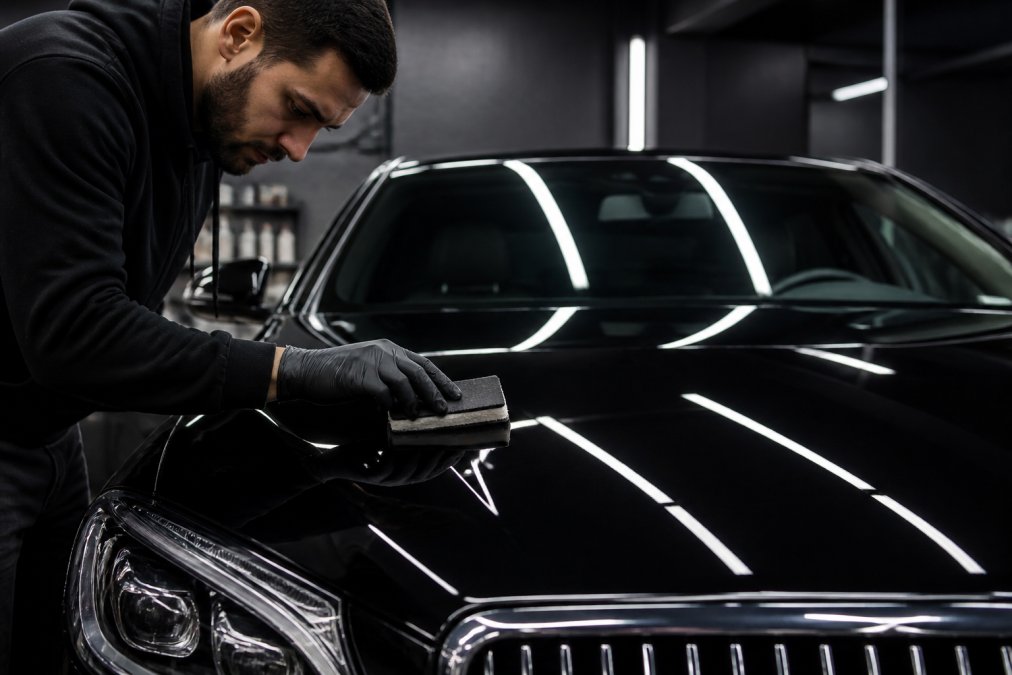
At Armored Inc., we work with automotive, marine, and RV owners across Ontario who want protection that actually lasts. Professional coatings are often rated at 9H on the pencil hardness scale, meaning they resist light scratching better than unprotected paint, but they do not stop rock chips or deep scratches. Most professional applications require 24-48 hours before water exposure, with full hardness developing over two to four weeks.
Ceramic Coating Pros and Cons: An Honest Breakdown
The Real Advantages
The hydrophobic properties of a properly applied ceramic coating are genuinely impressive. Water beads into tight spheres and rolls off the surface, carrying dirt and light contamination with it, reducing wash frequency and effort.
UV resistance prevents paint oxidation from prolonged sun exposure, one of the most common causes of premature paint degradation on vehicles stored outdoors. Chemical resistance to bird droppings, tree sap, and road salt buys time before etching occurs. Gloss enhancement fills surface imperfections at a microscopic level, creating depth and reflectivity that polished but uncoated paint cannot match.
The Limitations You Need to Know
Ceramic coating is not scratch-proof. It resists light swirl marks from improper washing, but rock chip protection is minimal. Deep scratches are not addressed at all; the coating locks them in permanently unless paint correction is done first.
DIY application is possible but has a small margin for error. Improper surface prep, uneven application, or poor conditions lead to high spots, streaks, and hazing. Matte finishes require specialized application technique because the coating must not alter surface sheen.
Cost is a meaningful investment. Contact Armored Inc. for a specific quote based on your vehicle type and condition.
| Factor | Ceramic Coating | Traditional Wax | Paint Sealant |
|---|---|---|---|
| Durability | 2-5+ years | 1-3 months | 6-12 months |
| Hydrophobic effect | Excellent | Moderate | Good |
| UV resistance | Strong | Minimal | Moderate |
| Scratch resistance | Light swirl marks only | None | None |
| Gloss enhancement | High | Moderate | Moderate |
| Application difficulty | High (prep critical) | Low | Moderate |
| Rock chip protection | No | No | No |
Ceramic Coating vs Paint Protection Film: Which Wins?
Ceramic coating and paint protection film (PPF) are not direct competitors; they solve different problems.
Paint protection film is a thick, optically clear urethane film applied to high-impact areas like the front bumper, hood, and side mirrors. Its primary function is absorbing physical impacts: rock chips, road debris, and minor abrasions. Many modern PPF products include self-healing properties where light scratches disappear with heat exposure.
Ceramic coating excels at chemical protection, UV resistance, hydrophobicity, and gloss enhancement but does not absorb physical impacts.
The most effective approach is layering both: PPF on high-impact zones for physical protection, then ceramic coating over the top of the PPF and across the rest of the vehicle for chemical resistance and self-cleaning properties. According to the Detailing Industry Association of Canada's guidance on paint protection, this combination represents the current gold standard for comprehensive paint protection on high-value vehicles.
How Long Does Ceramic Coating Last in Practice?
Ceramic coating durability depends on product quality, surface prep quality, and maintenance habits after application.
Entry-level consumer coatings last one to two years. Professional-grade products properly applied to a correctly prepped surface commonly last three to five years on automotive paint. Marine vessels face harsher conditions than road vehicles, requiring professional marine-specific ceramic formulations.
Maintenance is the variable most people underestimate. A ceramic coating washed with harsh detergents or contaminated with iron particles will fail years ahead of its rated life. Regular maintenance washes using pH-neutral shampoo, combined with periodic decontamination and ceramic booster spray application, keep the coating performing at its rated level. The claim that ceramic coating is "maintenance-free" is misleading; it significantly reduces maintenance effort but does not eliminate it.
Surface Prep and Paint Correction: Why They Decide Everything
Surface prep is where ceramic coating jobs succeed or fail. A ceramic coating chemically bonds to whatever surface it is applied to. If that surface has swirl marks, water spots, oxidation, or contamination, the coating locks all of it in permanently.
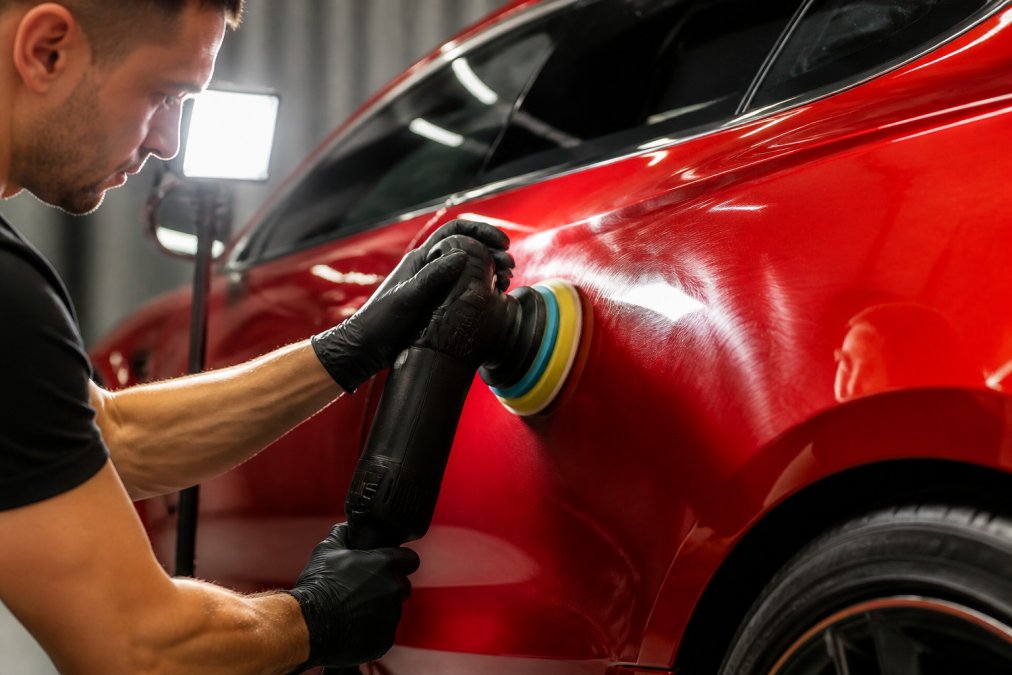
Paint correction mechanically removes defects from the clear coat using machine polishing. After polishing, the surface must be fully decontaminated: a wash to remove loose contamination, an iron decontamination spray to dissolve embedded ferrous particles, a clay bar treatment to remove bonded surface contamination, and an isopropyl alcohol wipe-down to remove polish oils before coating application.
Matte finishes cannot be machine-polished without altering surface texture, so decontamination and prep must be done entirely by hand with matte-safe products. As noted in the Canadian Automotive Industries Association's technical guidance on paint protection, proper surface preparation is the single most critical factor in long-term coating adhesion and performance.
Ceramic Coating Maintenance Tips That Protect Your Investment
Wash technique matters more than product choice. The two-bucket wash method prevents reintroduction of abrasive particles to the paint surface. Swirl marks on coated vehicles almost always come from improper wash technique, not coating failure.
Use pH-neutral shampoo exclusively. Alkaline or acidic shampoos degrade the hydrophobic layer over time.
Decontaminate twice a year. Iron fallout from brake dust and road debris bonds to the coating surface and can affect performance if left long enough.
Apply a ceramic maintenance spray every three to six months. These spray-on boosters contain fresh SiO2 particles that extend the coating's effective life.
Avoid automatic car washes. Brushes and harsh chemicals are among the most common causes of premature coating failure. Hand washing remains the correct approach. For marine vessels, rinse with fresh water after every outing to remove salt and biological contamination.
Long-Term Cost-Benefit Analysis and Warranty Nuances
The real value of ceramic coating becomes clear when looking at the full cost picture over five years. An uncoated vehicle requires regular waxing, more frequent detailing, and is more vulnerable to paint oxidation and water spotting. A professional ceramic coating shifts spending toward higher upfront cost but substantially lower ongoing maintenance and better paint condition at resale.
According to Transport Canada's vehicle value and maintenance guidance, maintaining a vehicle's exterior condition is one of the most consistent factors in preserving resale value over time.
Most professional ceramic coating warranties cover coating failure under normal use conditions but do not cover physical damage, rock chips, or damage from improper maintenance. Warranty coverage typically requires proof of regular maintenance washes, and coating applied over uncorrected paint may not be covered if defects were pre-existing. Some warranties are voided by automatic car wash use.
Ceramic coating cannot be removed by washing. Professional removal requires machine polishing to abrade the coating layer off the clear coat, which consumes some clear coat thickness. In 2026, nano-ceramic formulations include greater flexibility in the cured layer to reduce micro-cracking under thermal cycling and improved UV inhibitor chemistry for sustained temperature performance.
Protecting a vehicle's paint, whether a luxury car, Corvette, Porsche, RV, or marine vessel, is a long-term investment decision. Armored Inc. provides professional ceramic coating, paint protection film, and surface protection services for automotive, marine, and recreational vehicles, with mobile service options and valet arrangements. Contact Armored Inc. to discuss your vehicle's specific requirements and get an accurate quote for the protection approach that fits your situation.
Frequently Asked Questions
Is there a downside to ceramic coating?
Yes. Ceramic coating does not stop rock chips, deep scratches, or dents the way paint protection film does. It also requires thorough paint correction before application, any swirl marks or surface contamination sealed under the coating will stay visible. The curing time means your vehicle is off the road for at least 24-48 hours after application. And while maintenance is simpler than waxing, it still requires pH-neutral shampoo and regular maintenance washes to perform as advertised.
Does ceramic coating actually last as long as manufacturers claim?
Not always. A professionally applied nano-ceramic coating rated for 5-7 years can fall short of that in harsh climates where road salt, freeze-thaw cycles, and intense UV exposure accelerate degradation. Real-world longevity depends heavily on surface prep quality, the specific product's silica dioxide concentration, and how consistently you follow ceramic coating maintenance tips. Professional-grade coatings applied by trained technicians consistently outperform consumer DIY kits in durability testing.
What destroys ceramic coating?
The biggest threats are prolonged exposure to bird droppings and tree sap left to bake in the sun, harsh alkaline or acidic wash chemicals, and automatic car washes with abrasive brushes that introduce swirl marks. Road salt degrades the hydrophobic properties over time if the vehicle is not rinsed regularly during winter. Physical abrasion from improper washing technique, like dry wiping or using the wrong cloth, also wears down the coating's 9H hardness rating faster than normal.
What is better than ceramic coating for cars that need full scratch protection?
Paint protection film (PPF) offers stronger physical protection against rock chips and deep scratches because it is a thick thermoplastic urethane layer, not a chemical bond to the clear coat. Many vehicle owners choose both: PPF on high-impact areas like the front bumper, hood, and mirrors, with ceramic coating over the rest of the vehicle for hydrophobic properties and gloss enhancement. This combination delivers the most complete protection available in 2026.
How does road salt affect ceramic coating performance?
Road salt is one of the most common environmental hazards for coated vehicles. Salt deposits are mildly corrosive and, when left on the surface, work into microscopic imperfections over time, gradually reducing water beading and the self-cleaning effect. Rinsing the vehicle after driving on salted roads, even a quick rinse, significantly slows this process. A proper maintenance wash every two to four weeks through winter keeps the coating's solvent resistance and hydrophobic surface tension intact longer.
Can ceramic coating be applied to marine vessels and RVs?
Yes. Marine-grade ceramic coatings are formulated to handle continuous water exposure, UV radiation, and the environmental hazards specific to freshwater and saltwater environments. For RVs, ceramic coating protects fiberglass and painted panels from paint oxidation, UV damage, and surface contamination from road debris. The surface prep and decontamination process is just as critical on boats and RVs as on cars, skipping the clay bar and paint correction stage will shorten coating lifespan regardless of the product used.
This article was written using GrandRanker