ultimate-guide
Professional Paint Protection for Matte Cars: 2026 Guide
Table of Contents
- Why Matte Finishes Need Professional Paint Protection
- How Matte and Satin Paint Differ from Gloss
- Matte Paint Protection Film: What It Does for Your Finish
- Ceramic Coating for Matte Cars: How It Compares to PPF
- How to Clean Matte Car Paint Without Damaging the Finish
- Matte Paint Protection Film Cost: What Affects the Price
- Barrie Climate Challenges for Matte Paint Protection
- Professional Installation vs DIY: What Actually Works
- Conclusion
- Frequently Asked Questions
Last Updated: September 11, 2026
Why Matte Finishes Need Professional Paint Protection
Matte paint is one of the most unforgiving finishes on the road, which is why professional paint protection for matte cars matters so much. A matte or satin finish often looks flawless for a year, then picks up a shine patch or a stain. Matte paint achieves its flat look through microscopic surface texture that scatters light instead of reflecting it, and anything that fills, polishes, or smooths that texture, wax, abrasive polish, or a gloss-enhancing coating, permanently changes how the panel catches light.
That is the core tension in matte car care: the products that make gloss paint look incredible are the same products that ruin a matte finish. According to Transport Canada's motor vehicle safety and recall information, Canadian roads expose vehicles to heavy seasonal variation, and that variation accelerates wear on unprotected surfaces. For matte owners, protection is not cosmetic. It is the only way to keep the finish looking the way it did on delivery day.
How Matte and Satin Paint Differ from Gloss
Matte and satin finishes sit at different points on the same spectrum. Matte paint reflects almost no light and shows a deep, flat color; satin sits between matte and gloss, with a soft sheen that catches light at certain angles. Both rely on controlled surface texture, but satin has slightly more polished back, making it marginally more forgiving to maintain.
The maintenance implications differ in three ways:
- Gloss paint hides fine scratches poorly but can be machine-polished back to a mirror finish.
- Matte paint hides fine scratches well but cannot be polished without creating a shiny patch that never blends.
- Satin paint falls in between, and touching up a damaged area so it matches the surrounding texture is genuinely difficult.
That last point is the one most owners learn too late. A single abrasive wash mitt can leave a permanent gloss streak on a matte hood, and no amount of detailing skill reverses it without a repaint.
Matte Paint Protection Film: What It Does for Your Finish
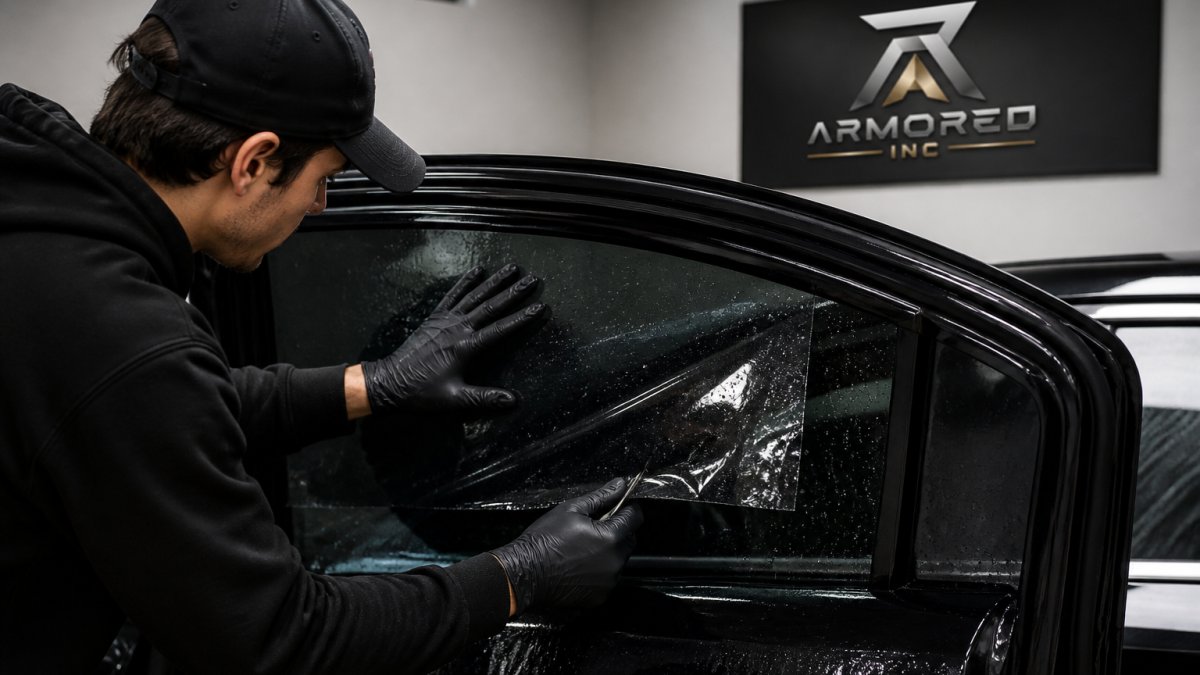
Matte paint protection film is a transparent urethane layer engineered to sit on top of a matte or satin finish without altering its light-scattering texture. It absorbs rock chips, road debris, and light scratches while keeping the flat look intact. Unlike standard clear film, which would make a matte panel look satin or semi-gloss, matte film preserves the finish.
Film Thickness, Self-Healing Technology and Curing Time
Film thickness is measured in mil, and matte-specific films typically run 6 to 8 mil for the topcoat-inclusive total, the same range as quality gloss films. Thicker film resists impact better; thinner film conforms more easily around complex curves. Self-healing technology lets light surface marring relax back into the film when exposed to heat, a real advantage on a finish you cannot polish. Curing time varies with temperature and humidity, but most installations need a few days before full adhesion and normal washing.
Ceramic Coating for Matte Cars: How It Compares to PPF
Ceramic coating for matte cars is a liquid-applied protective layer that bonds chemically to the surface, adding hydrophobic properties and stain resistance without adding a film. It does not absorb rock chips the way paint protection film does. The two products solve different problems, and on a matte finish the choice matters more than on gloss.
| Protection Type | Primary Job | Best For | Key Limitation |
|---|---|---|---|
| Matte PPF | Physical impact and chip defense | Highways, track use, front-end coverage | Higher upfront cost, longer install |
| Ceramic coating for matte cars | Chemical and stain resistance, hydrophobicity | Whole-car ease of cleaning, UV protection | No impact protection |
| PPF plus coating | Layered defense | Owners wanting both | Highest cost, most complex install |
For most matte owners, a ceramic coating over matte PPF delivers the best of both: the film handles physical hits, while the coating handles contaminants, water spotting, and UV exposure. A nano ceramic coating on top also makes the film easier to clean, extending its service life.
How to Clean Matte Car Paint Without Damaging the Finish
Knowing how to clean matte car paint correctly is the single habit that determines whether the finish survives five years or five months. The rules are stricter than gloss and not negotiable.
The two-bucket matte wash method
- Pre-rinse with a pressure washer. Work top to bottom, paying extra attention to rocker panels and wheel arches where Barrie road salt and grit collect. Never aim the wand directly at a film edge at close range.
- Set up two buckets. One with matte-safe pH-neutral soap and water, one with clean rinse water. A grit guard in the rinse bucket keeps dislodged dirt at the bottom instead of back on your mitt.
- Wash with a soft microfiber mitt, one panel at a time. Start at the roof and work down. Rinse the mitt in the clean bucket between panels, never re-dip a dirty mitt into the soap bucket.
- Use a separate mitt or dedicated brush for wheels and tires. Brake dust and road tar should never touch the paint mitt.
- Rinse thoroughly, then dry with forced air or a clean plush microfiber towel. Never let water spot-dry on matte, Ontario tap water is hard enough that mineral spots etch into the texture.
Matte-safe decontamination, step by step
Decontamination is where matte owners get into trouble: the tools that work on gloss, clay bars, machine polishers, aggressive chemical fallout removers, damage matte texture.
- Iron removal. Spray a matte-safe iron remover on cool, shaded panels. Let it dwell per the label, then rinse. Do not agitate with a clay bar afterward.
- Tar removal. Use a matte-safe tar remover on a microfiber, working one small area at a time. Test on a hidden panel first.
- Tree sap and bug residue. Soften with a matte-safe bug and sap remover, then lift gently with a microfiber. Do not scrape or use a plastic razor.
- Skip the clay bar entirely. Clay abrades the surface texture and creates gloss streaks that cannot be polished out.
- Skip wax and gloss sealants. Wax fills the texture and creates shiny patches. Use only matte-safe products.
Winter and post-salt washing in Barrie
Barrie's winter road salt is the biggest threat to a matte finish: brine dries into a film that stains the texture and resists removal without aggressive chemicals. Two practical rules for local owners:
- Rinse the undercarriage and rocker panels at least every two weeks during salt season. A touchless wash with a matte-safe pre-soak is acceptable between full hand washes.
- Do not let salt sit for months. The longer brine stays on the surface, the more it bonds to the texture. A spring decontamination is not a substitute for regular winter rinsing.
If your matte car is protected with matte PPF and a matte-safe ceramic coating, this wash routine gets easier, the coating sheds water and contaminants, and the film takes the salt and sap instead of the paint. That is the practical argument for protecting the finish before the first Ontario winter, not after.
Matte Paint Protection Film Cost: What Affects the Price
Matte paint protection film cost in Canada is driven by coverage area, film brand and grade, vehicle complexity, and installer labor, not a single flat rate. Most Ontario shops quote matte PPF in tiers, and the spread between a partial front and a full body is wide enough that owners should understand what each tier buys before comparing quotes.
Typical coverage tiers and what they protect:
- Partial front (bumper, partial hood, partial fenders, mirrors). The entry point for most matte owners. Covers the highest-impact rock chip zones on Highway 400 and Simcoe County back roads, but leaves doors and rear quarters exposed to salt spray and door-edge chips.
- Full front (bumper, full hood, full fenders, mirrors, headlights). The most common choice for daily-driven matte cars in Barrie. Full-panel coverage means no visible film edge across the middle of the hood, which matters more on matte than gloss, because a film line catches light differently than the surrounding texture.
- Full body. Every painted panel wrapped. Highest material and labor cost, longest install window, and the only tier that fully protects against salt brine on rocker panels and rear bumper impact zones.
What actually moves the price:
- Film brand and grade. Matte-specific urethane from established manufacturers costs more per roll than generic gloss film, and gloss film cannot be substituted without changing the finish. Thicker topcoat-inclusive films (commonly 6-8 mil total) cost more but resist impact better.
- Vehicle complexity. Aggressive curves, deep bumpers, vents, and split panels take longer to film than flat panels. A matte SUV with complex rear quarters will quote higher than a simple coupe for the same coverage tier.
- Installer experience. Matte film leaves no room for error during stretching and repositioning, a stretch mark on matte is permanent. Shops with matte-specific experience charge for that skill, and it is worth paying for.
- Surface prep and decontamination. A matte car that has never been protected needs a matte-safe wash and iron removal before film goes on. Skipping prep traps contaminants under the film.
- Ceramic coating add-on. A matte-safe coating over the film adds cost but extends film life and makes washing easier, a real long-term saving on a finish you cannot polish.
Because pricing varies this much by vehicle and coverage, Armored Inc. quotes each project individually rather than publishing a flat rate. When you request a quote, ask the installer to itemize four things in writing: coverage area (which panels), film brand and product line, whether ceramic coating is included, and warranty terms. A quote listing only a total is not comparable to another quote.
For consumer protection context on service quotes in Canada, review the Competition Bureau's guidance on deceptive marketing and accurate pricing before you commit. A legitimate installer will put the coverage, film brand, and warranty in writing without pressure.
Barrie Climate Challenges for Matte Paint Protection
Barrie sits in one of Ontario's harshest seasonal corridors: road salt in winter, heavy freeze-thaw cycling, summer UV, and spring tree sap all attack an unprotected finish. Salt brine is particularly hard on matte paint because it dries into a film that stains the texture. UV exposure fades unprotected pigment, and matte finishes show oxidation faster than gloss because there is no clearcoat gloss layer to mask it.
For drivers searching for matte car protection near me in Barrie, the practical answer is a film-and-coating combination installed before winter, giving the surface a sacrificial layer that takes the salt, sap, and UV instead of the paint underneath. Local owners also deal with gravel kicked up on Highway 400 and Simcoe County back roads, exactly the debris that chips unprotected front ends.
Professional Installation vs DIY: What Actually Works
Professional installation wins on matte finishes, and it is not close. Matte film and matte-safe coatings demand controlled dust conditions, precise squeegee technique, and the ability to reposition film without stretching or marring it. A DIY attempt in a home garage almost always leaves trapped dust, lifted edges, or stretch marks, far more visible on a flat finish than on gloss.

The cost-benefit math is straightforward: a DIY kit saves money on materials but risks the finish itself, and correcting a botched matte install usually costs more than the professional job would have. A professional installation also comes with surface preparation, warranty coverage, and matte-specific film experience. Armored Inc. handles matte paint protection film and ceramic coatings in Barrie with mobile service options, so your vehicle can be protected without disrupting your schedule.
Conclusion
Matte paint rewards owners who protect it early and punishes those who treat it like gloss. The finish cannot be polished back, so every scratch, stain, and gloss patch is permanent unless you prevent it. Armored Inc. installs matte-specific paint protection film and ceramic coatings designed to preserve the flat look while adding hydrophobic properties, UV protection, and resistance to road debris and road salt. If you drive a matte or satin vehicle in the Barrie area, get a quote before the next winter hits.
Contact Armored Inc. to book your matte paint protection consultation and keep your finish exactly the way it left the factory.
Frequently Asked Questions
How much does matte paint protection film cost in Ontario?
Matte paint protection film cost depends on the vehicle size, the coverage area, and the film brand. Full-body installations on a sports car cost more than partial front-end coverage. In Ontario, pricing also varies by installer experience and whether paint correction is needed first. Armored Inc. does not publish fixed rates because every matte finish is assessed individually. Request a quote with your vehicle details for accurate pricing.
Should you apply PPF to a matte car?
Yes, if you want to prevent paint chips, scratches, and environmental fallout from damaging the finish. Matte paint cannot be polished or buffed the way gloss paint can, so any damage is permanent without protection. A matte-specific paint protection film absorbs road debris impact and provides a sacrificial layer that can be replaced. The film must be matte-formulated, since standard gloss PPF will add unwanted shine to a satin or matte finish.
Is ceramic coating worth it for matte paint?
Ceramic coating for matte cars adds hydrophobic properties and stain resistance without altering the finish, provided the product is matte-safe. It makes washing easier and helps repel water, road salt, and bird droppings. However, ceramic coating does not protect against rock chips or physical scratches the way PPF does. Many owners combine both: PPF on high-impact panels and ceramic coating on the rest of the vehicle for easier maintenance.
Does matte car paint require special maintenance?
Matte paint needs pH-neutral cleaners and soft wash mitts. Avoid automatic car washes with spinning brushes, waxes, and any product containing gloss enhancers. Hand washing with a two-bucket method and drying with a soft microfiber towel keeps the surface clean without scratching. A maintenance schedule of every two to four weeks during Ontario winters helps remove road salt before it bonds to the film or coating surface.
Can you polish matte paint if it gets scratched?
No. Polishing matte paint removes the textured top layer that creates the flat appearance, leaving a shiny patch that cannot be blended back. This is why prevention matters more on matte finishes than on gloss. If a scratch occurs, a qualified detailer can sometimes improve the appearance with matte-safe products, but the result is not guaranteed. PPF applied before damage occurs is the most reliable way to avoid this problem.
How long does matte paint protection film last?
Quality matte PPF lasts five to ten years depending on film brand, sun exposure, and maintenance. In Barrie, winter road salt and summer UV accelerate wear, so annual inspections help catch lifting edges or staining early. Ceramic coatings typically last two to five years. Curing time after installation is usually 24 to 48 hours before washing, though full adhesion takes up to a week. Follow your installer's aftercare instructions to maximize lifespan.