 comparison
Marine vs Car Ceramic Coating: Key Differences
Table of Contents
- Marine Ceramic Coating vs Car Coating: Quick Comparison
- Core Differences in Formulation and Performance
- Marine Ceramic Coating Durability for Boats
- Automotive Ceramic Coating: Durability and Lifespan
- Application Process: DIY vs Professional Installation
- Benefits of Ceramic Coating for Boats in Ontario Waters
- Professional Ceramic Coating for Work Trucks and Fleet Vehicles
- Maintenance Requirements and Long-Term Care
Last Updated: August 28, 2026
Marine Ceramic Coating vs Car Coating: Quick Comparison
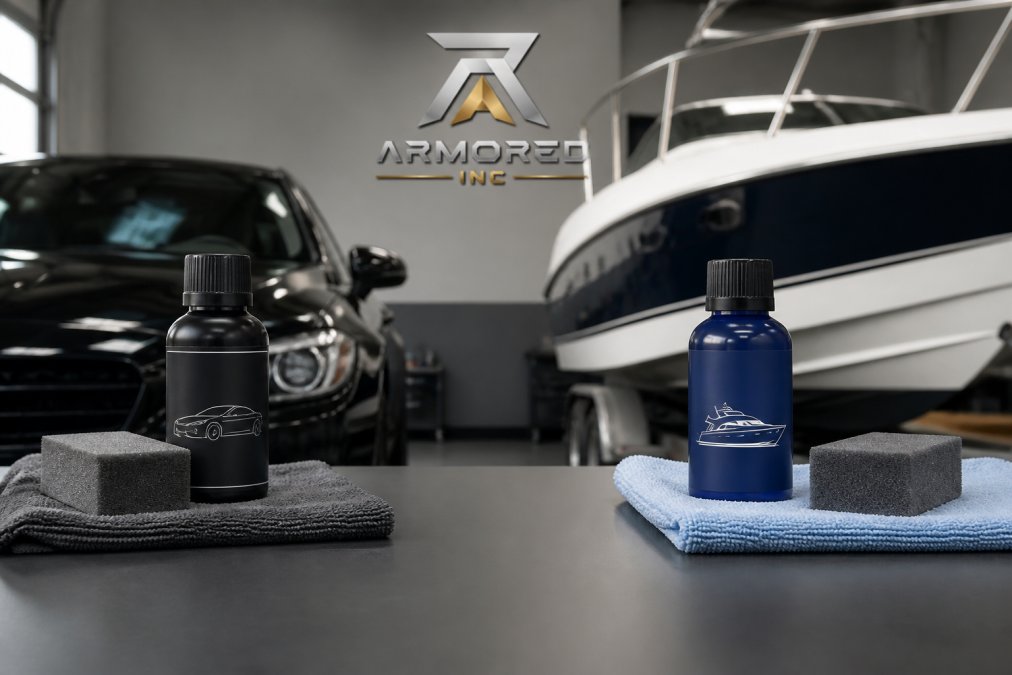
Marine and automotive ceramic coatings are fundamentally different formulations designed for completely different environments. A marine ceramic coating engineered for saltwater and intense UV won't perform the same way on automotive paint, and vice versa.
Boats face saltwater corrosion, constant UV exposure, and algae growth. Cars face road salt and brake dust but are typically garaged at night and don't sit submerged in corrosive water. Understanding these differences helps you choose the right protection for your investment.
At Armored Inc., we work with both marine and automotive clients in Barrie and across Ontario. Here's what separates these two protection systems and which one suits your specific needs.
Core Differences in Formulation and Performance
Marine ceramic coatings are engineered to resist saltwater corrosion, constant UV bombardment, and gelcoat degradation. Automotive ceramic coatings prioritize paint hardness, swirl resistance, and protection against road contaminants and brake dust.
The hardness profiles differ too. Automotive coatings aim for maximum hardness (typically 9H or 10H) to protect against minor scratches and swirl marks. Marine coatings prioritize chemical resistance and hydrophobic properties over pure hardness, because a boat's primary threat is oxidation and corrosion from prolonged water exposure.
UV Protection and Oxidation Resistance
Marine environments present relentless UV exposure. A boat sitting in open water receives direct, unfiltered sunlight for extended periods, and the water reflects additional UV radiation back onto the hull. This constant bombardment causes oxidation, color fading, chalking, and structural degradation.
Marine ceramic coatings include enhanced UV stabilizers that prevent the coating from breaking down under prolonged sun exposure. Products like Gtechniq Marine Ceramic Base Coat create a sacrificial layer that oxidizes instead of allowing the underlying gelcoat to degrade.
Automotive ceramic coatings provide solid UV protection, but they're not optimized for the intensity of direct water-based UV exposure. Cars typically spend significant time indoors, parked in garages or shaded areas, so their UV protection handles environmental sun exposure effectively without needing the continuous-exposure engineering that marine coatings require.
Salt and Freshwater Corrosion Resistance
This is where marine and automotive coatings diverge most dramatically. Saltwater is one of the most corrosive environments on earth. Salt crystals embed in microscopic imperfections, and when water evaporates, those crystals expand, creating pressure that cracks coatings and attacks the substrate beneath.
Marine ceramic coatings are formulated with enhanced chemical resistance specifically to handle salt and mineral attack. These coatings bond strongly to gelcoat and marine paint surfaces, creating a barrier that salt crystals cannot penetrate.
Automotive ceramic coatings provide chemical resistance targeting road salt exposure, brief contact as a car drives through winter conditions, not prolonged saltwater immersion. They're not designed for the relentless, months-long saltwater exposure that marine vessels endure.
Marine Ceramic Coating Durability for Boats
Marine ceramic coatings deliver durability measured in years, but the timeline depends on environmental exposure and maintenance. A boat in freshwater with regular maintenance can see 2-3 years of protection. A boat exposed to constant saltwater and intense UV typically sees 12-18 months of optimal protection before reapplication becomes necessary (peer-reviewed research).
The durability advantage comes from the coating's ability to resist the specific degradation pathways that marine environments create. Water continues to bead and sheet off the surface, reducing the time mineral deposits and salt residue spend clinging to the hull.
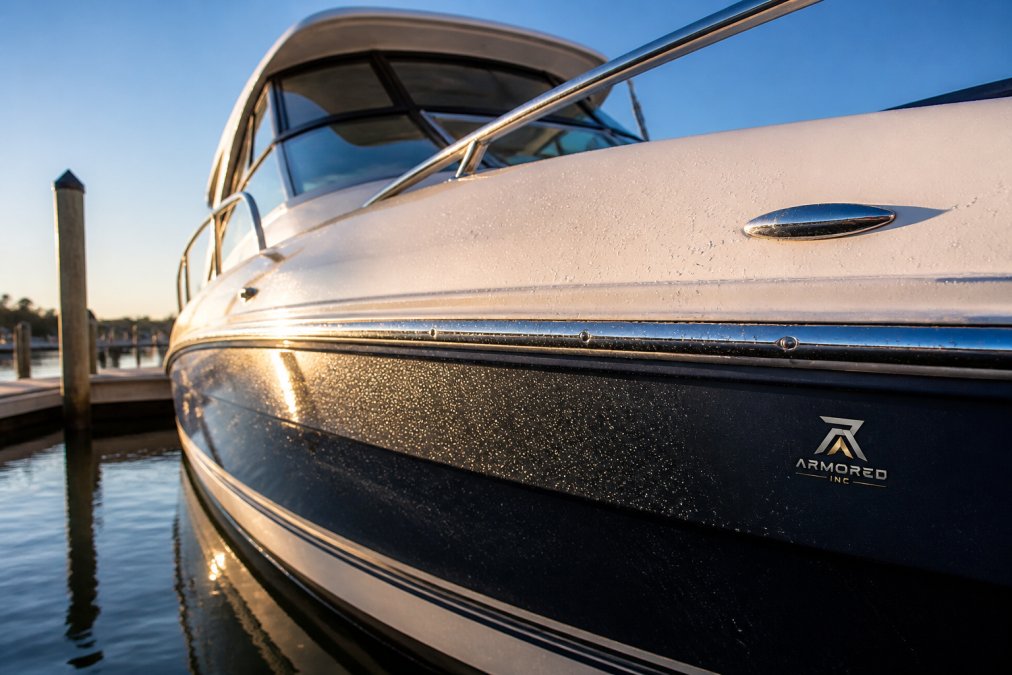
Marine ceramic coating durability depends heavily on application quality and surface preparation. A poorly prepared substrate with residual wax, oxidation, or contamination will cause the coating to fail prematurely. Professional application matters more for marine coatings than automotive ones, because the harsh environment punishes weak adhesion immediately.
Maintenance also extends durability significantly. Regular freshwater rinses remove salt deposits before they cause damage. Boats in Barrie that receive consistent care typically see their marine ceramic coatings perform at the upper end of the durability range.
Automotive Ceramic Coating: Durability and Lifespan
Automotive ceramic coatings typically last 3-5 years under normal driving conditions, with some premium formulations claiming 7 years or longer (peer-reviewed research).
The longer lifespan compared to marine coatings reflects the less aggressive environment. Cars don't experience constant saltwater exposure and spend significant time indoors where UV and environmental contaminants have less opportunity to attack the coating.
Durability depends on driving conditions and maintenance. A car driven primarily on well-maintained roads in moderate climates can see the full 5-7 year lifespan. A car driven in harsh winter conditions with frequent salt exposure may see durability decline to 3-4 years.
Automotive ceramic coatings degrade gradually and predictably. You'll notice the hydrophobic effect diminishing and water beading becoming less pronounced before reapplication is needed. Marine ceramic coatings can fail more suddenly when environmental stress exceeds the coating's capacity.
Application Process: DIY vs Professional Installation
The application process for marine and automotive ceramic coatings shares fundamental steps but diverges significantly in execution difficulty and environmental requirements.
Surface Preparation Requirements
Both coatings require meticulous surface preparation. For automotive applications, preparation involves paint correction, decontamination, and final cleaning to remove all oils and residue. A car's paint surface is relatively uniform and accessible, making preparation straightforward for a skilled DIY applicator.
Marine surface preparation is more complex. Gelcoat often has oxidation, chalking, or previous wax buildup that must be removed completely. The curved surfaces of a boat hull make even application difficult. Salt deposits and mineral staining require aggressive decontamination.
Professional applicators recommend professional installation for marine ceramic coatings because poor preparation leads to failure within months. A boat coating applied over inadequately prepared gelcoat will fail, leaving a surface harder to retreat because the failed coating must be stripped away.
Curing Time and Environmental Conditions
Automotive ceramic coatings typically cure within 24-48 hours, allowing normal use shortly after application.
Marine ceramic coatings have more stringent curing requirements. Many require 7-14 days of curing before the boat can return to water (peer-reviewed research). Temperature, humidity, and air circulation significantly affect curing speed. A marine coating applied in cool, humid conditions cures more slowly than one applied in warm, dry weather.
The curing environment matters more for marine applications. A boat coating applied during high humidity or where moisture might contact the surface during curing can develop adhesion problems. Automotive coatings are more forgiving of minor environmental variations.
Benefits of Ceramic Coating for Boats in Ontario Waters
Ceramic coating for boats in Ontario waters delivers specific advantages tailored to the region's environmental challenges. Ontario's freshwater lakes present algae growth, mineral deposits from limestone-rich water, and UV exposure that intensifies at higher latitudes during summer months.
A marine ceramic coating reduces the frequency of deep cleaning required to maintain a boat's appearance. Water beads and sheets off the coated surface rather than sitting and allowing algae spores to establish themselves. Mineral deposits don't bond as aggressively to a hydrophobic ceramic surface, making removal easier.
The coating also protects against freeze-thaw cycles that Ontario experiences. Water that penetrates unprotected gelcoat freezes and expands during winter, creating micro-cracks. A ceramic coating prevents water from reaching the gelcoat, eliminating this damage pathway.
Professional Ceramic Coating for Work Trucks and Fleet Vehicles
Professional ceramic coating for work trucks and fleet vehicles serves a fundamentally different purpose than automotive enthusiast coatings. A work truck faces constant exposure to dirt, dust, road salt, and chemical contaminants. Fleet managers need coatings that reduce maintenance burden and preserve resale value.
Ceramic coating on work trucks reduces wash frequency and labor required to keep vehicles presentable. A coated truck sheds mud and dust more readily than an uncoated one. For dealerships managing multiple vehicles, this efficiency gain translates directly to labor savings and faster vehicle turnover.
The coating also protects against wear patterns that work vehicles experience. Bed liners and equipment mounting points create areas where moisture collects and corrosion starts. A ceramic coating prevents this moisture from causing rust at these stress points.
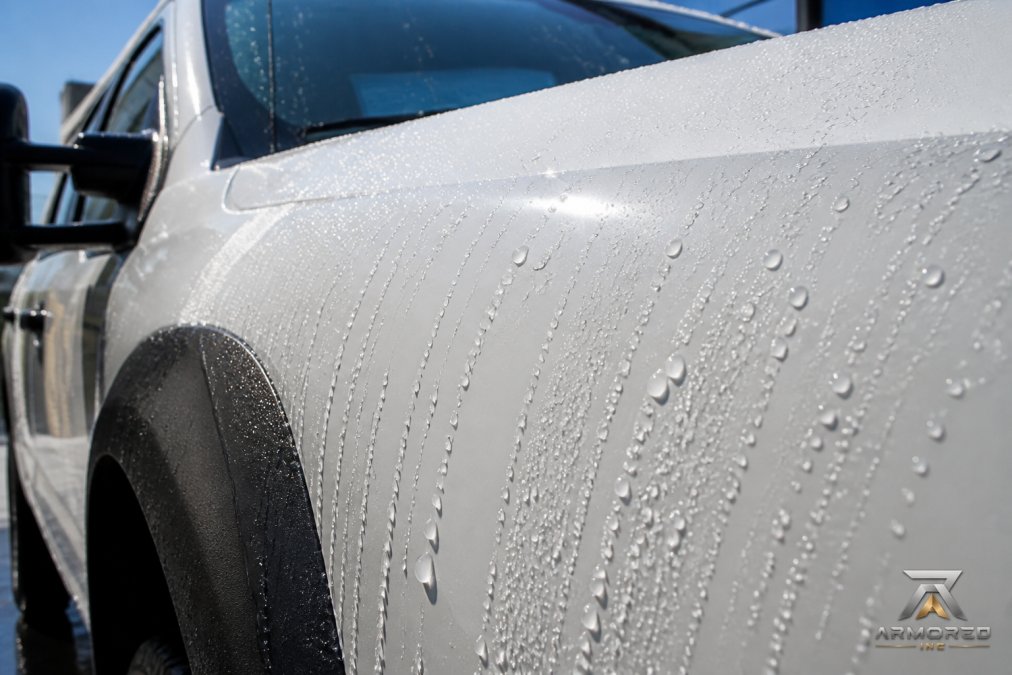
Fleet vehicles coated with professional ceramic formulations see improved resale value because the paint remains in better condition longer. A truck that's been ceramic coated looks newer and commands a higher price at auction than an uncoated vehicle with equivalent mileage.
Maintenance Requirements and Long-Term Care
Ceramic-coated surfaces require different maintenance approaches than uncoated surfaces, and marine coatings demand more rigorous protocols than automotive ones.
Automotive ceramic coatings require regular washing with pH-neutral car wash products. Avoid abrasive brushes and high-pressure washers. Most automotive ceramic-coated vehicles benefit from quarterly deep cleaning and occasional ceramic boost products that refresh hydrophobic properties.
Marine ceramic coatings require more frequent maintenance because the saltwater and mineral-rich environment attacks the coating continuously. Boats should be rinsed with fresh water immediately after use in saltwater, removing salt deposits before they crystallize. Weekly freshwater rinses during the boating season prevent mineral buildup. Monthly deeper cleaning with marine-specific products removes algae and mineral deposits.
The difference reflects the environments. A car parked in a garage overnight has hours of recovery time. A boat sitting in water faces 24-hour exposure to corrosive elements.
Professional ceramic coating providers, including Armored Inc., recommend maintenance schedules specific to each application. Marine vessels in Ontario typically benefit from professional re-coating every 18-24 months, while automotive vehicles can extend to 4-5 years between professional applications if maintained properly.
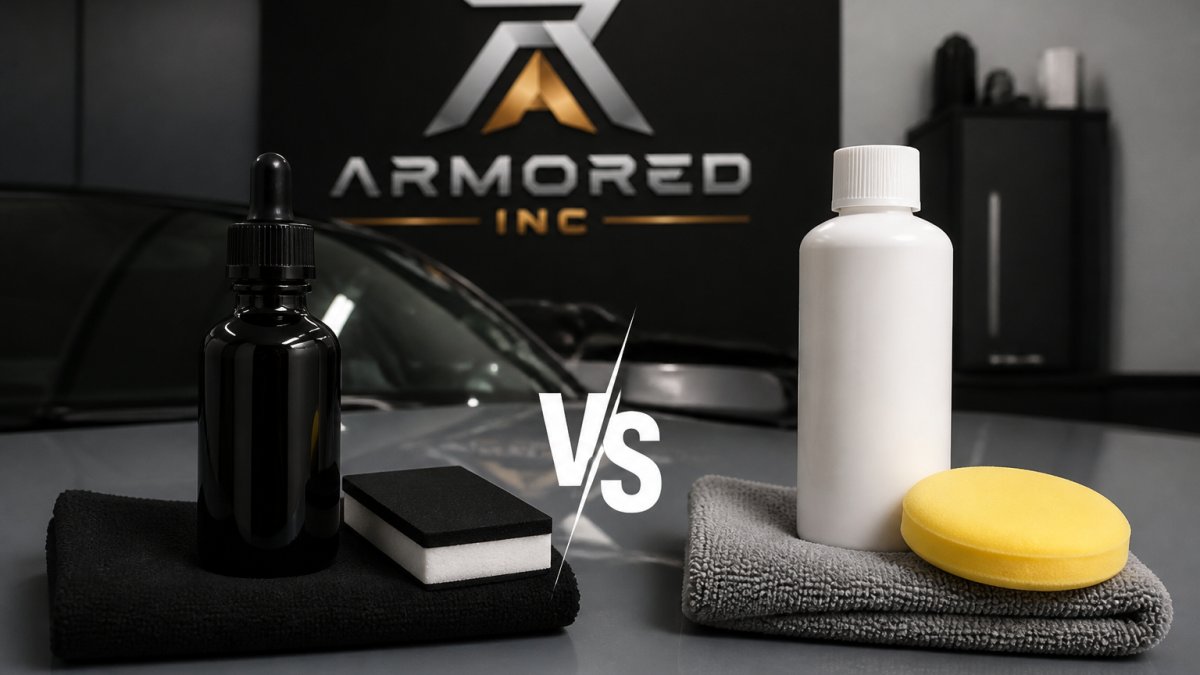
Comparison Table: Marine vs Automotive Ceramic Coatings
| Factor | Marine Ceramic Coating | Automotive Ceramic Coating | Winner |
|---|---|---|---|
| Saltwater Corrosion Resistance | Specifically engineered for salt | Handles road salt only | Marine |
| UV Protection | Enhanced for constant exposure | Solid for typical use | Marine |
| Durability (optimal conditions) | 18-36 months | 36-60 months | Automotive |
| Application Difficulty | High; requires professional | Moderate; DIY possible | Automotive |
| Curing Time | 7-14 days | 24-48 hours | Automotive |
| Maintenance Frequency | Weekly/monthly | Quarterly | Automotive |
| Cost Efficiency | Higher per month of protection | Lower per month | Automotive |
| Best For | Boats, marine vessels | Cars, trucks, fleet vehicles | , |
Choosing between marine and automotive ceramic coatings comes down to matching the coating's formulation to your specific environment. Boats in Ontario waters need marine ceramic coatings engineered for freshwater, UV intensity, and freeze-thaw cycles. Work trucks and luxury vehicles need automotive formulations optimized for road conditions and reduced maintenance.
At Armored Inc., we specialize in both marine and automotive ceramic coating applications in Barrie and throughout Ontario. Whether you're protecting a recreational boat or a fleet of work trucks, we assess your specific environment and recommend the coating formulation designed to deliver maximum durability and protection. Contact Armored Inc. today to discuss which ceramic coating solution matches your needs and get started with professional application that ensures your investment stays protected.
Frequently Asked Questions
How long does marine ceramic coating last compared to automotive grade?
Marine ceramic coatings typically last 1-3 years depending on water type and UV exposure, while automotive coatings often last 3-5 years or longer. Marine coatings face harsher conditions: saltwater accelerates degradation, freshwater algae growth, and constant UV radiation from water reflection intensify oxidation. Automotive coatings on vehicles are exposed to less severe environmental stressors, allowing them to maintain protection longer. Reapplication frequency for boats is higher, especially in saltwater environments.
Can I apply a standard car ceramic coating to my boat hull?
No. Standard automotive ceramic coatings lack the specialized formulation needed for marine environments. Car coatings are not designed for saltwater corrosion, continuous water immersion, or the chemical demands of gelcoat and marine paint substrates. Marine-specific coatings bond differently to gelcoat and offer enhanced salt resistance. Applying automotive coating to a boat hull will result in poor adhesion, premature failure, and wasted investment. Always use coatings formulated specifically for your boat's substrate and water conditions.
What are the main benefits of ceramic coating for boats in Ontario?
Marine ceramic coatings protect boats from UV radiation, saltwater corrosion (in Great Lakes environments with higher mineral content), and freshwater algae growth. They enhance gloss retention, reduce oxidation of gelcoat, and provide hydrophobic properties that shed water and contaminants. Self-cleaning properties reduce maintenance washing frequency. For vessels stored year-round or used regularly, ceramic coatings preserve the showroom finish, protect against swirling from washing techniques, and extend the lifespan of underlying paint or gelcoat by creating a sacrificial barrier.
Is professional ceramic coating worth it for work trucks and fleet vehicles?
Yes, for fleet managers and commercial vehicle owners. Professional ceramic coating protects work truck paint from road salt, debris, and UV damage, reducing maintenance costs over time. For dealership inventory, coatings enhance resale value and showroom appearance. Professional installation ensures proper surface preparation, decontamination, and curing conditions that DIY applications cannot match. Fleet vehicles see faster ROI because they accumulate damage quickly; ceramic coating reduces repainting costs and keeps vehicles looking newer longer, improving customer perception and retention.
Why do marine coatings require higher UV resistance than car coatings?
Water surfaces reflect and amplify UV radiation, doubling the intensity compared to land-based exposure. Boats experience constant sun reflection from water, intensifying UV damage to paint and gelcoat. Marine coatings must resist this amplified UV radiation to prevent oxidation, color fading, and substrate degradation. Automotive coatings on vehicles experience UV from above only. Marine-specific formulations include advanced UV absorbers and stabilizers to maintain gloss and structural integrity under these harsher conditions, ensuring longer protection before reapplication becomes necessary.
This article was written using GrandRanker