 how-to
Ceramic Coating for Matte Cars: A How-To Guide
Table of Contents
- What is Matte Ceramic Coating?
- Why Ceramic Coating Matters for Matte Paint
- Surface Preparation: The Critical First Step
- How to Apply Ceramic Coating to Matte Finishes
- How to Wash a Matte Car After Coating
- Ceramic Coating Durability on Matte Wraps
- Matte Paint Maintenance Tips for Long-Term Protection
- Troubleshooting Common Application Issues
Last Updated: August 21, 2026
What is Matte Ceramic Coating?
Matte ceramic coating is a protective layer applied to matte-finish paint that bonds chemically with the surface to provide hydrophobic properties and contaminant resistance without adding gloss. Unlike traditional glossy ceramic coatings, matte formulations preserve the flat aesthetic while delivering equivalent protective benefits.
The coating creates a hydrophobic barrier that causes water to bead and roll off, preventing water spots, mineral deposits, and environmental contaminants from bonding to the paint. Matte-specific formulations maintain surface tension and flat appearance while providing protection against UV damage, bird droppings, tree sap, and road salt.
The curing process typically takes 24 to 72 hours, during which the vehicle should not be exposed to water or direct sunlight (peer-reviewed research). Full hardness develops over two to three weeks as the coating bonds molecularly with the clear coat beneath the paint, creating a protective layer that lasts several years with proper maintenance.
Why Ceramic Coating Matters for Matte Paint
Matte finishes are inherently more vulnerable to environmental damage than glossy paint. The flat surface texture creates more surface area for contaminants to lodge into, making matte paint susceptible to etching from acidic substances like bird droppings and tree sap. A ceramic coating creates a sacrificial barrier that absorbs this damage instead of allowing it to reach the paint.
The hydrophobic properties are critical for matte finishes. Water sitting on matte paint can seep into micro-scratches and cause oxidation. A properly applied ceramic coating causes water to bead and roll off within minutes, preventing pooling and mineral deposits.
UV protection is essential for matte finishes, which fade faster than glossy paint because the flat texture absorbs more UV radiation. A quality ceramic coating reflects UV rays and prevents clear coat breakdown, extending the finish's life by years.
Matte paint correction is expensive and difficult because the flat finish shows every polishing mark. Prevention through ceramic coating is far more economical than attempting repairs after damage occurs.
Surface Preparation: The Critical First Step
Surface preparation determines whether ceramic coating will bond properly and last as intended. Skipping this phase is the most common reason applications fail or develop streaking and high spots.
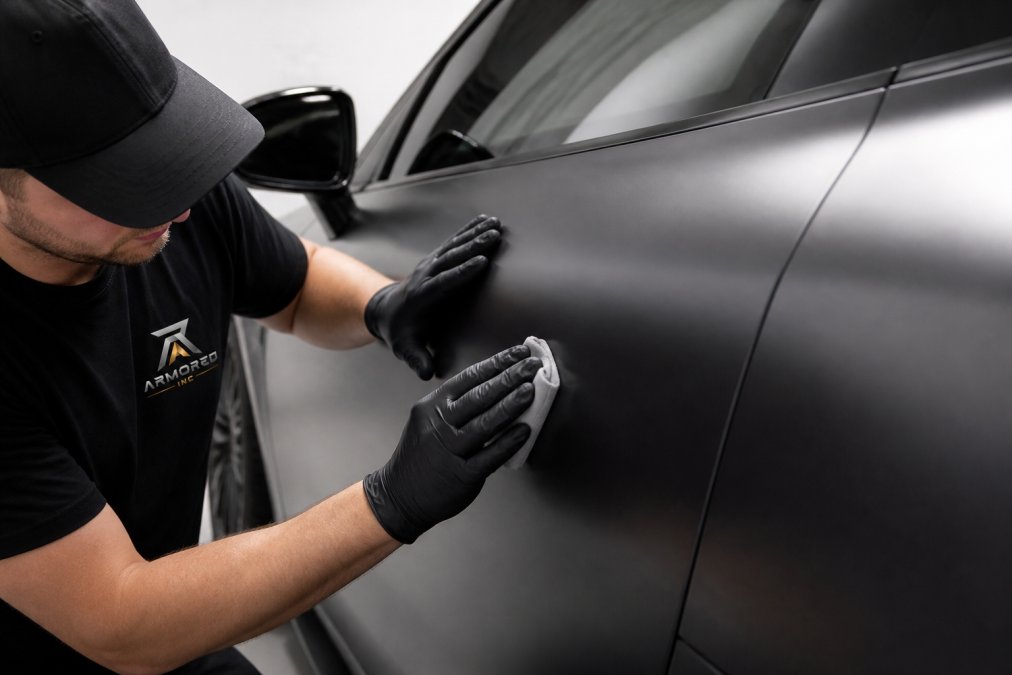
Begin with a thorough wash using pH-neutral soap and a microfiber wash mitt, using straight-line motions rather than circular scrubbing. Rinse thoroughly to remove all soap residue, which can interfere with coating adhesion.
A clay bar removes embedded contaminants like industrial fallout, brake dust, and overspray that washing alone cannot eliminate. Work the clay bar slowly across small sections using light pressure and a lubricant spray to avoid scratching.
For heavily contaminated surfaces, isopropyl alcohol on a microfiber cloth removes residual oils and silicones from previous treatments. This step is critical because ceramic coatings will not bond properly over a slick surface.
Allow the surface to dry completely before coating. Any moisture trapped during application will create high spots and poor adhesion. The surface should feel completely dry to the touch.
How to Apply Ceramic Coating to Matte Finishes
Applying ceramic coating requires precision and technique. The application method directly affects whether you achieve an even, streak-free finish or end up with high spots and hazing.
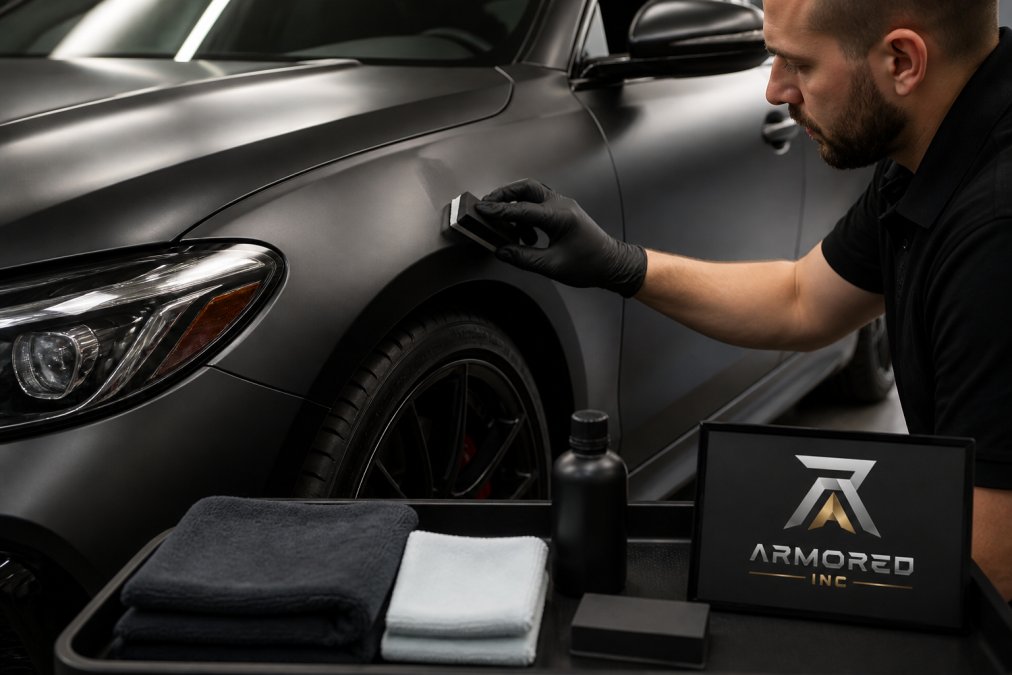
Work in a controlled environment with temperature between 15 and 25 degrees Celsius and humidity below 80 percent (peer-reviewed research). Avoid direct sunlight and high wind, which accelerate curing and make even application difficult.
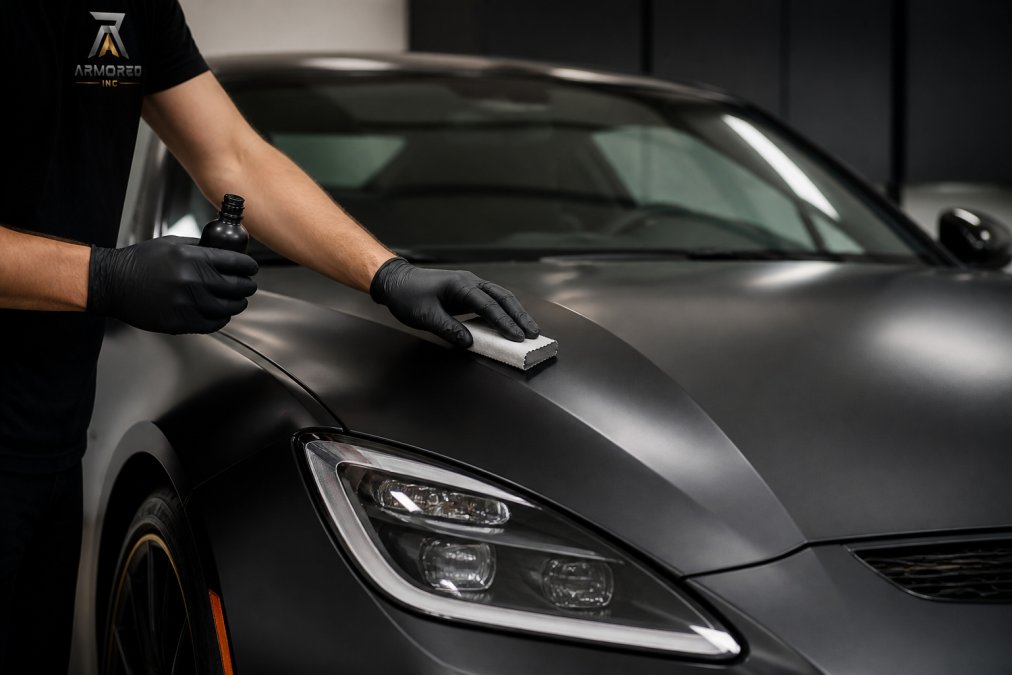
Use a microfiber applicator pad specifically designed for ceramic coating. Apply the coating in thin, even layers using overlapping motions. A common mistake is applying too much product at once, which leads to streaking and high spots. Work in small sections, approximately one square meter at a time. preventative car maintenance.
Maintain consistent pressure and speed throughout application. Allow the coating to flash (begin to cure) for the time specified by the manufacturer, typically 5 to 15 minutes. Once flashing is complete, buff the coating with a clean, dry microfiber cloth using gentle pressure to remove excess product and prevent high spots from hardening.
How to Wash a Matte Car After Coating
Washing technique changes after ceramic coating is applied. Wait at least two weeks after application before washing to allow the coating to fully cure.
Use pH-neutral car wash soap specifically formulated for coated vehicles. Always use a two-bucket method: one for soapy water, one for rinsing the wash mitt. Wash in straight lines using a soft microfiber wash mitt, never circular motions.
Dry the vehicle immediately after washing using a clean microfiber drying towel or air drying. Do not allow water to air-dry on the surface, as this can leave mineral deposits. Avoid automatic car washes and high-pressure washers, which can degrade ceramic coatings.
Ceramic Coating Durability on Matte Wraps
Ceramic coating can be applied over vinyl wraps, but durability is typically shorter than on painted surfaces. A coating on vinyl may last 12 to 24 months before requiring reapplication, compared to two to three years on paint (peer-reviewed research). This is because vinyl expands and contracts with temperature changes, creating micro-movement that stresses the coating bond.
Chemical bonding is weaker on vinyl than on paint because vinyl is a polymer with different surface properties than automotive clear coat. The ceramic coating sits on top of the vinyl rather than bonding at a molecular level.
For maximum durability on vinyl wraps, apply ceramic coating only after the vinyl has fully cured (at least one week after installation). Ensure the vinyl surface is completely clean and free of adhesive residue.
Matte Paint Maintenance Tips for Long-Term Protection
Wash the vehicle every two weeks if regularly exposed to contaminants. More frequent washing in harsh conditions prevents contaminants from bonding to the coating and etching through to the paint.
Inspect the coating monthly for signs of degradation. Look for areas where water no longer beads, which suggests the hydrophobic properties are diminishing.
Avoid parking under trees or in areas prone to bird droppings and tree sap. If exposure is unavoidable, wash the vehicle within a few hours of contamination.
Use only products specifically formulated for coated vehicles. Standard car waxes, sealants, and polishes can interact negatively with ceramic coatings. Avoid clay bar treatments after ceramic coating is applied, as the clay bar can remove or damage the coating surface.
Protect the coating from harsh chemicals. Use pH-neutral cleaners for all surfaces, including wheels and undercarriage. Consider annual professional inspections to assess coating condition and perform touch-ups if needed.
Troubleshooting Common Application Issues
Streaking appears as visible lines or uneven coverage across the matte surface, typically resulting from applying too much coating at once or uneven buffing. Prevention is the best solution: apply thin layers and buff immediately during the flash window.
High spots develop when excess coating hardens in localized areas, creating glossy patches on the matte finish. These result from over-application or insufficient buffing. Use consistent pressure and avoid dwelling in one area during application.
Hazing or clouding occurs when the coating cures unevenly, creating a hazy appearance rather than a clear, flat finish. Environmental control during application is critical to prevent this issue.
Adhesion failure appears as the coating peeling or flaking off the surface, resulting from inadequate surface preparation. Prevention requires thorough surface decontamination before coating.
Poor water beading suggests the coating was not applied thickly enough or the hydrophobic properties are degrading. A maintenance coating or booster product may restore beading in early stages.
Protecting a matte finish requires a different approach than standard paint care, and ceramic coating is one of the most effective methods available. The process demands attention to detail during application and consistent maintenance afterward, but the payoff is years of protection against environmental damage, UV fading, and contaminant etching.
Armored Inc. specializes in ceramic coating applications for matte finishes, including luxury vehicles, sports cars, and marine vessels. If you're considering ceramic coating for your matte-finish vehicle, contact Armored Inc. to discuss your options and get a professional assessment of your paint's condition.
Frequently Asked Questions
Is ceramic coating worth it for matte finish?
Yes. Ceramic coating on matte paint provides hydrophobic properties that repel water and contaminants, protecting against bird droppings, tree sap, and UV damage. The investment preserves the integrity of your matte finish and reduces maintenance frequency. Matte surfaces are more vulnerable to swirl marks and etching, making professional protection especially valuable for luxury and sports cars.
Can you apply standard ceramic coating to a matte wrap?
Standard ceramic coatings can be applied to matte vinyl wraps, but compatibility matters. The coating must bond properly to the wrap's surface without affecting its matte appearance. Ensure the product is pH-neutral and silica-based to avoid chemical reactions. Professional application is recommended to prevent streaking or gloss enhancement that would compromise the matte aesthetic.
How long does ceramic coating last on matte paint?
Ceramic coating durability on matte finishes typically ranges from 2 to 5 years, depending on environmental exposure, maintenance habits, and coating quality. Harsh weather, salt exposure, and frequent washing can shorten longevity. Regular maintenance with pH-neutral cleaners and proper washing techniques extends the protective layer's lifespan significantly.
Why can't you polish matte paint after ceramic coating?
Polishing creates micro-scratches and friction that generate heat, both of which alter the matte finish by creating glossy patches. After ceramic coating, the surface has a chemical bond that polishing disrupts. Instead, use clay bar decontamination and gentle washing to maintain protection without compromising the matte appearance or the coating's integrity.
This article was written using GrandRanker