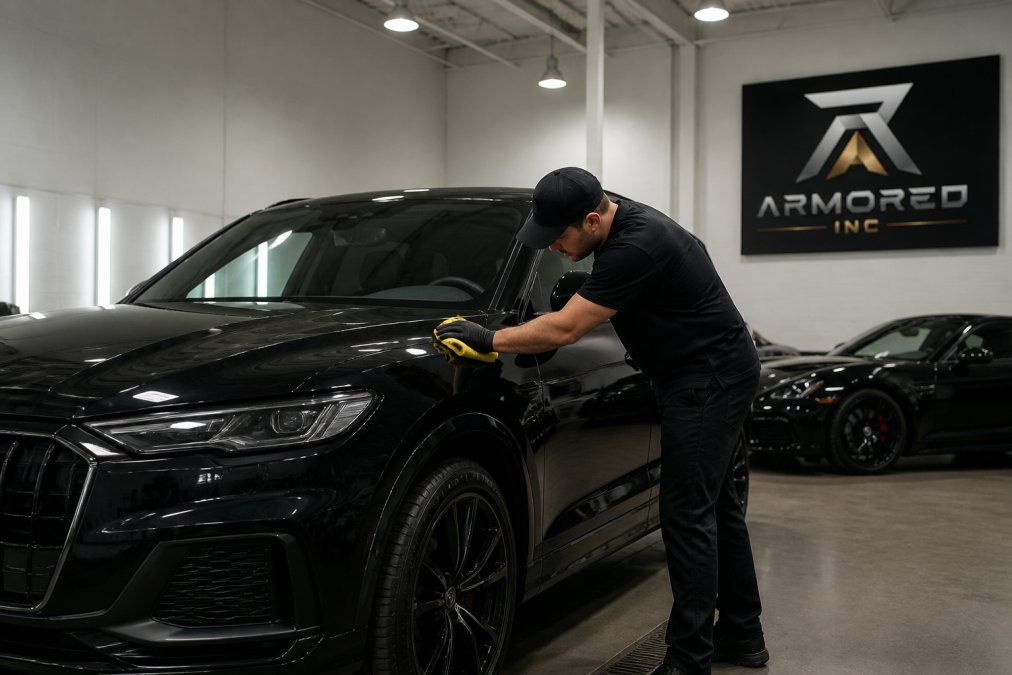
 ultimate-guide
High Volume Dealership Detailing Services in Barrie
Table of Contents
- Why High Volume Dealership Detailing Services Are Different
- Dealership Detailing Turnaround Time: What to Expect
- Ceramic Coating for Dealership Inventory: A Smart Investment
- Dealership Fleet Detailing Barrie: A Local Solution
- Comparing In-House vs. Outsourced Detailing
- Standardized Detailing Checklist for Pre-Sale Vehicles
- Building a Detailing Partnership for Consistent Results
- Frequently Asked Questions
Last Updated: September 7, 2026
Why High Volume Dealership Detailing Services Are Different
Retail detailing is about pampering a single vehicle. High volume dealership detailing services are about moving metal. When a used car sits on your lot, it depreciates daily, and every day it waits for reconditioning is a day it is not generating revenue. This is the core tension that makes dealership detailing a distinct discipline: the goal is not perfection for its own sake, but a consistent, sellable standard achieved at speed.
We work with dealerships across Barrie and Simcoe County that need inventory turned around in days, not weeks. The difference between a retail detail and a bulk operation comes down to process, product, and predictability. You cannot run a 40-vehicle lot on a schedule built for one-off appointments.
Dealership detailing is the systematic reconditioning of pre-sale vehicles to a uniform standard that supports faster inventory turnover and higher resale value. A professional operation relies on standardized checklists, professional grade chemicals, and volume-based scheduling to deliver consistent results without bottlenecks.
What most dealership managers get wrong is treating this as a simple headcount problem. Hiring more staff does not fix a lack of standardized process. The real lever is a partner who brings a mobile service unit and a documented workflow that matches your lot's velocity.
Dealership Detailing Turnaround Time: What to Expect
For a dealership, detailing turnaround time isn't just a convenience metric; it is a direct lever on inventory velocity and the financial metric of 'days on lot.' Every day a vehicle spends in the detailing bay is a day it is not on the front line generating interest or being sold. The competitive advantage of a high-volume service is not just the quality of the finish, but the speed at which that finish is achieved and the unit is returned to your available inventory.
A common pattern for a standard reconditioning pass, which includes an exterior wash, interior shampooing, and basic paint decontamination, is a 24 to 48-hour window (autocare.org). However, this is a starting point, not a guarantee. A professional partner should be able to provide a more granular breakdown based on vehicle class and condition:
- Standard Reconditioning (2-3 hours of labor): 24-48 hours. This covers a trade-in in average condition that needs a thorough cleaning and basic paint prep.
- Paint Correction (4-6 hours of labor): 3-5 days. This is for vehicles with significant swirl marks, light scratches, or oxidation that require machine polishing to restore clarity and gloss.
- Full Enhancement (6-8+ hours of labor): 5-7 days. This is for high-line vehicles or those needing extensive interior work, multiple-stage paint correction, or the application of a ceramic coating.
For a high-volume lot, the real question is throughput, not just per-unit time. You need to know how many units a partner can process per week without sacrificing the standard. A professional team with a mobile unit should be able to handle a steady flow, but you should demand a clear service level agreement (SLA) that states the expected turnaround time per vehicle class and the weekly capacity.
The most sophisticated dealership partners frame their services around throughput and scheduling. Instead of a single flat timeline, they offer a 'batch and flow' model. They will assess your lot's current inventory, categorize vehicles by reconditioning need, and propose a schedule that aligns with your sales projections. For example, they might suggest a schedule where all 'front-line ready' units are processed first, while units slated for paint correction are batched together to maximize efficiency. This proactive approach turns detailing from a reactive cost center into a proactive contributor to your sales pipeline.
Be wary of partners who quote a single flat timeline. Paint depth, condition, and the presence of swirl marks or brake dust removal needs all shift the clock. A credible partner will walk your lot, assess the inventory, and give you a schedule based on actual condition, not a marketing promise. They should also be able to provide a weekly throughput report, showing units completed against the SLA, which gives you the data you need to manage your own inventory forecasts.
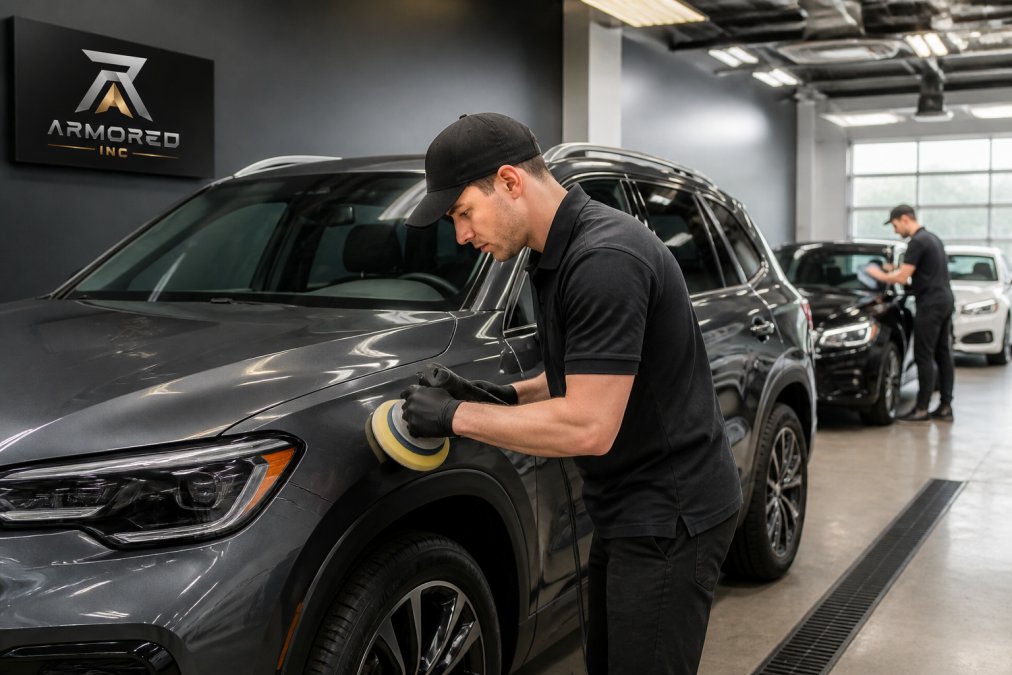
Ceramic Coating for Dealership Inventory: A Smart Investment
Ceramic coating for dealership inventory is not just a premium upsell. It is a protective layer that keeps pre-sale vehicles looking lot-ready for weeks, which directly supports inventory turnover. A coated car resists the micro-scratches from washing, holds its gloss under lot lights, and presents better to every prospective buyer who walks the line (ceramicpro.com).
For a dealership, the value of ceramic coating is twofold. First, it reduces the need for repeated paint decontamination and polishing on units that sit for a while. Second, a coated vehicle is a demonstrable selling point, especially for higher-end stock where buyers expect paint protection film or a ceramic finish.
The economics change at volume. Applying ceramic coatings across a fleet requires a partner with the capacity to cure vehicles properly, which means controlled space and time. This is where a specialist with a mobile service unit in Barrie has an edge over a generalist trying to squeeze coating jobs between retail appointments.
Dealership Fleet Detailing Barrie: A Local Solution
Dealership fleet detailing in Barrie comes with local advantages that a distant national chain cannot match. A local partner understands the Ontario climate: the salt from winter roads, the sand, and the UV exposure that dulls paint and cracks interiors (ontario.ca). A Barrie-based operation can respond quickly when a trade-in arrives needing urgent reconditioning.
The convenience of a local mobile service is significant. Instead of driving units to a separate facility, a mobile unit comes to your lot, which keeps your inventory on-site and your sales team in control. This is particularly valuable during seasonal spikes in the South Simcoe and Muskoka areas, where dealerships see surges in both volume and vehicle types, from trucks to recreational vehicles. car detailing techniques.
For dealerships in Barrie looking for "dealership detailing near me," the search is really about finding a partner who will show up consistently. A local provider with a track record of supporting dealership inventory understands that your lot is a sales floor, and that a vehicle in the bay is a vehicle not earning its keep.
Comparing In-House vs. Outsourced Detailing
Most dealerships eventually face this decision: build an in-house bay or contract the work out. In-house detailing gives you direct control over scheduling, but it comes with fixed costs: equipment, professional grade chemicals, staff training, and the management time to keep quality consistent. For many lots, the volume does not justify the overhead.
Outsourced detailing converts that fixed cost into a variable one. You pay for completed units, which is easier to align with sales flow. The trade-off is less day-to-day control, which makes a documented service level agreement and a standardized checklist essential.
| Factor | In-House Detailing | Outsourced Detailing |
|---|---|---|
| Upfront Cost | High (equipment, bay) | Low (none) |
| Staff Management | Your responsibility | Partner's responsibility |
| Quality Consistency | Varies with training | Standardized via checklists |
| Scalability | Hard to flex | Easy to scale up/down |
| Best For | Very high fixed volume | Variable or seasonal volume |
The deciding factor is usually consistency. A dedicated partner lives and dies by its process, which often means more uniform results than a general service department juggling detailing between other duties. For dealerships that prioritize inventory turnover, outsourcing to a specialist is frequently the more reliable path.
Standardized Detailing Checklist for Pre-Sale Vehicles
A standardized detailing checklist is the backbone of any high-volume operation. It ensures every vehicle meets the same baseline for pre-sale preparation, regardless of who is performing the work. Without a checklist, quality drifts, and a customer who buys a poorly reconditioned car will not return.
A professional pre-sale checklist should cover the full exterior and interior scope. Exterior steps include a thorough wash, clay bar treatment for paint decontamination, machine polishing for swirl mark removal, and a protective layer of wax, sealant, or ceramic coating. Interior work covers upholstery extraction, leather conditioning, and odour elimination.
- Exterior wash and wheel cleaning, including brake dust removal
- Clay bar treatment to remove bonded contaminants
- Machine polish for swirl mark and scratch removal
- Paint protection application (sealant or ceramic coating)
- Interior vacuum and upholstery extraction
- Leather conditioning and interior plastic dressing
- Glass cleaning and headlight restoration if needed
- Final inspection under lot lighting
Building a Detailing Partnership for Consistent Results
A detailing partner should function like an extension of your dealership's operations team, not a vendor you call when you remember. The strongest relationships are built on clear expectations, volume-based pricing models, and a shared commitment to turnaround time. This is where a specialist like Armored Inc. earns its place.
The most critical component of a B2B detailing partnership is the Service Level Agreement (SLA) . A professional SLA goes beyond a simple price per car. It should define:
- Scope of Work: A detailed checklist of what is included in each service tier (e.g., Standard, Premium, Paint Correction).
- Turnaround Time: Specific timeframes for each service tier, as discussed in the previous section.
- Quality Standards: A clear definition of what constitutes an acceptable finish, often referencing a standardized checklist.
- Capacity and Scheduling: The partner's commitment to a minimum and maximum number of units per week.
- Liability and Insurance: Clear terms on who is responsible for any damage or issues.
Beyond the SLA, the pricing model is where a true B2B partnership is defined. Most retail-focused detailers charge a flat fee per service. A high-volume dealership partner should offer volume-based pricing models that align with your inventory flow. Common structures include:
- Tiered Per-Unit Pricing: A lower cost per unit as your monthly volume increases (e.g., $X per unit for 1-20 units, $Y per unit for 21-50 units).
- Monthly Retainer: A fixed monthly fee for a guaranteed number of reconditioning hours or units, providing predictable budgeting for your dealership.
- Performance-Based Incentives: A bonus structure for the partner if they consistently meet or beat turnaround time targets, aligning their incentives with your inventory velocity goals.
We bring professional-grade surface protection to dealerships across Barrie, Newmarket, Aurora, and Orillia. Our expertise in ceramic coatings and paint protection film ensures your inventory leaves the lot looking its best and stays protected against the elements. We offer mobile services that come to your location, minimizing disruption to your sales flow.
The strongest partnerships start with a conversation about your lot's specific velocity and challenges. Whether you manage 10 vehicles or 100, the goal is the same: reduce the time between acquisition and sale. A partner who understands dealership detailing as a function of inventory turnover will help you hit that target.
Frequently Asked Questions
How does high volume detailing differ from retail car detailing?
High volume detailing for dealerships prioritizes speed and efficiency without sacrificing finish quality. Unlike a retail detail that may take a full day, a dealership program uses streamlined processes and professional-grade chemicals to prep vehicles for sale quickly. The focus is on making each car showroom-ready to support inventory turnover, often using standardized checklists to ensure every unit meets the same visual standard before it hits the lot.
What turnaround times should Barrie dealerships expect for fleet detailing?
Dealership detailing turnaround time depends on the vehicle's condition and the services needed. A standard exterior and interior detail for a pre-sale unit can often be completed in a few hours. However, a vehicle requiring paint correction or ceramic coating will take longer. For a fleet of 40 vehicles, a professional service can set up a schedule to process a consistent number of units daily, ensuring a steady flow of showroom-ready inventory.
Are ceramic coatings a viable option for high volume dealership inventory?
Yes, ceramic coating for dealership inventory is a growing trend to protect new vehicles from the moment they arrive. It offers long-term protection against swirl marks, bird droppings, and UV damage, keeping cars looking newer for longer. This can reduce the need for frequent corrective detailing and increase the resale value of used inventory. It is a premium option that can be offered to buyers as an add-on.
What are the benefits of outsourcing detailing for Barrie car dealerships?
Outsourcing dealership fleet detailing in Barrie lets your sales staff focus on selling instead of washing cars. A professional service brings specialized equipment, trained technicians, and a mobile unit, eliminating the need for a large capital investment in your own detailing bay. This approach offers predictable costs and high standards, ensuring every vehicle is reconditioned consistently, which is key to maintaining a strong brand image.
Getting vehicles sale-ready faster is the challenge every dealership faces, and it is one that a specialized partner solves more efficiently than a generalist. Armored Inc. provides the professional detailing and surface protection that keeps your inventory moving and your buyers satisfied. Contact us today to discuss a detailing partnership built around your lot's volume and your need for consistent, rapid turnaround.